Showing posts with label Buena Vista Lagoon. Show all posts

Monday, January 2, 2017

Christmas Bird Count

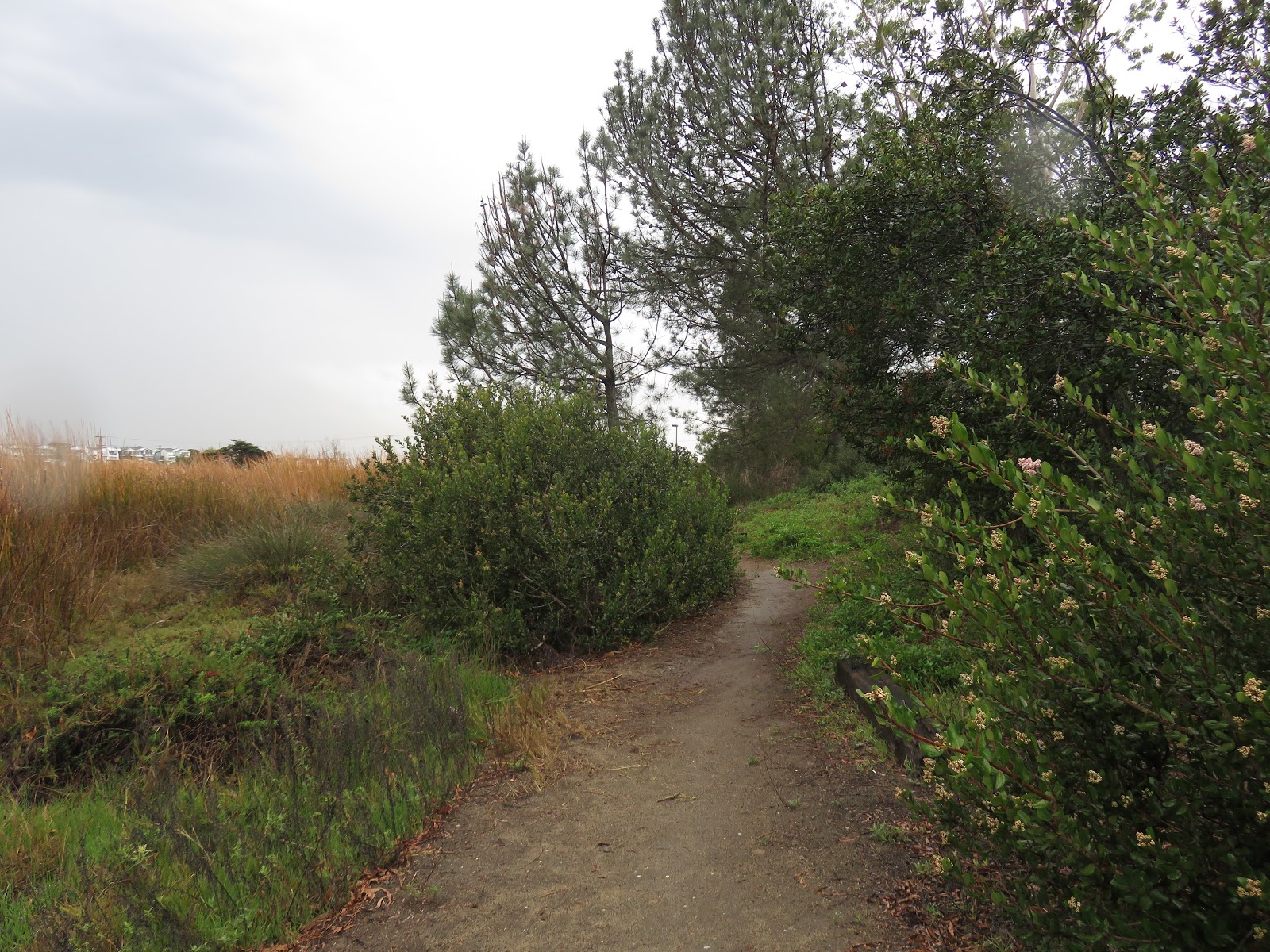
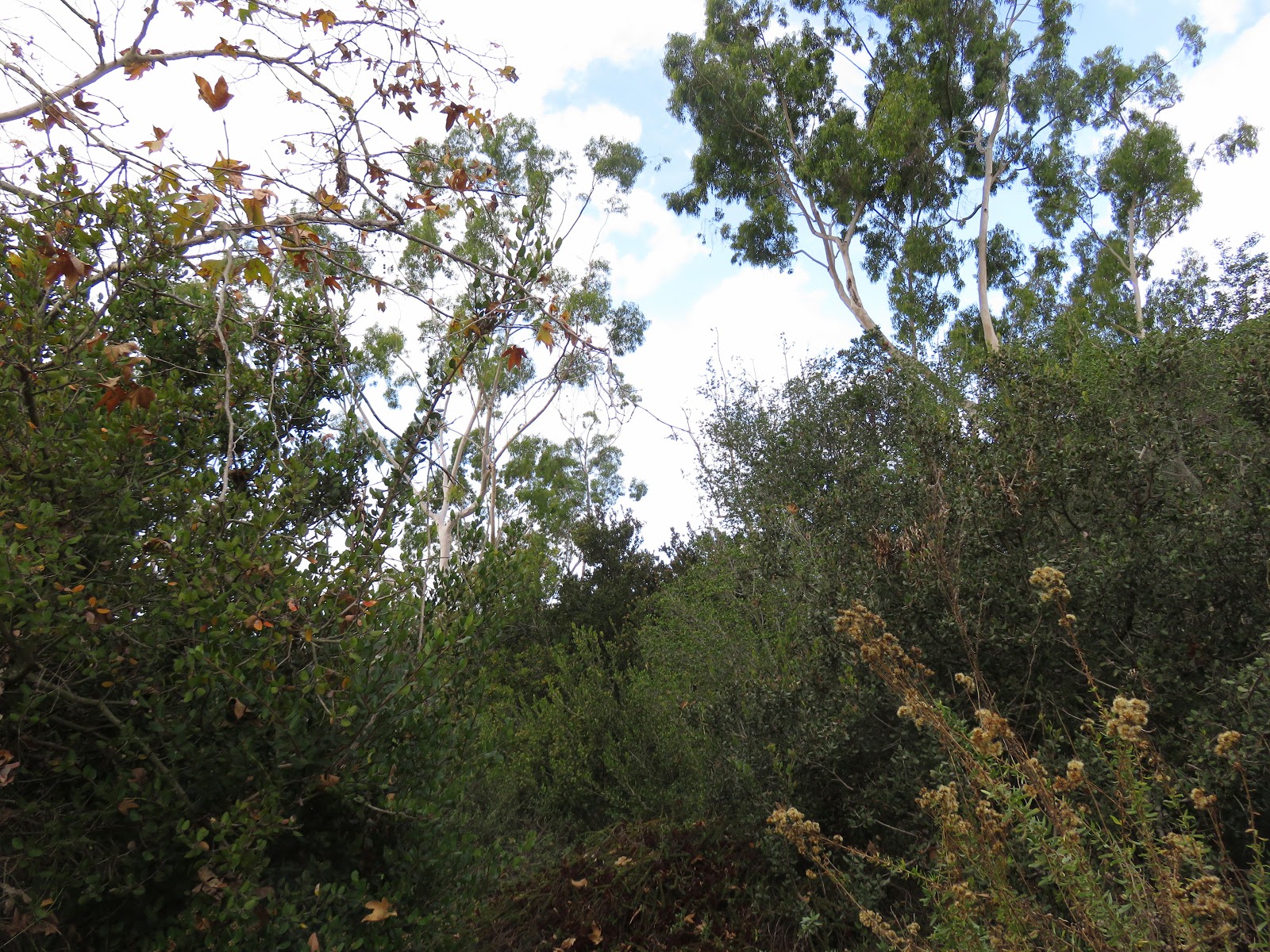
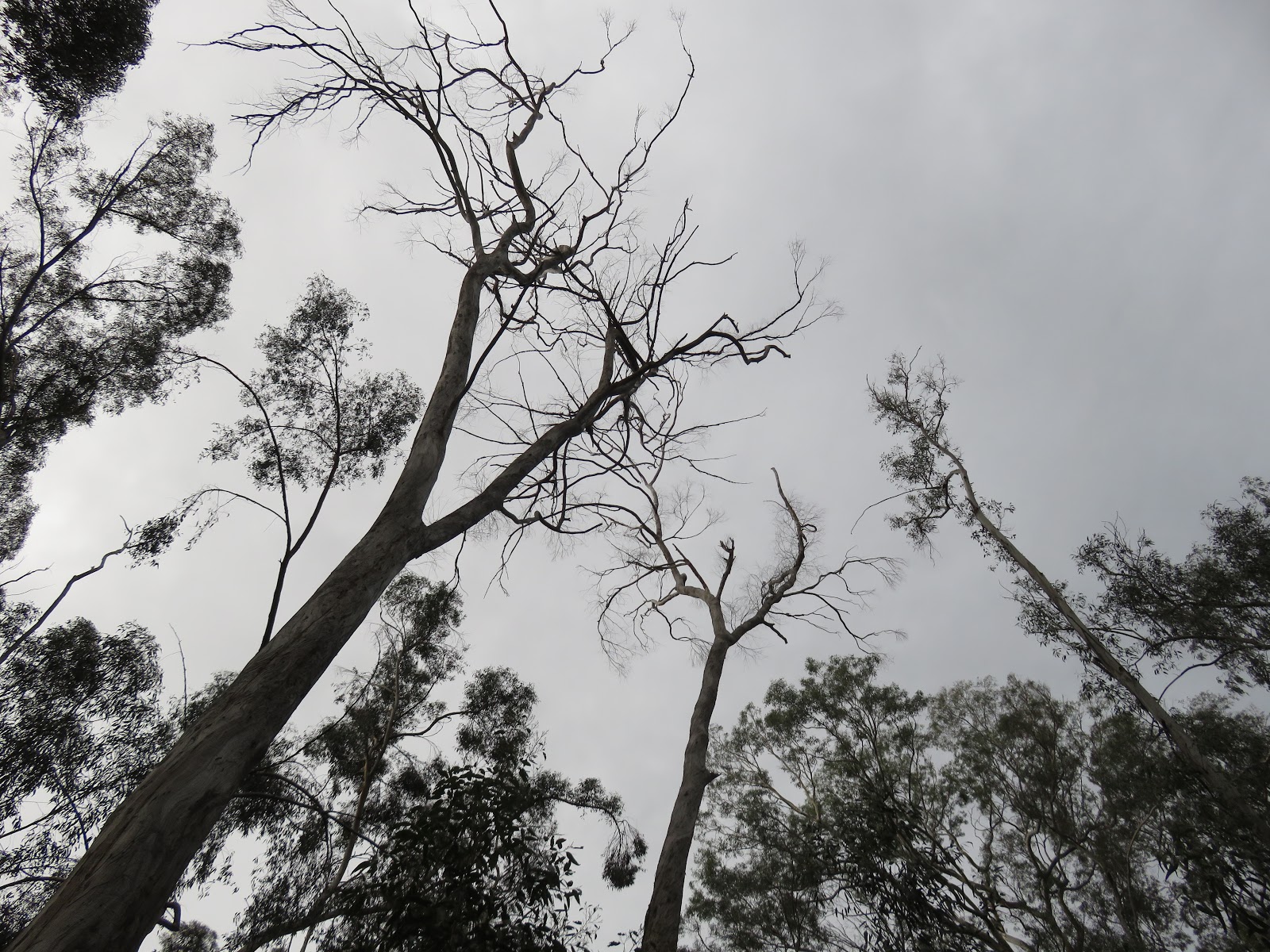
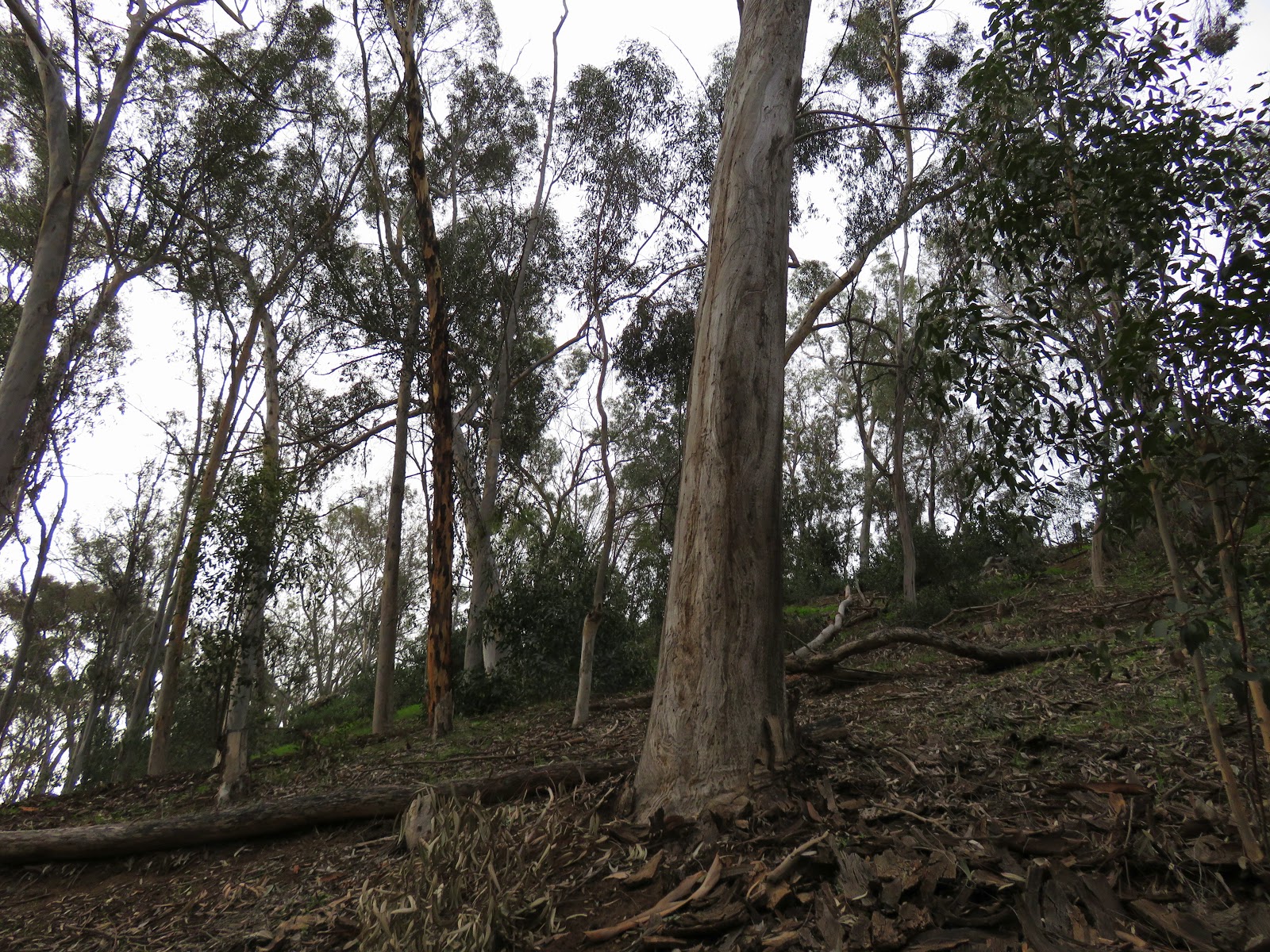
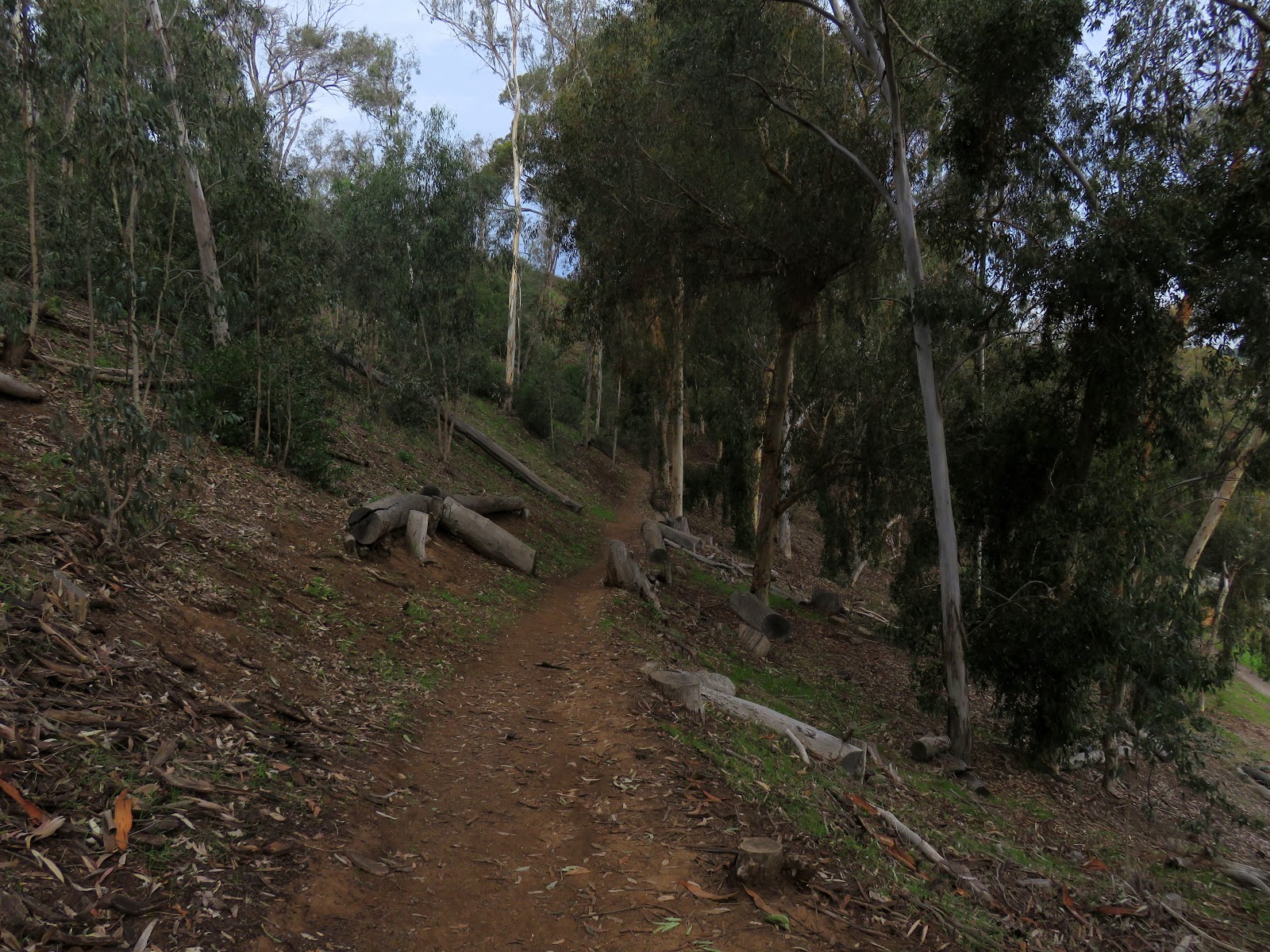
Last Friday was the Christmas Bird Count at the Buena Vista Lagoon. It was a very gray, somewhat chilly morning, and it rained on and off. My dad wanted to start early, before it started raining (since birds usually hide away when it rains), so we got to the lagoon early and started at Hosp Grove Park. We saw quite a few species, including some warblers (including Townsend's) and two different woodpeckers (Nuttall's and Downy), though it did start raining while we were there. Below are three photos of Hosp Grove Park.


As we were walking along the trail, we heard a Red-shouldered Hawk calling in the distance (they're very loud and always sound upset). It flew over us and landed in a tree. A crow then came and started harassing it. It flew away just as another Red-shouldered Hawk (probably its mate) flew in. The second hawk landed in the same place as the first, and the crow harassed it for a little while, then flew away. Below is the second hawk.
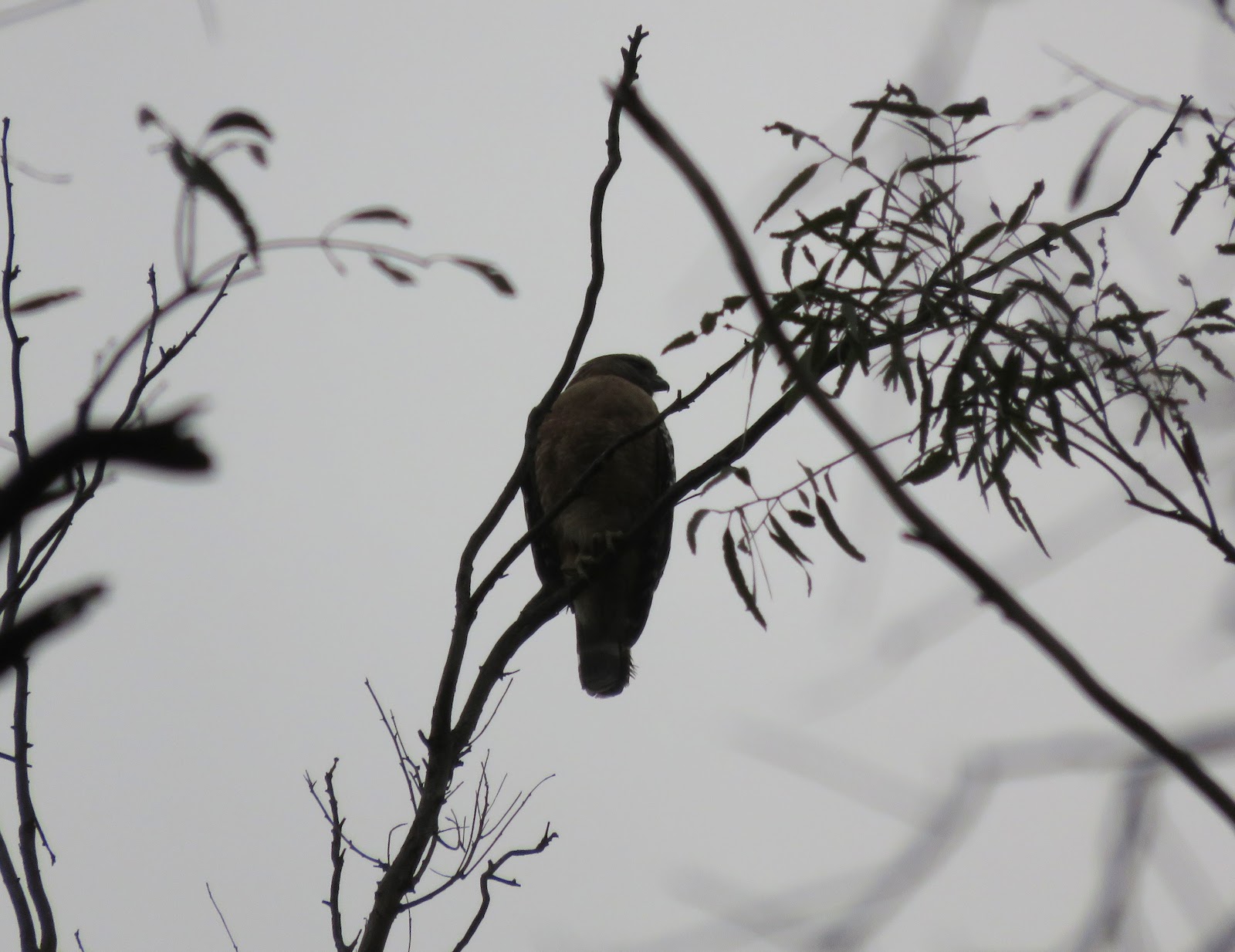
Red-shouldered Hawk

Across from the park is a parking lot (there are restaurants and things over there). In the parking lot, there were quite a few crows and one raven. The crows didn't seem to mind the raven, and the raven didn't seem to mind hanging around with the crows. Below is a photo of the raven sitting in a tree (notice the very large bill).
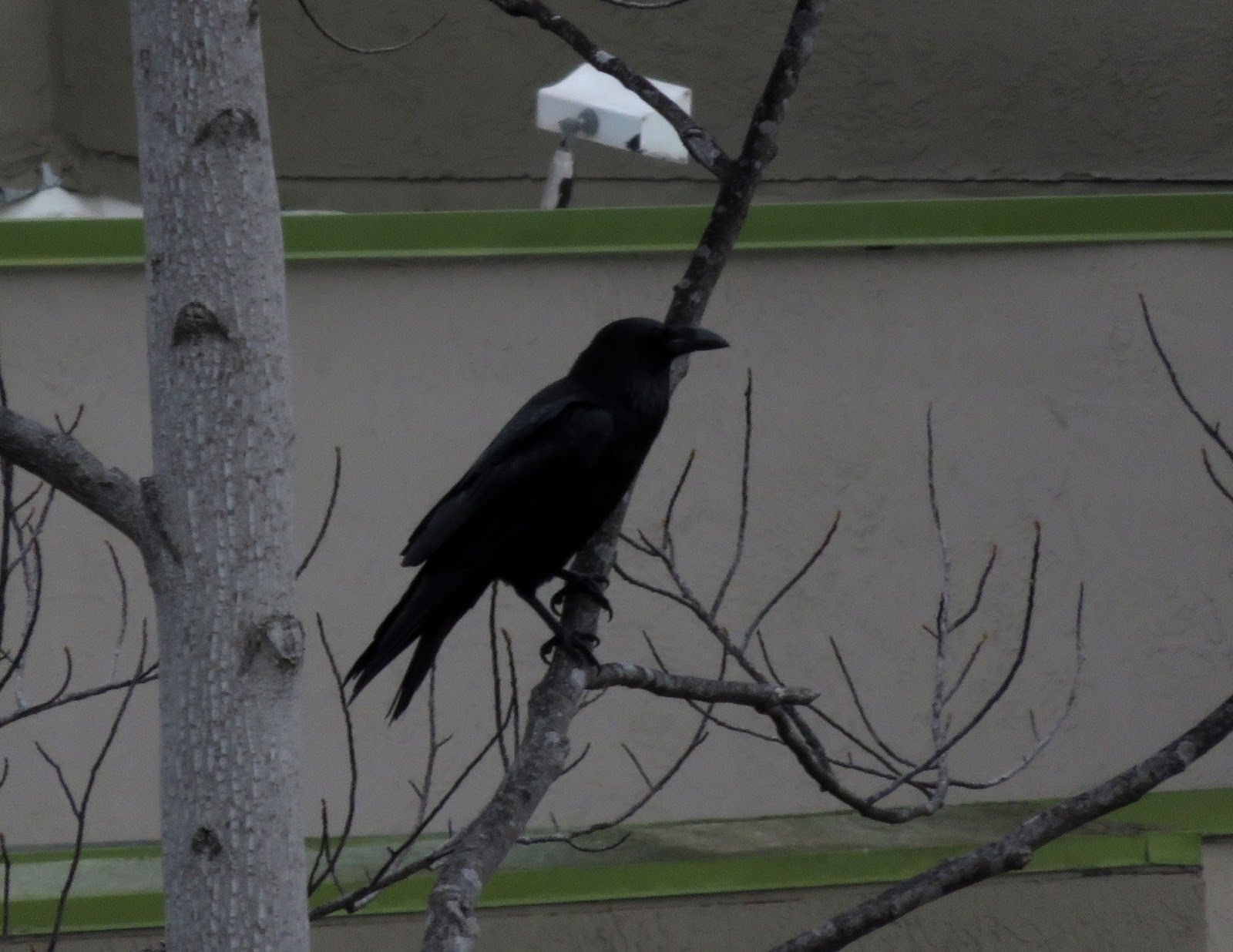
Common Raven

At the pond at the edge of the park, there were quite a few Mallards and couple of American Coots. They didn't seem to mind the rain. Below is a photo of the pond and some of the Mallards.
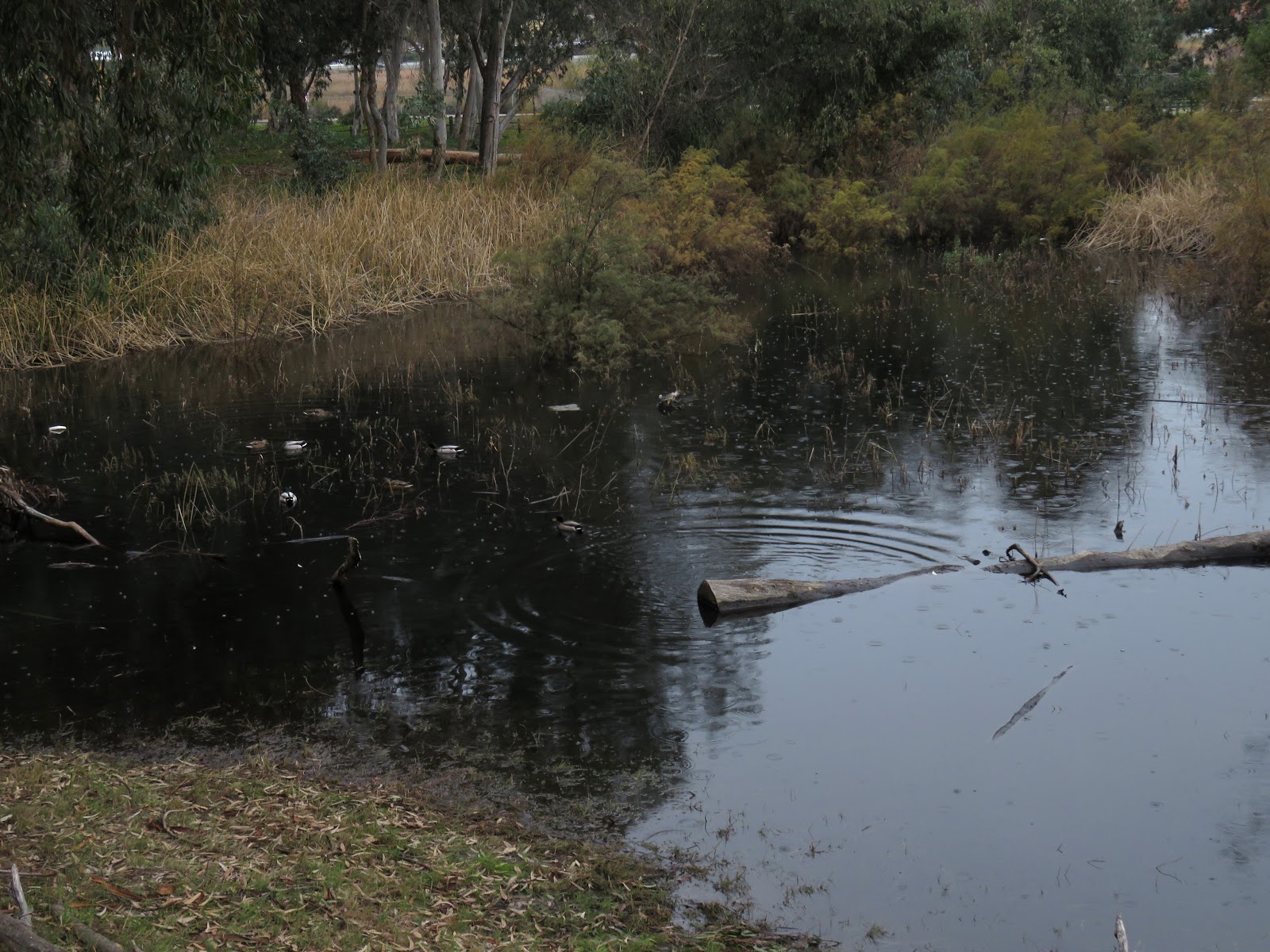
Mallards

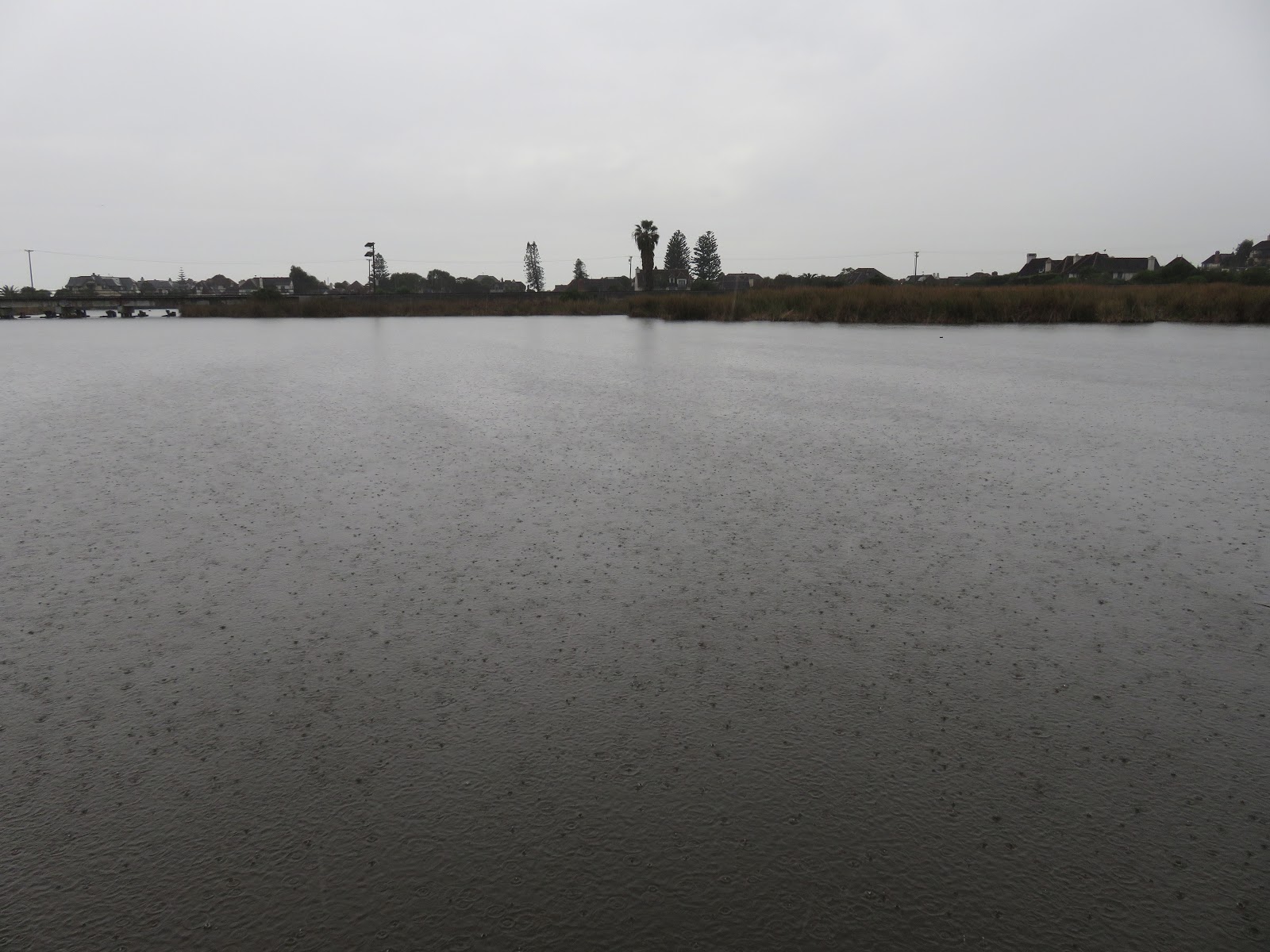
After Hosp Grove Park, we headed to the nature center. It was raining quite a lot, but there were still birds out. Below are four photos around the lagoon (the first two are of the same spot, during and after the rain).
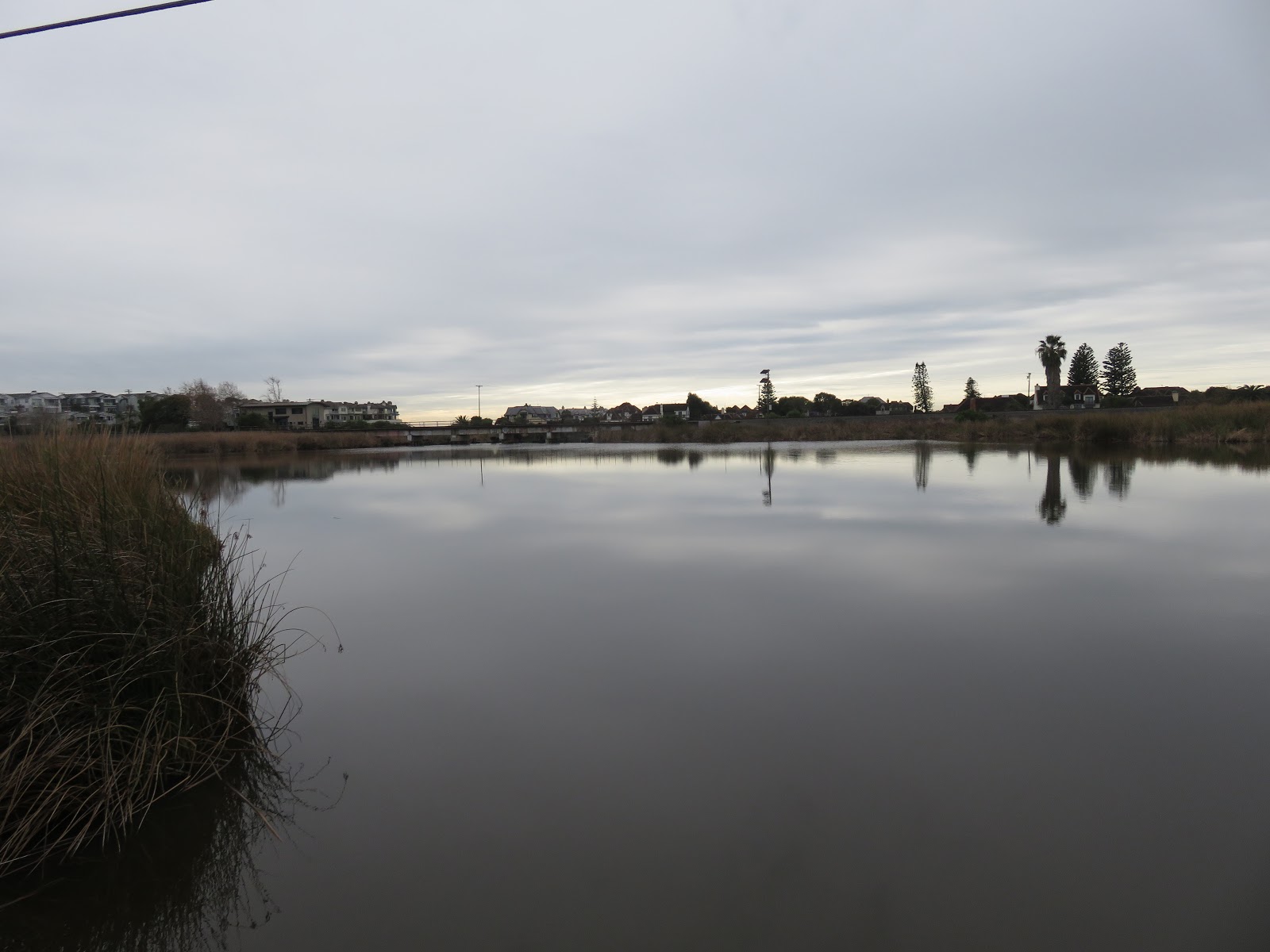
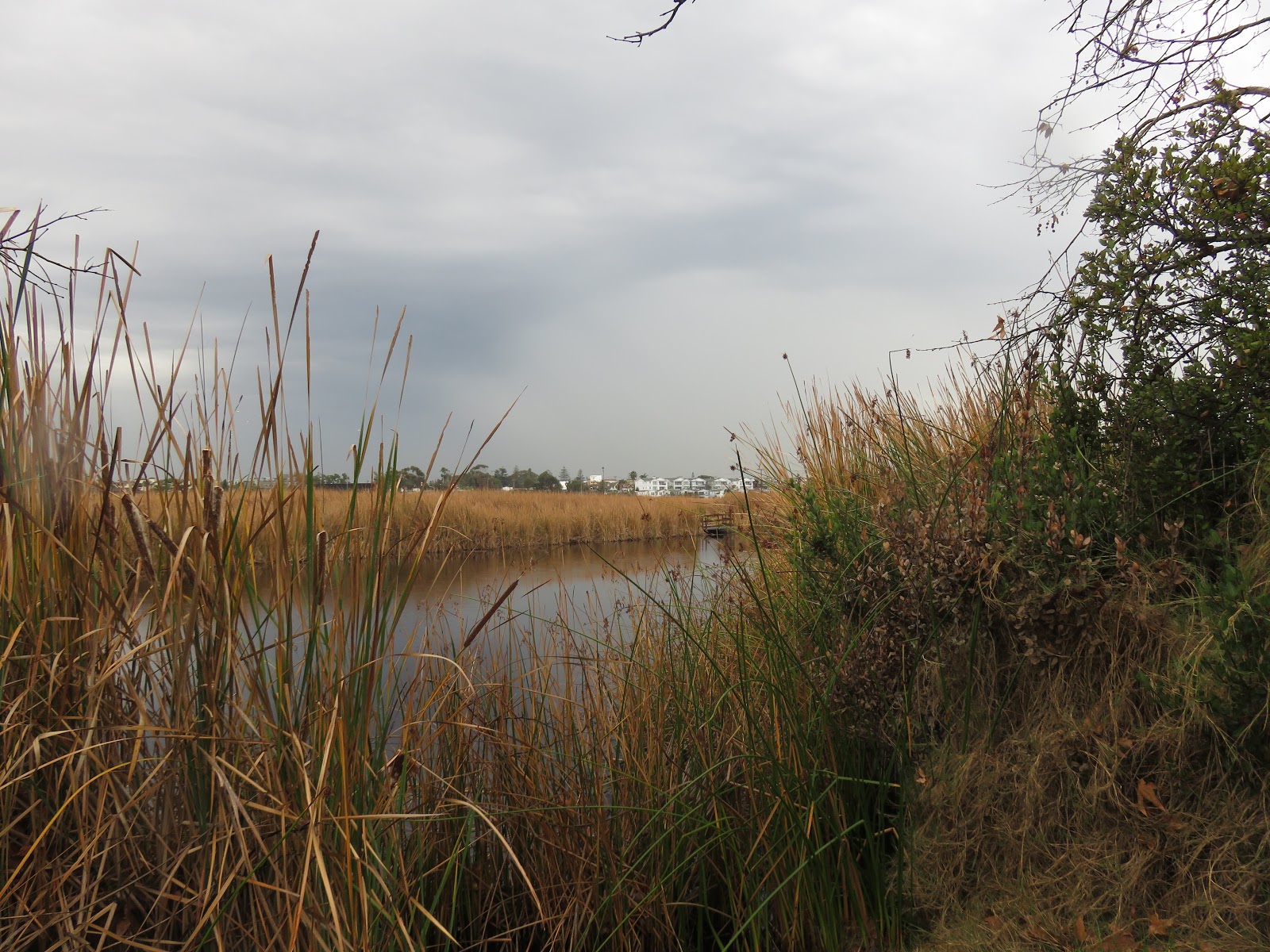
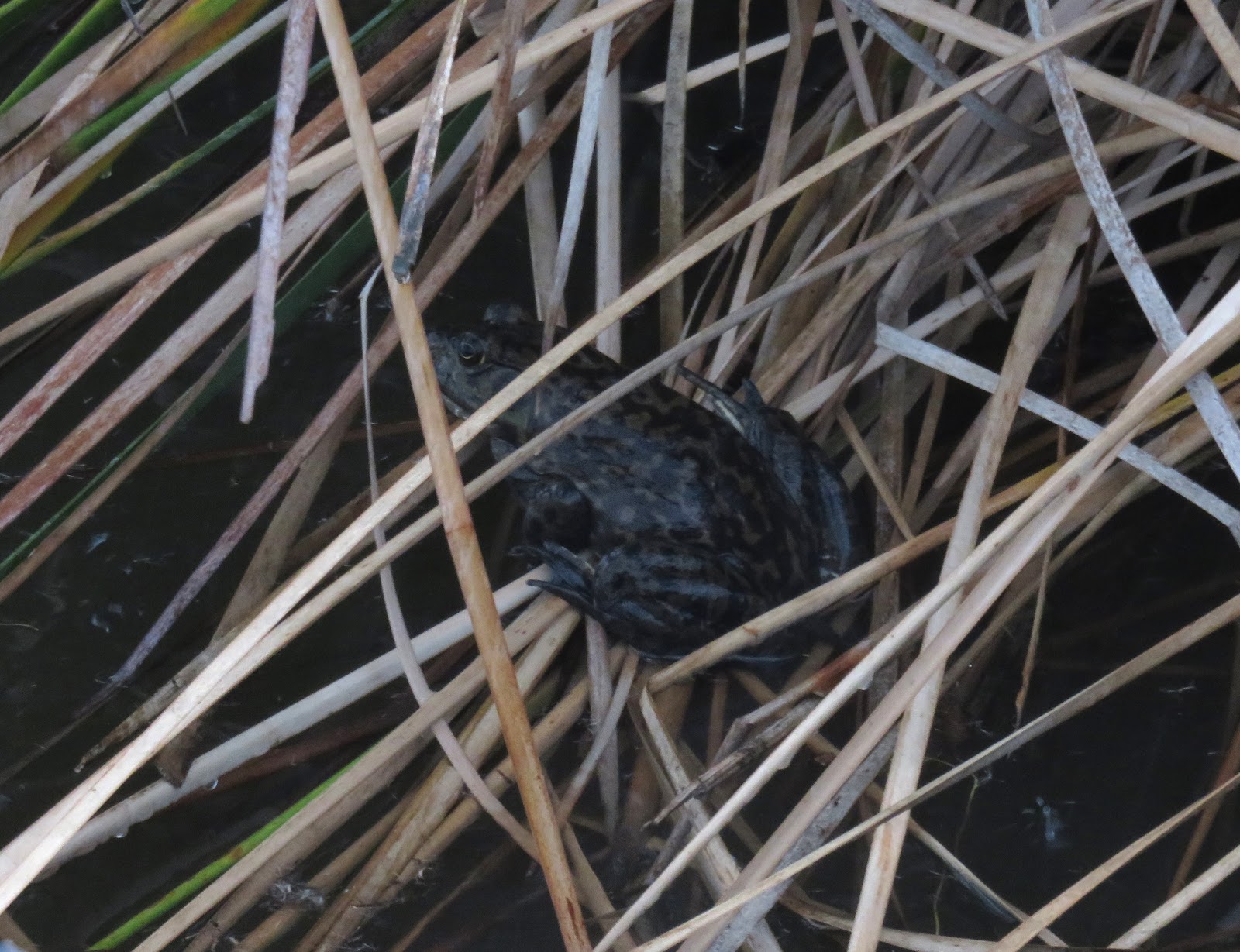
I don't usually see bullfrogs out of the water, since they usually dive into the water when I walk by. However, on Friday there was a large bullfrog sitting on the reeds by the fishing bridge and it didn't seem to notice me (or it wasn't bothered by me), since it continued to sit there. Below is a photo of it.
Bullfrog

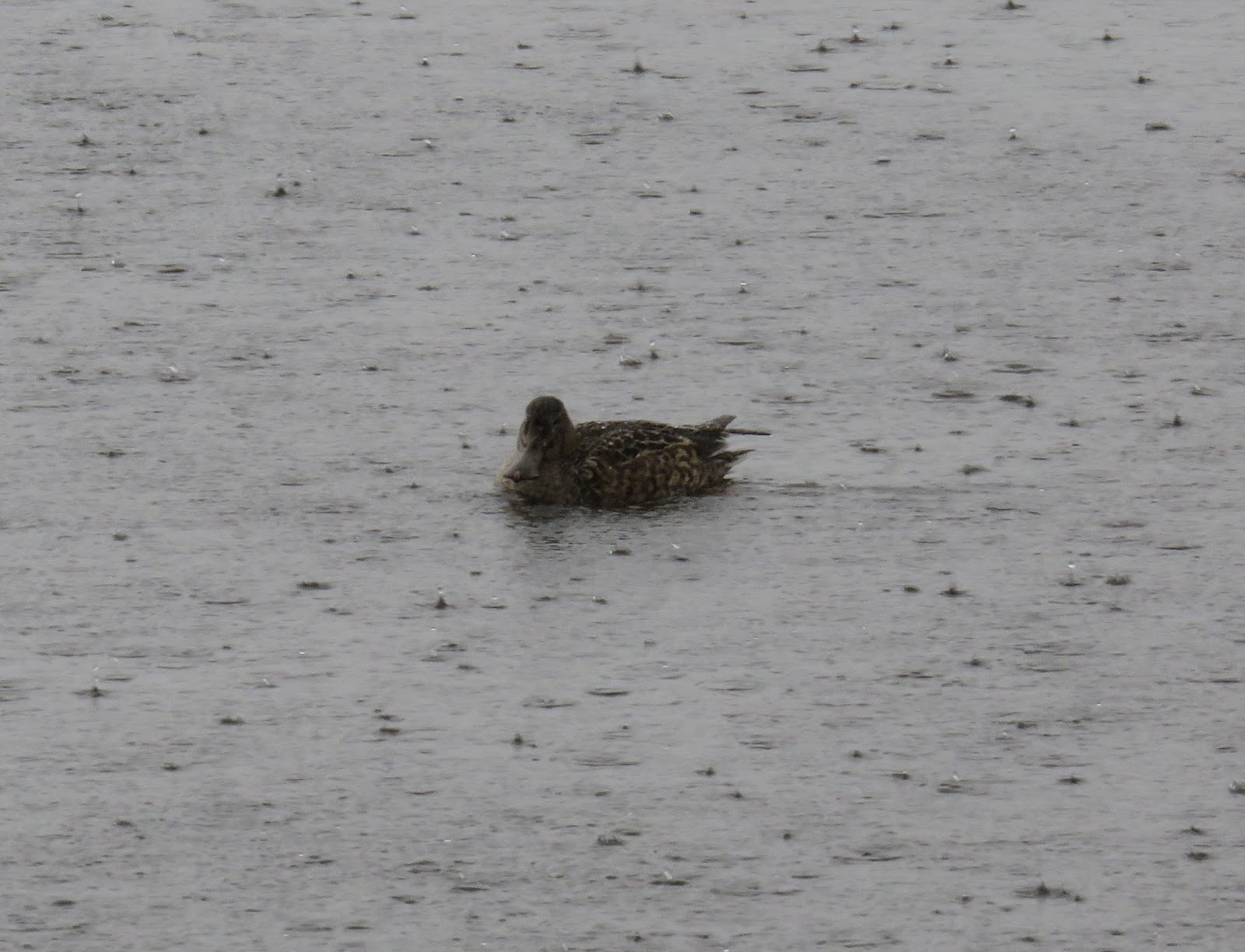
There were quite a few Northern Shovelers around the lagoon. They were more active than they usually seem to be in the early morning, even when it started raining. Below are three photos of some shovelers swimming in the rain. The first is a female and the second is a male. In the third photo, the one smaller bird in the middle going the opposite direction is a Pied-billed Grebe.
Northern Shoveler
Northern Shoveler
Northern Shovelers and Pied-billed Grebe

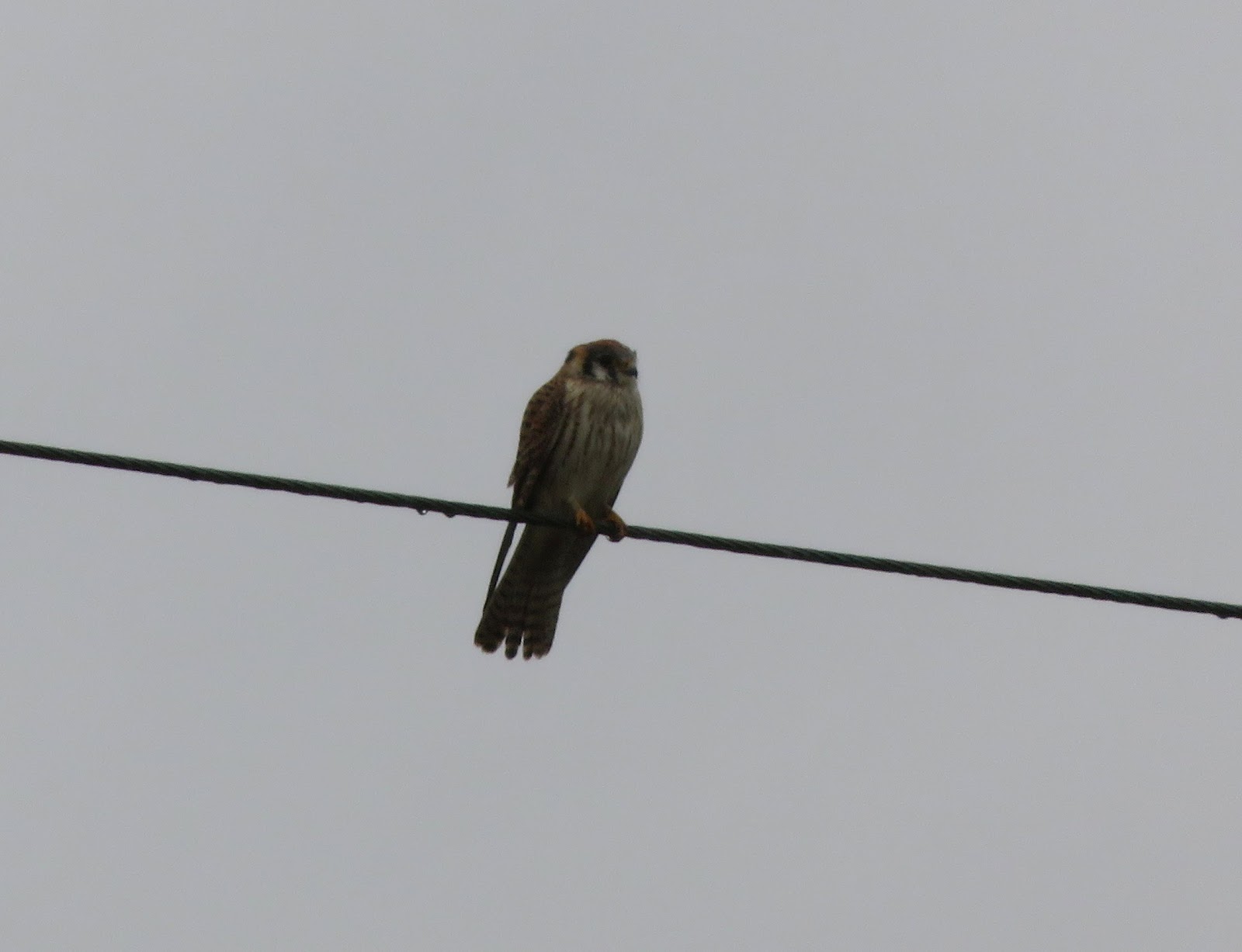
A female kestrel (probably the same one from last month) was sitting on the telephone line across the street from the nature center (same spot as last time). Below is a photo of the kestrel.
American Kestrel

In a sycamore tree along the trail behind the nature center was a Cooper's Hawk. It was all fluffed up because of the cold rain. Below is a photo of it.
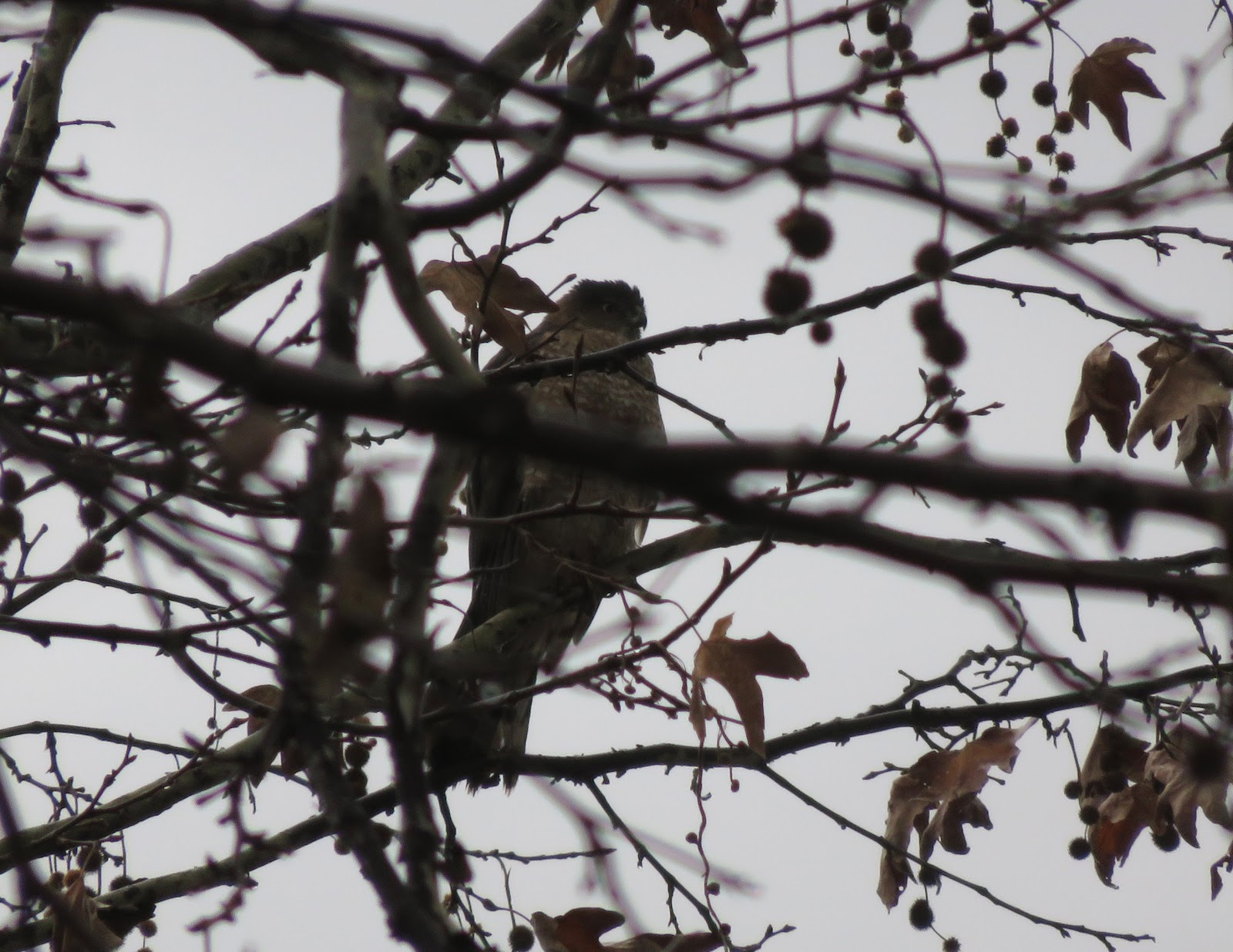
Cooper's Hawk

Also behind the nature center were two Black-and-white Warblers. They were both scooting around the trunks of trees like woodpeckers and making their sharp little cheeping calls. Below are two photos of one of them.
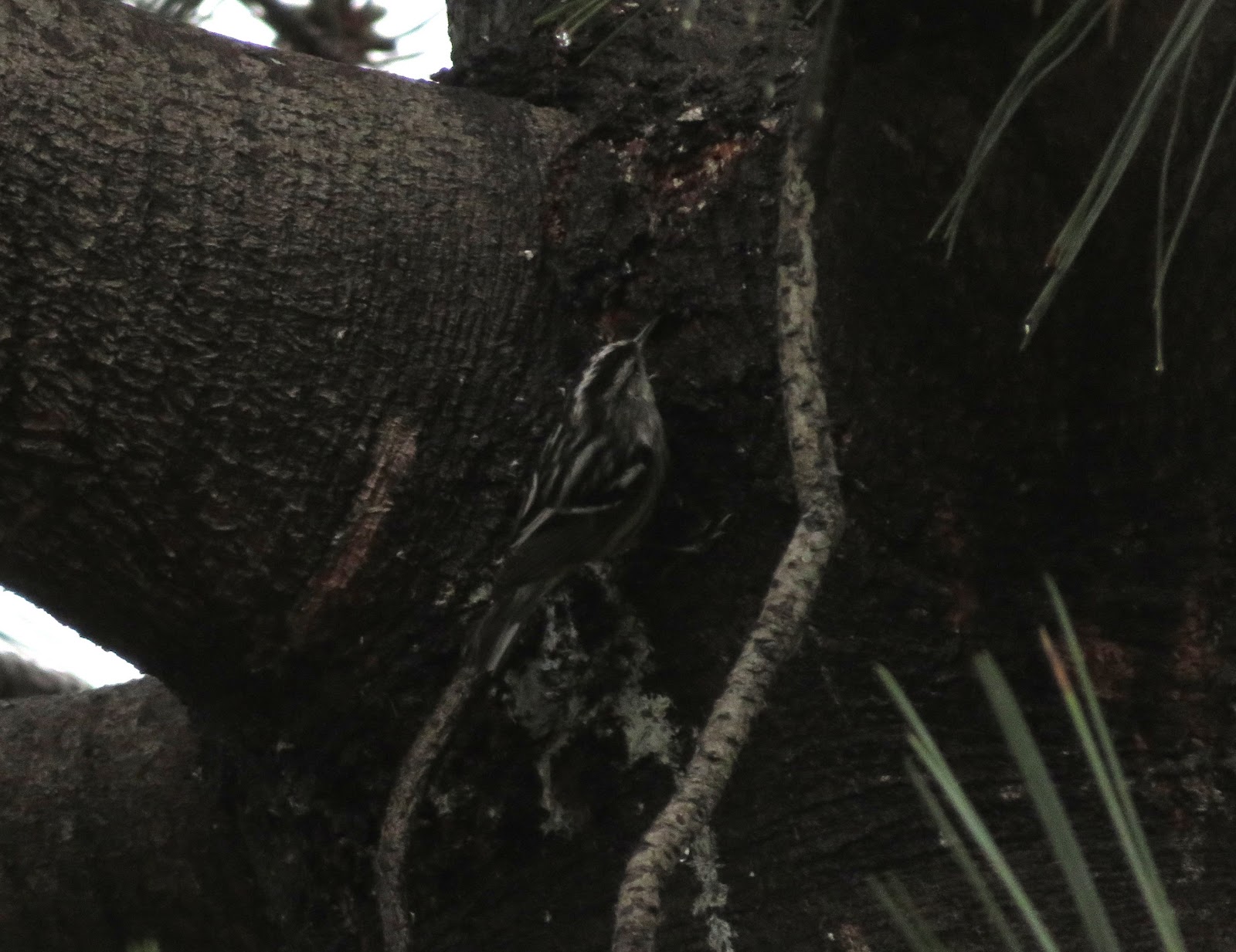
Black-and-white Warbler

We saw a couple of Red-tailed Hawks around the lagoon. Below is one of them in a palm tree. It was just sitting there and screeching over and over again.
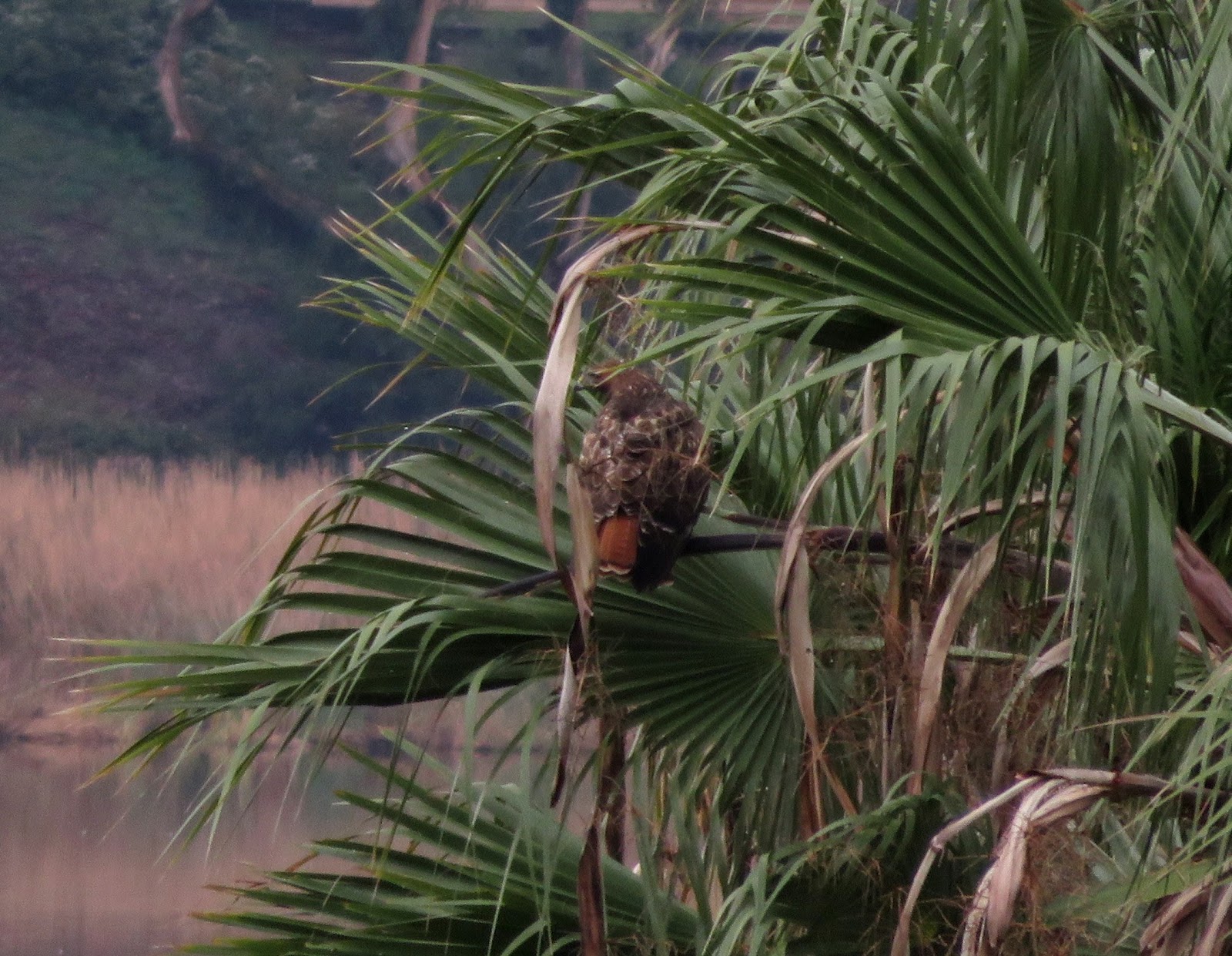
Red-tailed Hawk

There were quite a few hummingbirds around, though a lot of them were up in the trees, so I wasn't able to identify many of them. I did see both Anna's and Allen's, though. Below is a very pretty male Anna's Hummingbird.
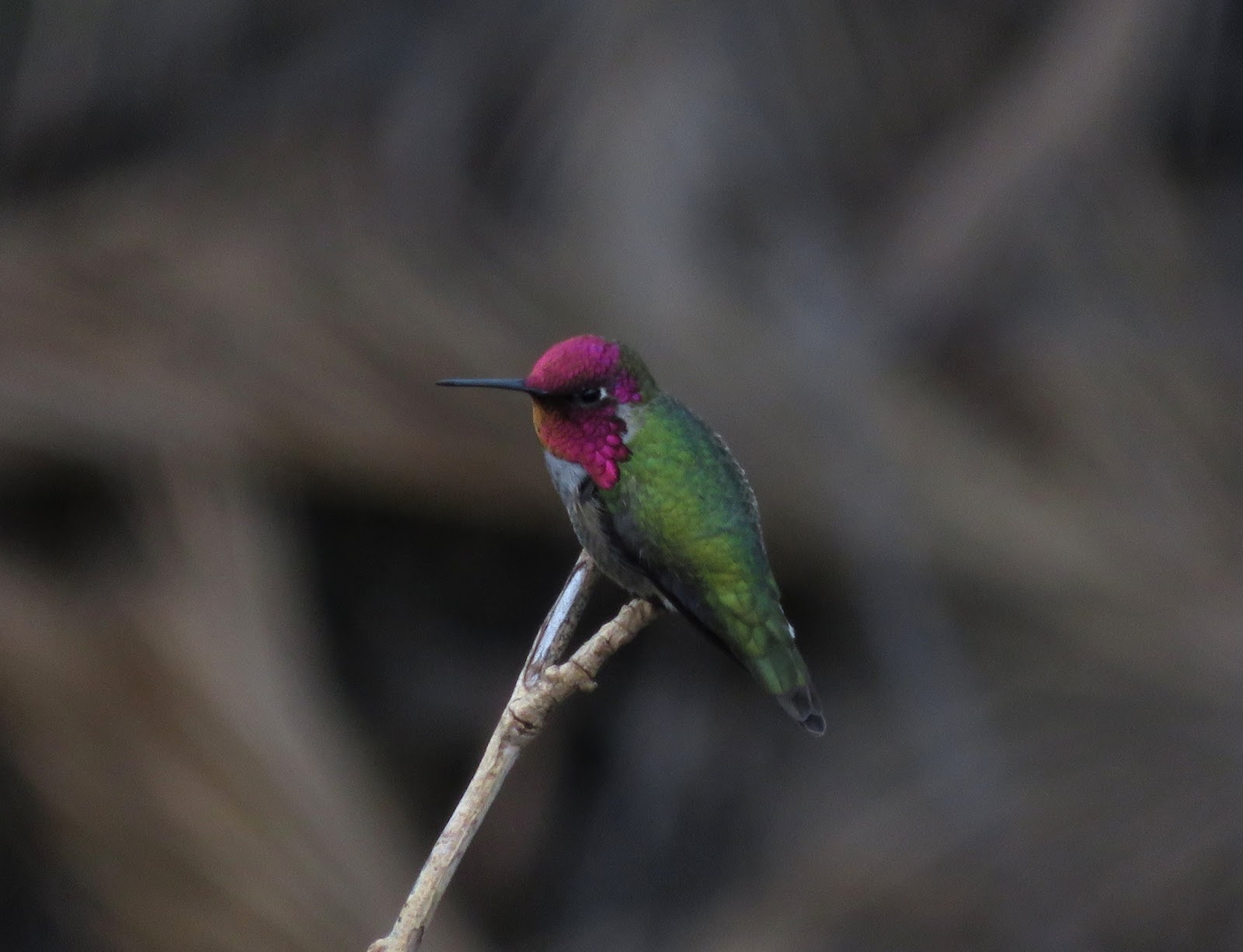
Anna's Hummingbird

There were also many, many Song Sparrows hopping around and singing in the bushes. Below is one of them.
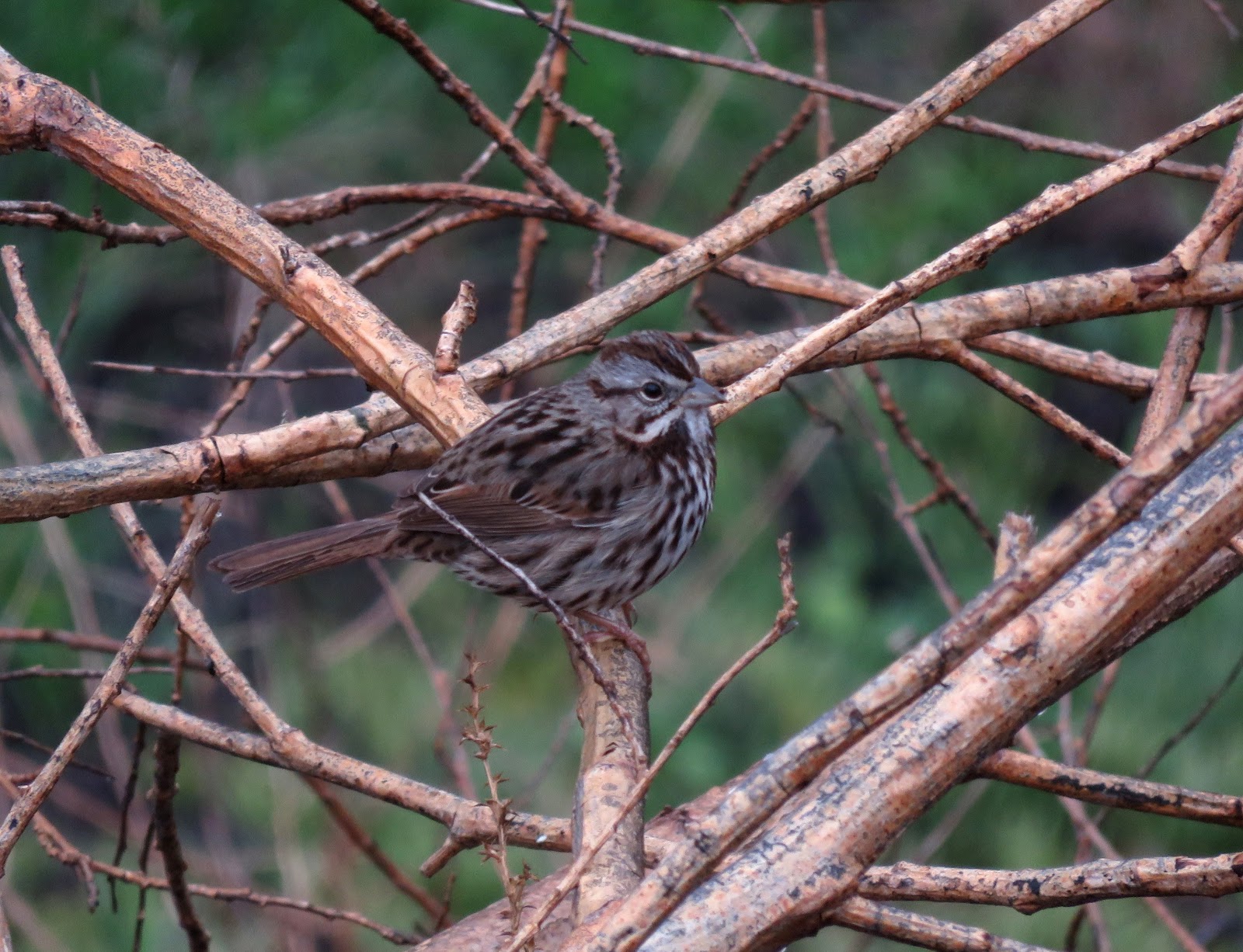
Song Sparrow

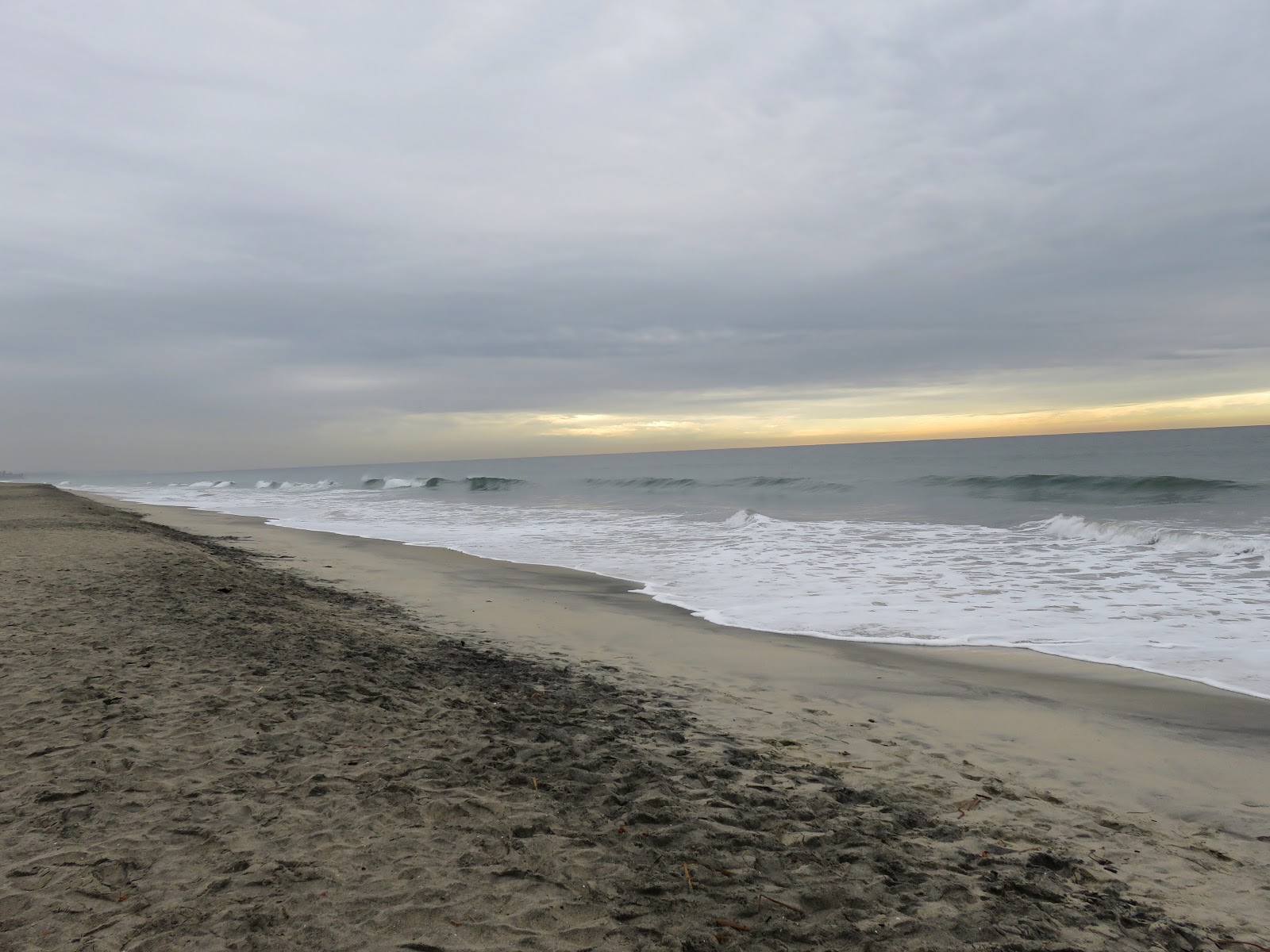
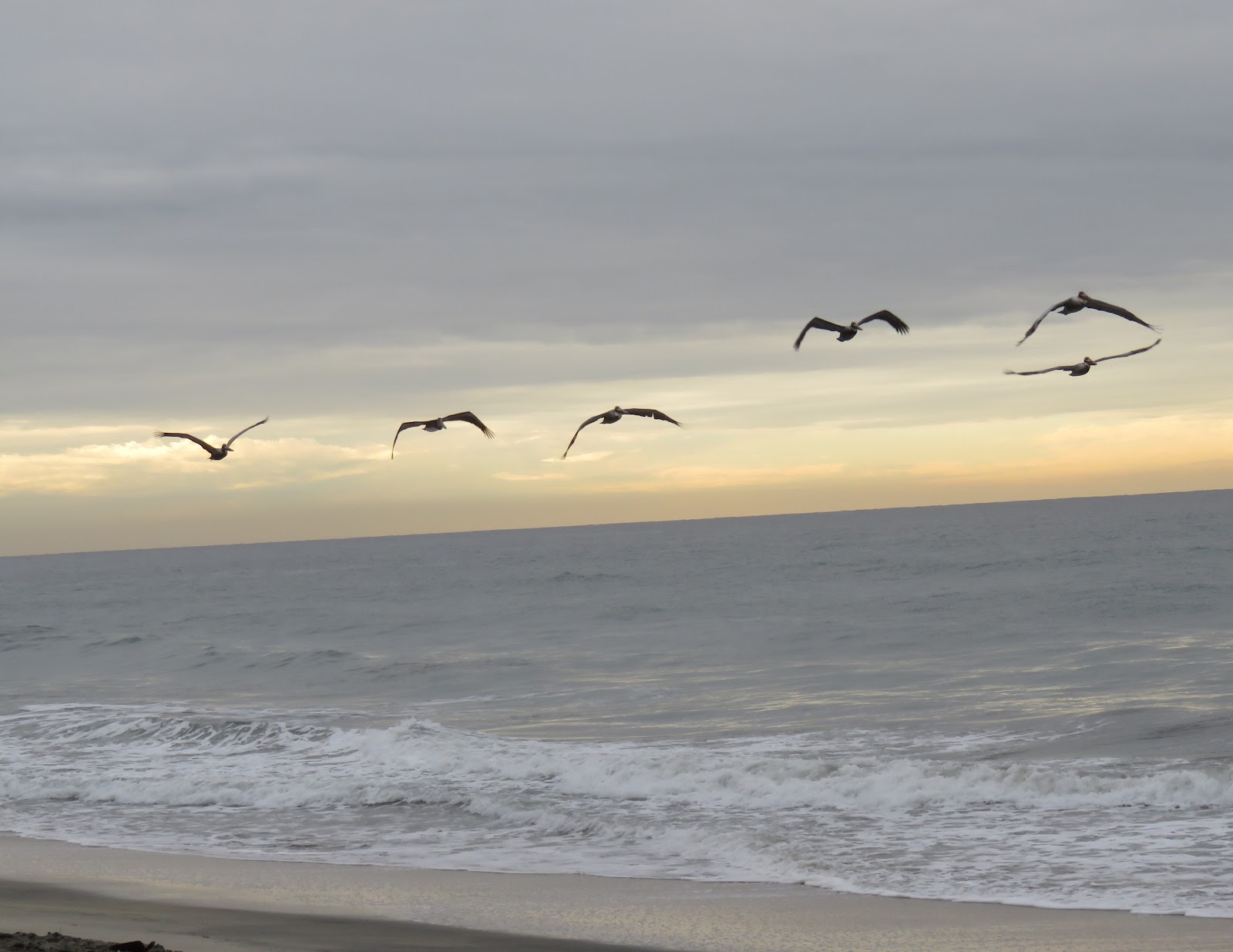
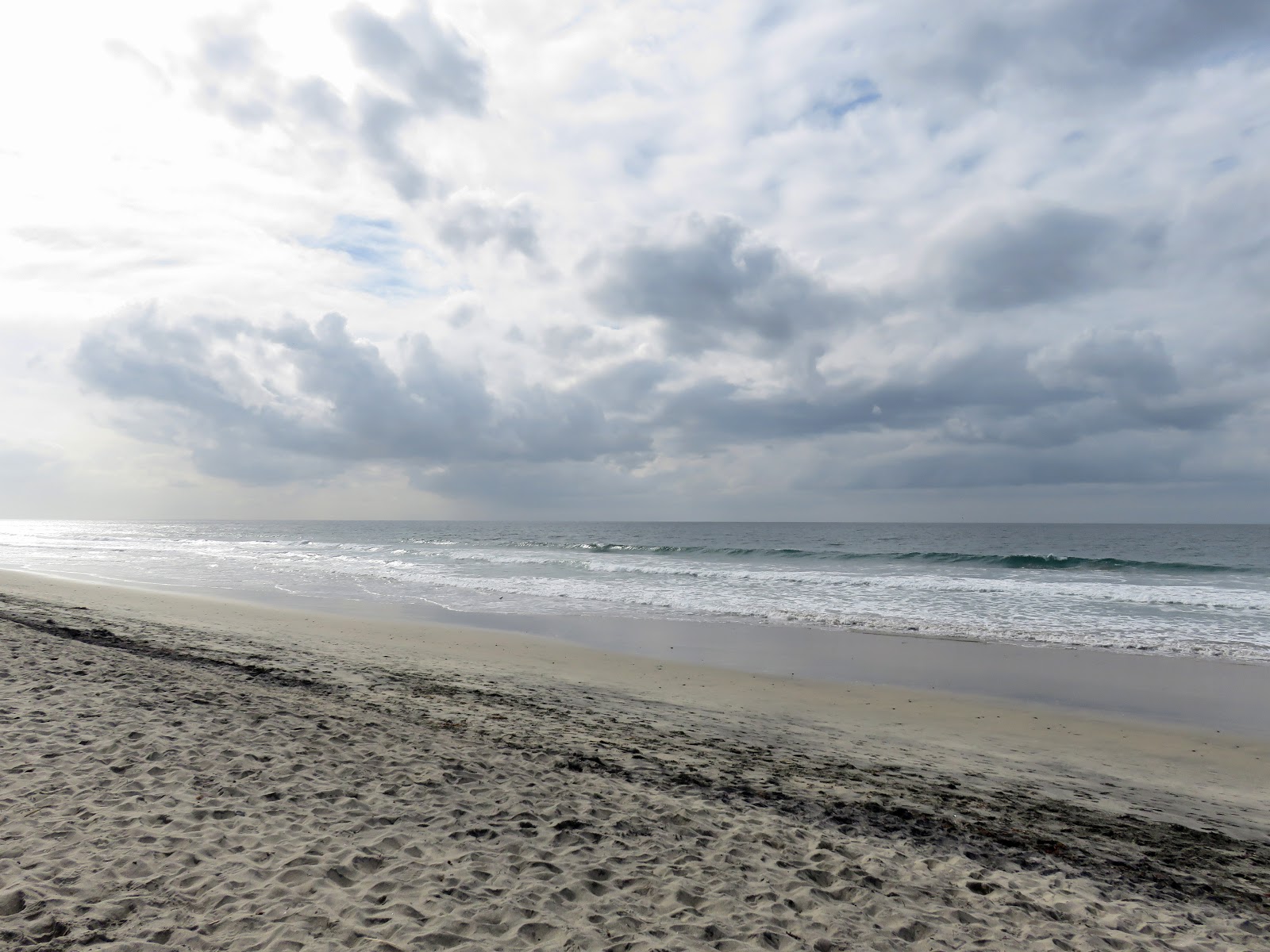
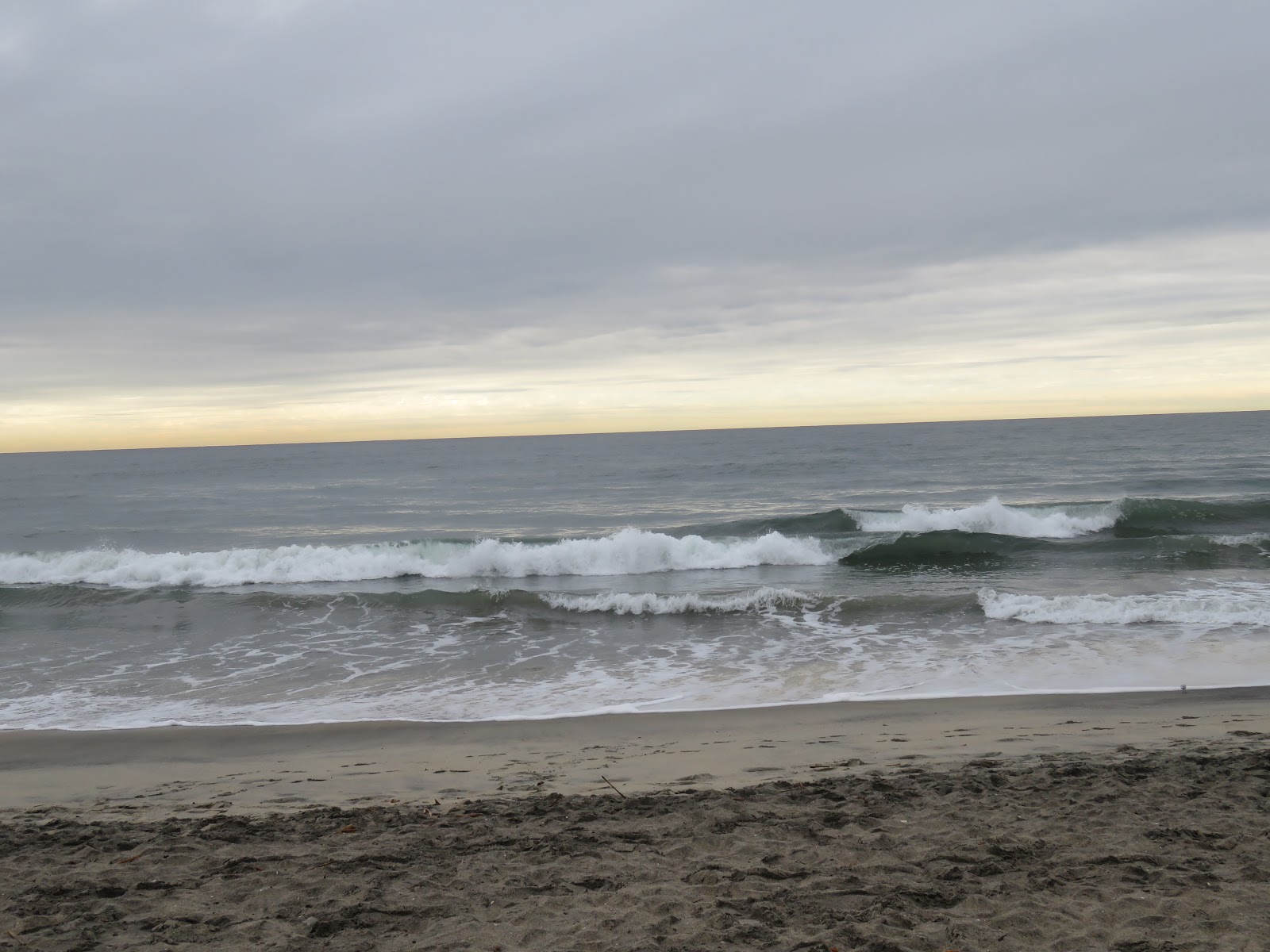
Our last stop was the beach. The water was actually calmer than I'd expected, and we hoped we'd see some loons, but there weren't any. There were a lot of pelicans, gulls, and cormorants, though (and one dolphin). Below are three photos. The first two are of the ocean. The third is of a flock of Brown Pelicans flying over the ocean.
Brown Pelicans

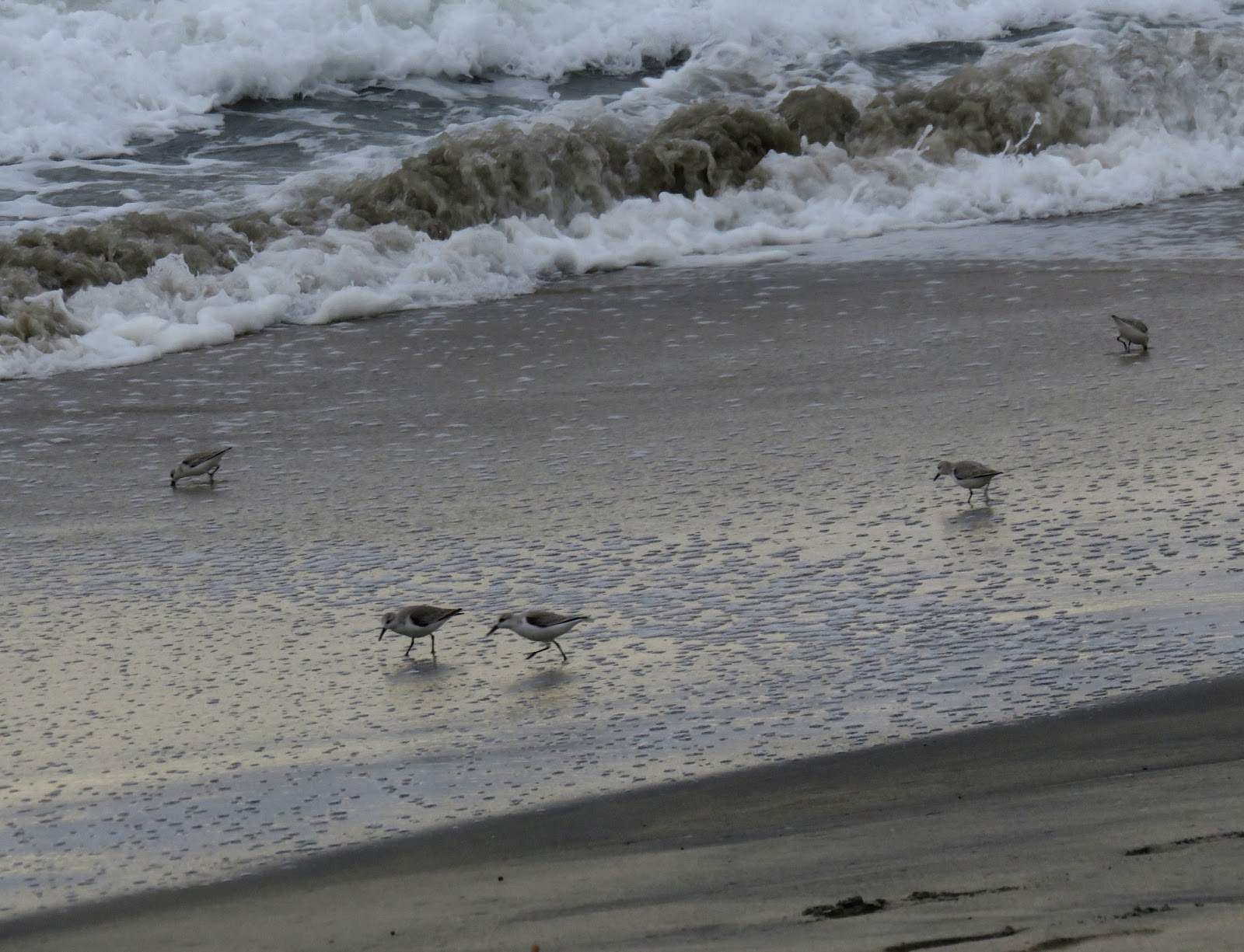
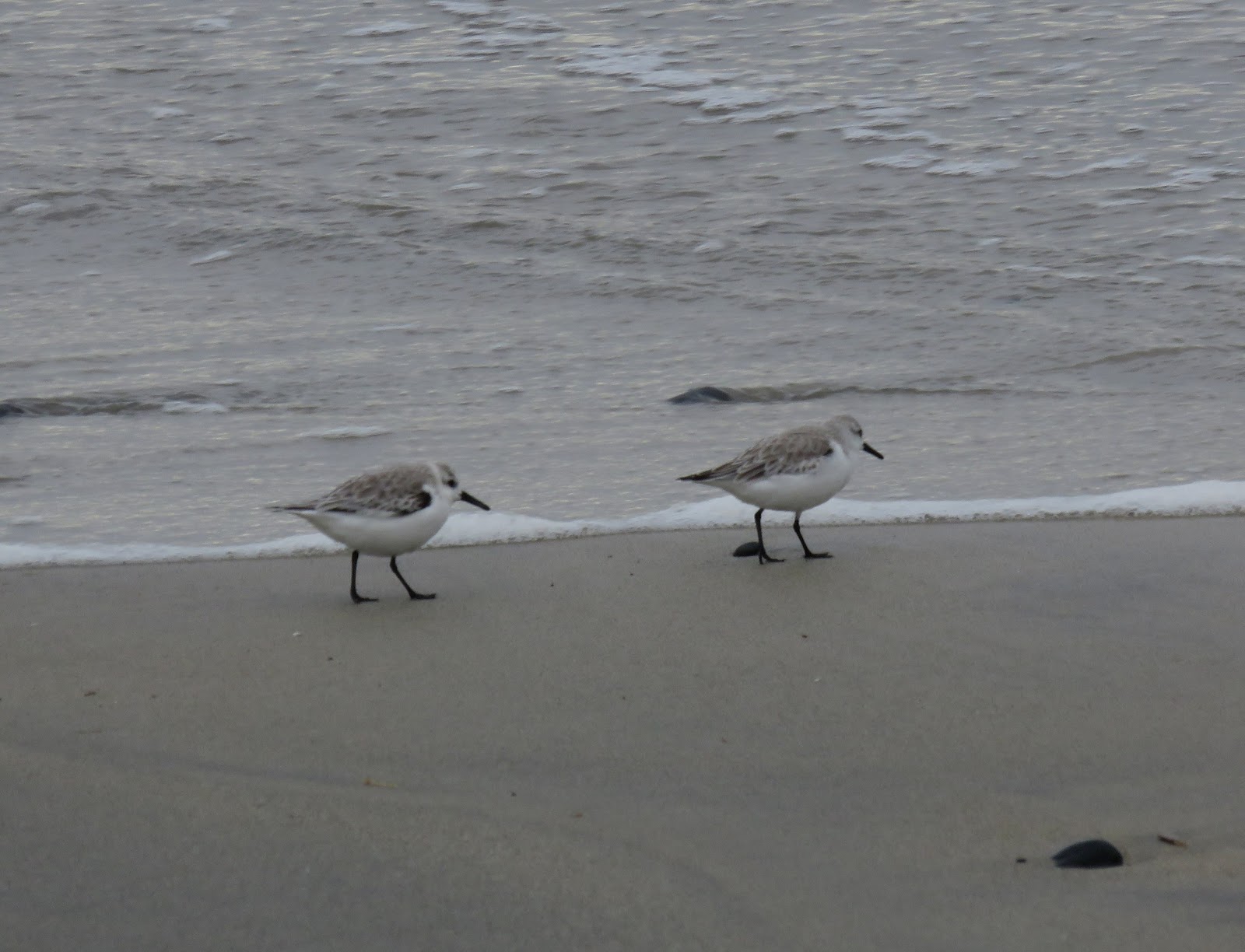
The only sandpipers we saw at the beach were Sanderlings. There were quite a few of them, all running back and forth along the beach as the water came in and out. Below are three photos of the Sanderlings.
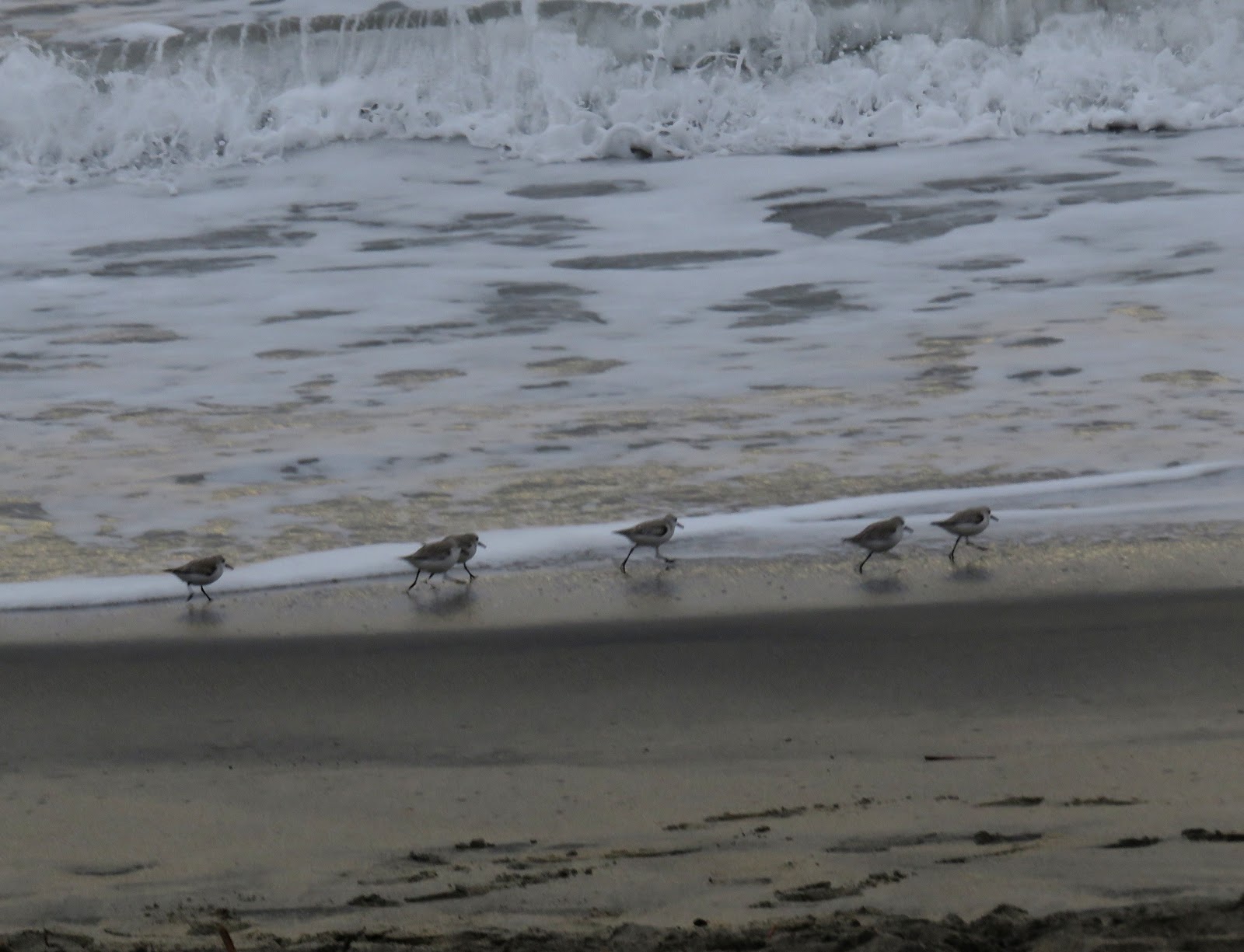
Sanderlings
Sanderlings
Sanderlings

Next to the weir (which was overflowing due to the rain) was a pretty little Snowy Egret. Below is a photo of it, with the weir behind it.
Snowy Egret

Just as my dad and I were about to leave the beach, we saw two unusual-looking birds flying over the ocean. We watched them and realized they were a pair of Peregrine Falcons. My dad had seen Peregrines at the lagoon when I was up at school, but before that, neither of us had ever seen them at the lagoon before. I guess the pair has moved in, though I don't know where they'd be nesting (there aren't any cliffs or anything nearby, as far as I know). It was very exciting to see them. Below is a photo of one of them standing on a telephone pole. It was making chirping noises.
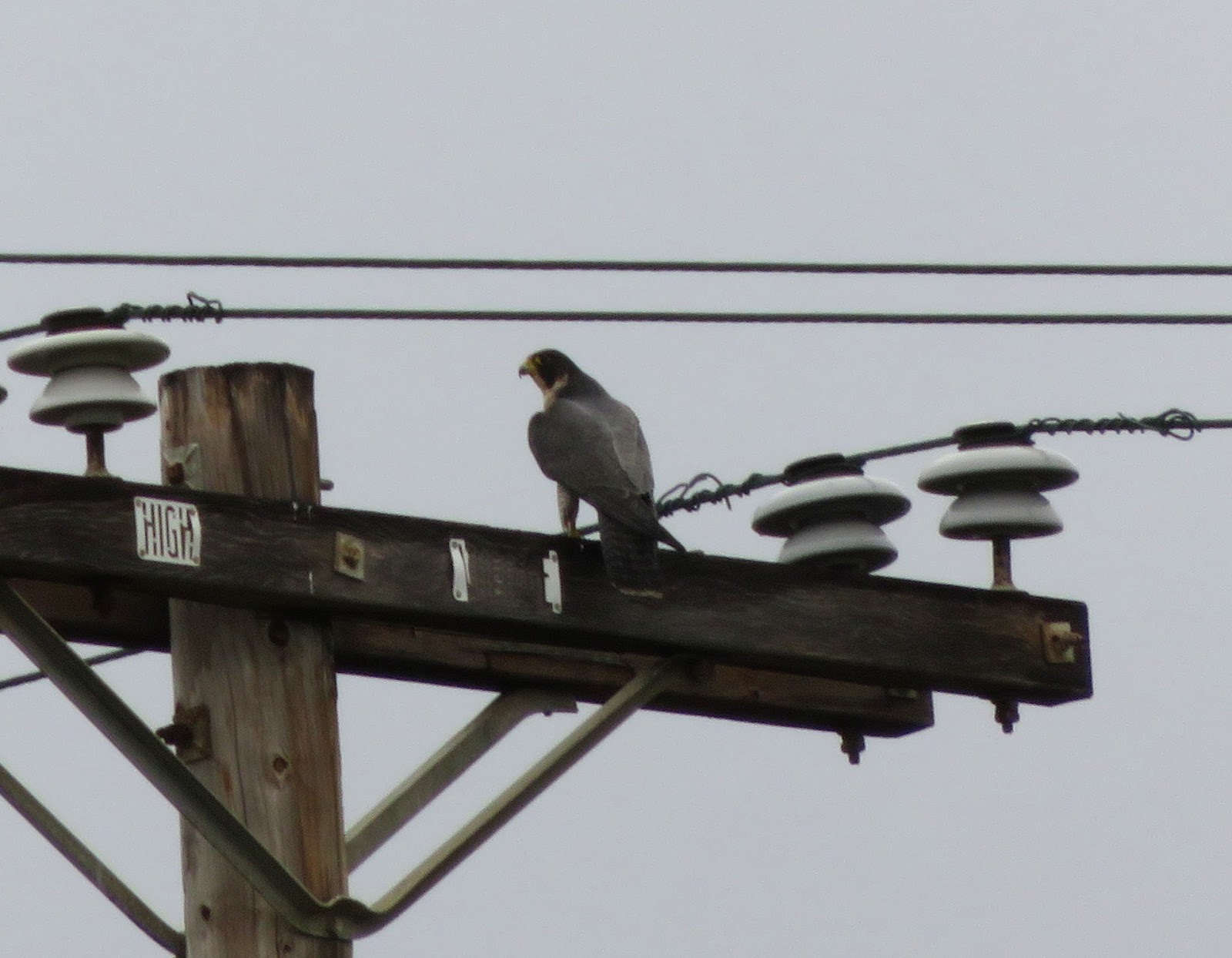
Peregrine Falcon

Saturday, December 3, 2016

Buena Vista Lagoon November

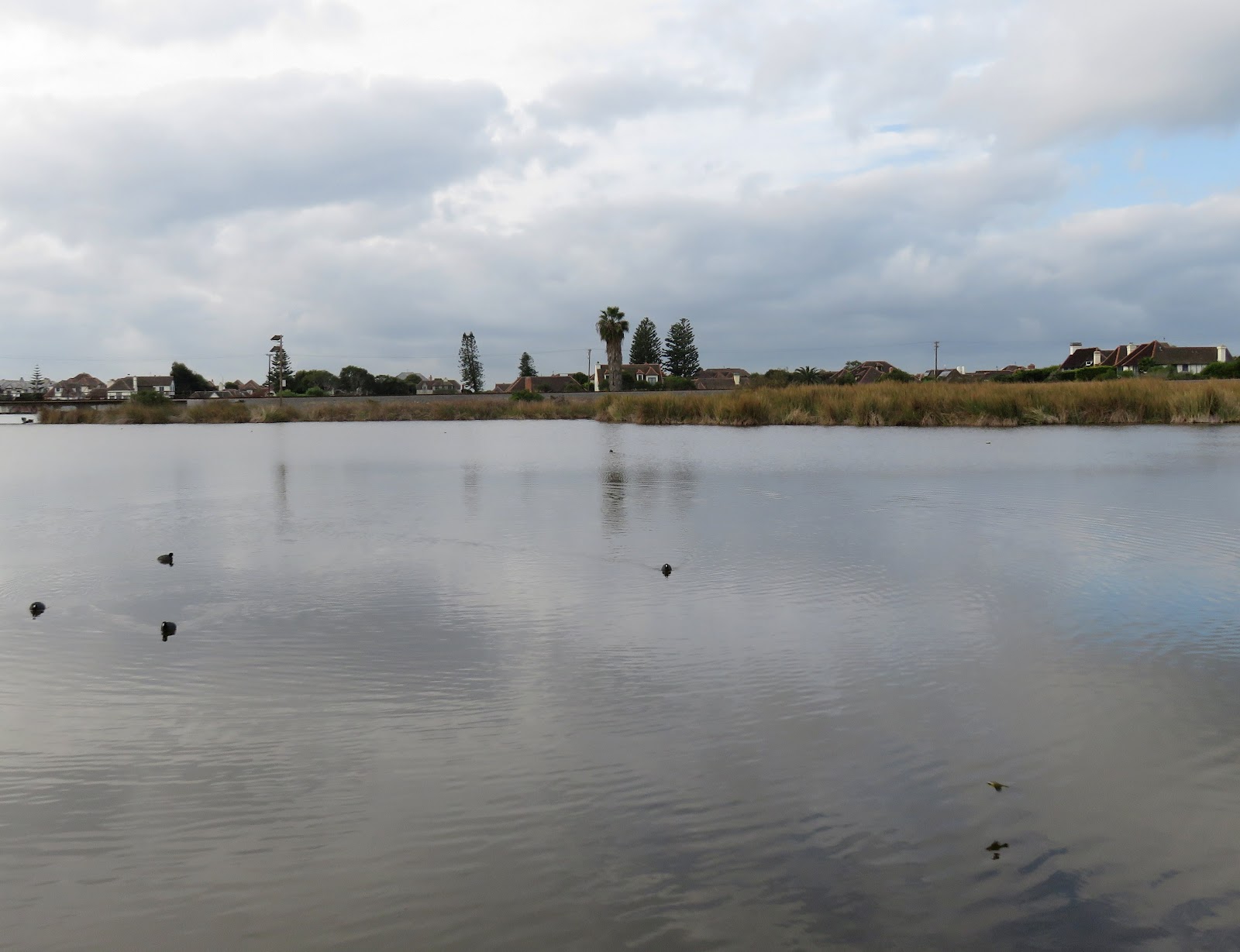
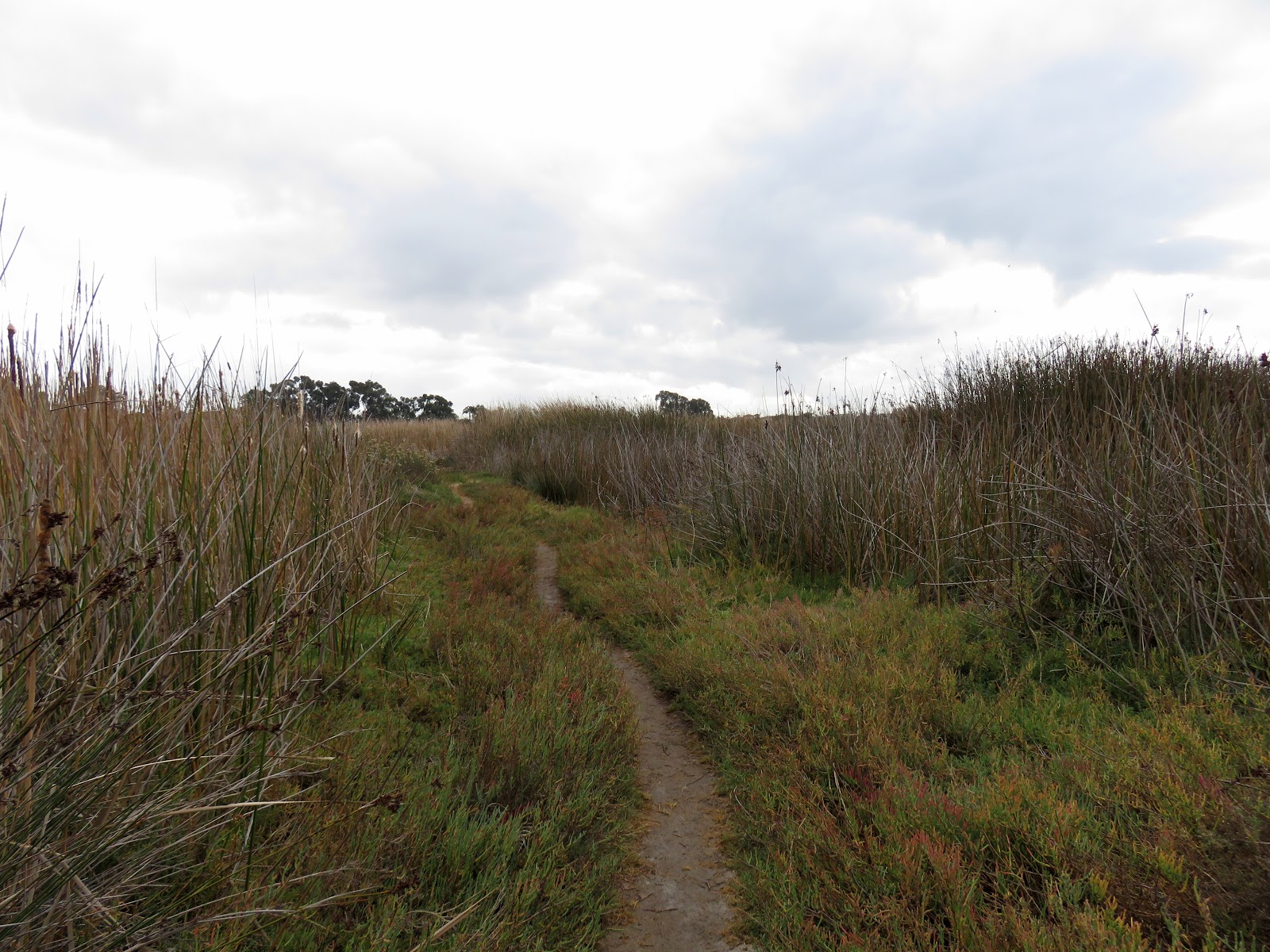
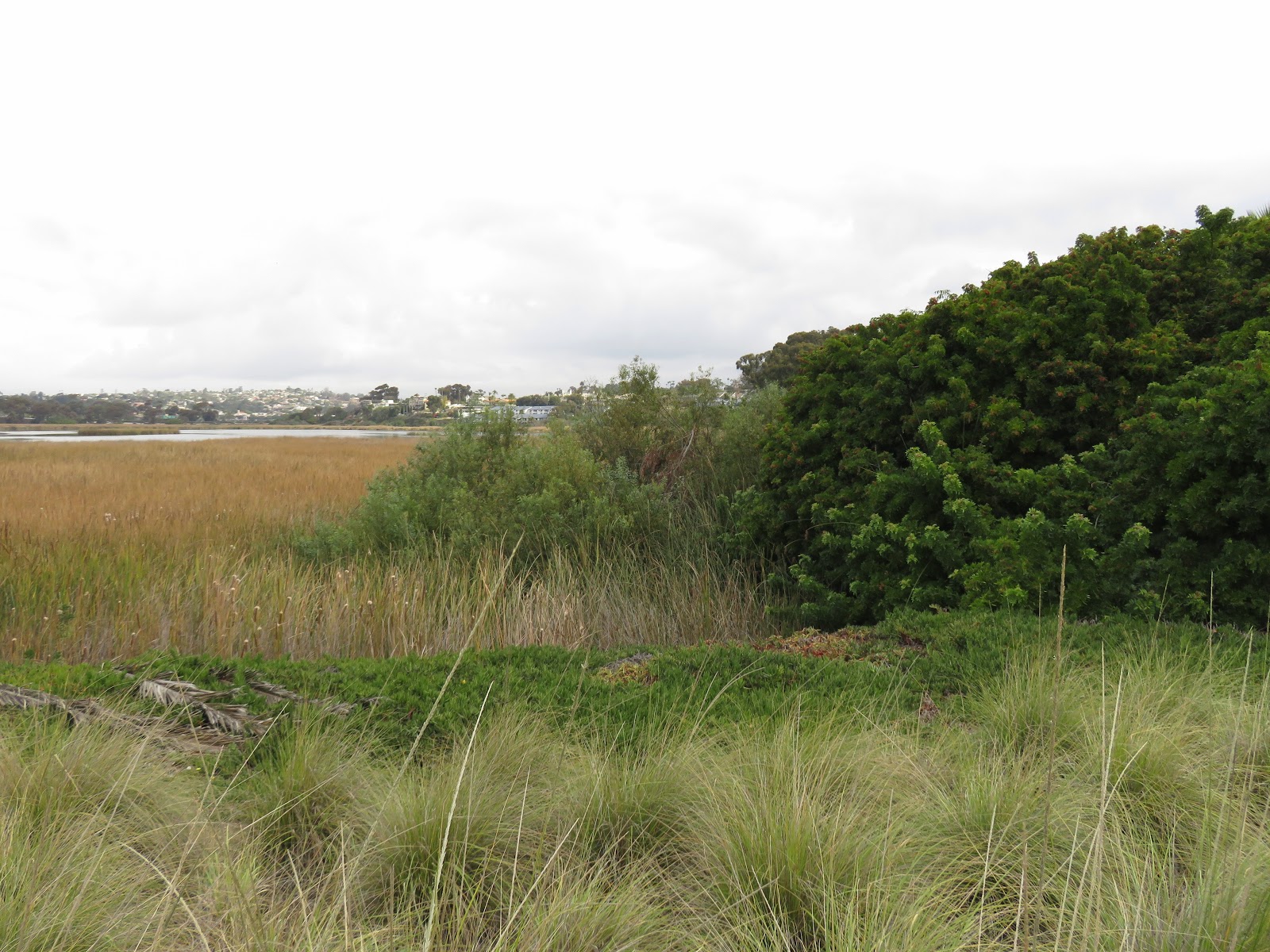
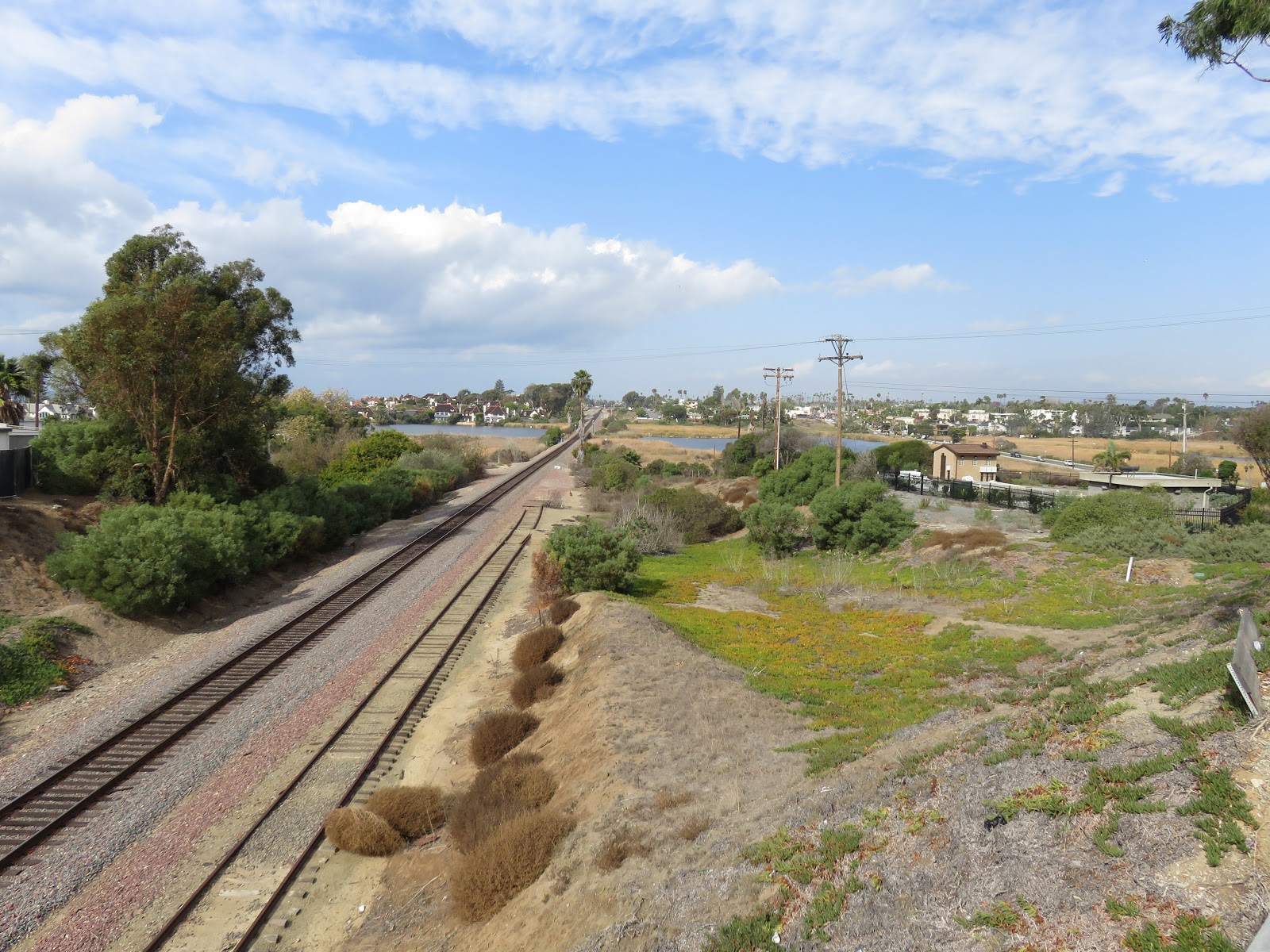
Last week I went home for Thanksgiving break, and went to the monthly brid count at the Buena Vista Lagoon last Saturday. Instead of doing our usual driving route around the lagoon, we took a different route, by foot. We walked up from the Nature Center to Maxton Brown park, and then walked to the beach and back. It was overcast and a bit chilly, and it rained later in the day (not while we were birdwatching). Unfortunately, since it was overcast, it was dark, and so a lot of my photos are also very dark. Below are seven views around the lagoon. The four larger dark shapes on the water in the first photo are coots. The small one in the bottom right corner is a Common Yellowthroat flying by.


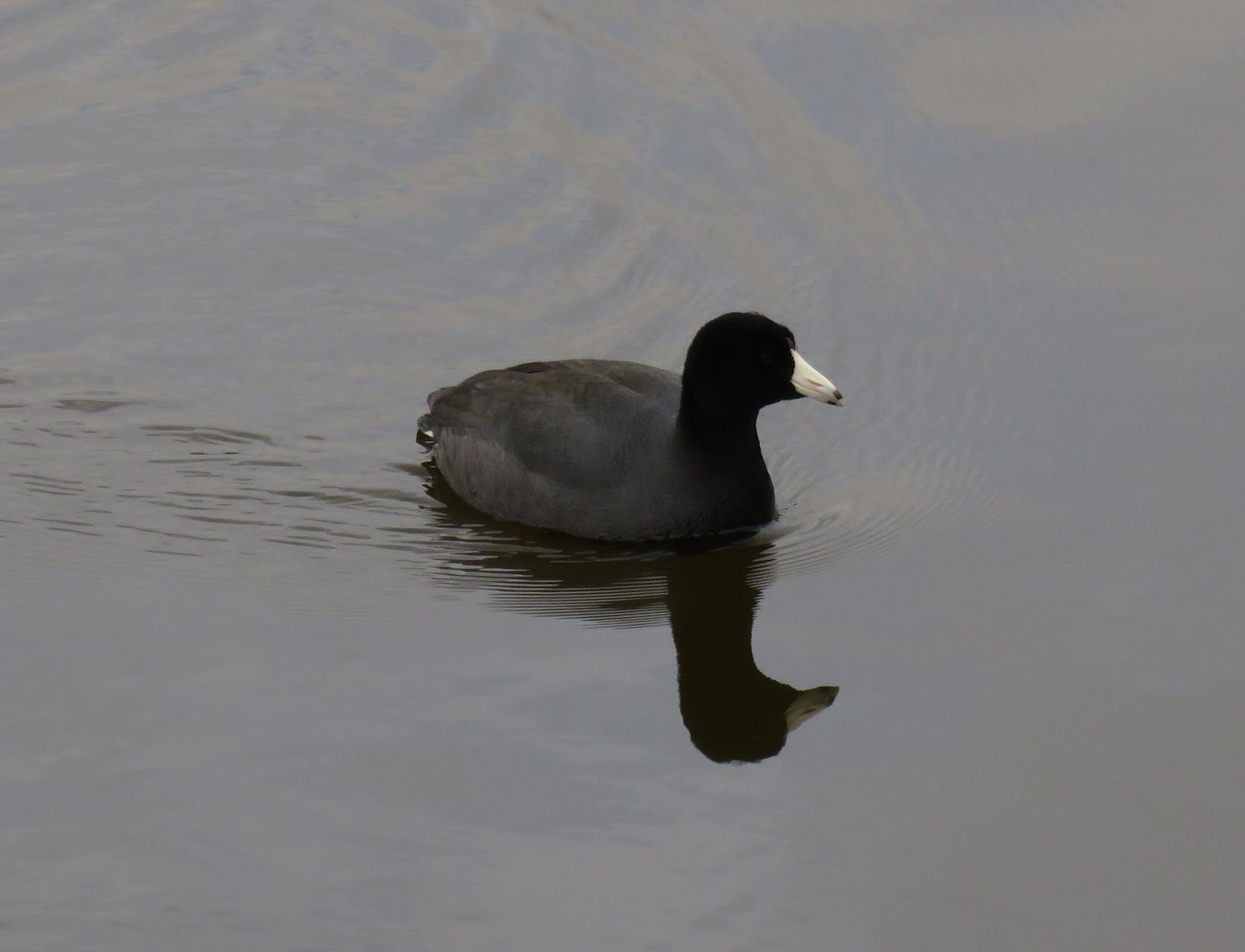
Early in the morning, there was a group of American Coots swimming around near the fishing bridge. They were chasing each other around. Below is one of them.
American Coot

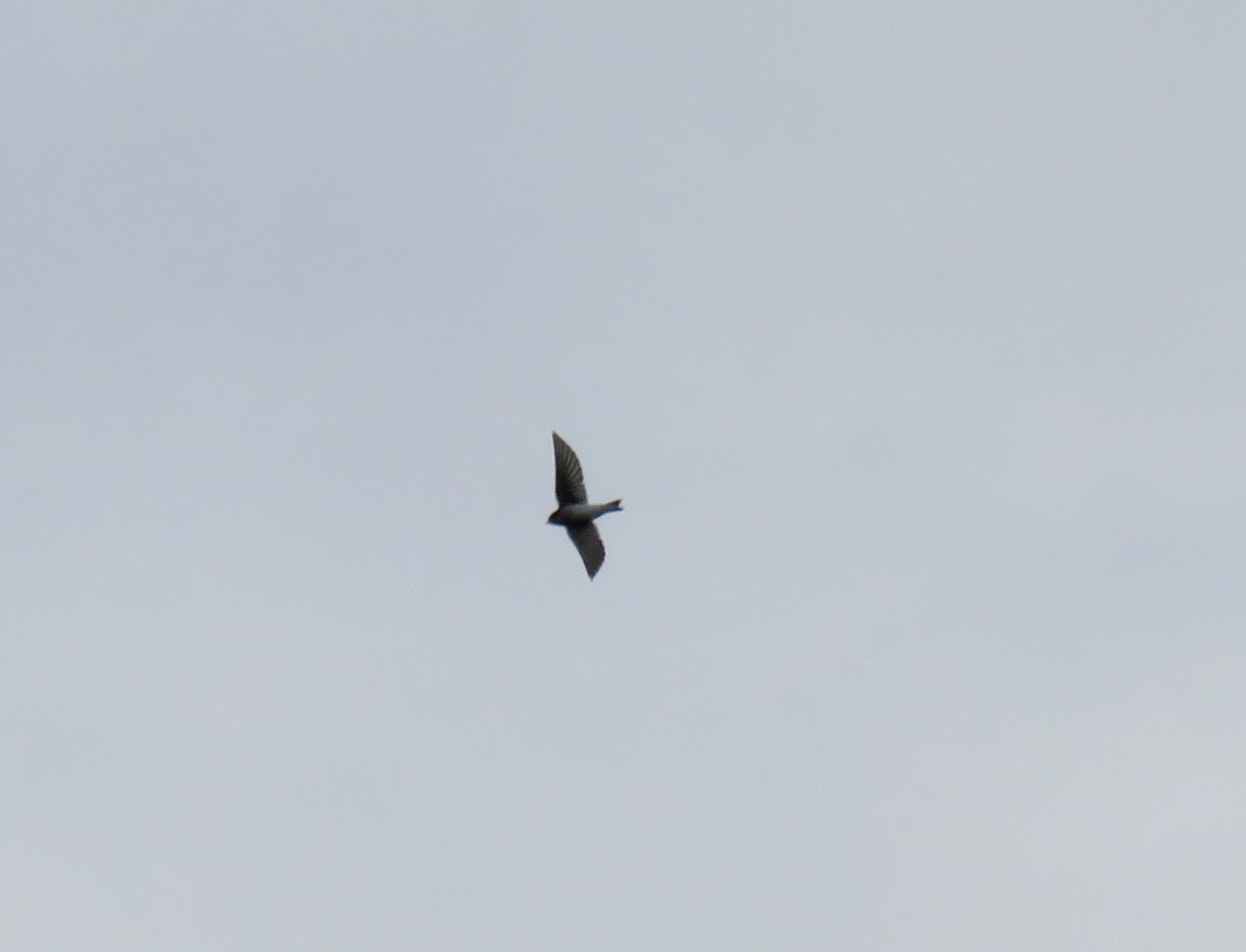
Although most of the swallows have left for South America, I saw a single Northern Rough-winged Swallow flying around above the lagoon. Below is a photo of it.
Northern Rough-winged Swallow

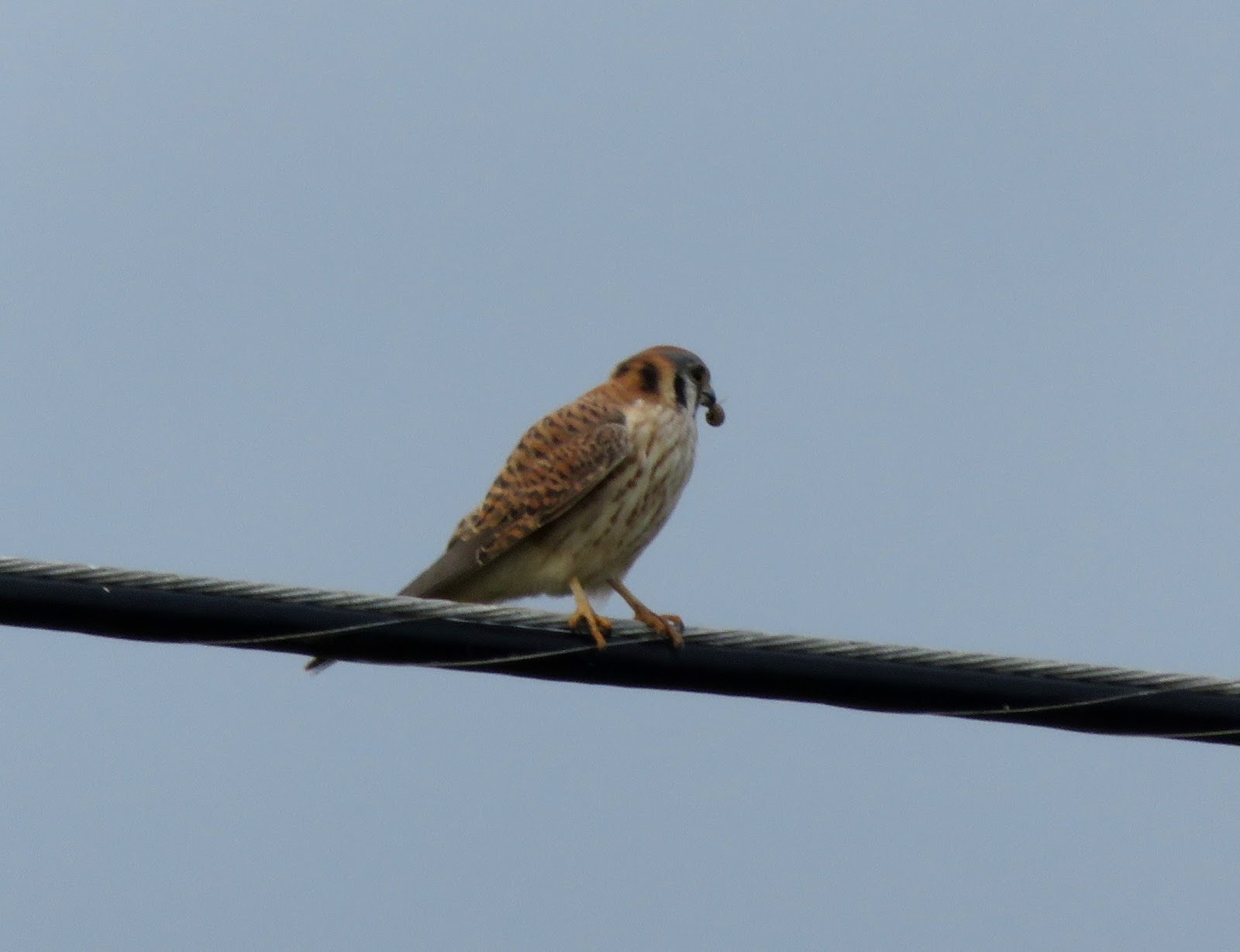
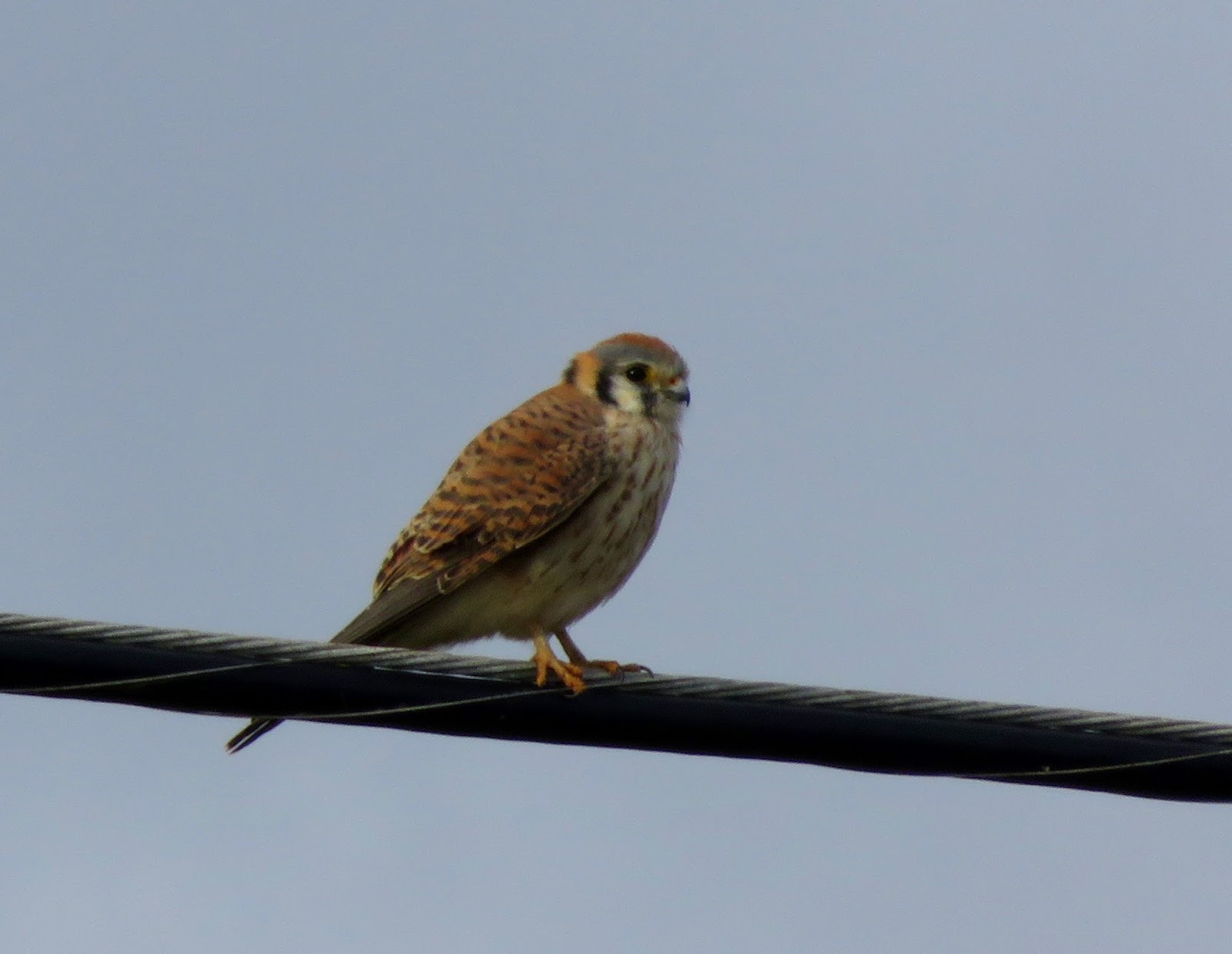
Also early in the morning, there was a female American Kestrel sitting on the telephone wire across from the Nature Center. It was watching the ground, looking for a meal, and then swooped down to catch a snail. It brought the snail back up to the wire and ate it, then flew away. Below are three photos of the kestrel: one before it caught the snail, one with the snail in its beak, and one after it ate the snail.
American Kestrel
American Kestrel
American Kestrel

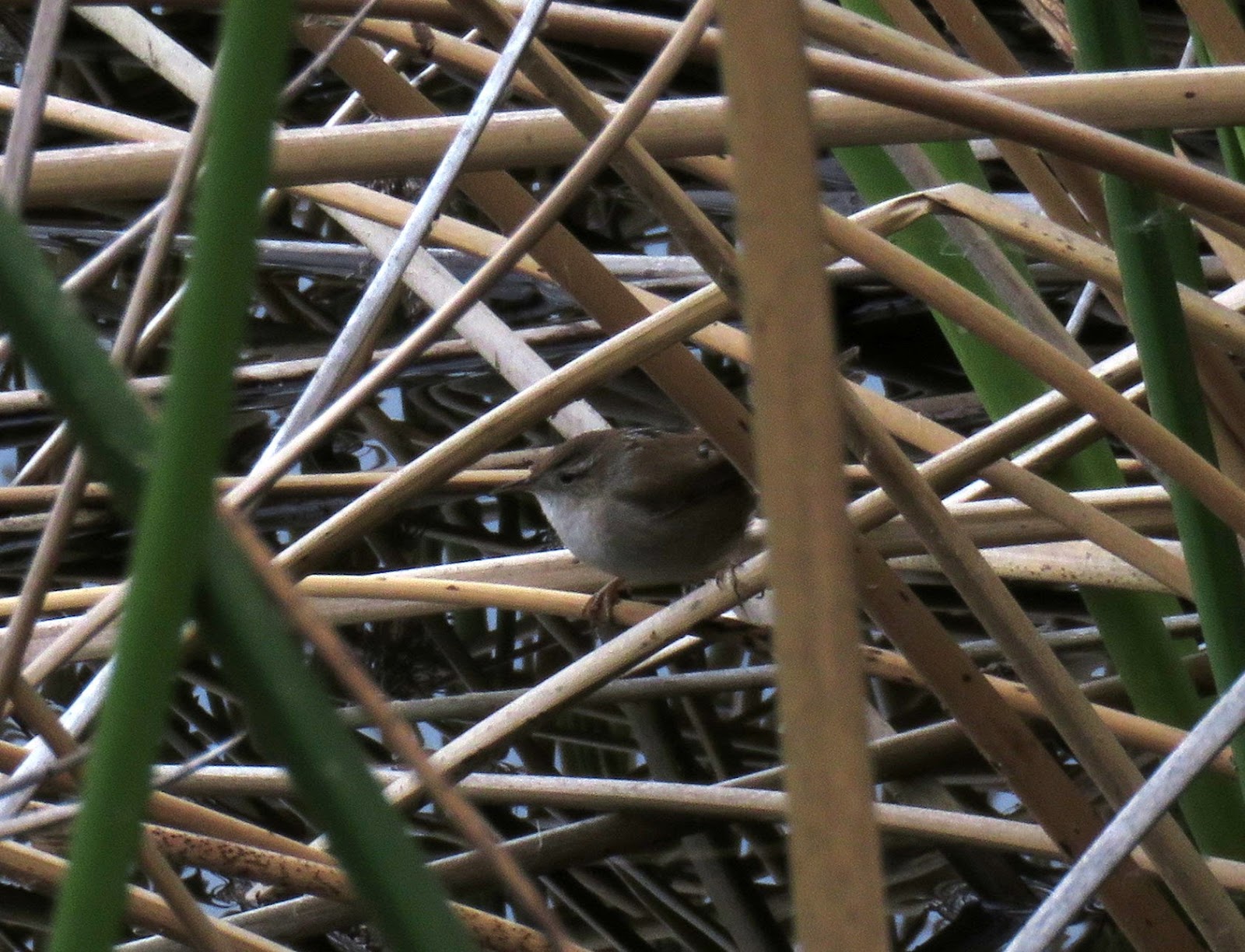
There were a few Marsh Wrens hopping around. They were unusually bold and sat out in the open, rather than hiding in the reeds. Below is one of them.
Marsh Wren

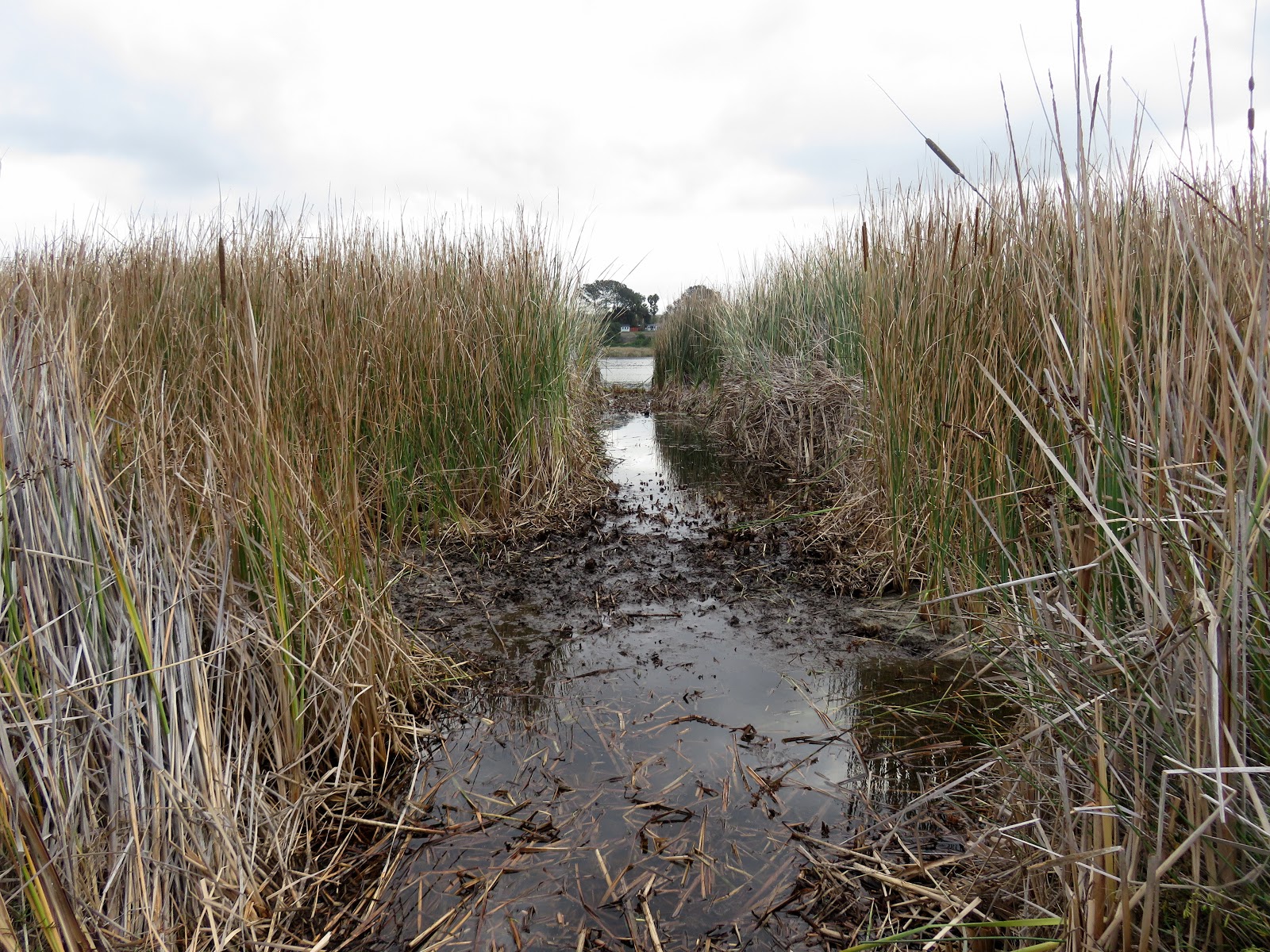
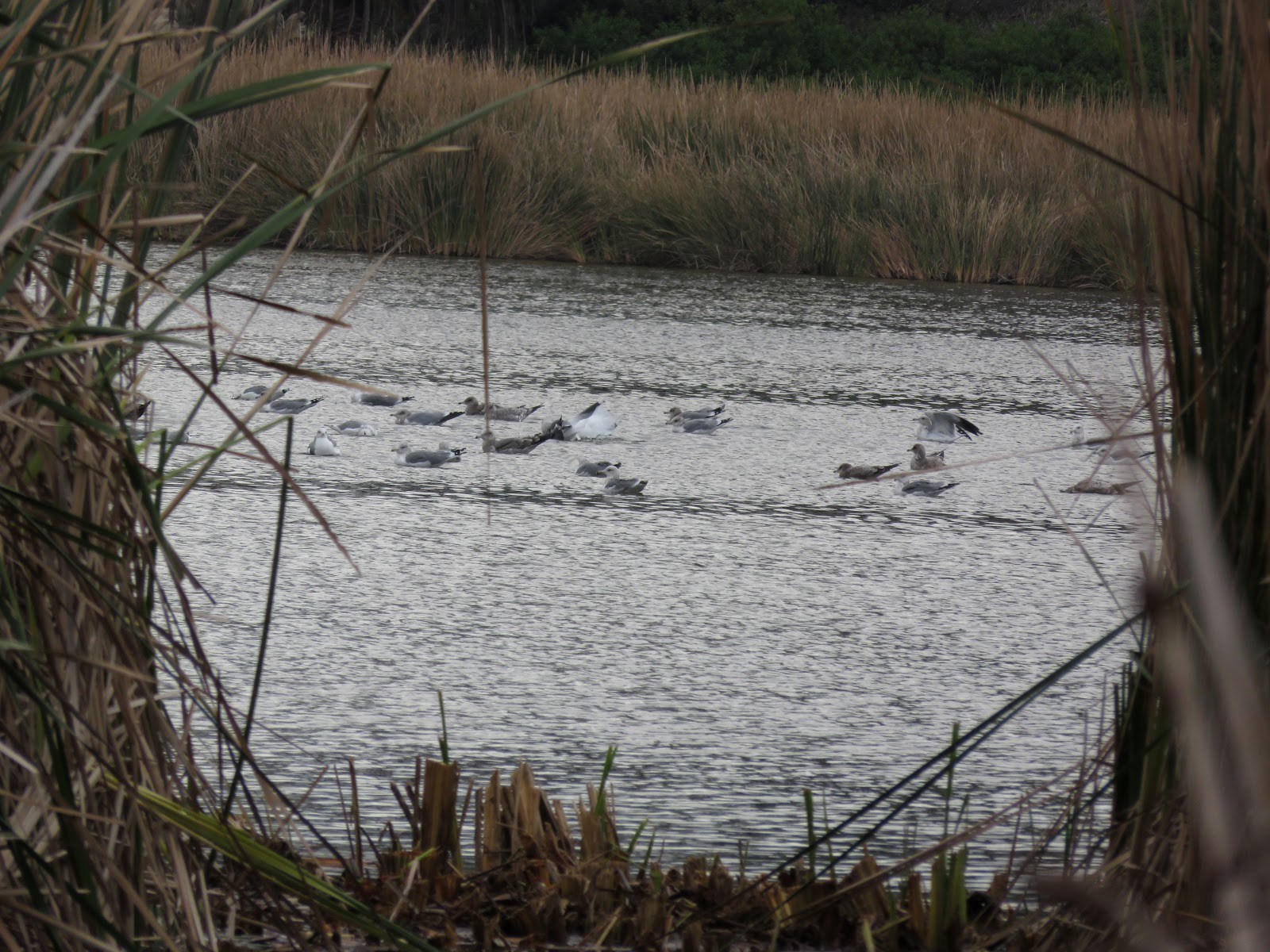
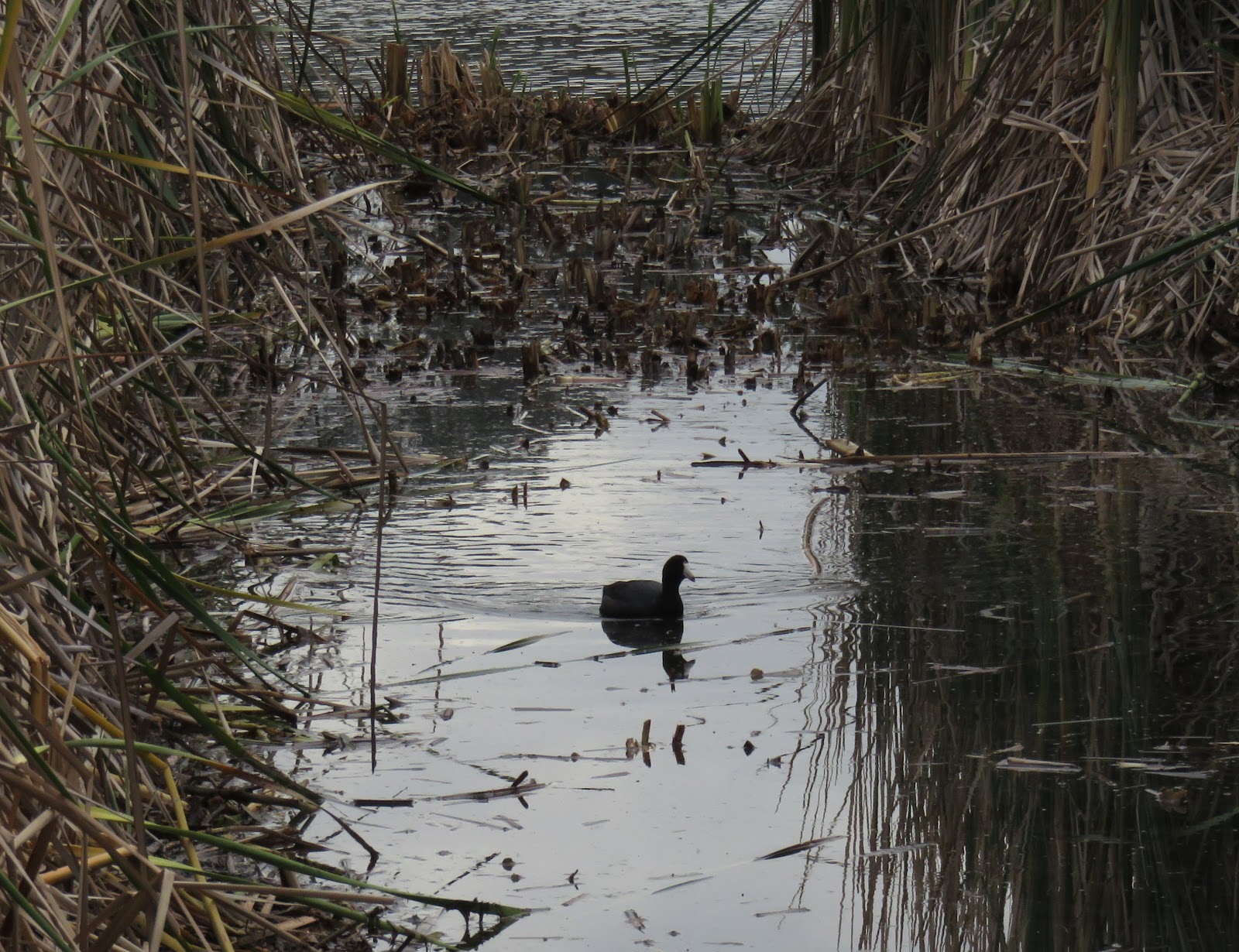
There's work being done to clear away some of the overgrown reeds at the lagoon. When I walked along the trail behind the Nature Center, there was a hole cut through the reeds, and I could see straight out into the middle of the lagoon, where a large group of California Gulls were floating. There were also some coots swimming around in the now open water between the walls of reeds. Below are four photos. The first two are of the areas where reeds were cut away, the third is of the California Gulls, and the fourth is of one of the coots.
California Gulls
American Coot

There were quite a few Cassin's Kingbirds around. Below is one of them sitting on a telephone wire.
Cassin's Kingbird

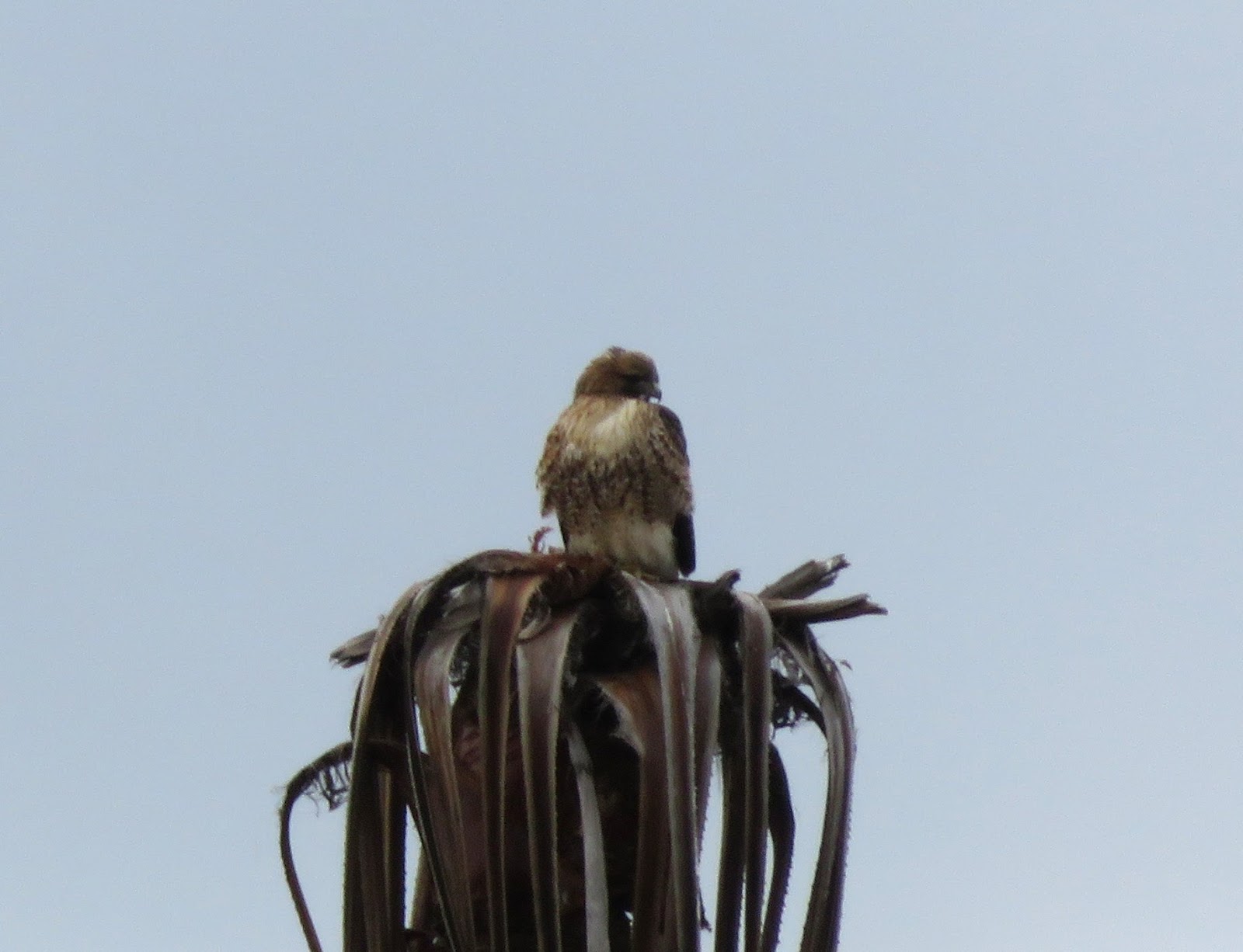
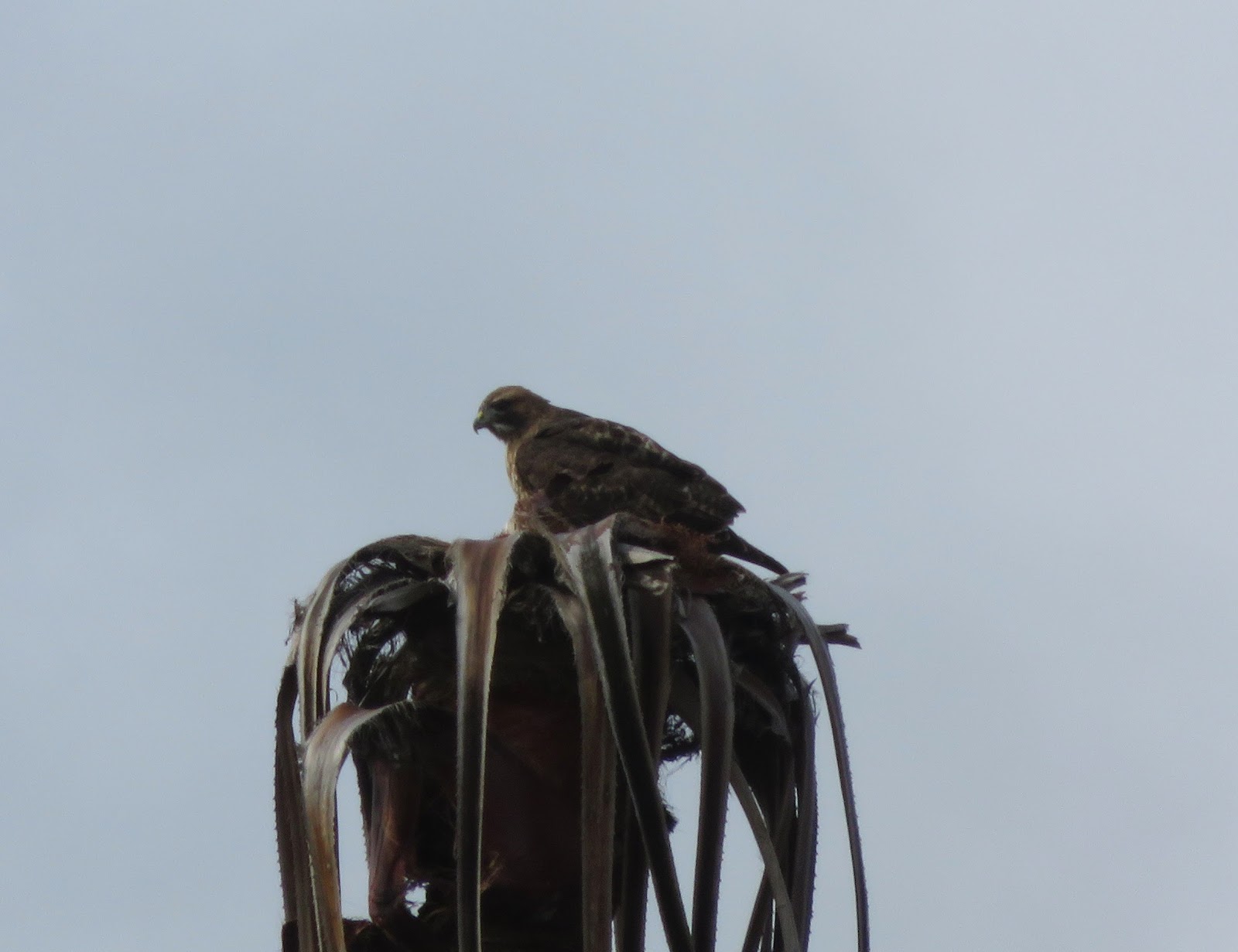
As we walked up the road to Maxton Brown park, we spotted a Red-tailed Hawk perched atop a dead palm tree. It stayed there the entire time we were birdwatching, as we saw it again when we were walking back from the beach. Below are two photos of the Red-tailed Hawk.
Red-tailed Hawk
Red-tailed Hawk

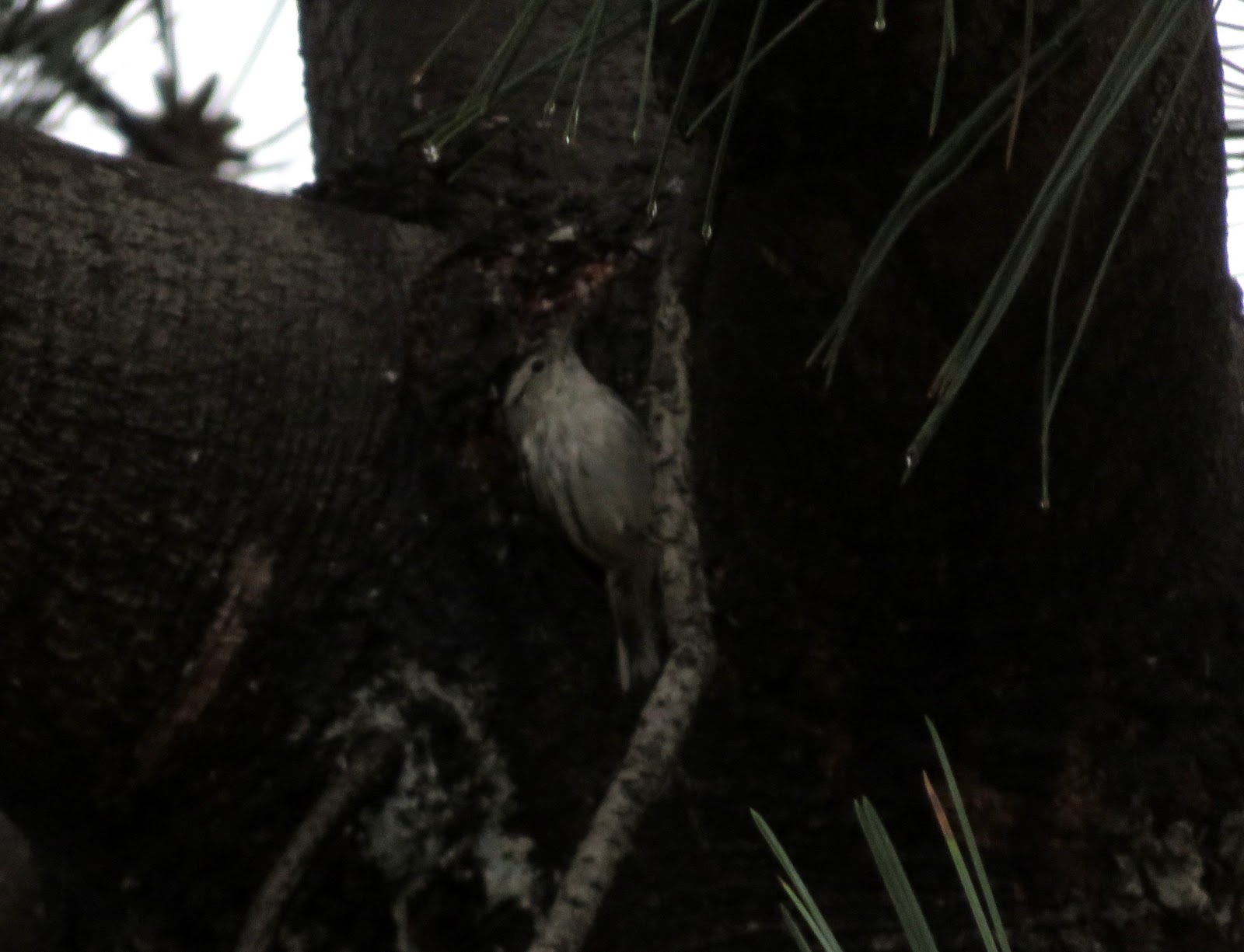
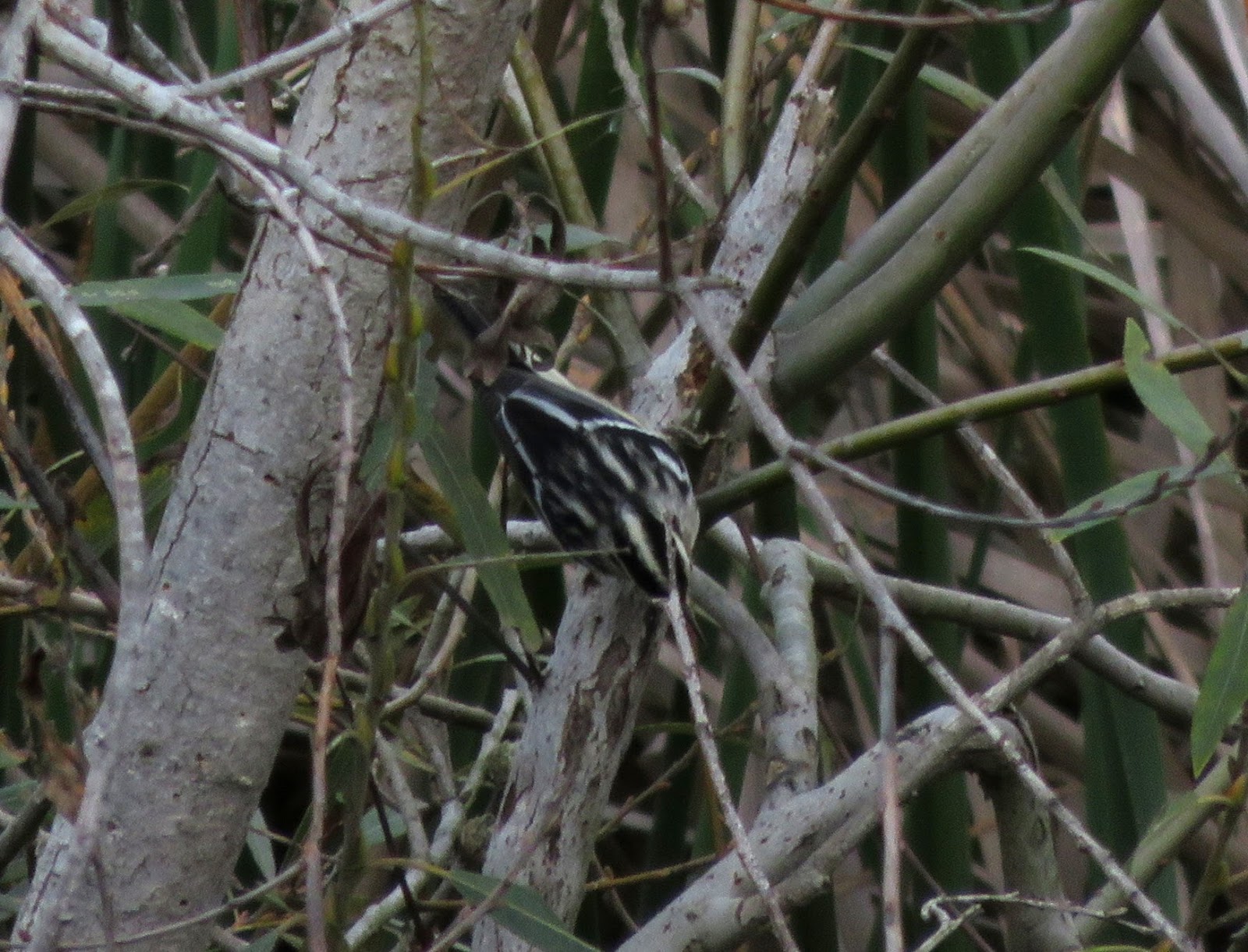
The most exciting bird (at least, for me) was a little Black-and-White Warbler at Maxton Brown Park. Black-and-White Warblers are almost entirely black and white streaked, and they have long bills and black legs with yellow feet. Females have faintly yellowish sides and white throats (breeding males have black throats). They behave like nuthatches, creeping up and around trees searching for insects hidden in the bark, and they nest on the ground, at the base of trees. They are normally found in southern Mexico, Florida, and Central America in the winter (they summer in eastern North America), but every year, some of them find themselves in the western United States. Even though they regularly wander, at most I only see one a year, so it's pretty exciting to see one. Plus, they're very cute and fun to watch as they spin around and around tree branches. Below is a photo of the Black-and-white Warbler (sorry, just its back).
Black-and-white Warbler

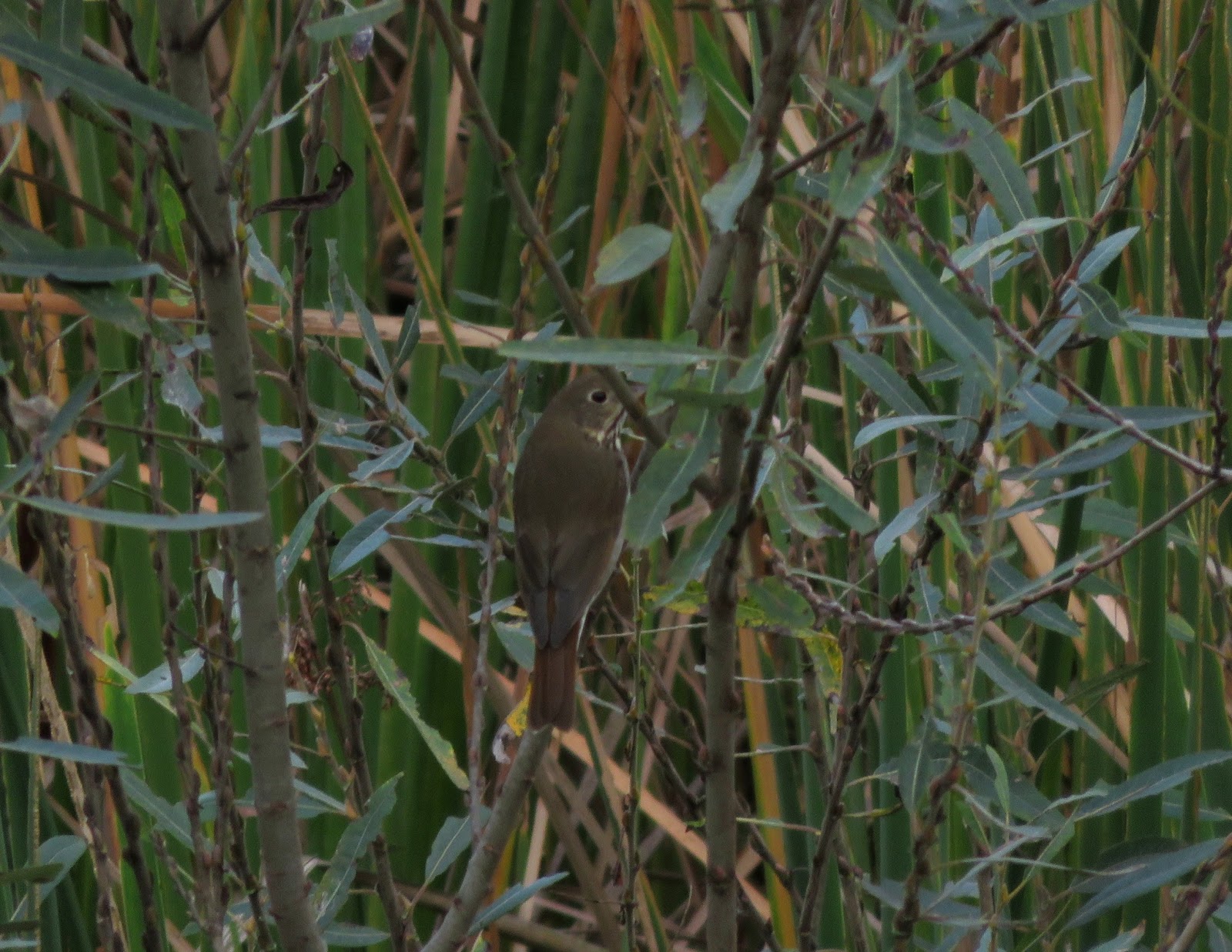
We also saw a Hermit Thrush at the park. It only stayed up for a short time, then disappeared back into the bushes. Below is a photo of it.
Hermit Thrush

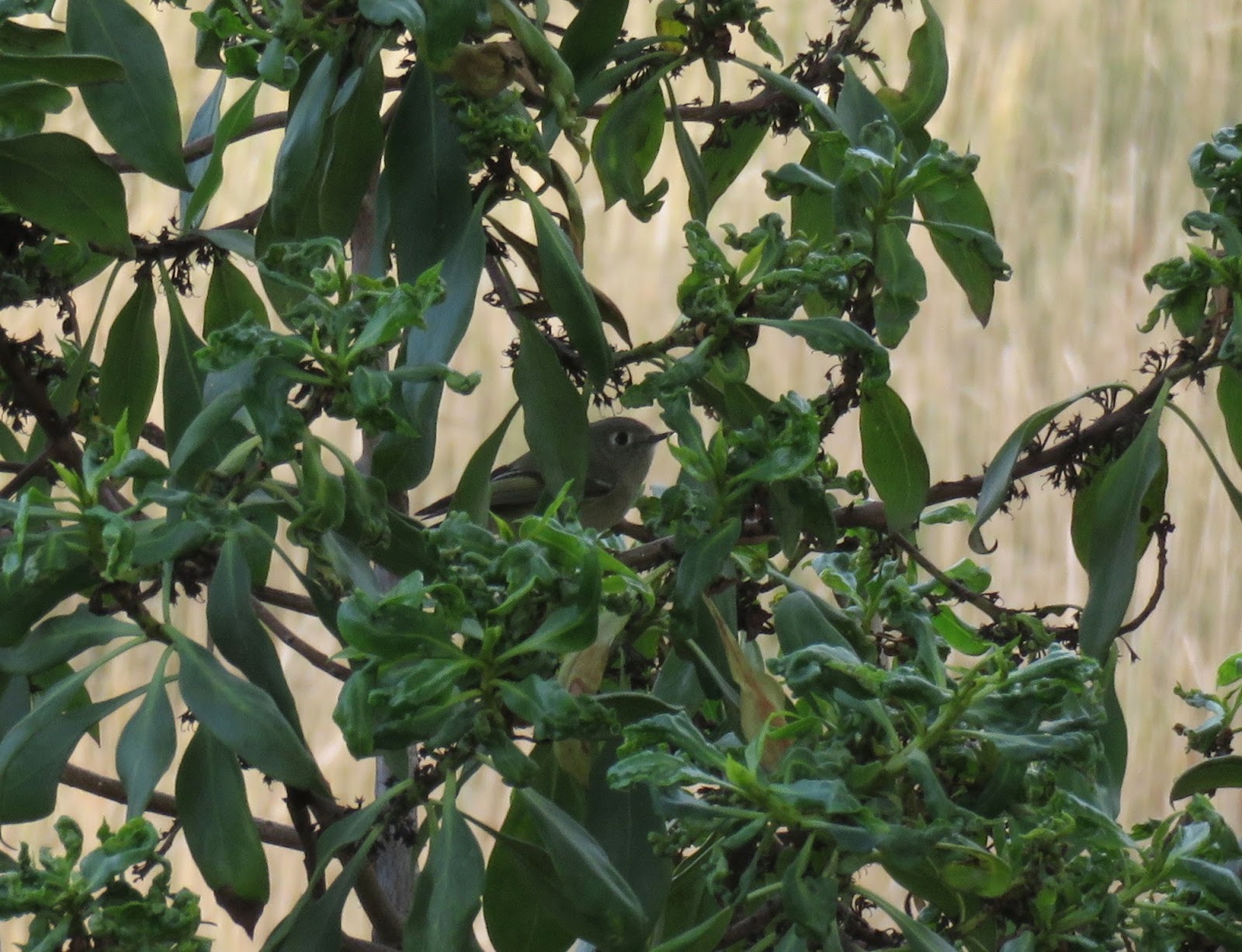
Along the way to the park, and in the park, there were several Ruby-crowned Kinglets hopping around in the bushes and trees. They were very tiny and cute. Below is one of them in a bush in the park.
Ruby-crowned Kinglet

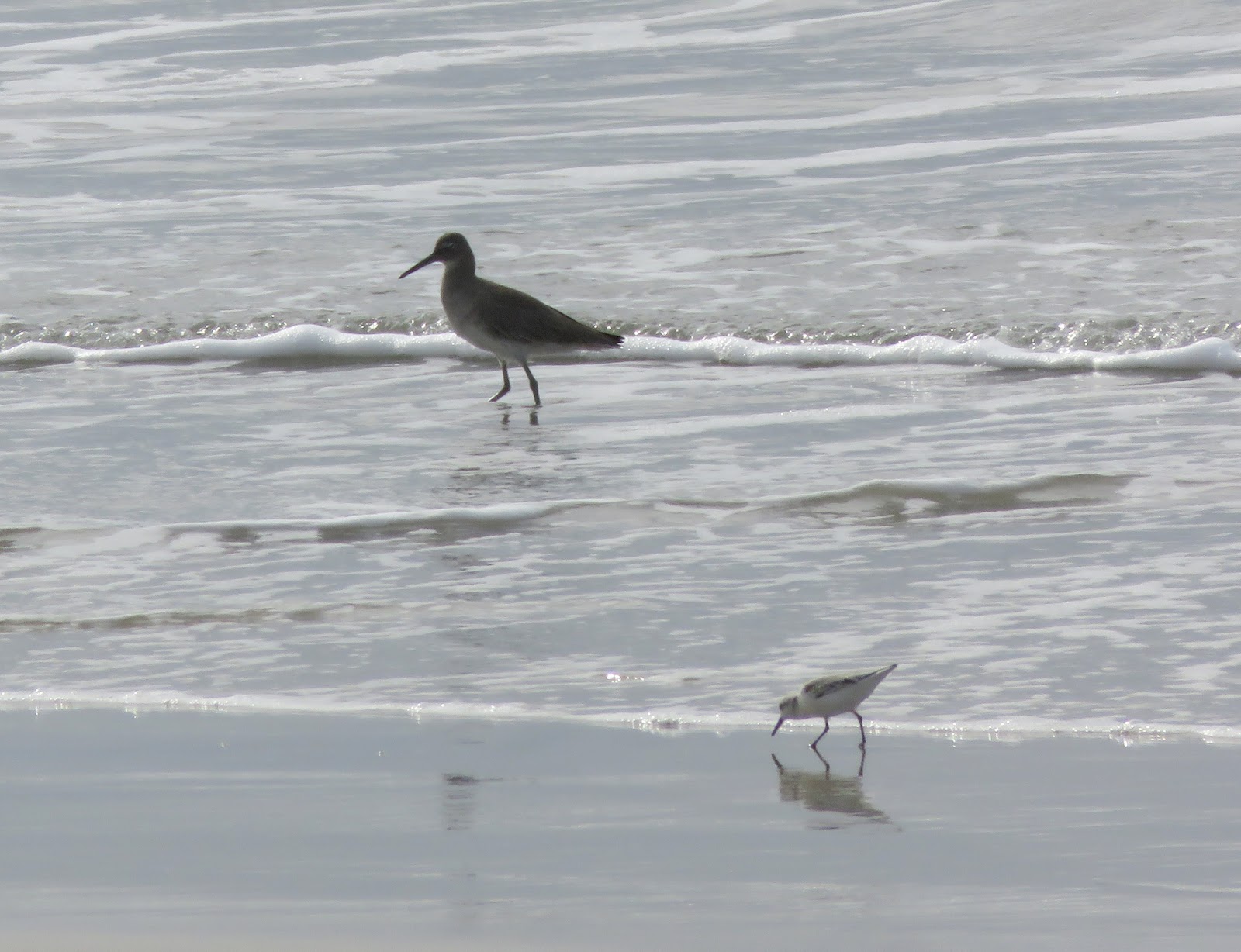
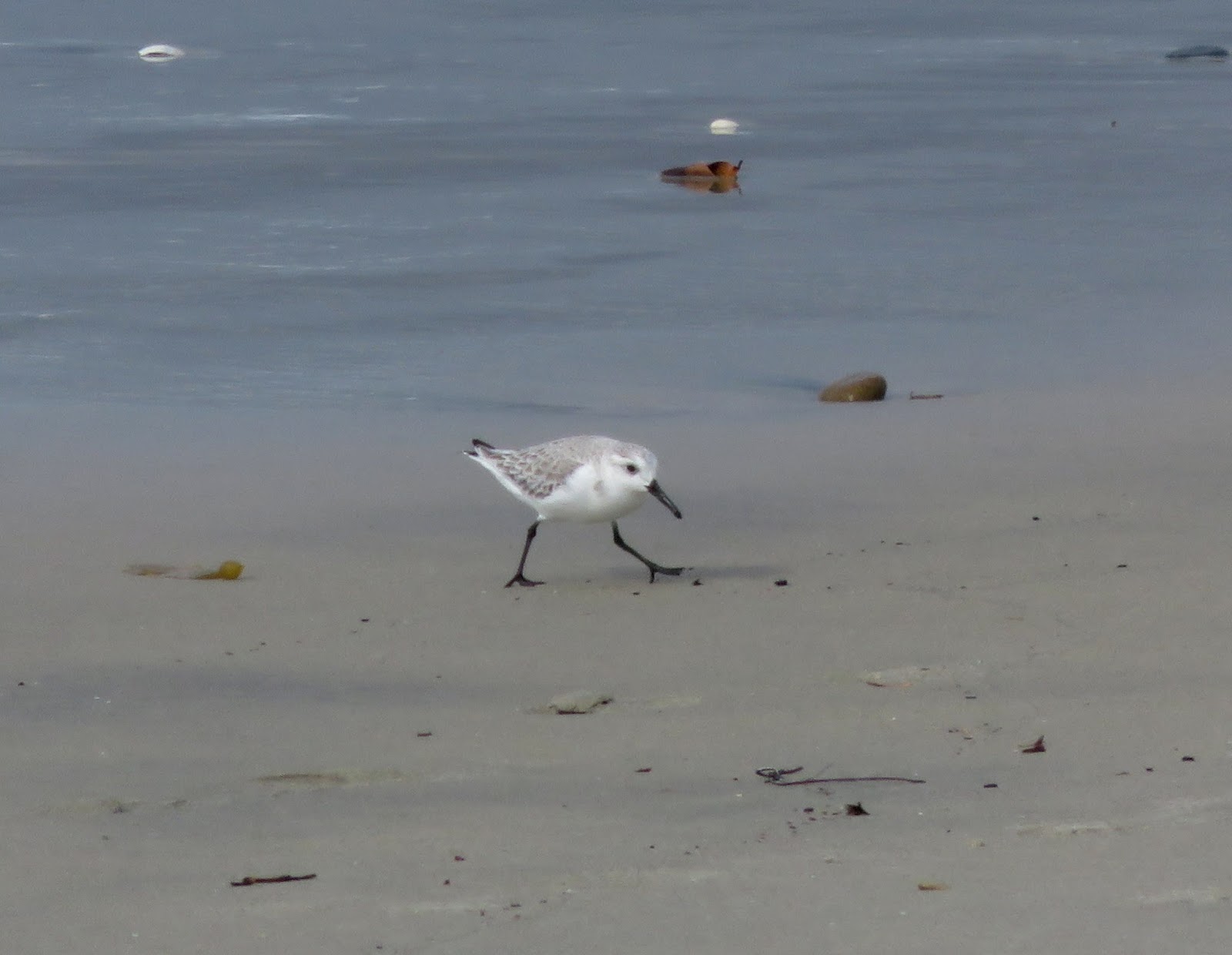
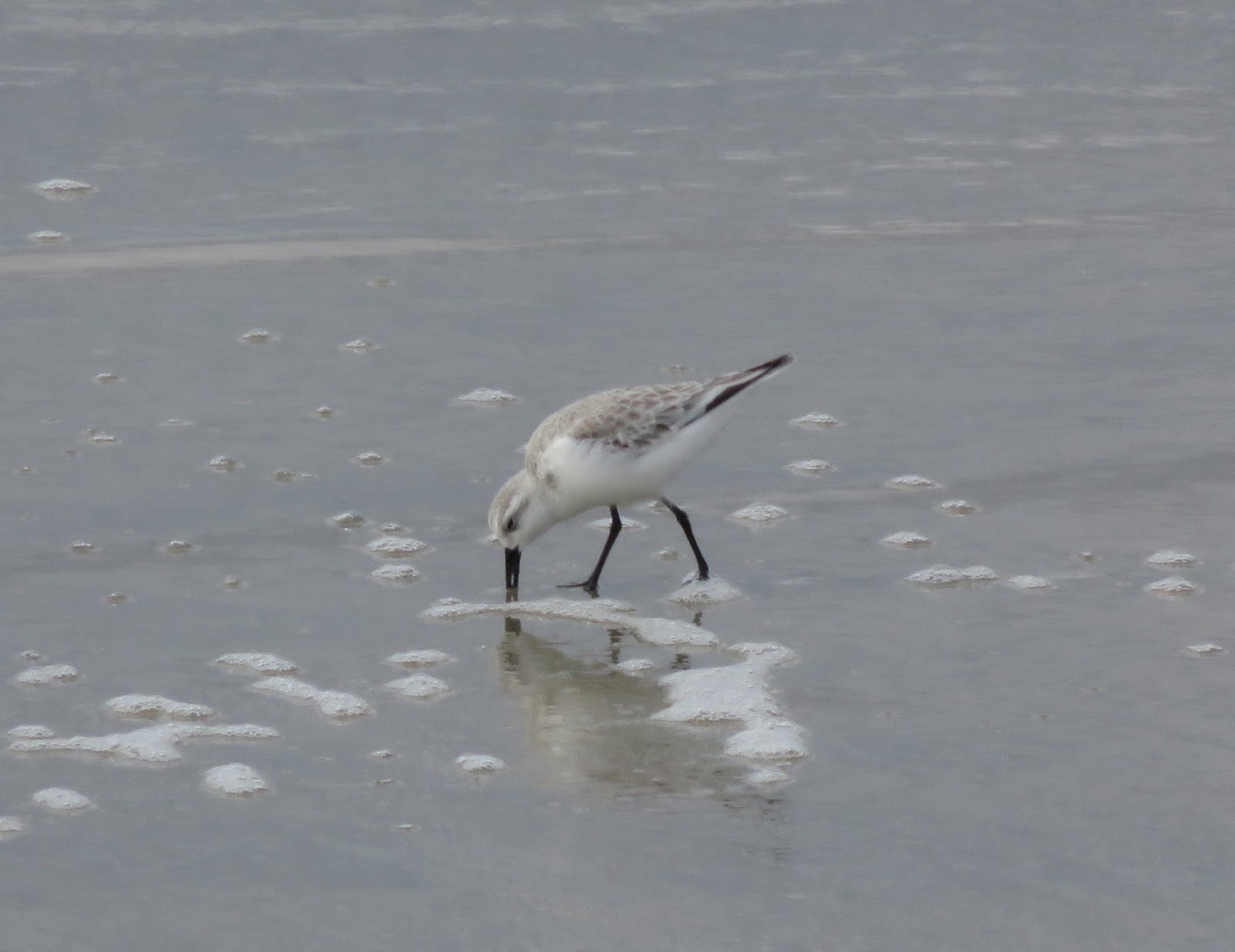
After the park, we headed to the beach. There were a few shorebirds, as well as some cormorants, gulls, and Western Grebes out on the ocean, which was surprising, since the water was a bit rough. Below are three photos. The first is of a Willet and a Sanderling, and the second two are of another Sanderling.
Willet and Sanderling
Sanderling
Sanderling

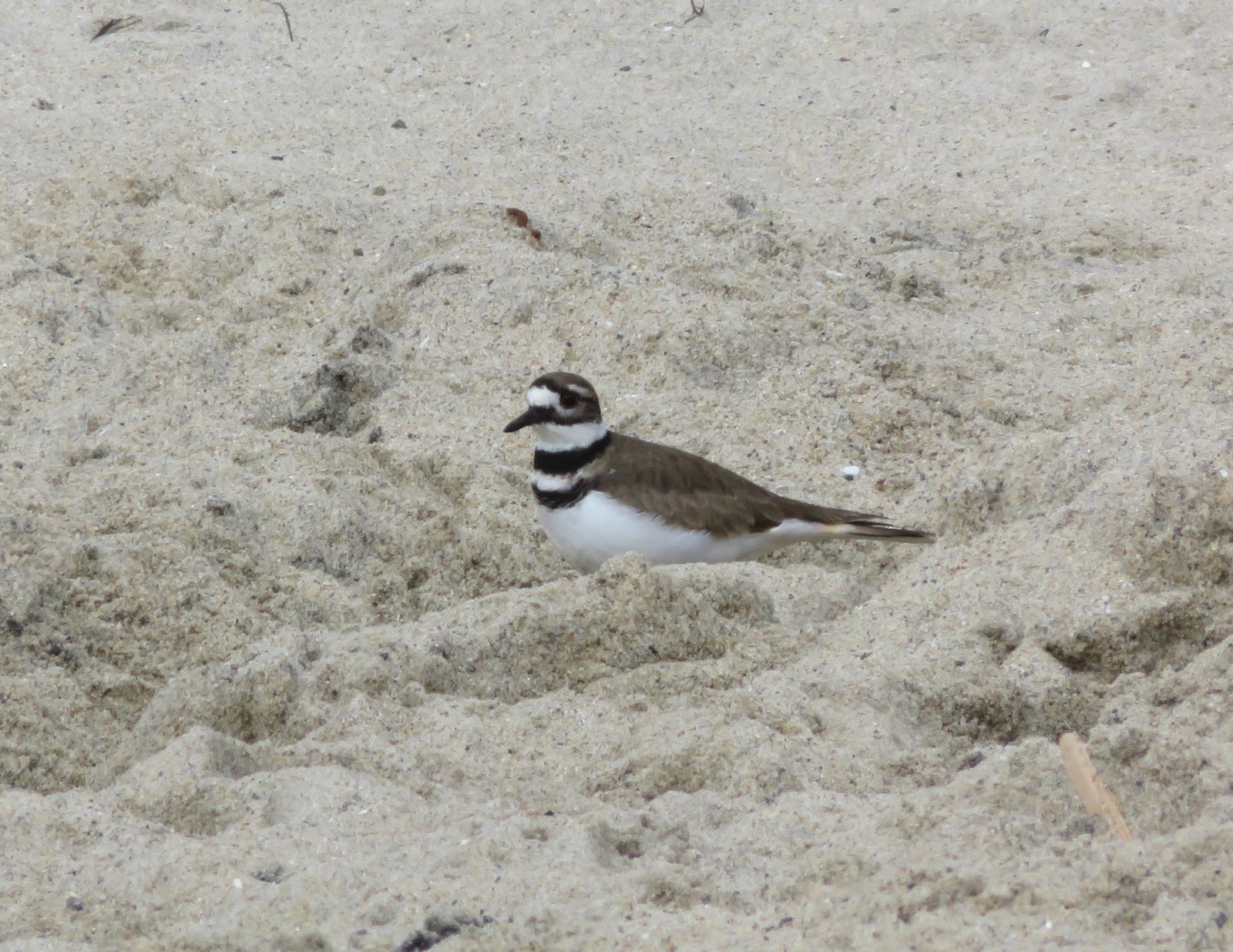
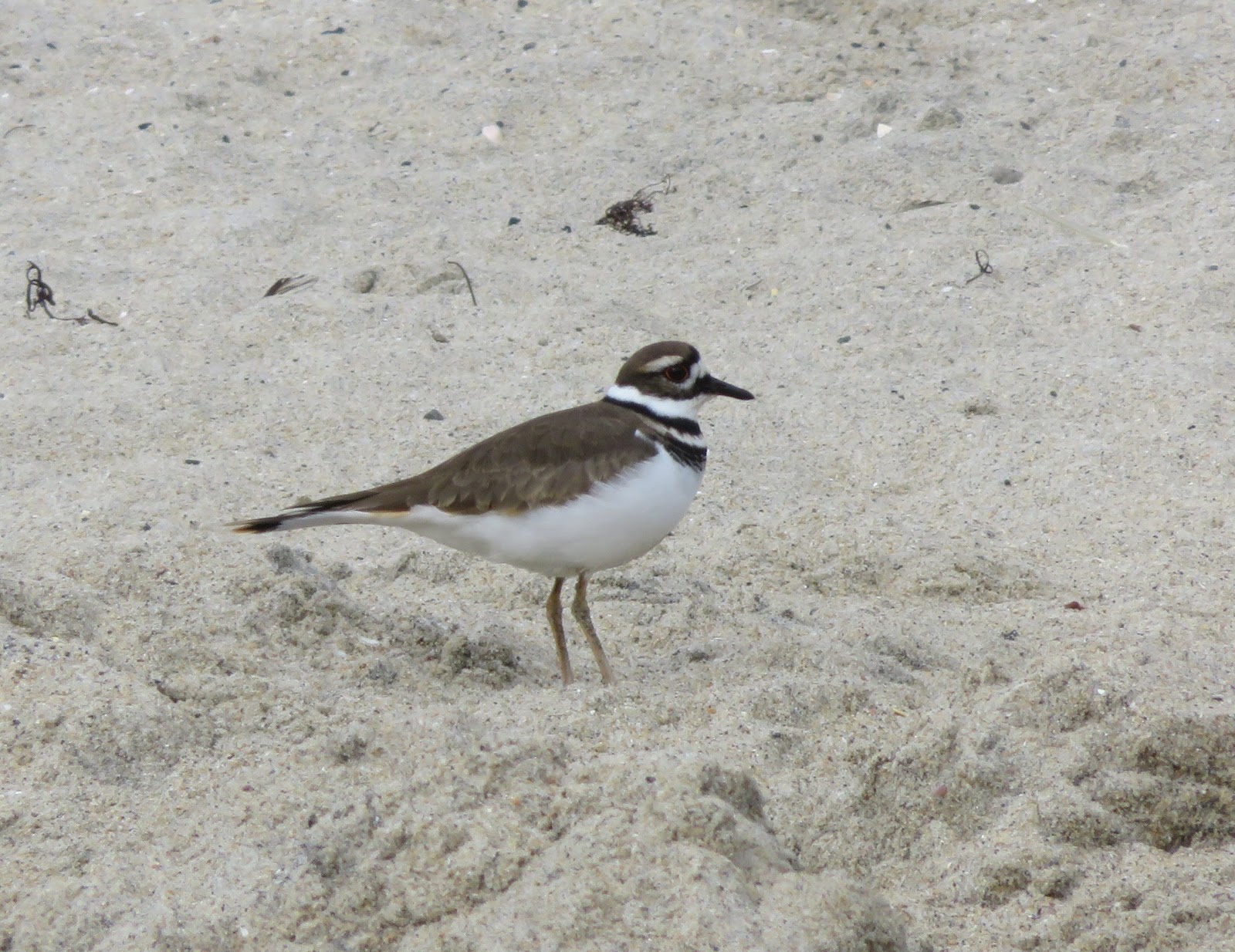
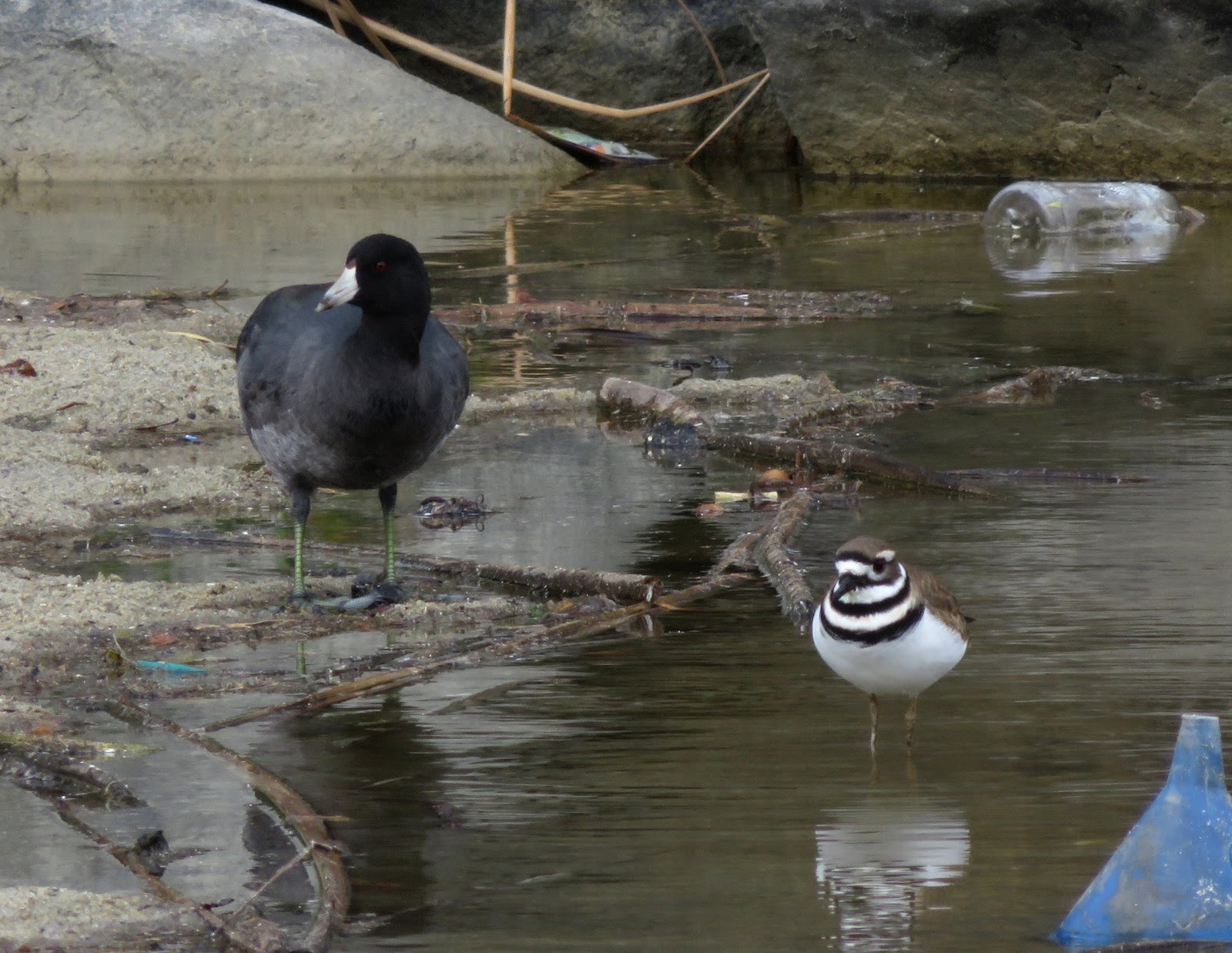
We saw a pair of Killdeer running around in the sand closer to the lagoon. There were also a few American Coots. Below are three photos. The first two are of one of the Killdeer, and the third is of the other Killdeer and a coot.
Killdeer
Killdeer
American Coot and Killdeer

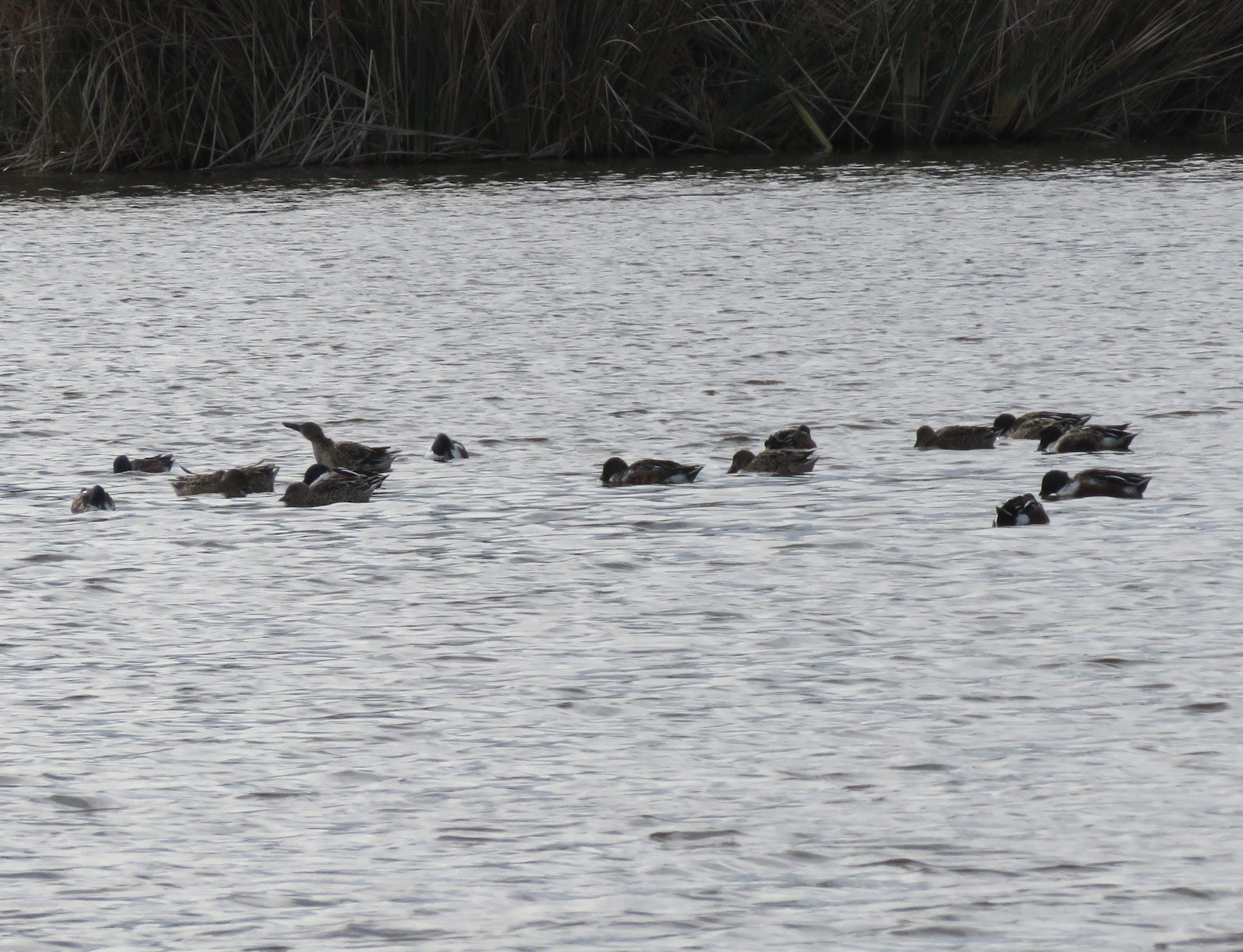
Scattered around the lagoon were some Northern Shovelers. Toward the end of the birdwatching trip, a large group of shovelers had gathered to forage together. Below is part of the group.
Northern Shovelers