Showing posts with label Other Trips. Show all posts

Wednesday, May 3, 2017

Quail and a Camping Trip

I'm sorry I haven't posted in a long while; I've been very busy with school.

On April 22 (a Saturday), I went on a camping trip to San Simeon State Park with a club from Cal Poly. Before we left, though, in the early morning, I was outside my dorm building when I noticed some birds walking around below me. They were a pair of California Quail! I've seen quail at school a few times before, but this was the first time I actually got close to them and was able to take somewhat decent photos. California Quail are found on the west coast of the United States and Baja California all year round. Both males and females have white streaks on their sides and scaled bellies and necks. Females are brownish-gray with a small dark plume on their heads. Males are bluish-gray with black and white faces, brown foreheads and caps, and a large plume on their heads. They are very similar to Gambel's Quail, but their ranges hardly overlap (Gambel's Quail are found in the desert). They're often hidden in the brush, but they do wander around in the open sometimes, especially males when they're singing (their song sounds like "Chi-CA-go!"). Below are three photos of the quail; the first is the male, the second is the female, and the third is both of them together.
California Quail
California Quail
California Quail

About an hour or so after I saw the quail, we headed off to San Simeon. Our campground was pretty, and there were quite a few birds, including White-tailed Kites, vultures, kestrels, California Scrub-Jays, Steller's Jays, and quail. Below is a photo of the space behind our campsite.


Since our campsite was near a marshy area, there were quite a few waterbirds flying over, as well, including herons, egrets, ducks, and loons. Below are two photos. The first is a Common Loon (in breeding plumage, which I hadn't seen before), and the second is a Great Egret.
Common Loon
Great Egret

There were many, many Band-tailed Pigeons around the campsite. I never saw any land, but there were always a couple of them flying over. Band-tailed Pigeons are found in oak woods along the Pacific coast of the United States, and parts of Mexico and South America. They are large pigeons (even larger than Eurasian-collared Doves) with gray bodies, pale bellies and tails, pinkish chests, white and iridescent green collars, and yellow feet and bills. In flight, they can be distinguished from Rock Pigeons by their size, long tails, and more rounded wings (and sometimes habitat, but not always). Below is a photo of two Band-tailed Pigeons.
Band-tailed Pigeons

After we'd settled in the campsite and set up our tents, we went on a short hike down to the beach. Below are four views from the hike. 


In a creek that empties into the ocean, there were some birds, including some different gulls and ducks. After using my camera to zoom in on the three of the ducks (I didn't bring my binoculars, so my camera was the next best thing), I saw that they were Red-breasted Mergansers, which I had never seen before. Red-breasted Mergansers are found along almost all of the coasts of North America, as well as the Great Lakes and parts of the southern United States, in the winter. In the summer, they are found in Canada and Alaska. Both males and females are slender with thin bright red bills, white bellies, gray sides, and messy-looking crests. In breeding season, males have green heads, red eyes, white collars, brown chests, and black and white backs and wings. Females have brown heads, light gray to white chests, and gray bodies. Nonbreeding males look very similar to females. Below are two photos of the Red-breasted Mergansers (they were either immature males, females, or both; I'm not sure, since they look similar).
Red-breasted Mergansers
Red-breasted Merganser

Walking down the beach a little bit, a friend and I found quite a few sandpipers, mostly Whimbrels and Long-billed Curlews. I believe there might have been godwits, but they flew away before I could get a good look at them. Below are four photos (all three are of the same three birds). In the first photo, the two taller birds facing left are Long-billed Curlews, and the one facing right is a Whimbrel. In the second photo, the bird on the right is the Whimbrel, and the one on the left is one of the curlews. The third photo is of the Whimbrel, and the fourth is of one of the curlews.
Long-billed Curlews and Whimbrel
Long-billed Curlew and Whimbrel
Whimbrel
Long-billed Curlew

There were also quite a few Semipalmated Plovers running around on the pebbly sand. Semipalmated plovers are found along the coasts of the United States, Central America, and most of South America in the winter. In the summer, they're found in northern Canada and Alaska. They are white below with a black collar, black masks, yellowish-orange legs, and brown backs and heads. They are a small plover (a few inches smaller than Killdeer) and are often found in flocks, sometimes with other small shorebirds. Below are three photos. The first two are of just the plovers, and the third is of a Long-billed Curlew with one of the plovers.
Semipalmated Plovers
Semipalmated Plover
Long-billed Curlew and Semipalmated Plover

After crossing a bridge over the creek, we walked down the other end of the beach. There were massive piles of driftwood and some small tidal pools in a rockier area. Below is one photo taken from the bridge and four photos of the other end of the beach.


There was a very large rock by the tidal pools. Near the top of it were a few Brandt's Cormorants. On either side of the rock were huge swarms of Cliff Swallows. It was difficult to see exactly what they were doing, but they may have been making nests. Below are three photos. The first is of a few Brandt's Cormorants sitting on the rock with two Cliff Swallows flying by. The second is of some of the Cliff Swallows flying around the side of the rock (plus a couple of Brandt's Cormorants). The third is of three Cliff Swallows perched on the rock.
Brandt's Cormorants and Cliff Swallows
Cliff Swallows and Brandt's Cormorants
Cliff Swallows

There were also a few Pigeon Guillemots on the rock. One was calling very loudly (they make very high pitched twittering and whistling sounds), though it wasn't near any of the others, so I'm not sure who it was calling to. Below are three photos of the guillemots (the bird flying by in the second photo is a Cliff Swallow).
Pigeon Guillemot
Pigeon Guillemots and Cliff Swallow
Pigeon Guillemots

Wednesday, December 21, 2016

Morro Bay Area

I came home for winter break on Saturday, but before I left, my dad and I went birdwatching around the Morro Bay area. First, we stopped at the Sweet Springs Nature Preserve.

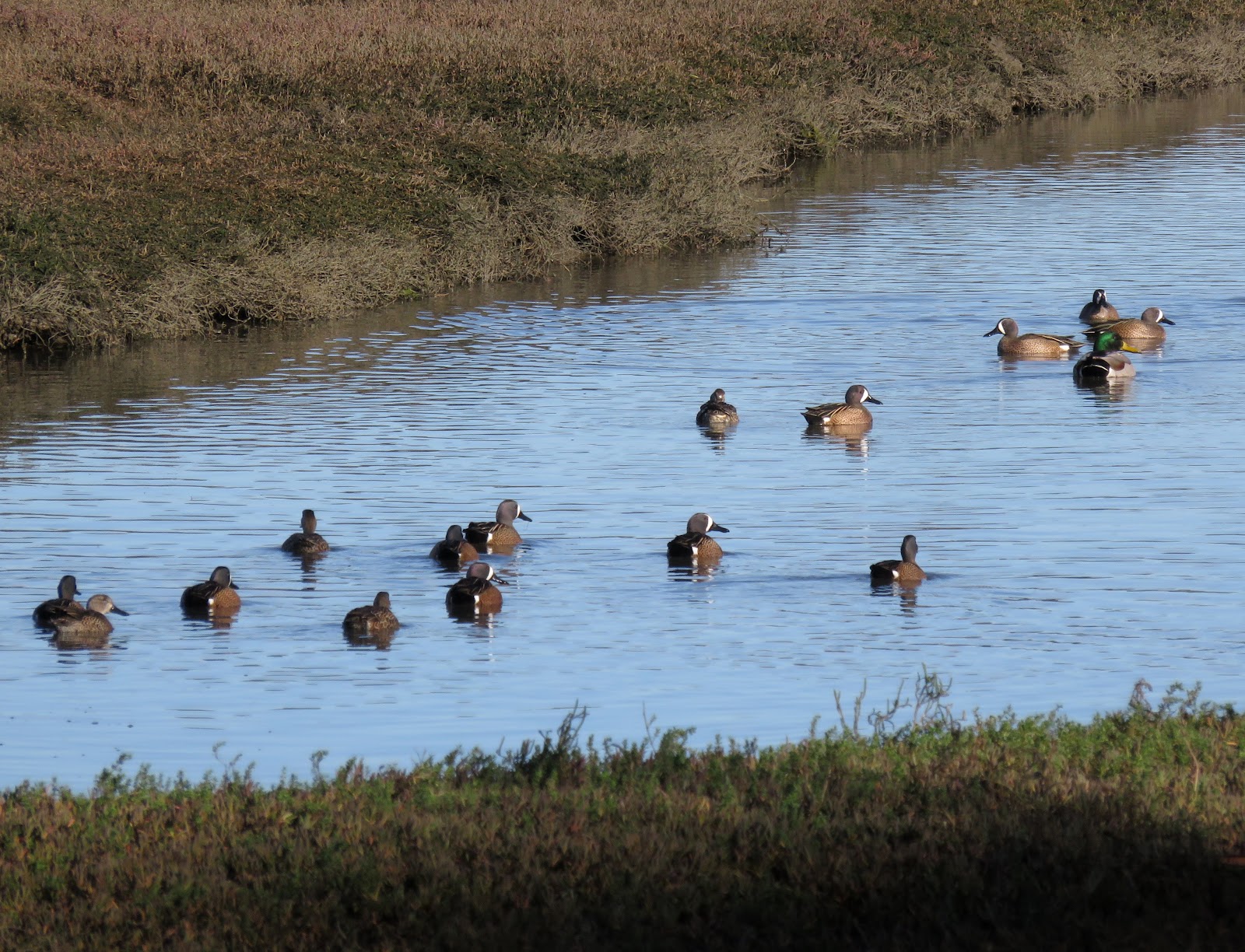
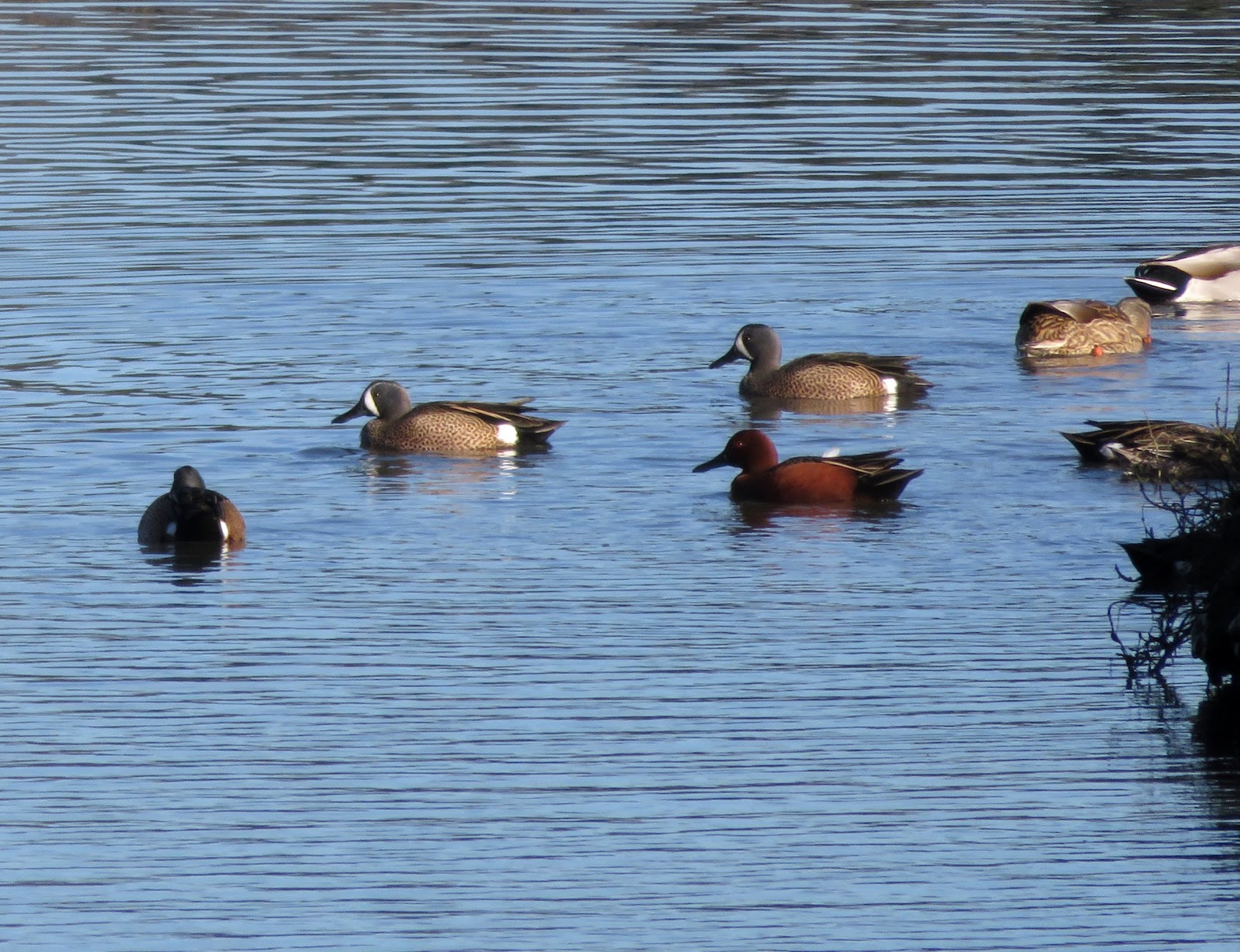
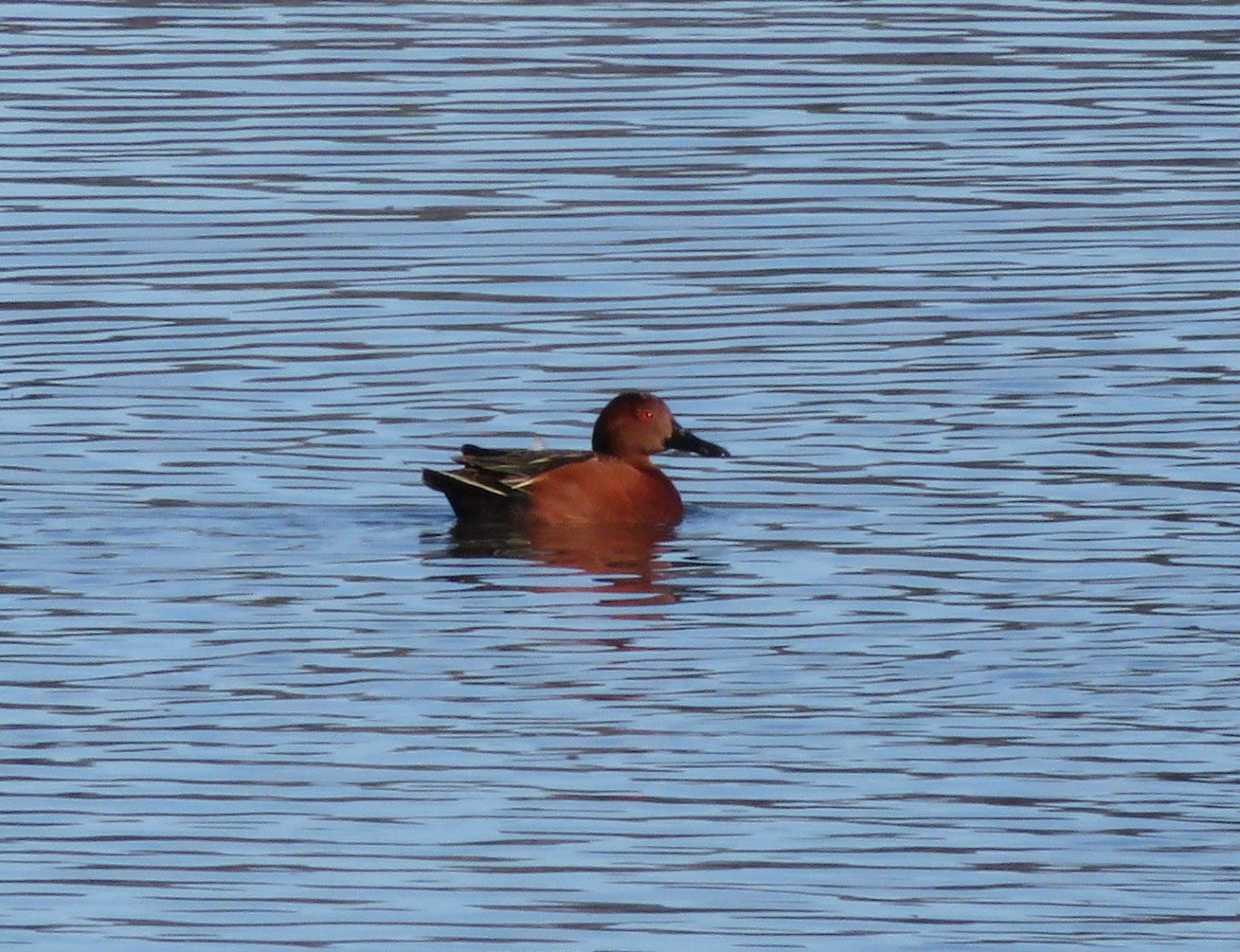
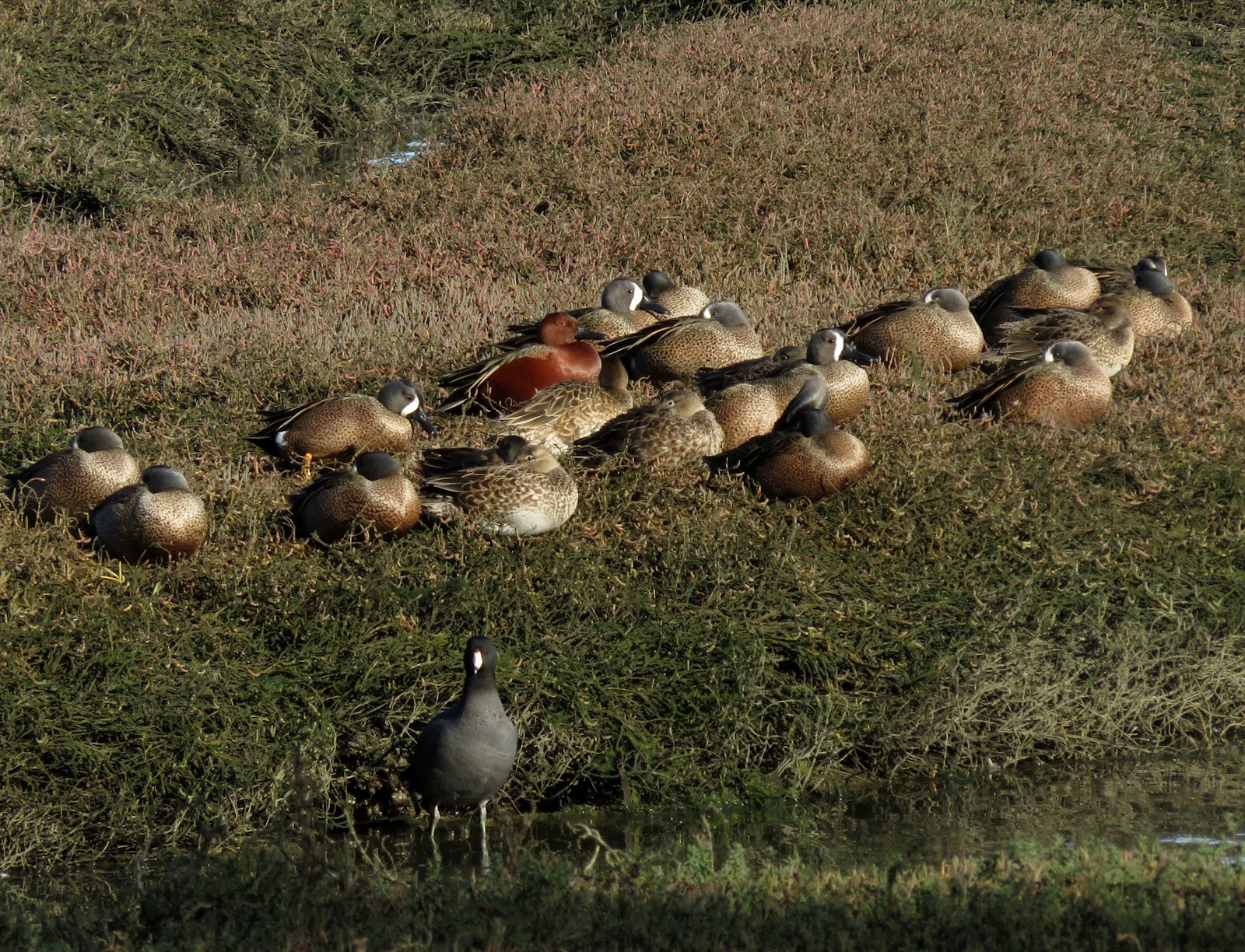
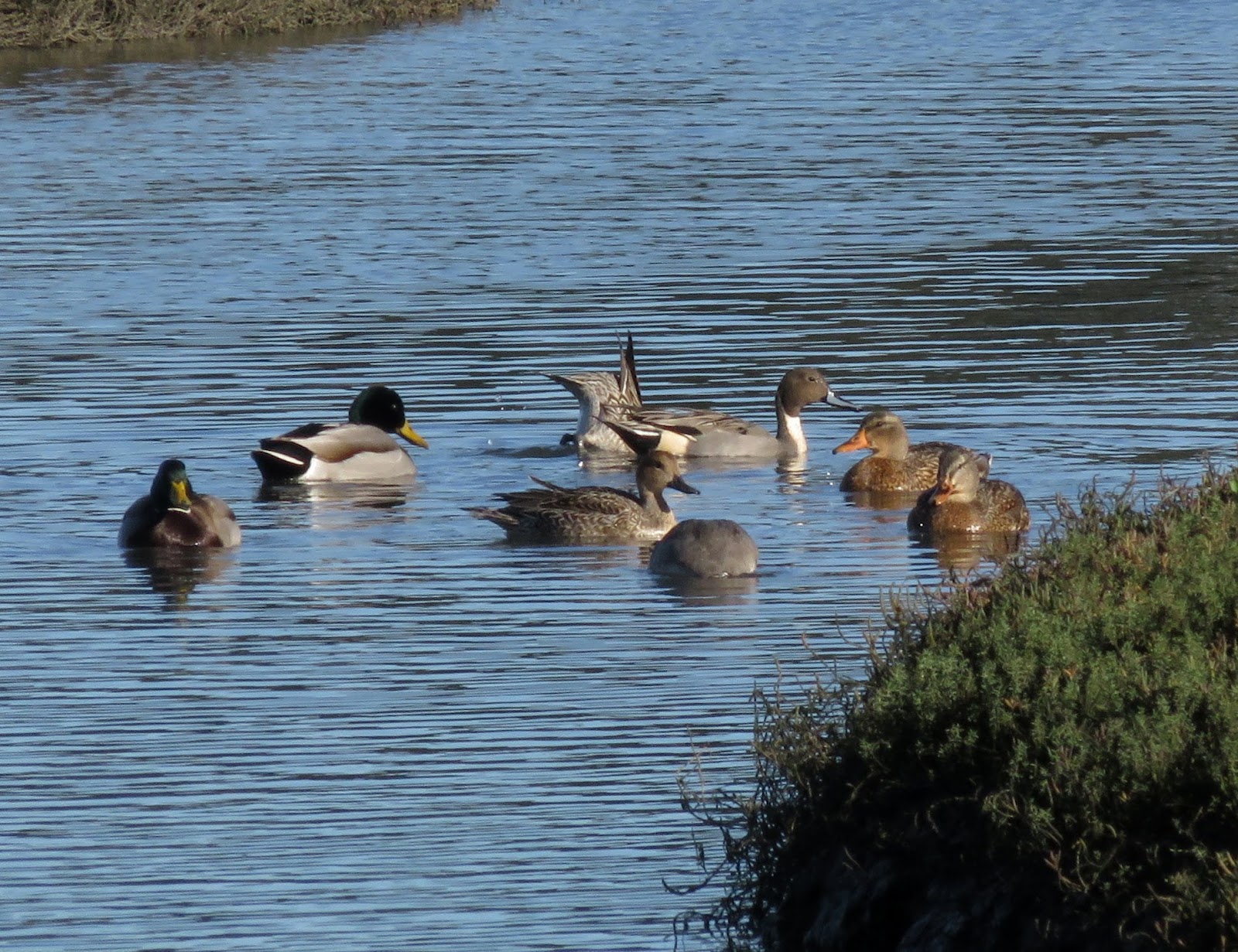
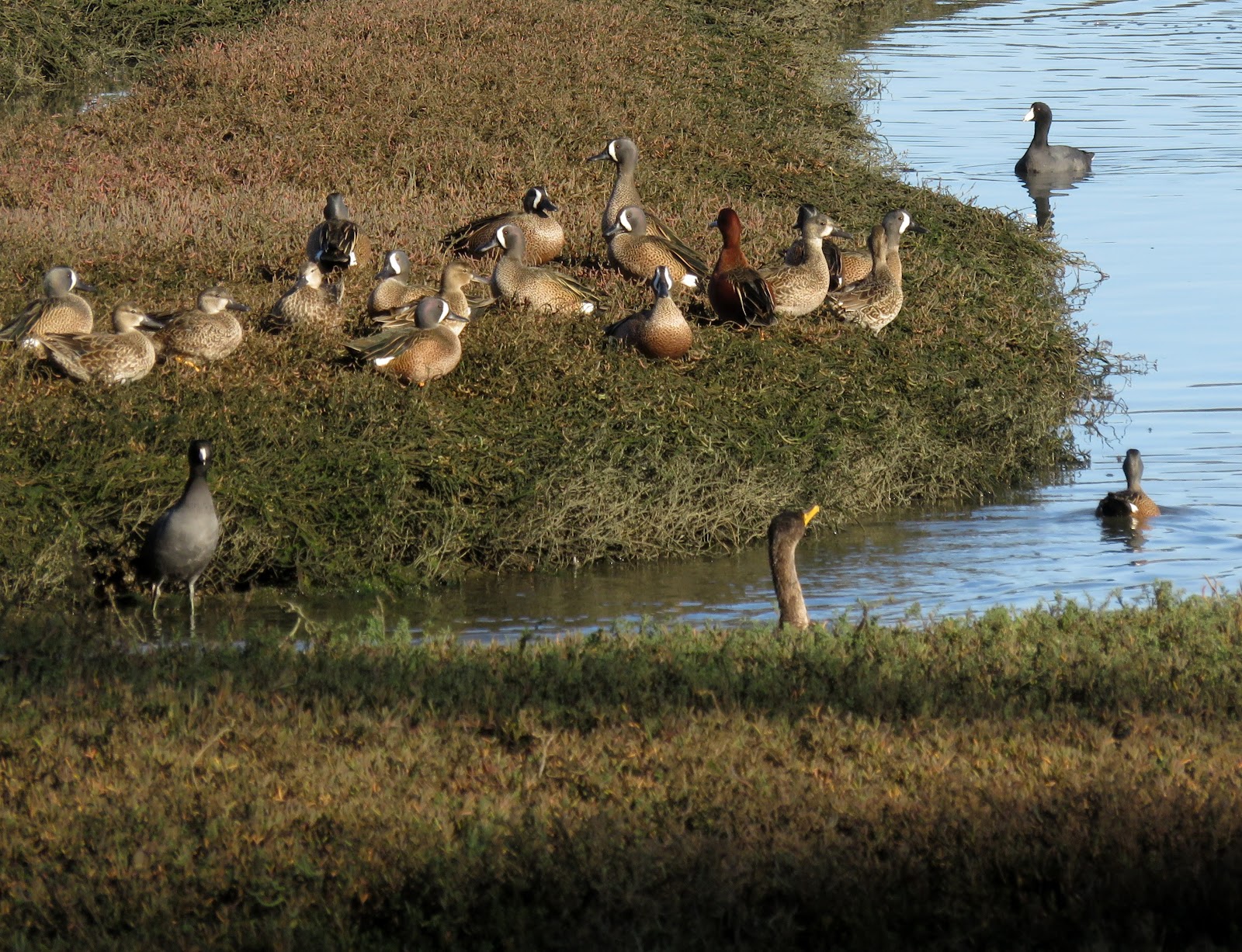
There were quite a few ducks there, mostly Blue-winged Teal. There were also quite a few Mallards, a group of Northern Pintails, and one very pretty male Cinnamon Teal. Below are five photos. The first is of a group of Blue-winged Teal and a couple of Mallards. The second is of some Blue-winged Teal, Mallards, and the Cinnamon Teal, and the third is of just the Cinnamon Teal. The fourth is of the Blue-winged Teal, Cinnamon Teal, and an American Coot, and the fifth is of Northern Pintails and Mallards.
Blue-winged Teal and Mallards
Blue-winged Teal, Mallards, and Cinnamon Teal
Cinnamon Teal
Blue-winged Teal, Cinnamon Teal, and American Coot
Northern Pintails and Mallards

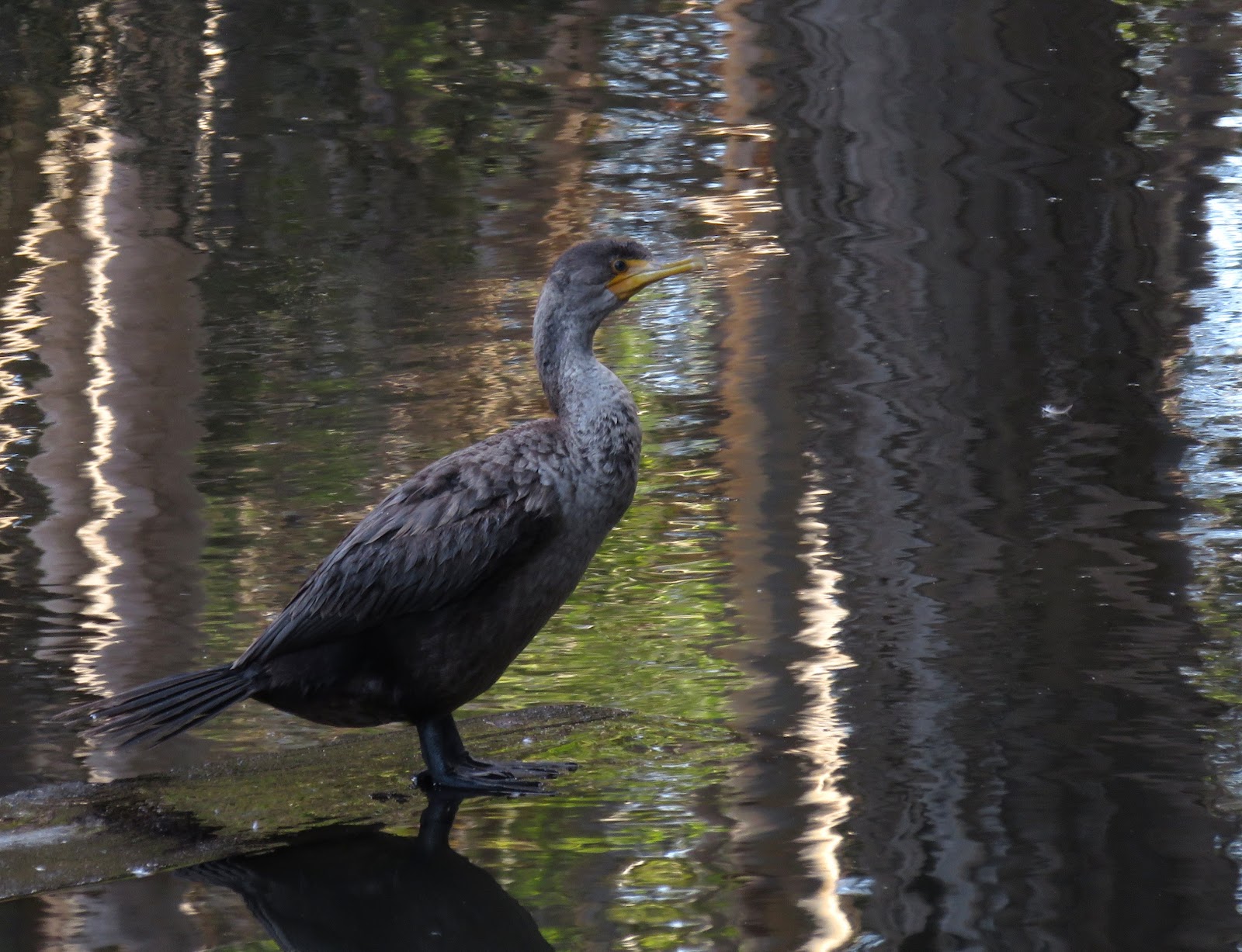
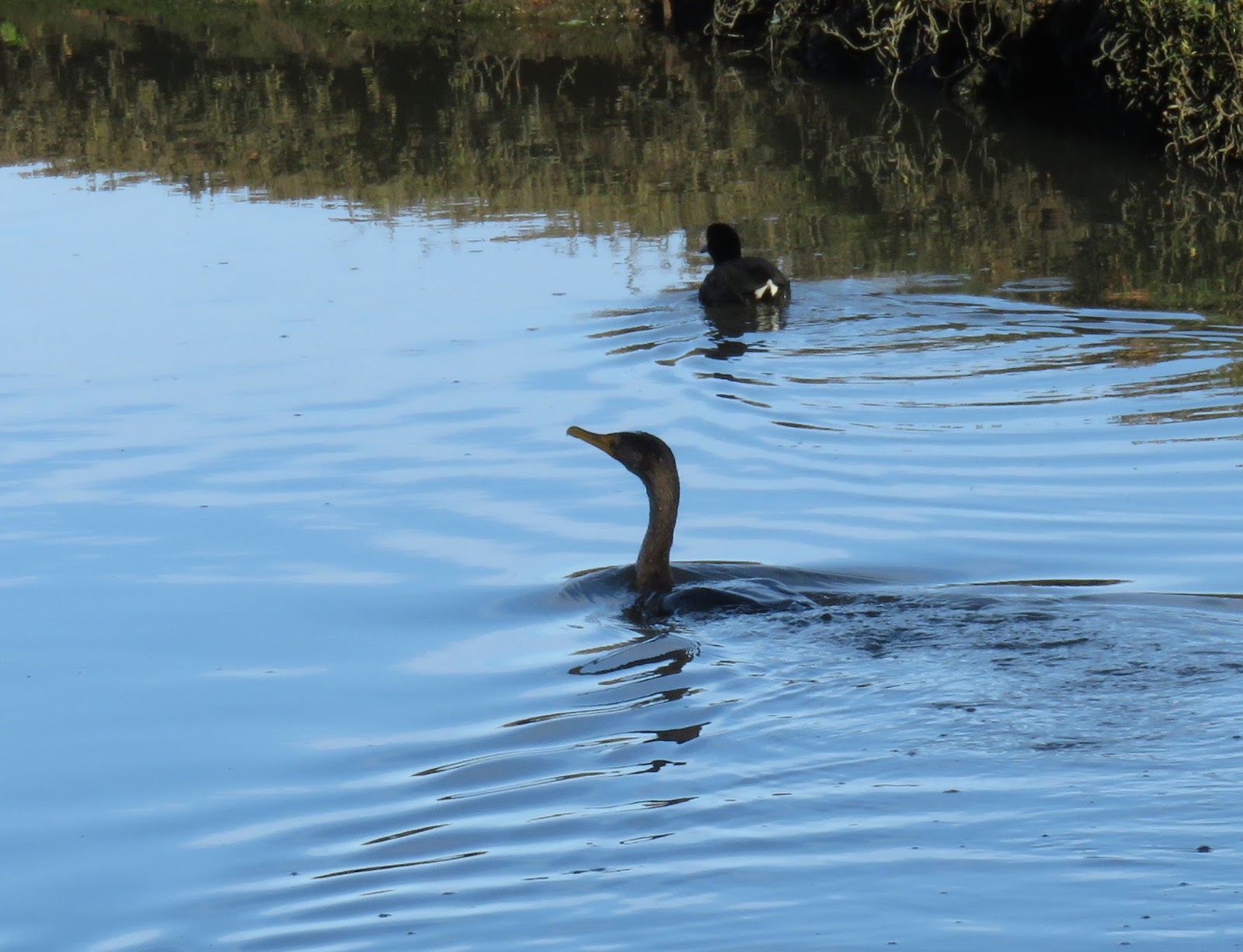
There was one Double-crested Cormorant close to the shore. It started swimming away when we walked close to it, but the water wasn't really deep enough, so it was just walking along the bottom. It then tried to dive, but again, the water wasn't deep enough, and we could see a bulge in the water where it was swimming. It scared a lot of coots as it swam by, and made the ducks nervous, too. Below are three photos. The first is of the cormorant before it started swimming, the second is of it swimming (just before it scared a coot away), and the third is of it swimming past the ducks (its head and neck are visible in the lower right).
Double-crested Cormorant
Double-crested Cormorant and American Coot
Double-crested Cormorant, Blue-winged Teal,
Cinnamon Teal, and American Coot

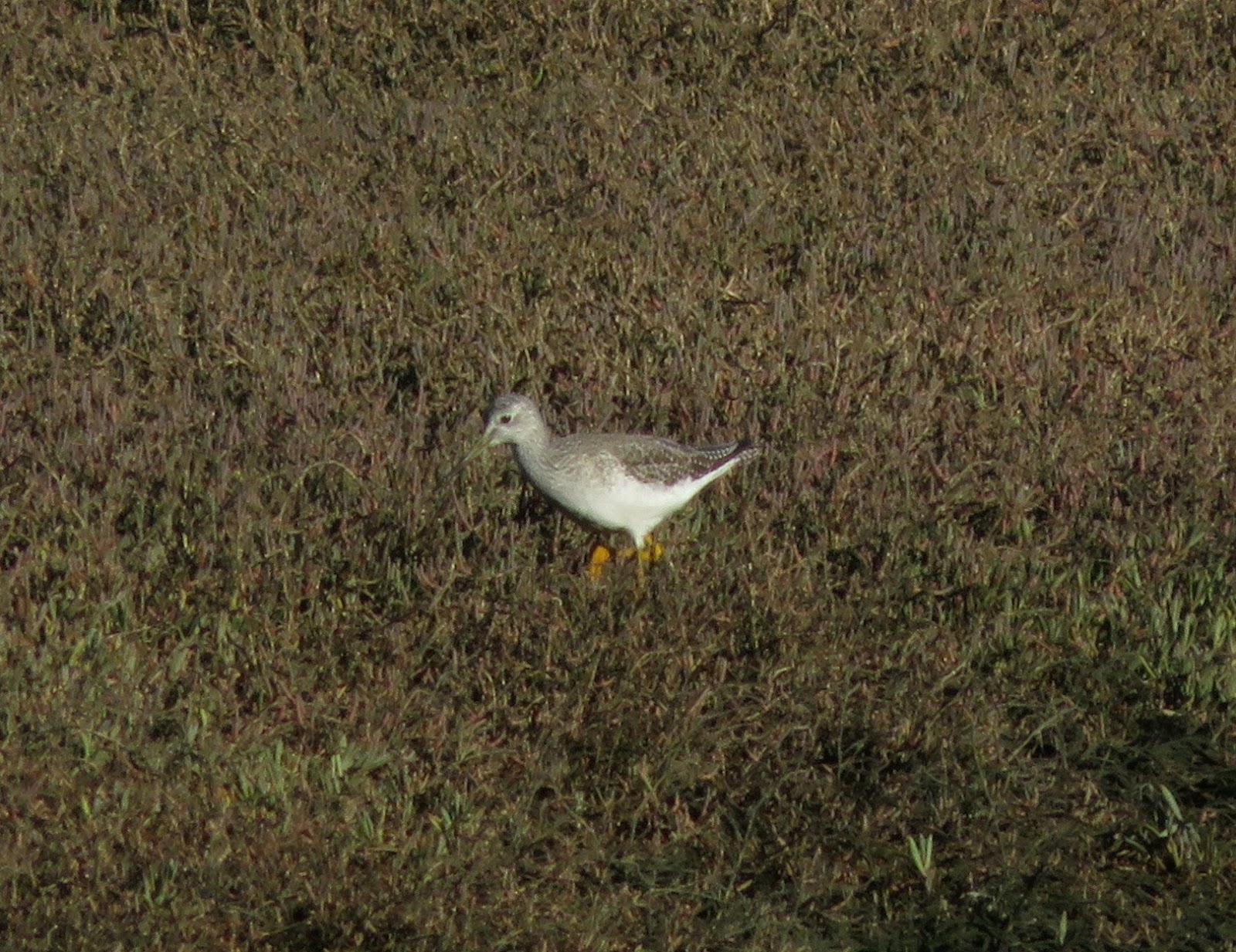
There were a couple of sandpipers walking around through the plants near the water. I didn't know what they were, so I took some photos and looked them up later. They turned out to be Greater Yellowlegs (which I hadn't seen before). Greater Yellowlegs are found in Canada and Alaska in the summer and the coasts of the United States and all of Central and South America in the winter. They are medium-sized shorebirds with white bellies, speckled grayish-brown backs and heads, and long yellow legs. They are very similar to Lesser Yellowlegs, but are larger with longer, slightly upturned bills. Below is a photo of one of the Greater Yellowlegs.
Greater Yellowlegs

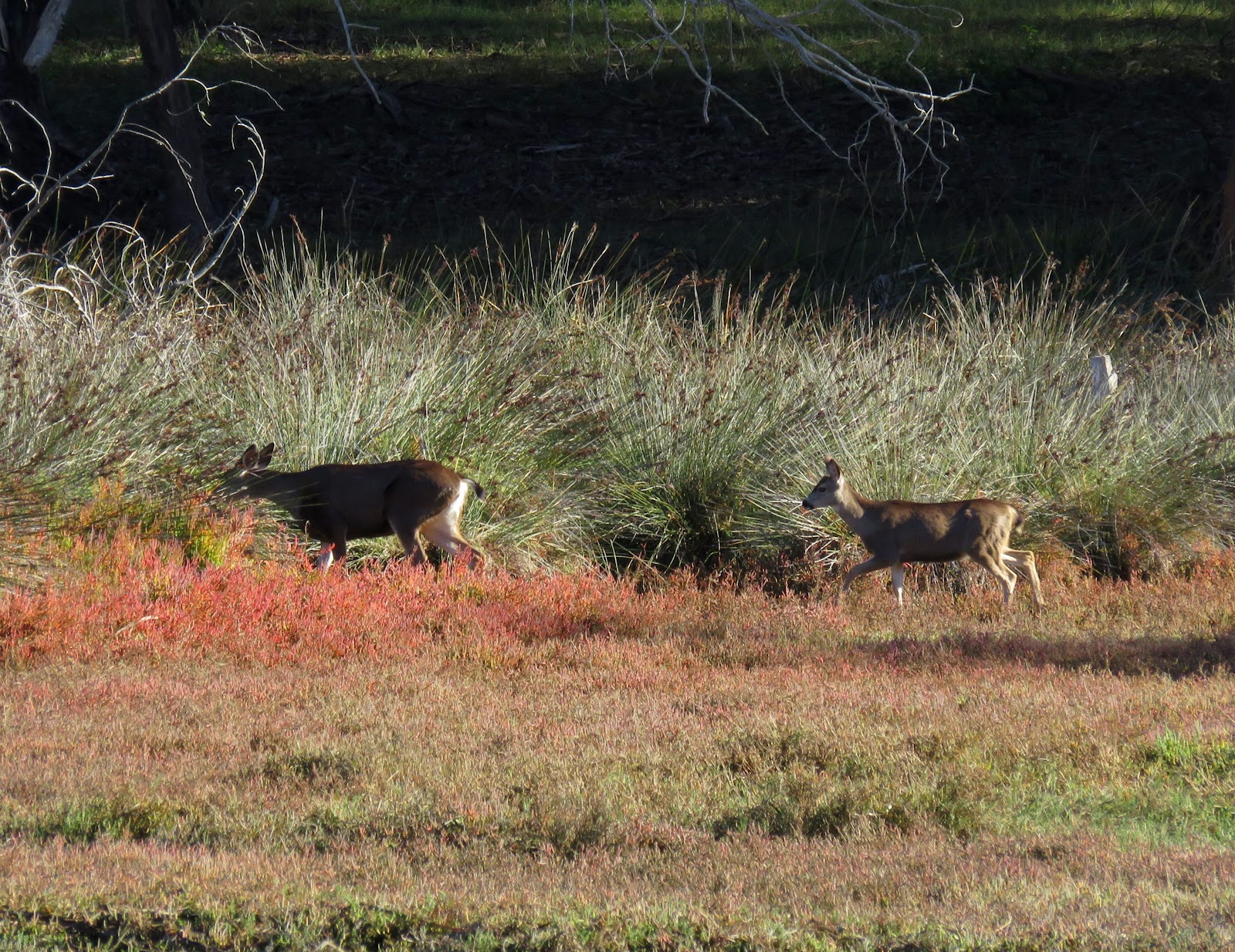
After most of the people that had been walking around the reserve had left, a Mule Deer doe and her fawn came out to graze on the plants. The fawn wasn't paying much attention, so it kept having to run to catch up with its mother. Below is a photo of them.
Mule Deer

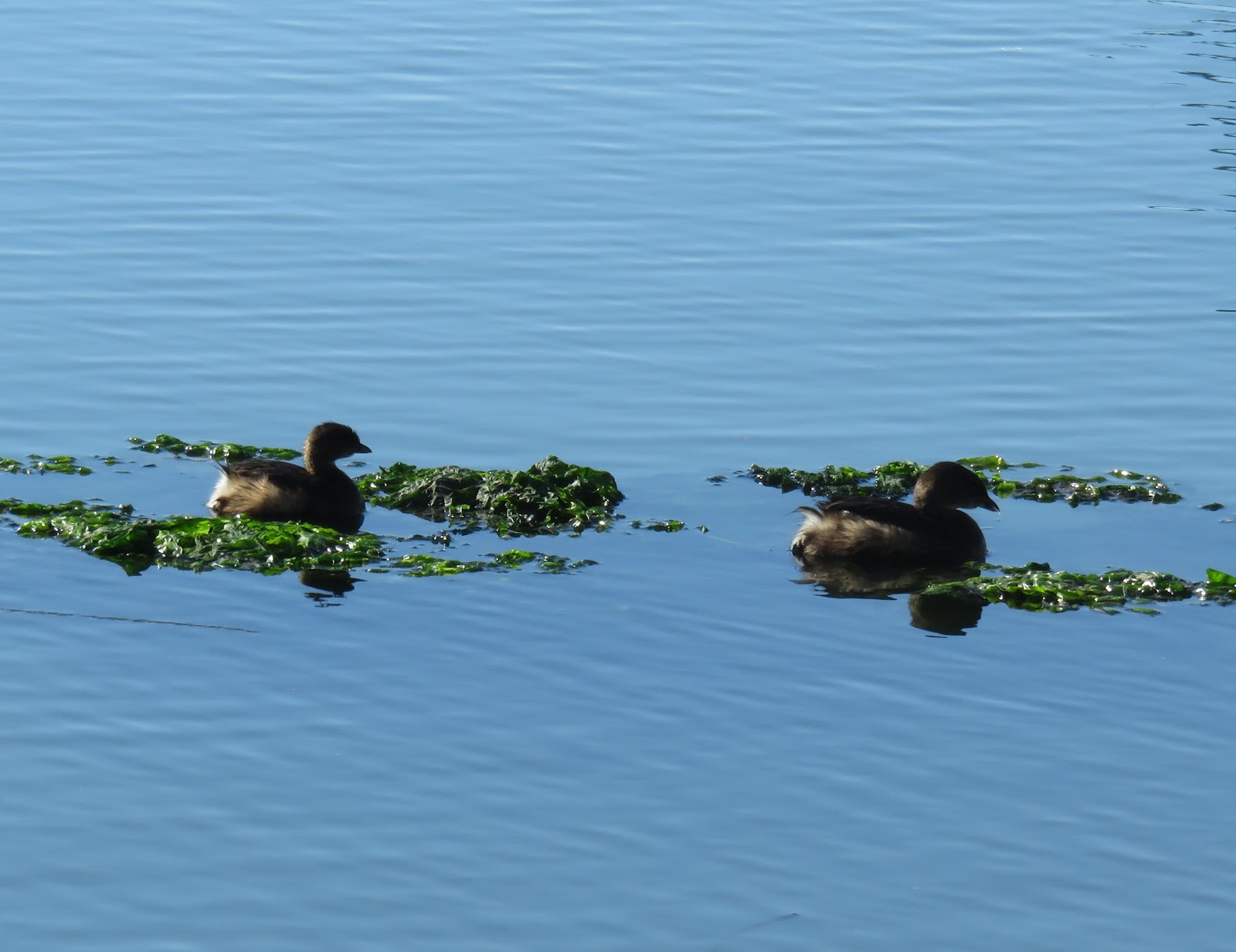
After the reserve, we went to a harbor area with trails near the Natural History Museum. There were quite a few Pied-billed Grebes in the harbor. Below are two of them.
Pied-billed Grebes

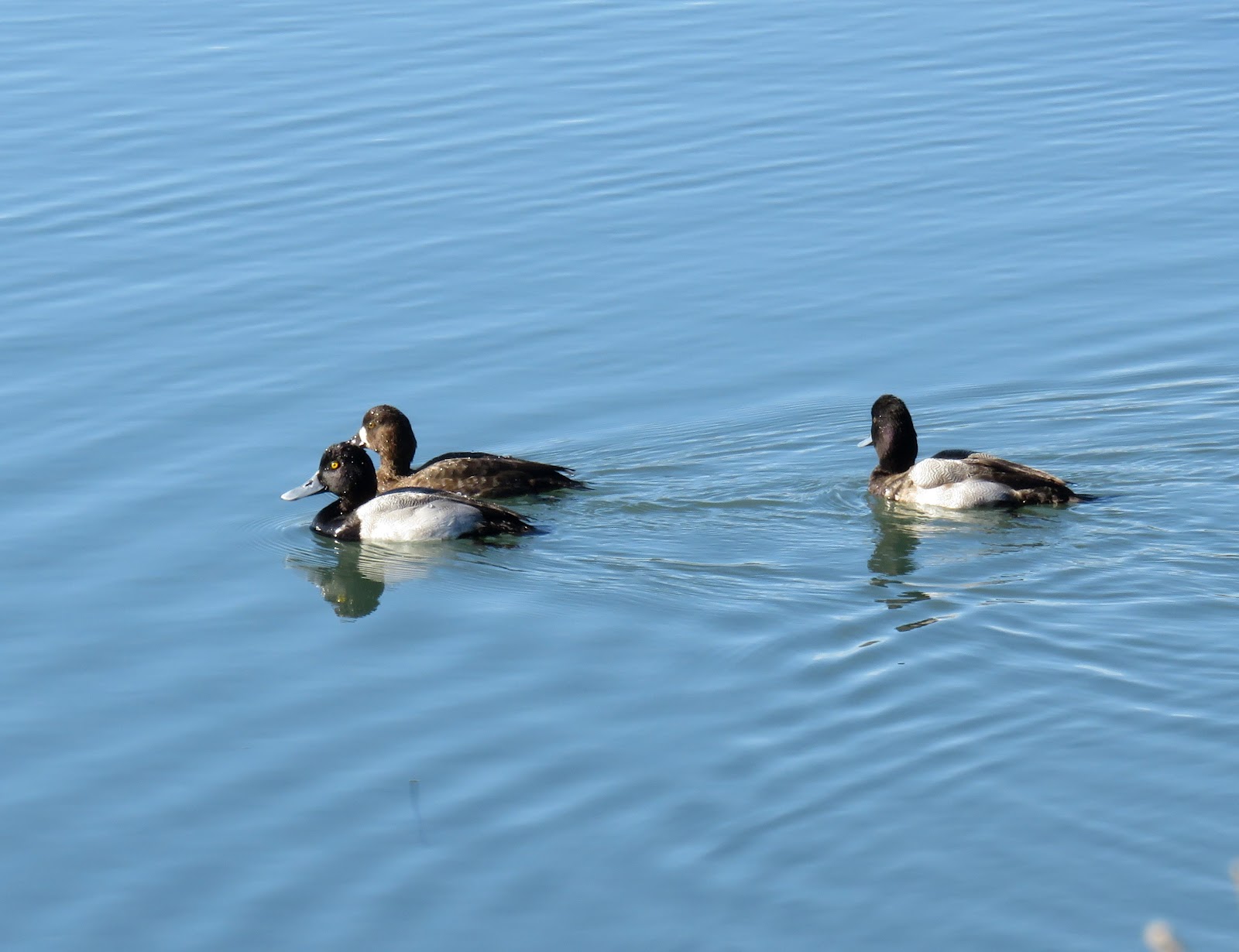
There were also a few Greater Scaup. They didn't like us looking at them, so they started swimming away almost as soon as we walked up. There were two males (one of them was a younger male; he didn't have his full adult feathers) and one female. Below is a photo of them.
Greater Scaup

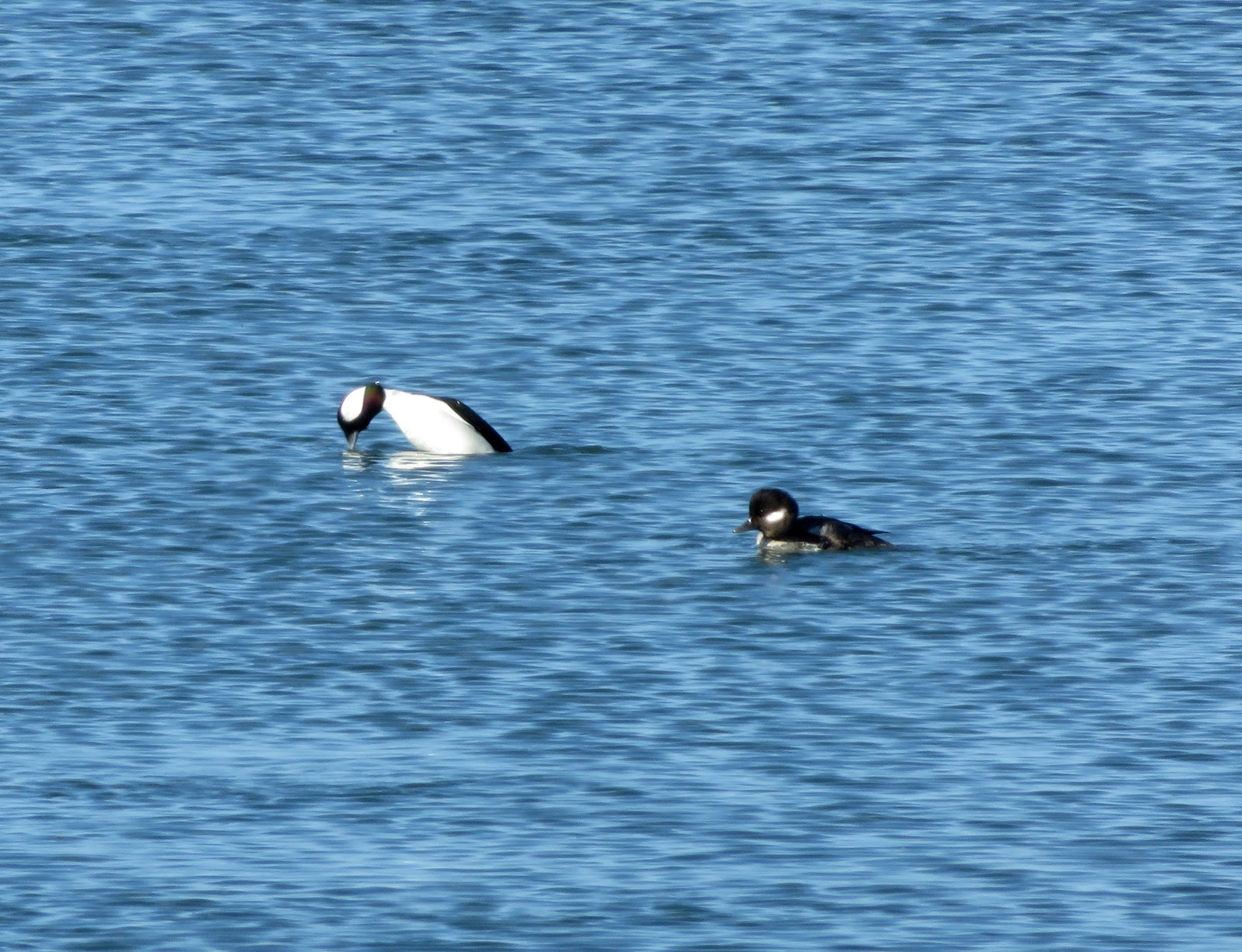
There were Bufflehead in the harbor, too, though most of them were a bit far away. They were all diving into the water over and over and over. Below is a photo of two of them, a male and a female (the male is diving).
Bufflehead

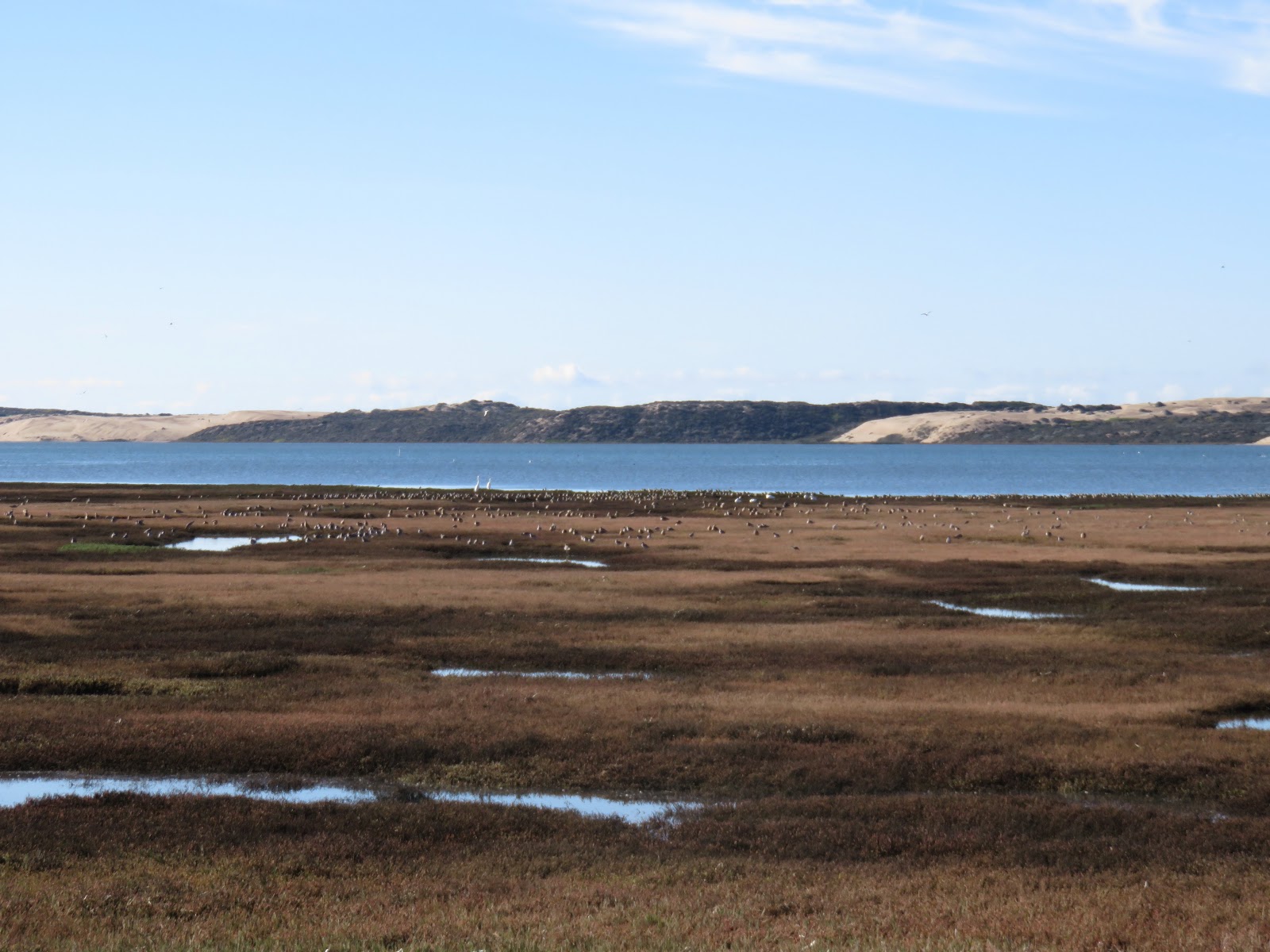
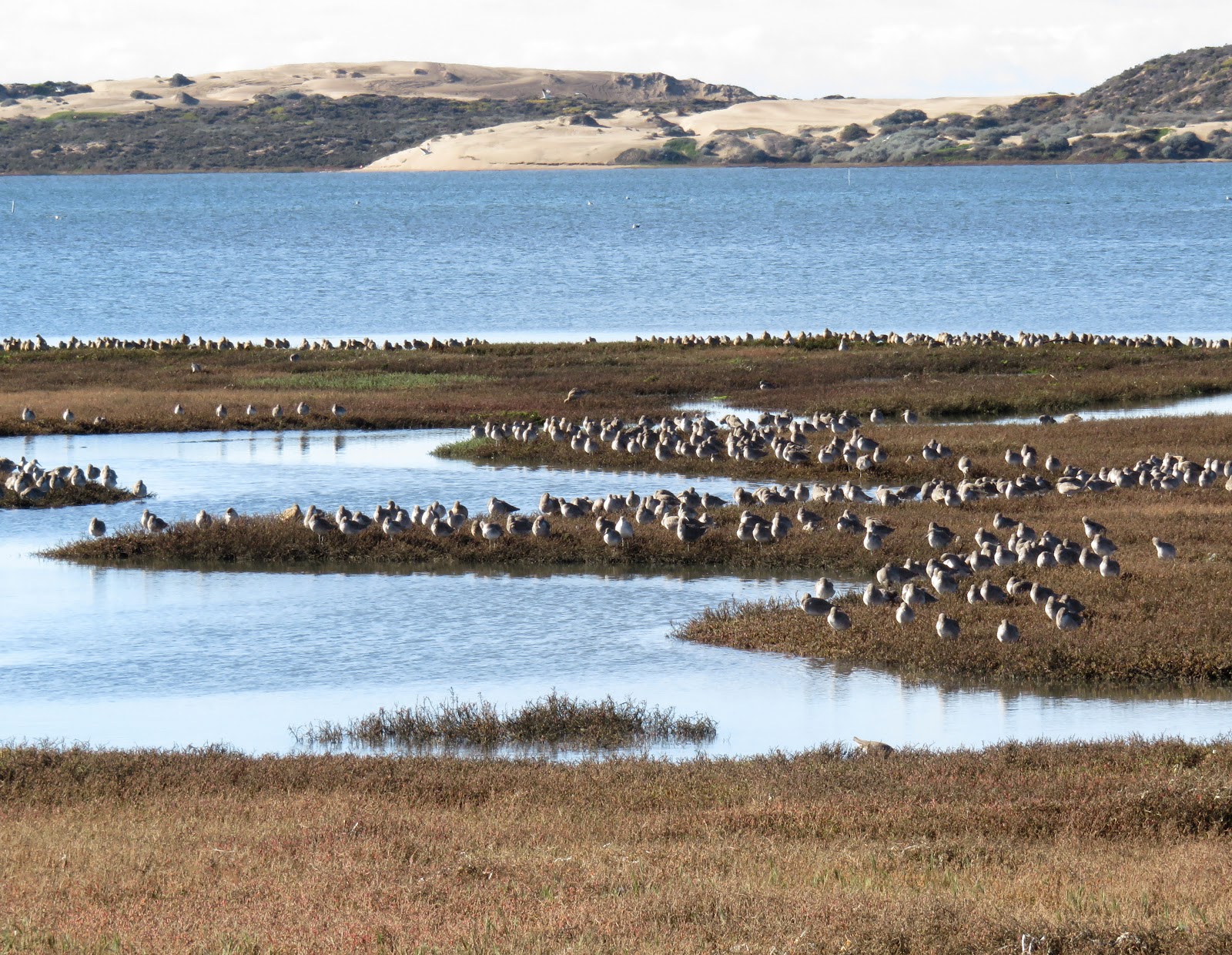
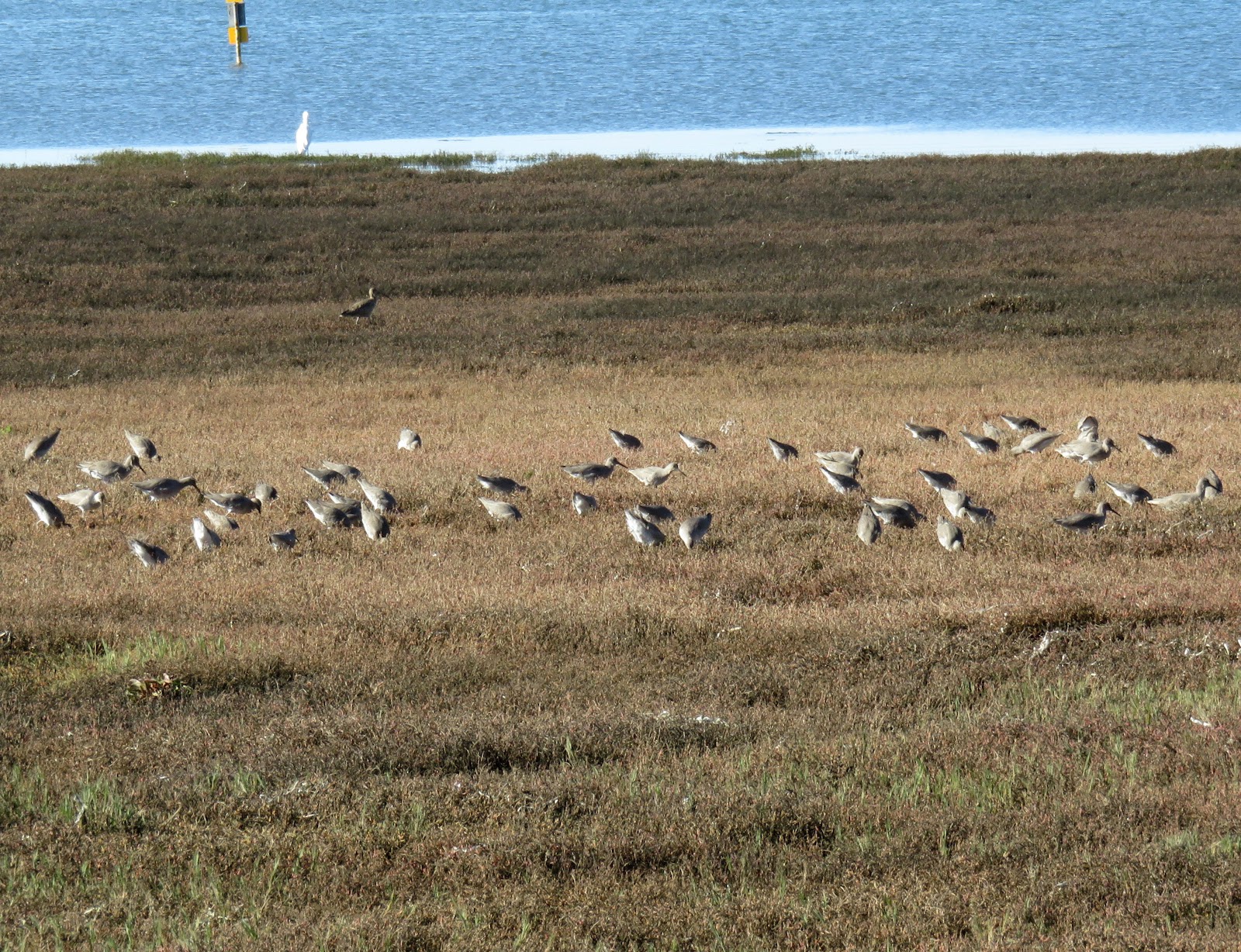
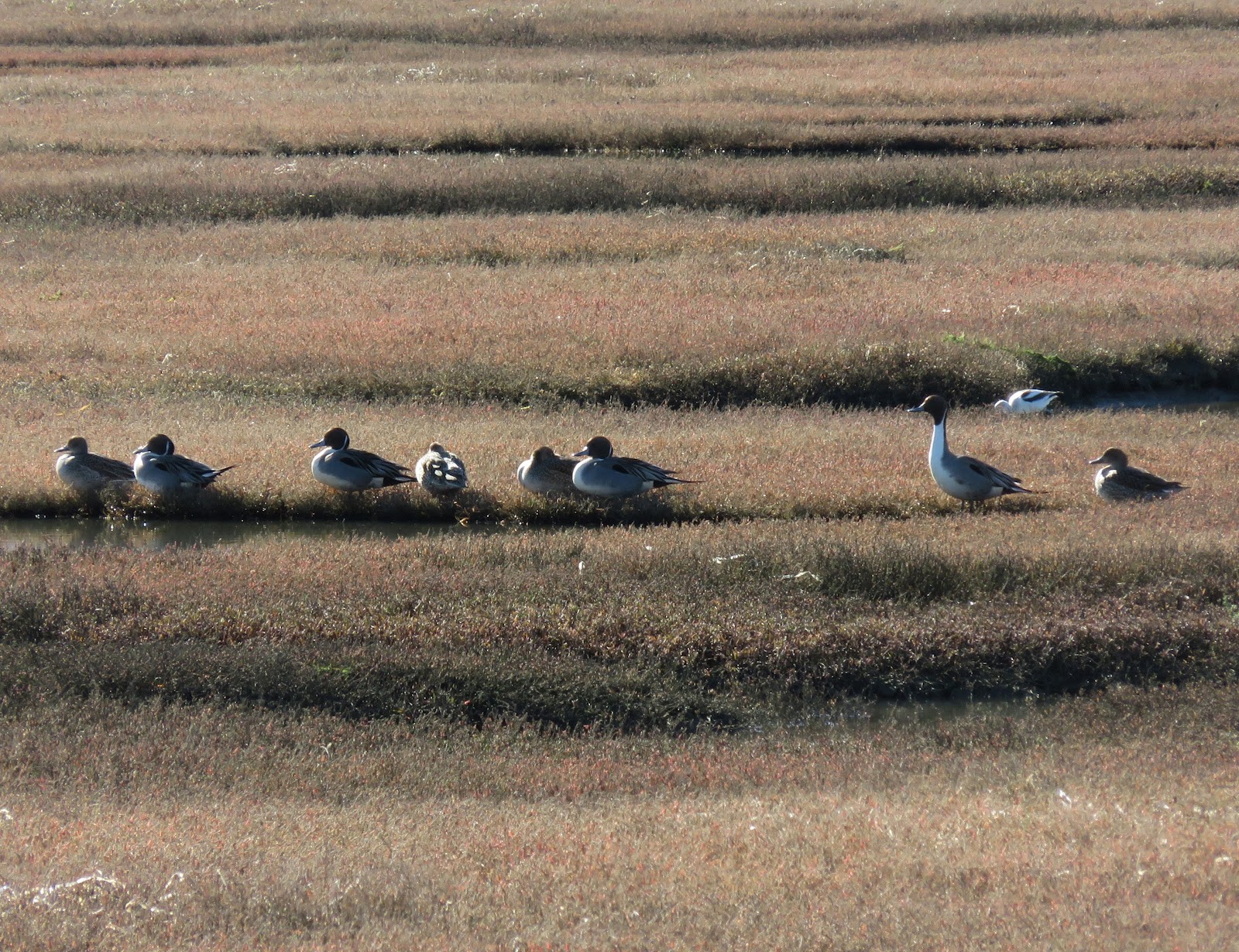
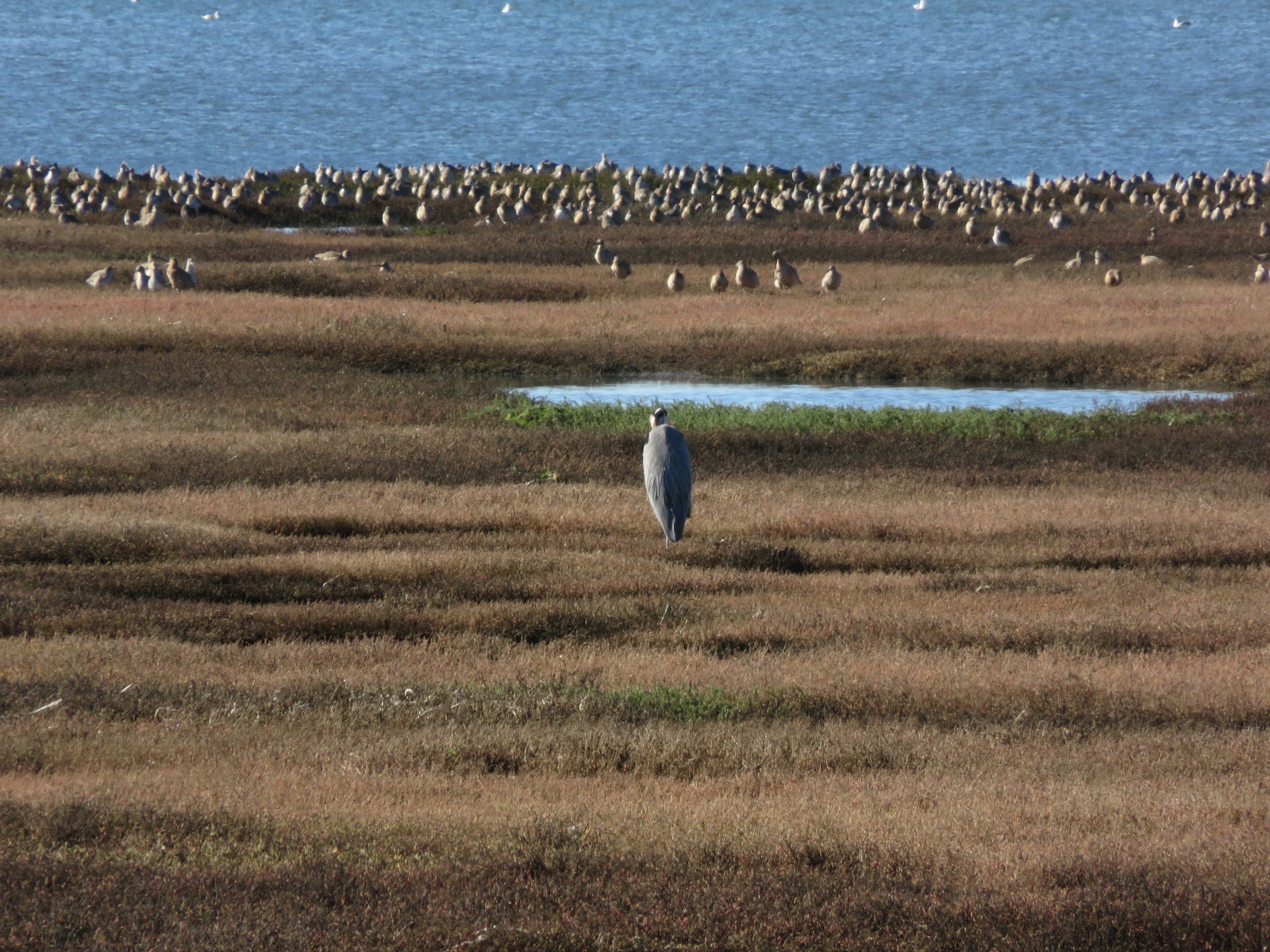
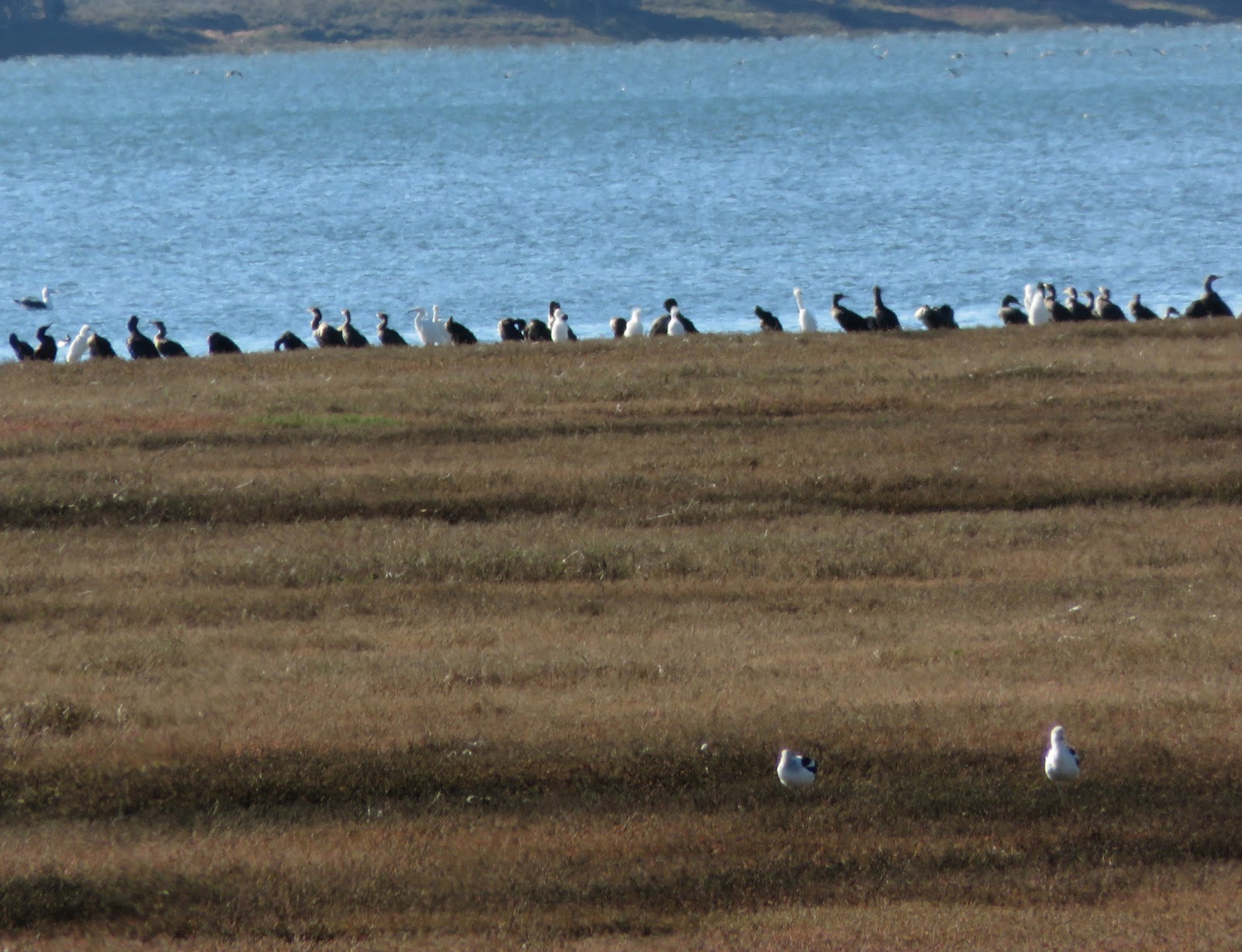
There were a lot of shorebirds (and ducks and gulls and other waterbirds). There were mostly Willets, but also quite a few Long-billed Curlews, American Avocets, Marbled Godwits, dowitchers, Whimbrels, and some small sandpipers that were either Western or Least Sandpipers (or both). There might have been other shorebirds as well, but they were far away and it would have been difficult (at least for me) to pick them out due to the sheer number of birds. Below are six photos. The first is a view of the wetland (shorebirds in the distance). The second and third are of shorebirds (mostly Willet, and also an egret in the third). The fourth is of Northern Pintails and an American Avocet, the fifth is of a Great Blue Heron and shorebirds, and the sixth is of Double-crested Cormorants, Snowy Egrets, and American Avocets.
Shorebirds
Shorebirds
Shorebirds and Egret
Northern Pintails and American Avocet
Great Blue Heron and Shorebirds
Double-crested Cormorants, Snowy Egrets,
and American Avocets

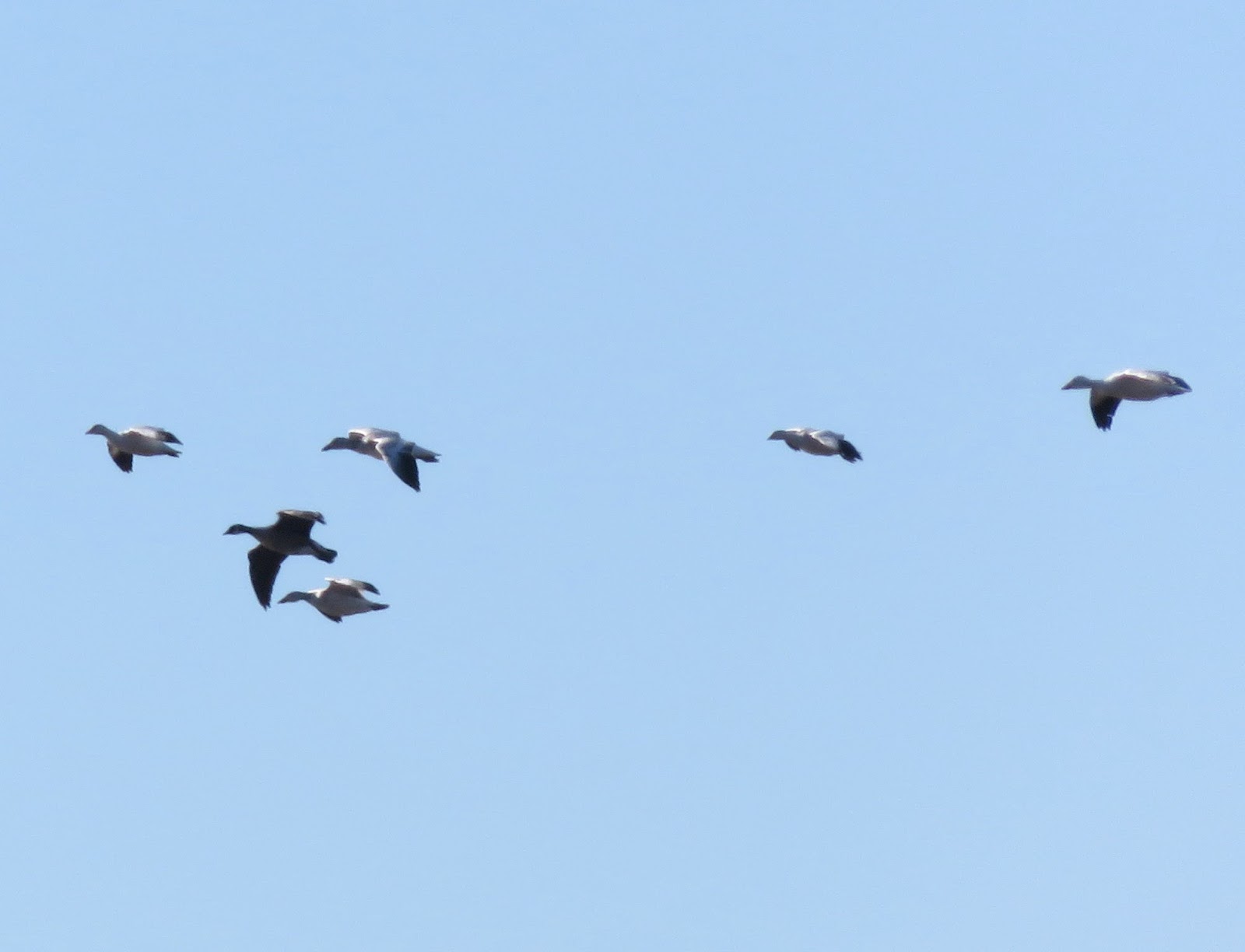
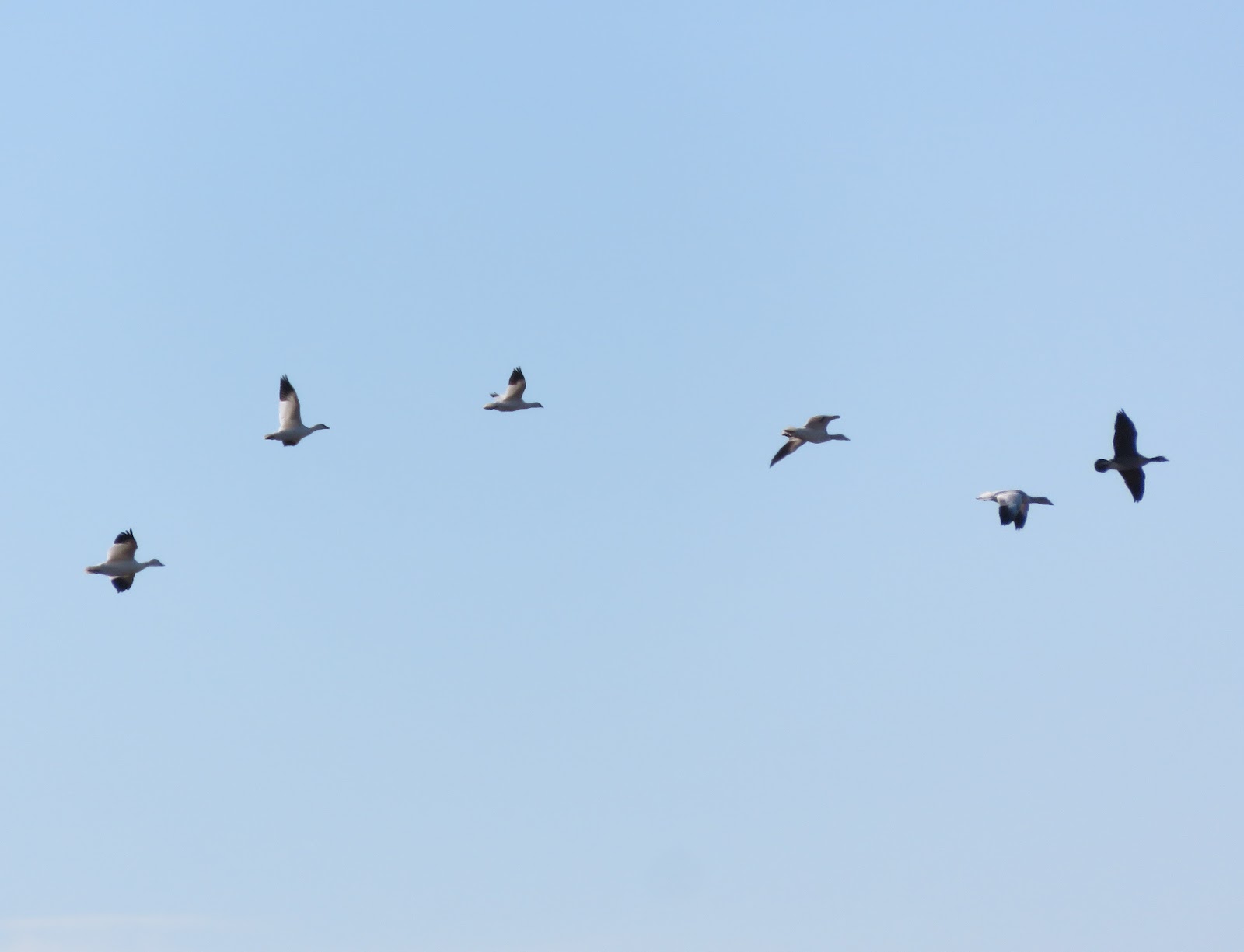
As we were watching the shorebirds, a small group of geese flew in. They circled around and around, then struggled to land (there were too many birds in the way). Eventually, some of the shorebirds flew away and they had a space to land. In that small group of geese, there were three species: four Snow Geese, one Ross's Goose, and one Cackling Goose.
          Both Snow Geese and Ross's Geese are found in the Arctic in the summer and on the east coast and patches of the southern midwest and west of the United States and northern Mexico in the winter. Snow Geese have a somewhat larger range. Both geese are white with black wingtips and pink bills and legs, but Ross's Geese are smaller with rounder heads, smaller bills, and shorter necks. Snow Geese have a black "grin patch" on their bills, while Ross's Geese do not. Snow Geese and Ross's Geese often flock together.
          Cackling Geese were split as their own species from the Canada Geese somewhat recently; they used to be considered subspecies. They are found in northern Canada and Alaska in the summer and the middle of the United States, coastal Texas, and in patches in the western United States in the winter. Cackling Geese are very similar to Canada Geese, though they can be distinguished by their small size, short necks, and sometimes shorter bill (but bill length varies). They sometimes mix in flocks of Canada Geese.
          Below are three photos. In the first photo, the Cackling Goose is the dark goose (notice that it has a very short neck and is smaller than the Snow Geese - Canada Geese are larger than Snow Geese), and the Ross's Goose is the second from the right (notice the smaller size, shorter neck, and short bill). In the second photo, the Cackling Goose is first in line, and the Ross's Goose is fourth. In the third photo, the geese are landing among the crowd of shorebirds (and some are flying away), and the Cackling Goose is on the left and (I think) the Ross's Goose is the second from the right. There's also a Brown Pelican in the background.
Snow Geese, Cackling Goose, and Ross's Goose
Snow Geese, Ross's Goose, and Cackling Goose
Cackling Goose, Snow Geese, Ross's Goose, Brown Pelican,
and Shorebirds

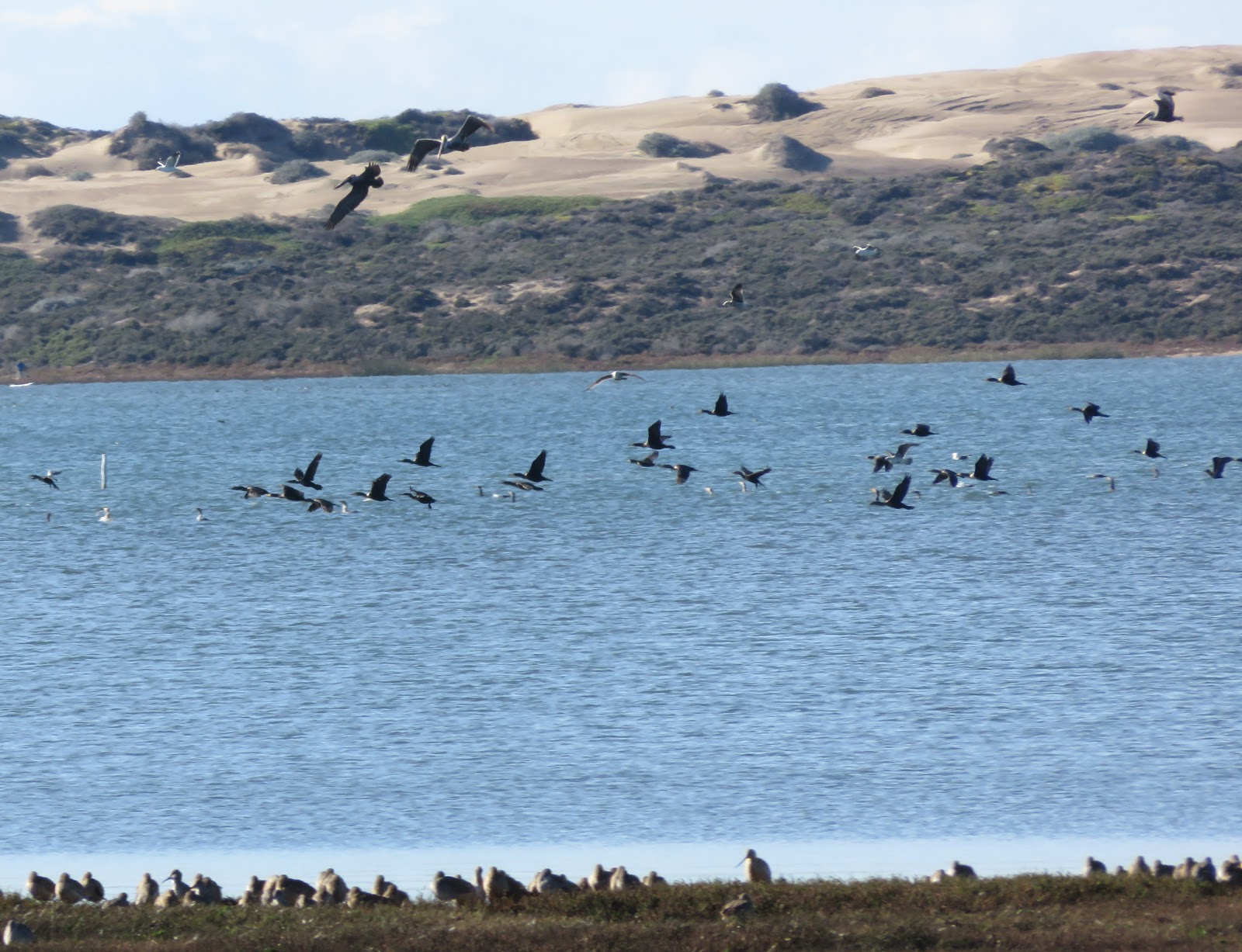
Often, groups of birds would suddenly fly up together and circle around before landing again in the same spot. Below are two photos. The first is of a group of gulls, Double-crested Cormorants, and Brown Pelicans flying over the water (various shorebirds in the foreground). The second is of a flock of Marbled Godwits.
Double-crested Cormorants, Brown Pelicans, Gulls, and
Shorebirds
Marbled Godwits

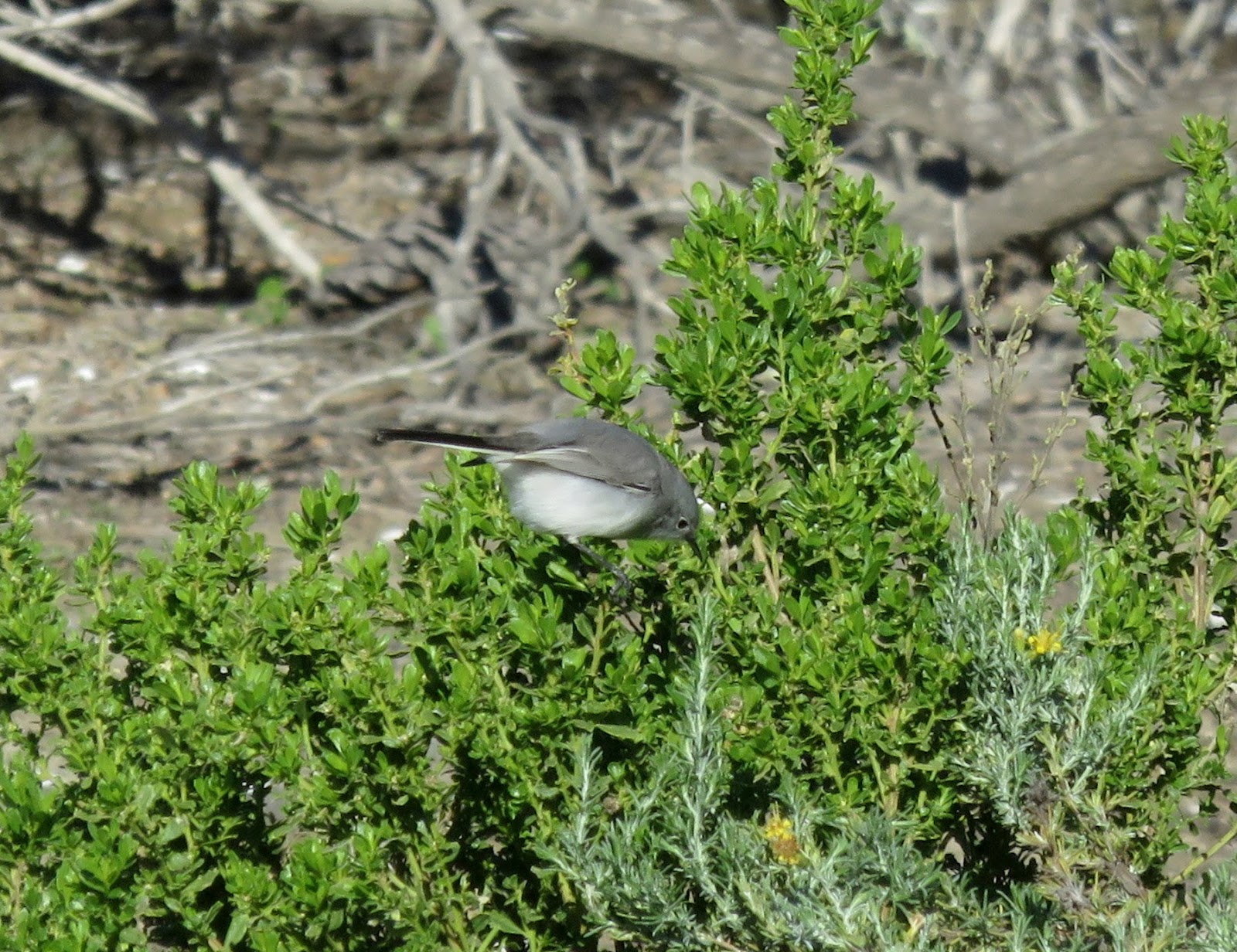
Hopping around in the bushes were quite a few Blue-gray Gnatcatchers. They were making their little buzzing noises and occasionally they came out into the open. Below is one of the gnatcatchers.
Blue-gray Gnatcatcher

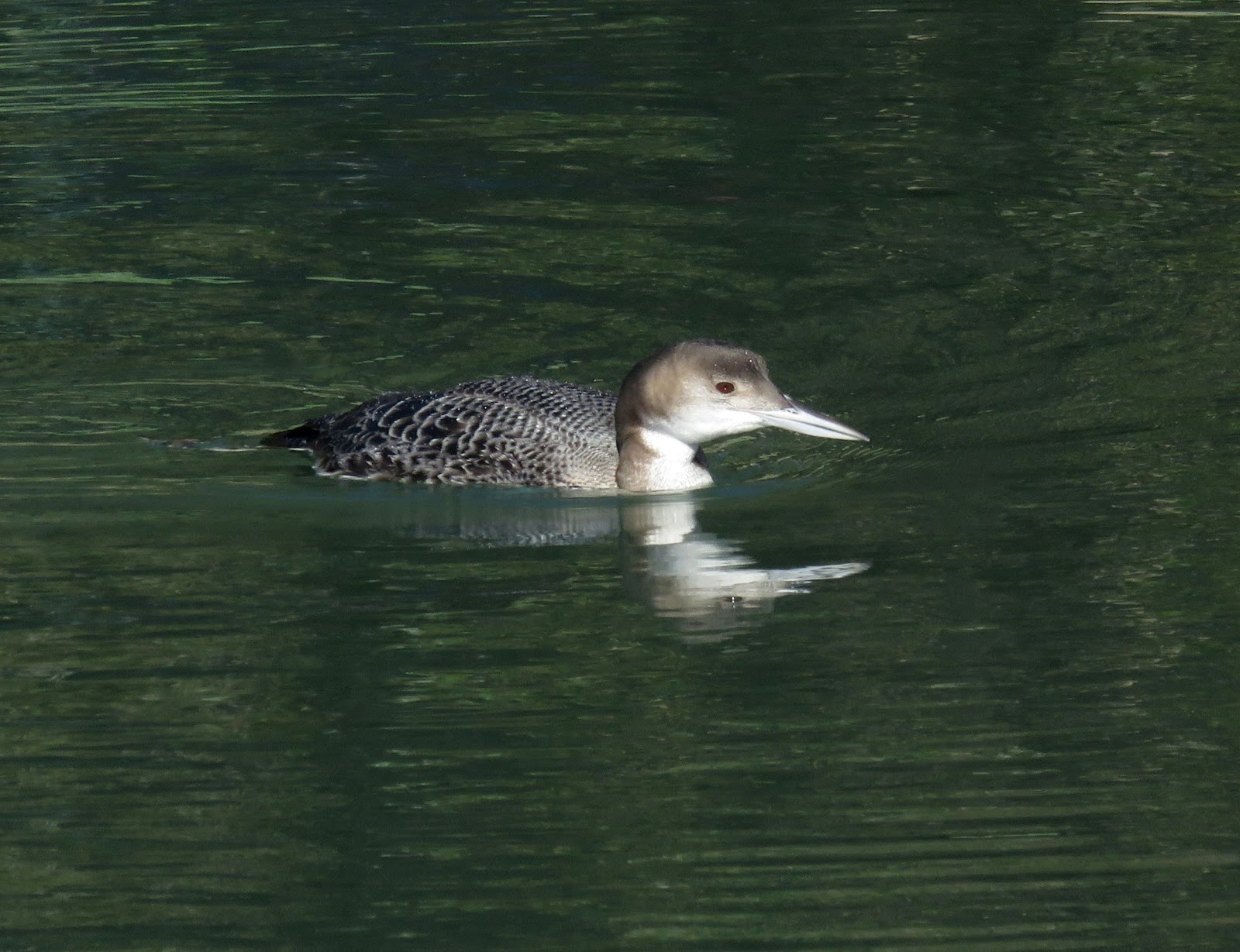
As we walked past the harbor again, there was a Common Loon swimming around. It would dive into the water, but not very deep, so we could see it swimming around below the surface. It didn't seem to be bothered by us, and swam very close to the shore near us. Common Loons are found in the northern United States, Canada, and Alaska in the summer and in the southeastern United States and coasts of the United States and Mexico in the winter. They are found on the western coast of Canada all year. In the summer, they have white bellies, black and white checkered backs, black heads and bills, and white collars. In the winter, they are brown above and white below with pale, bluish-gray bills. They look somewhat similar to Pacific and Red-throated Loons in the winter, but can be distinguished by their larger size, thicker necks and bills, and white around the eye. Below are two photos of the Common Loon.
Common Loon
Common Loon