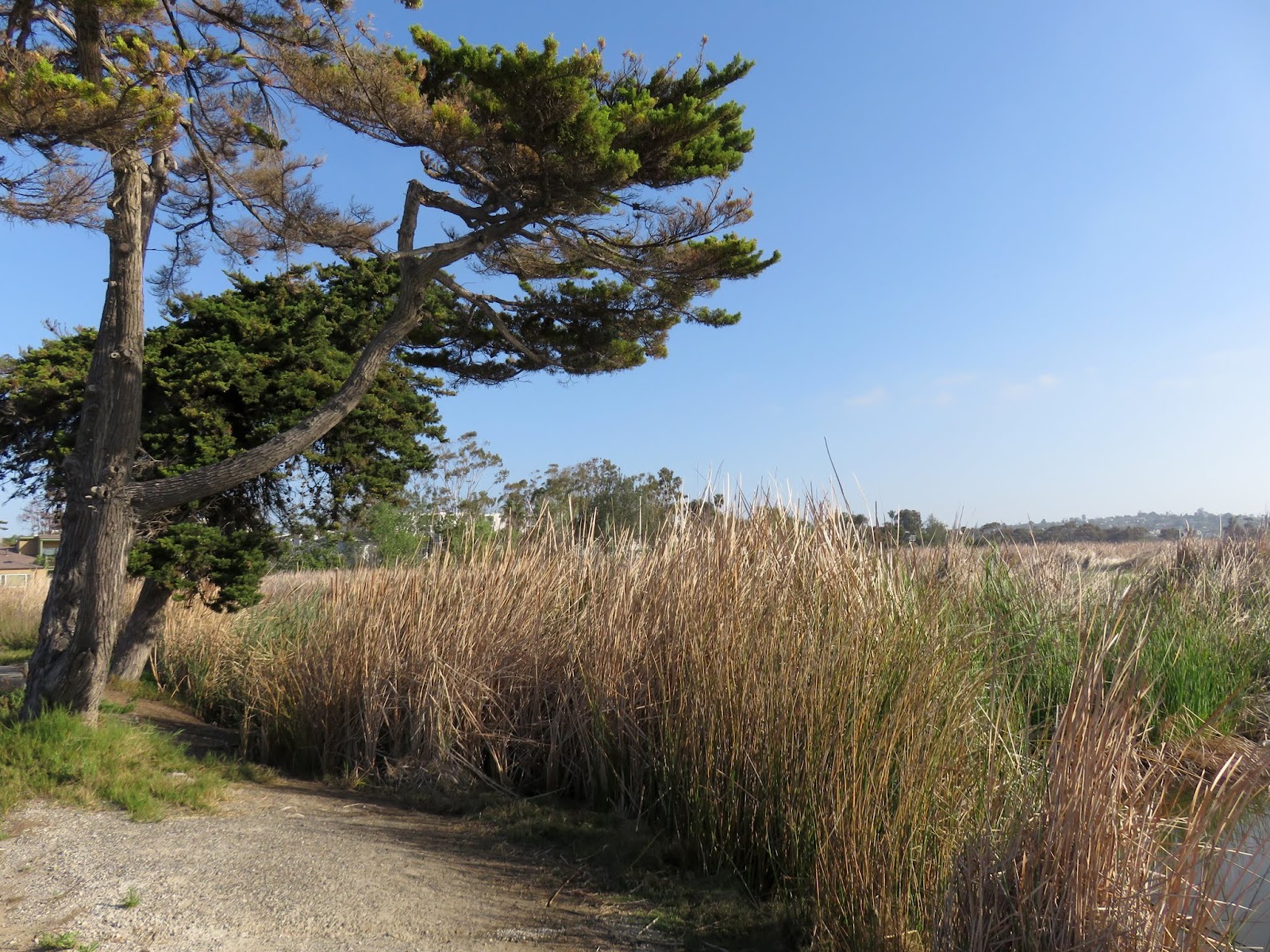
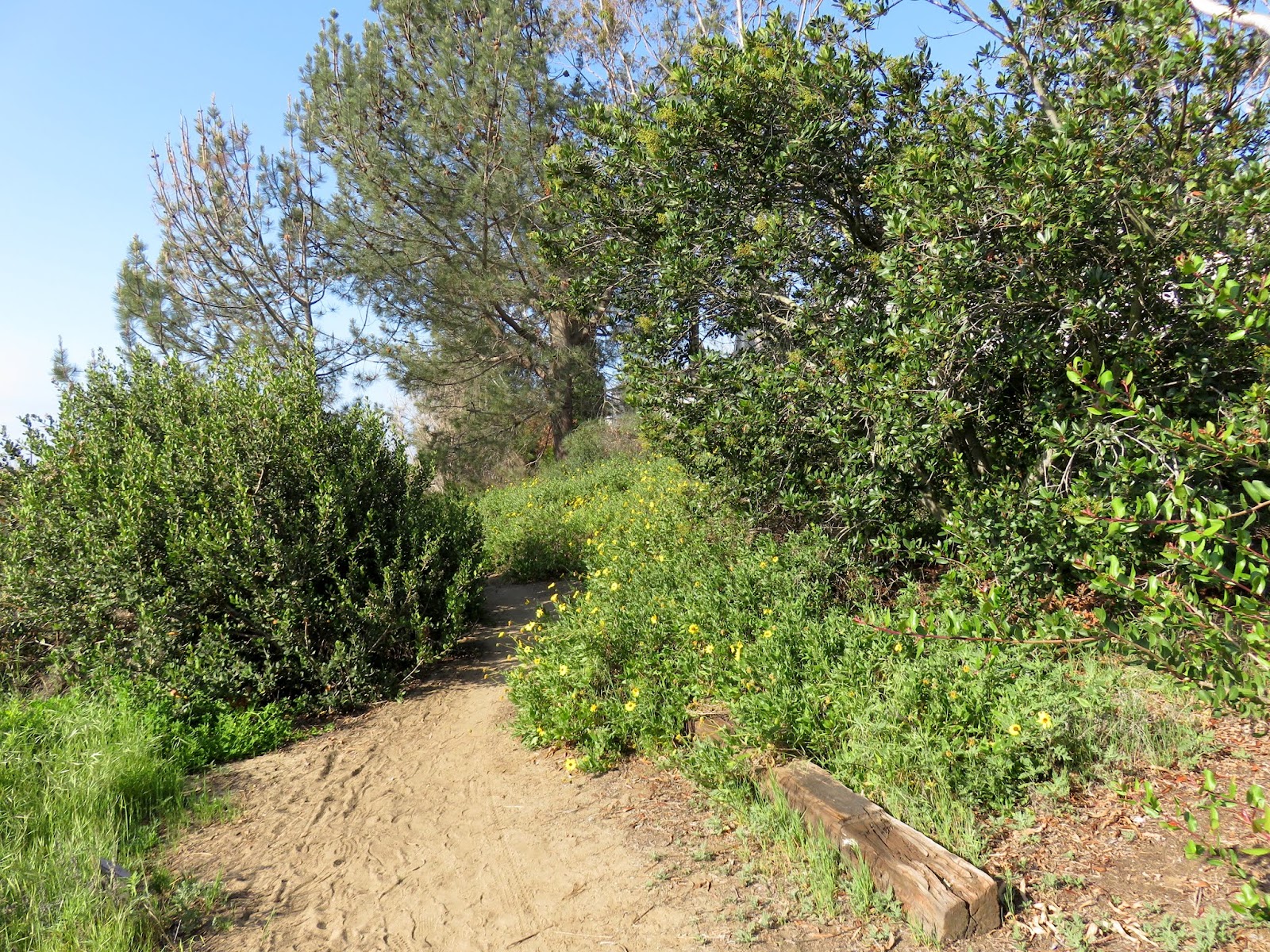
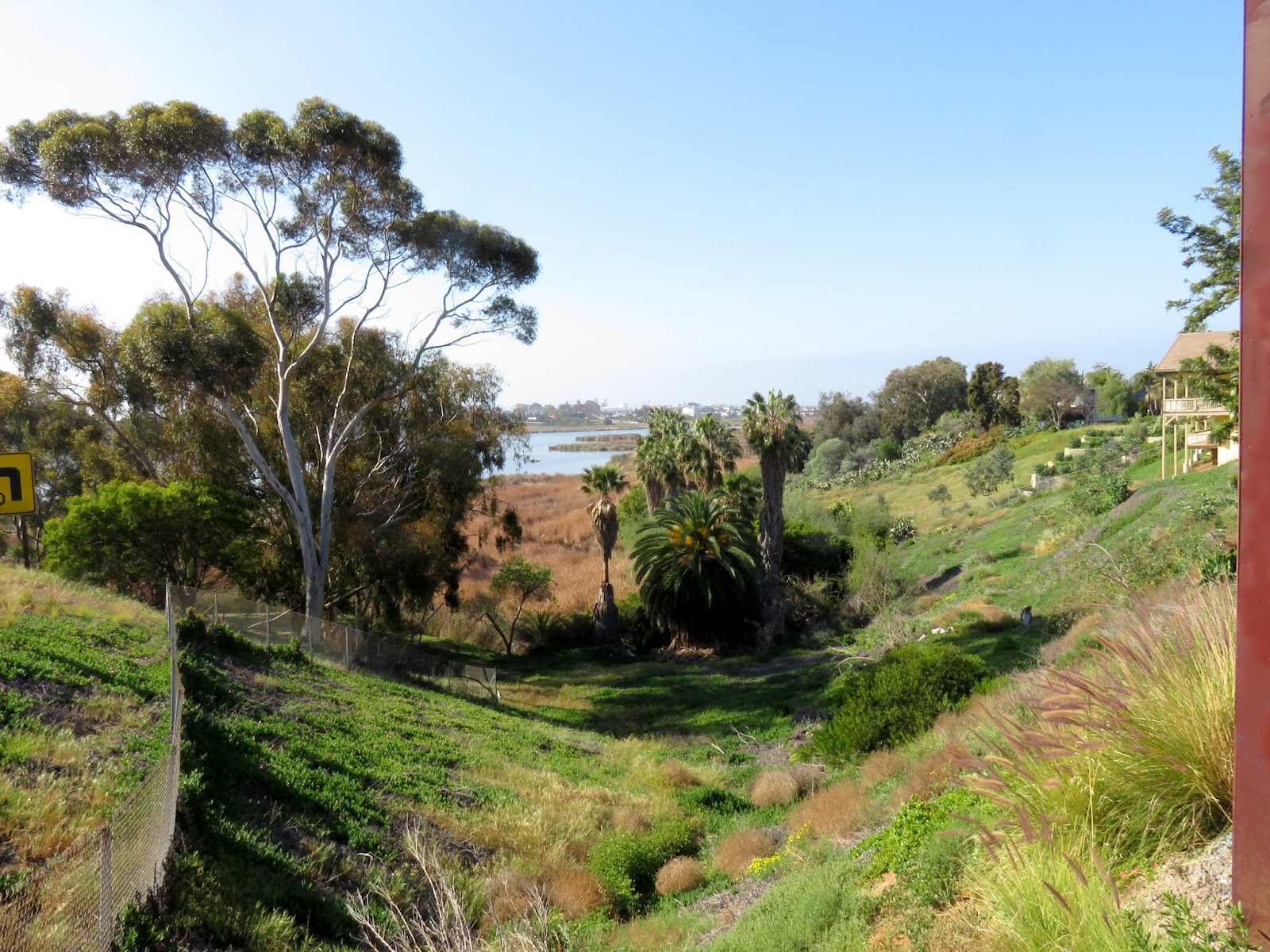
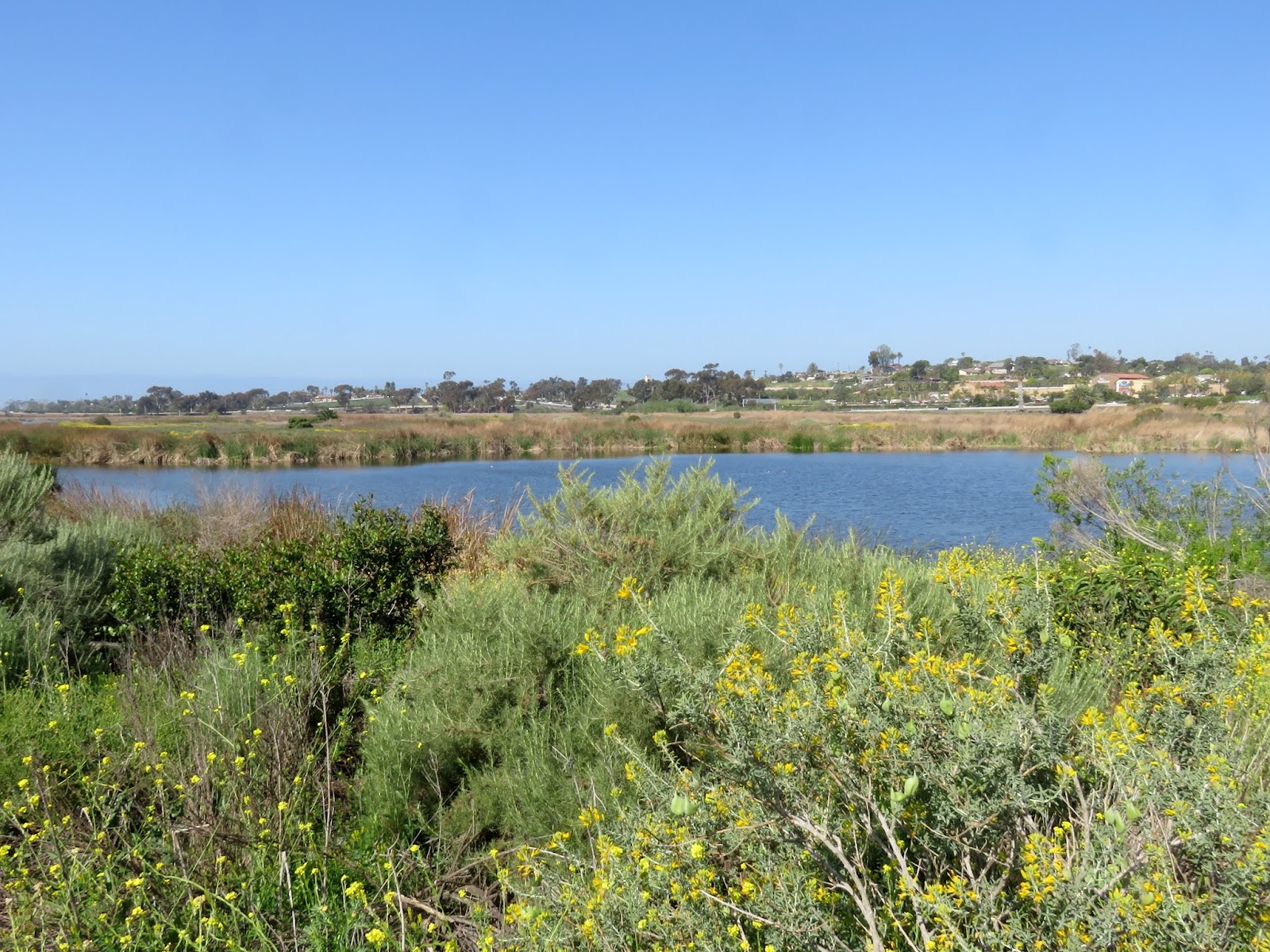
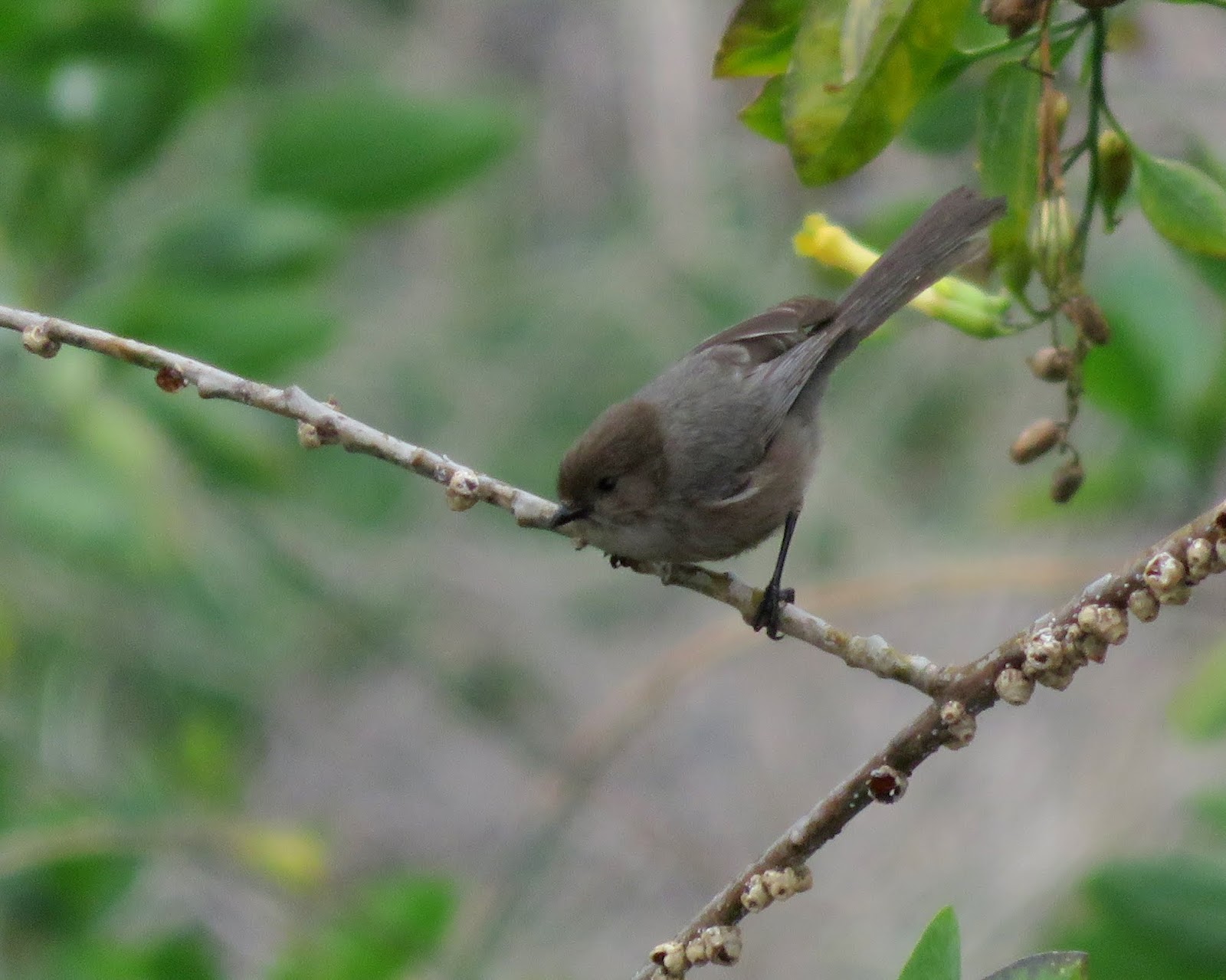
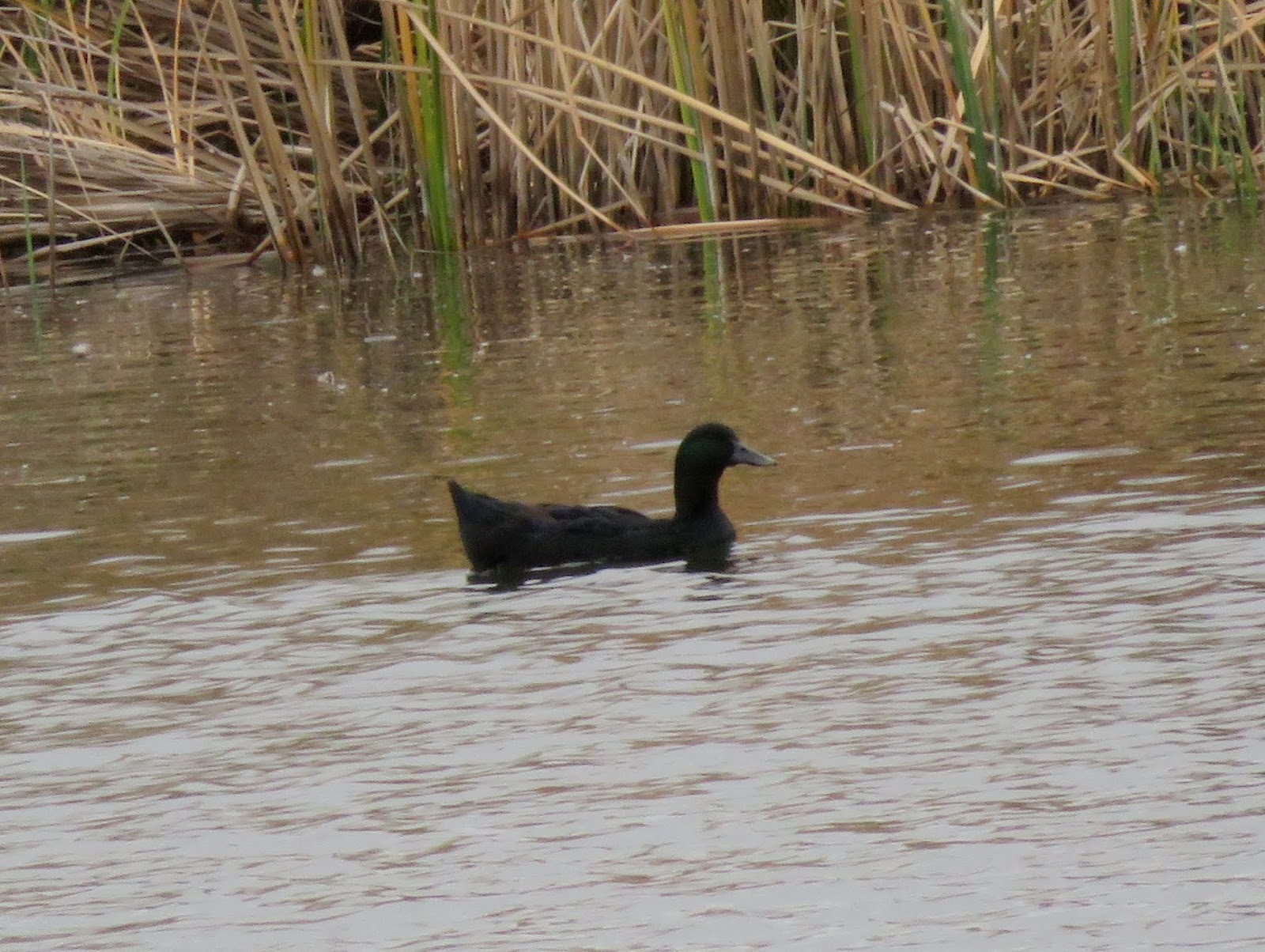
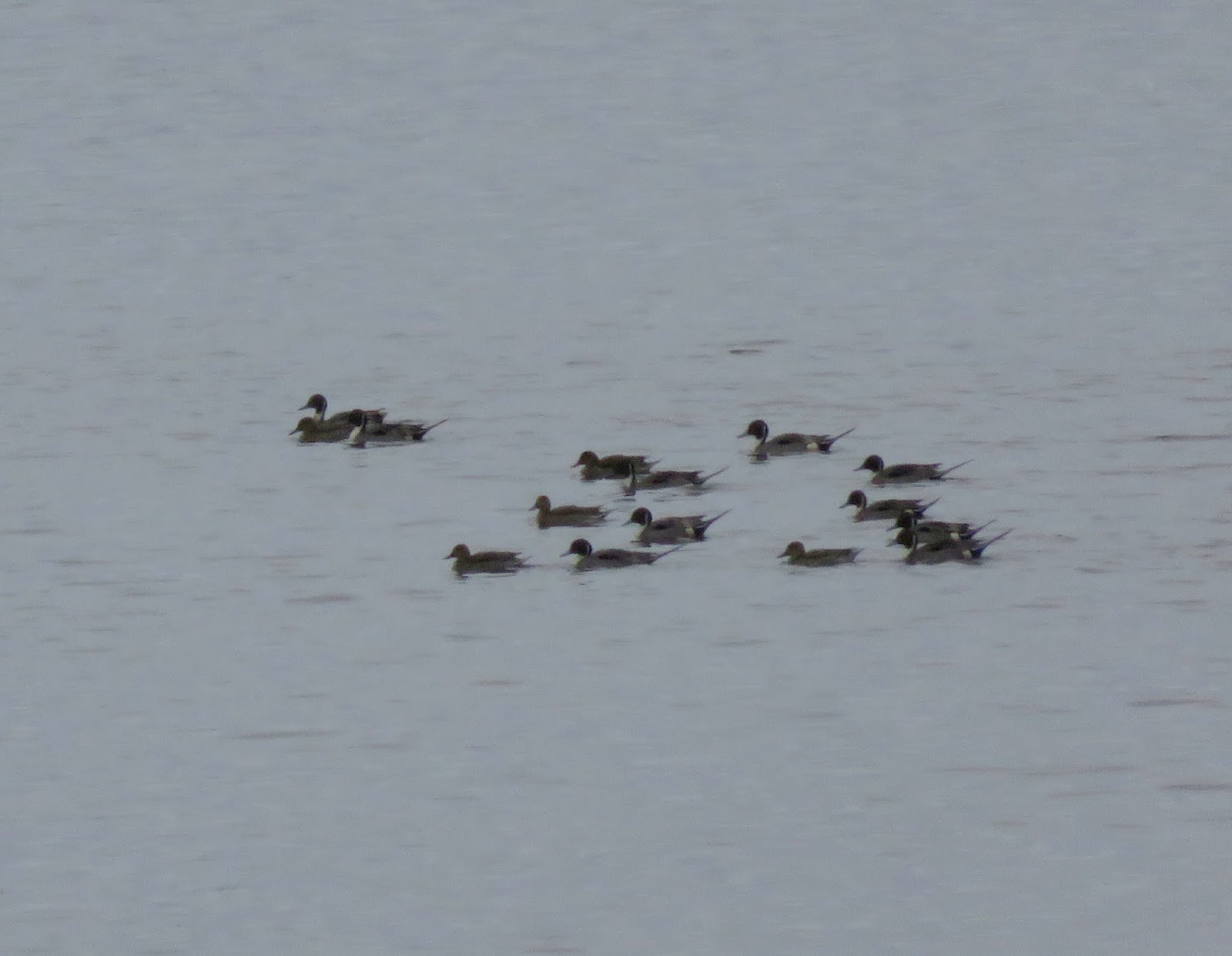
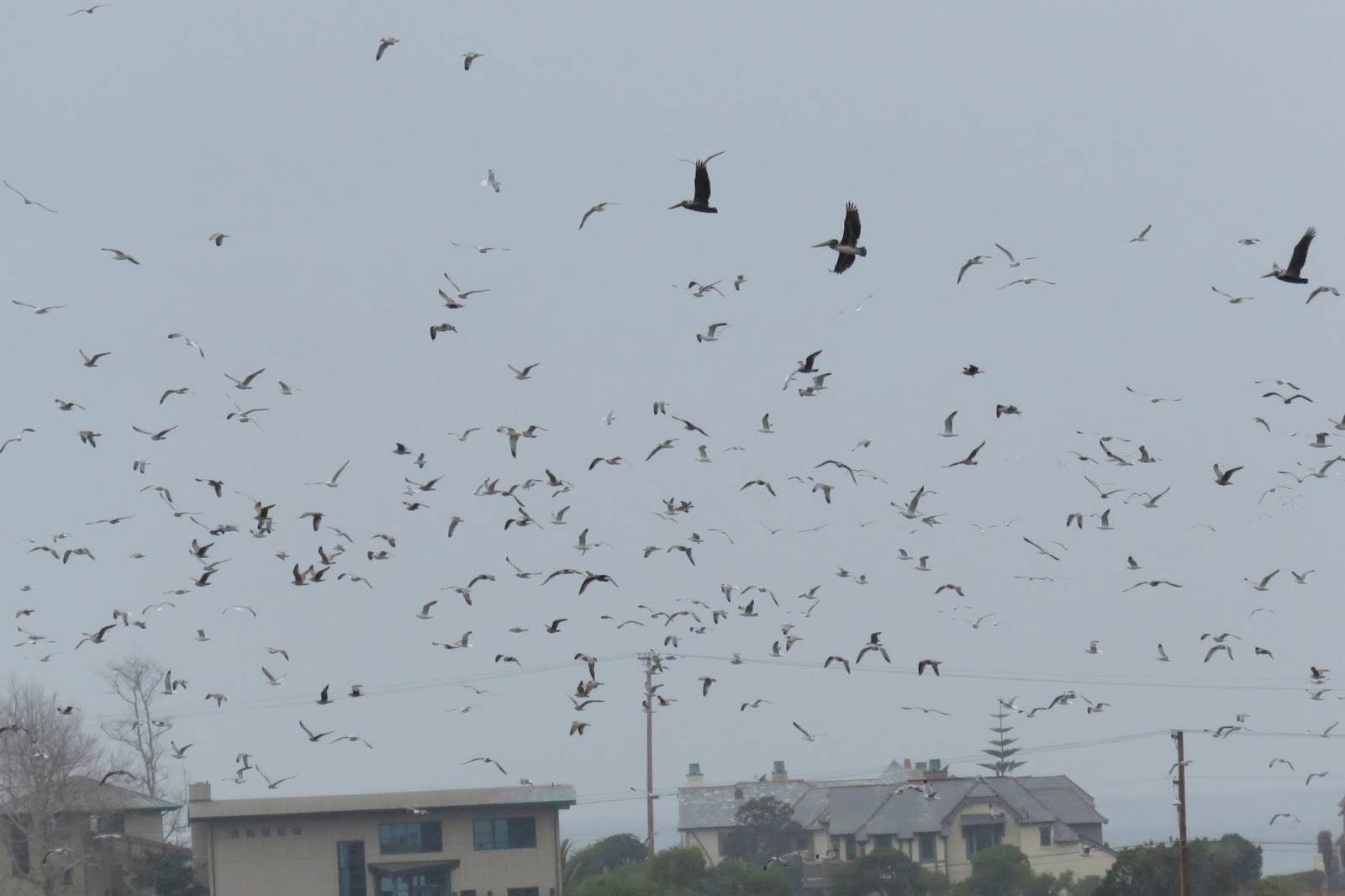
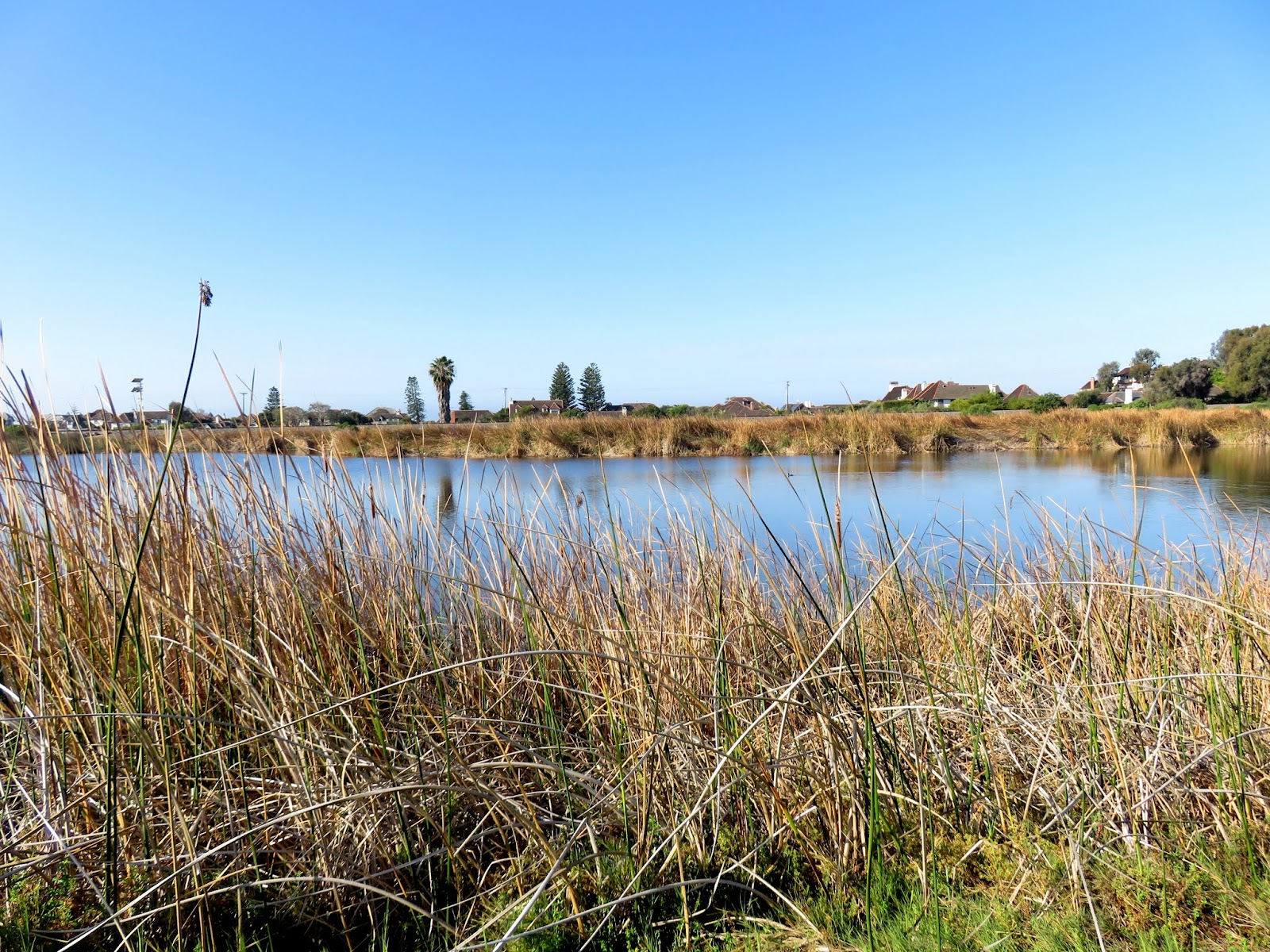
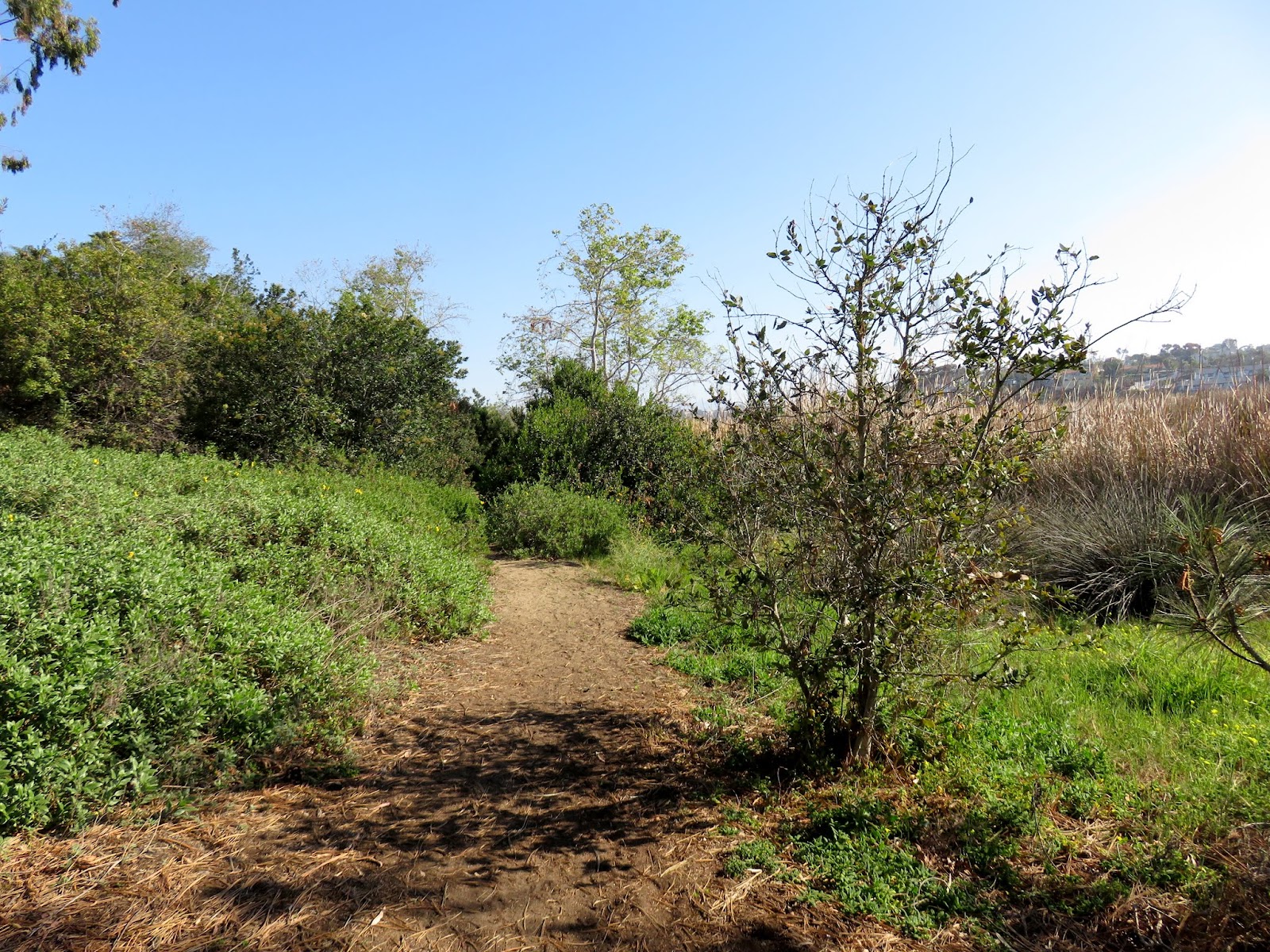
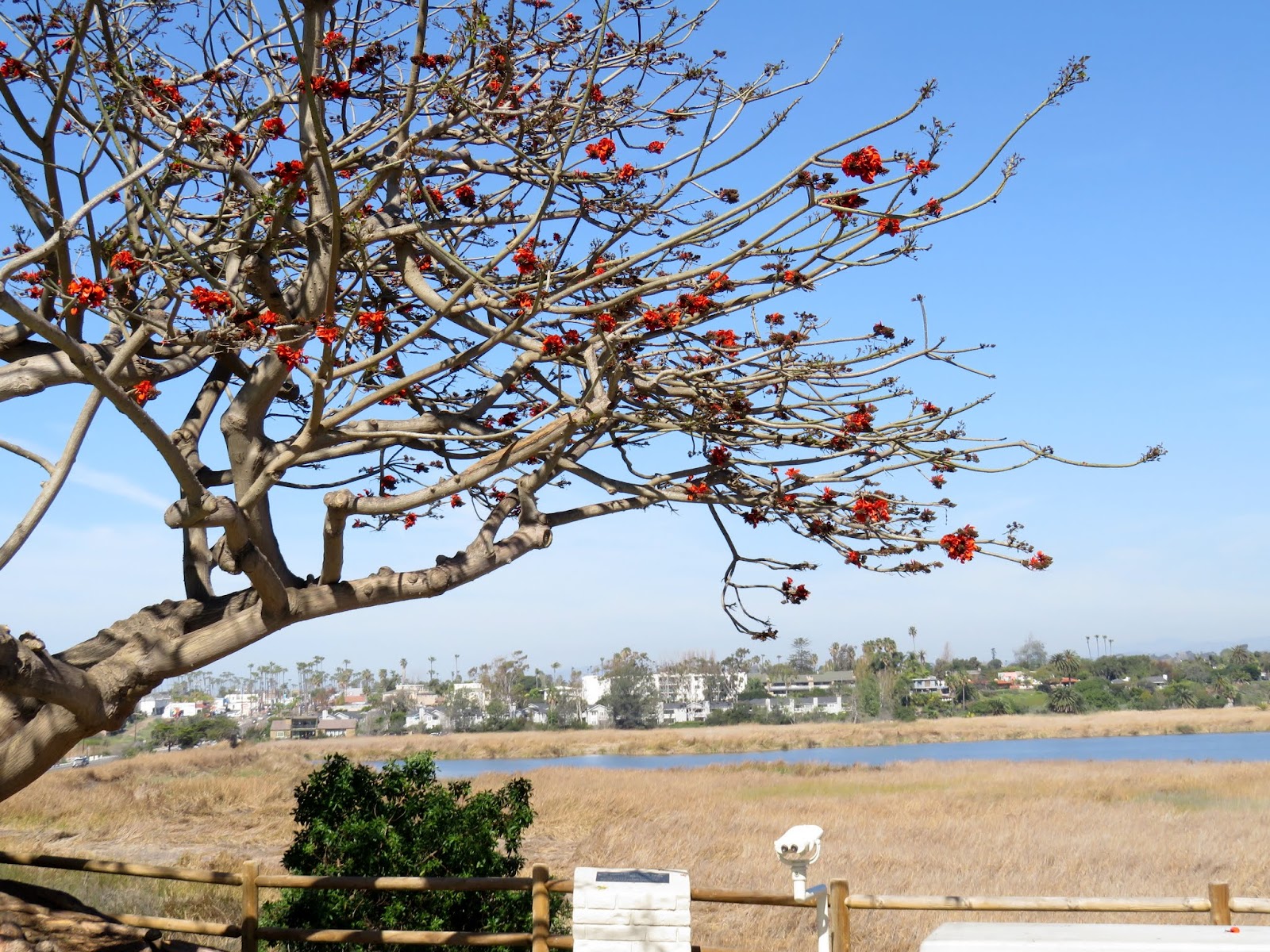
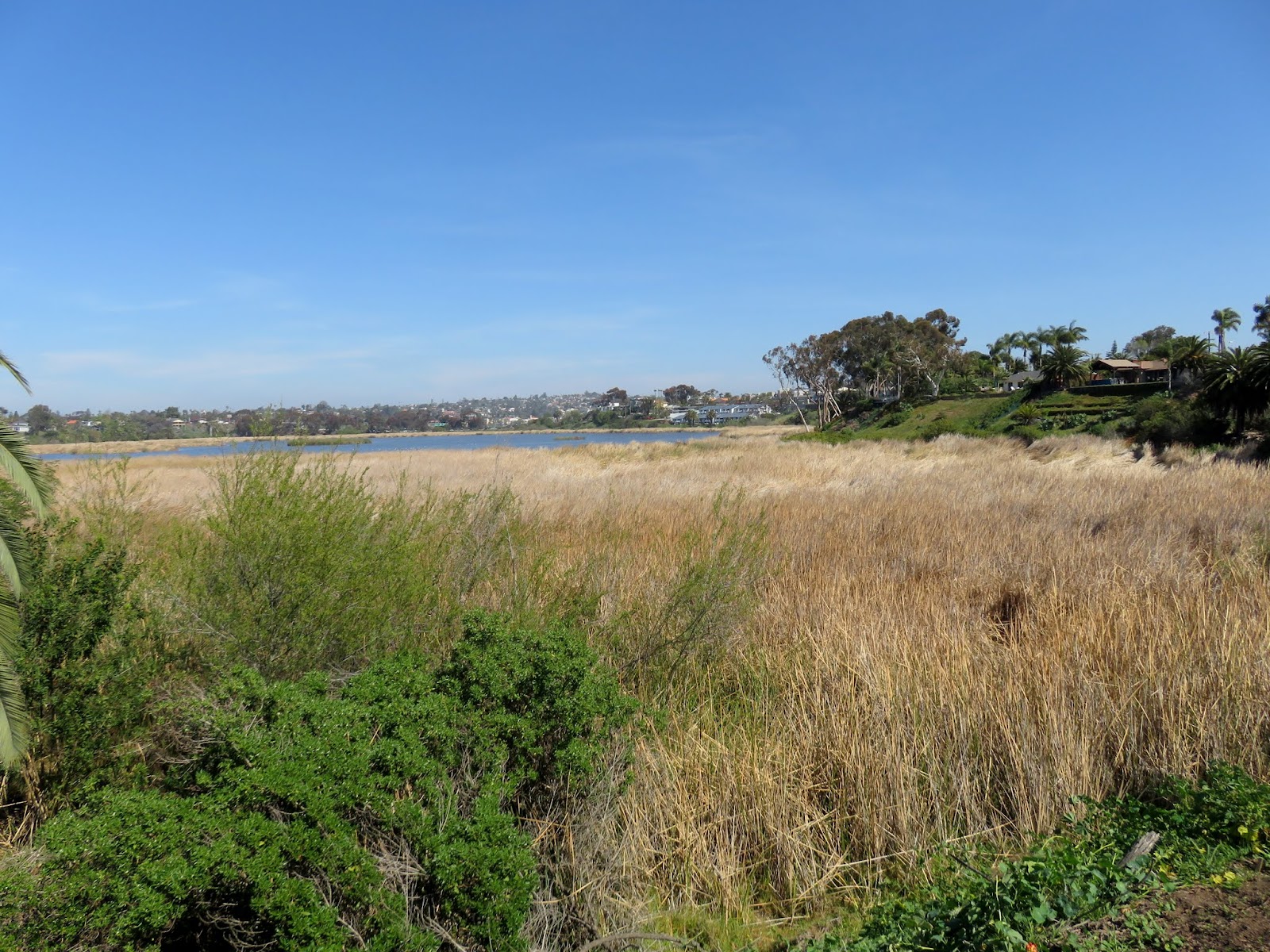
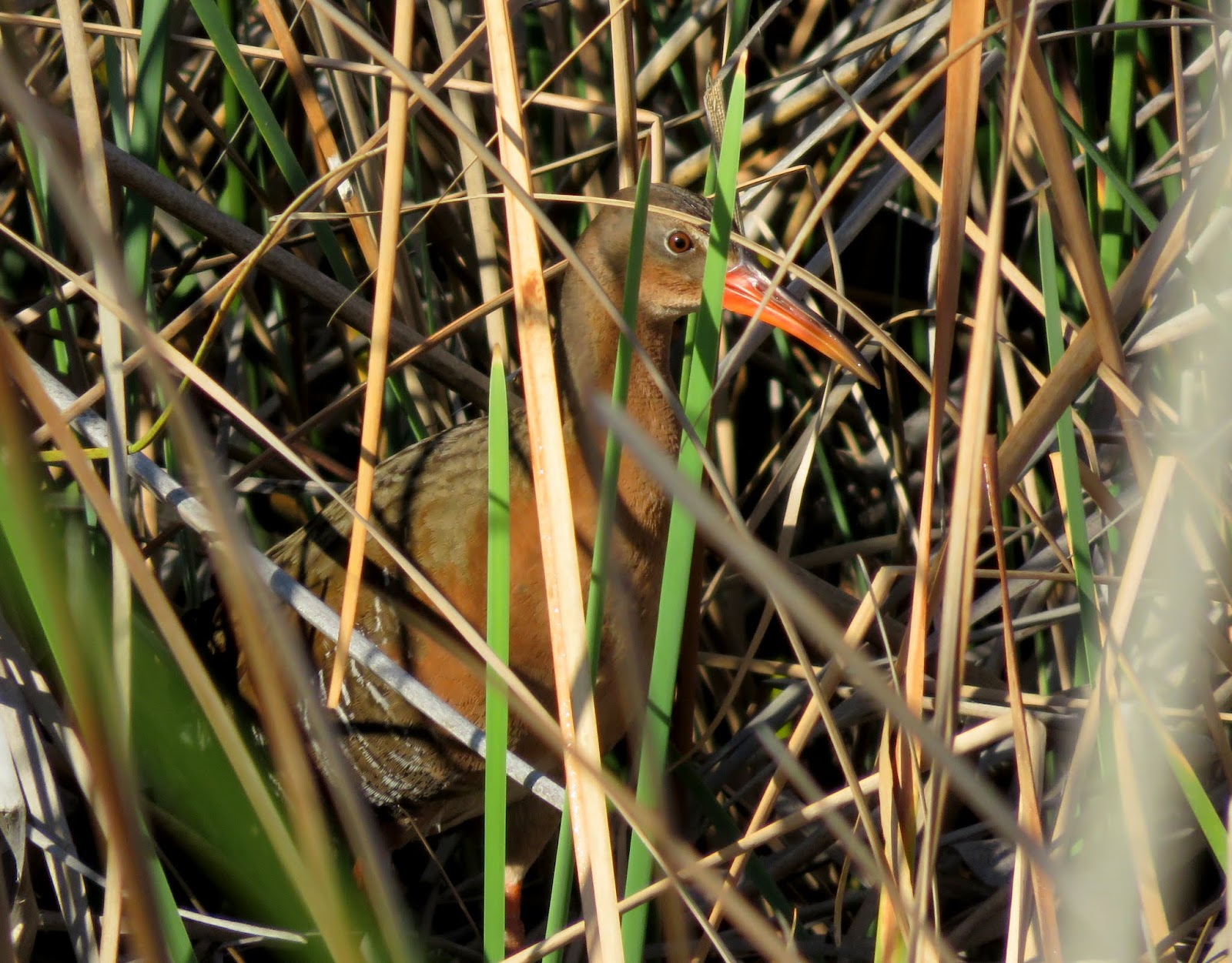
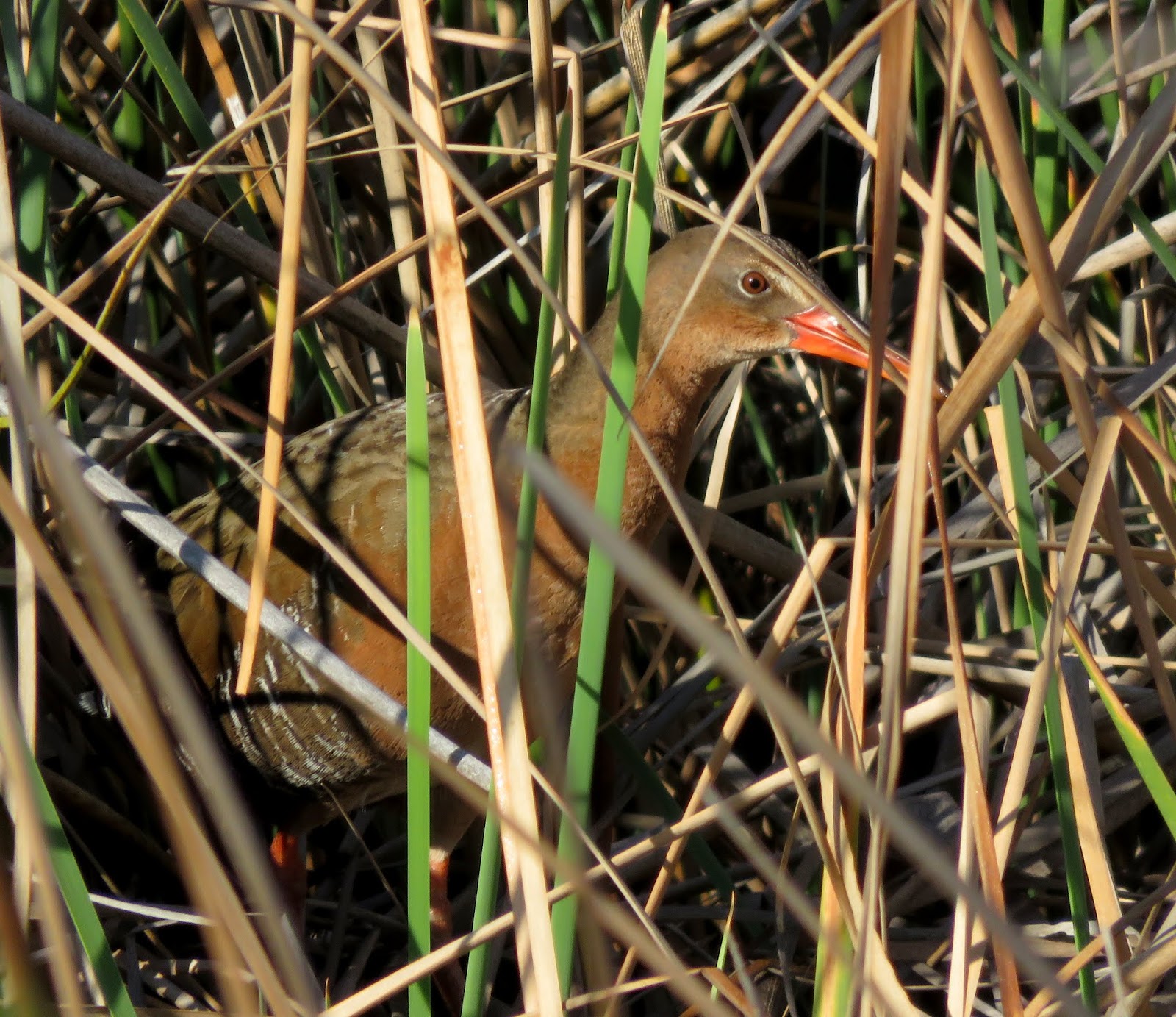
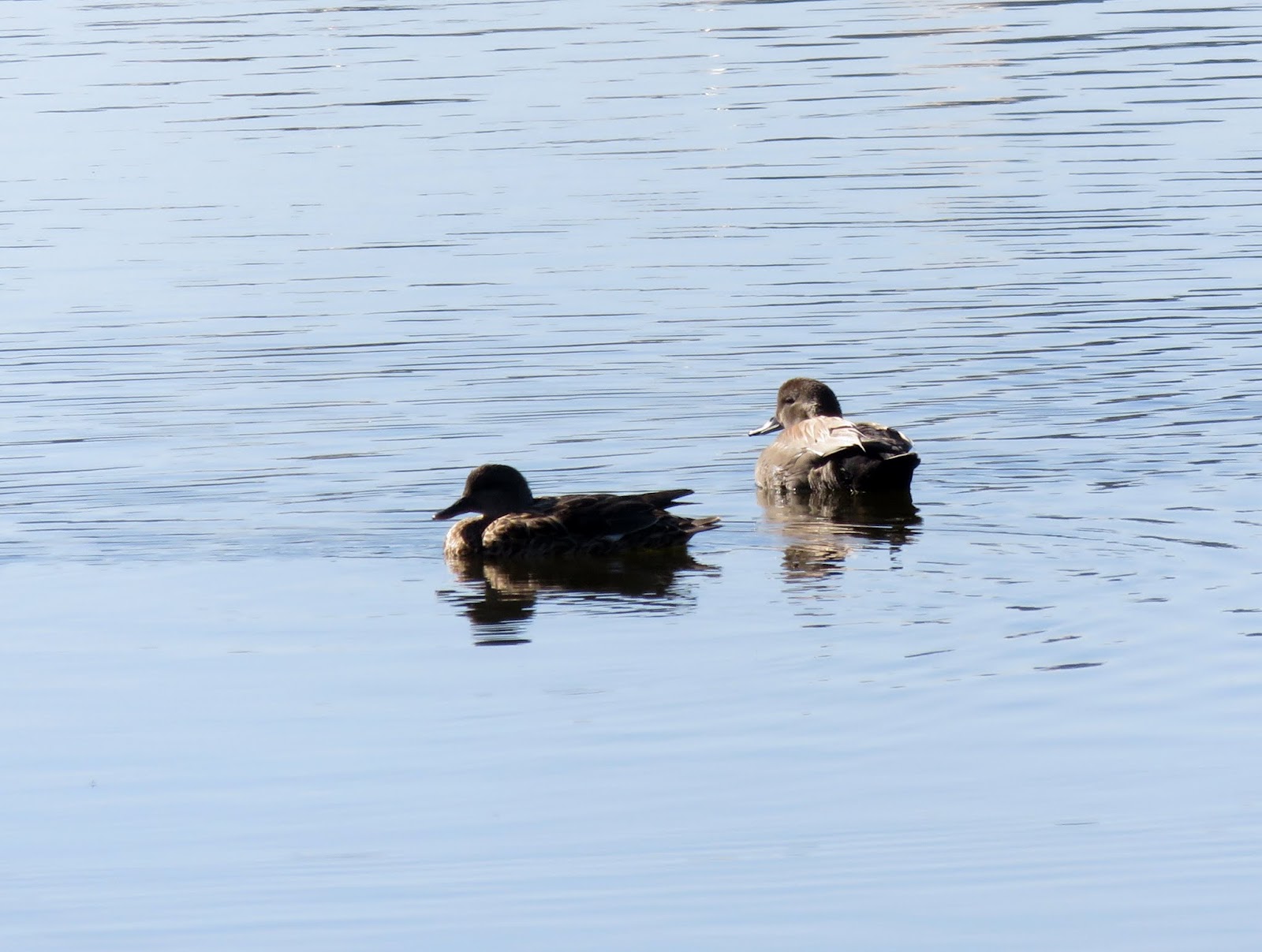
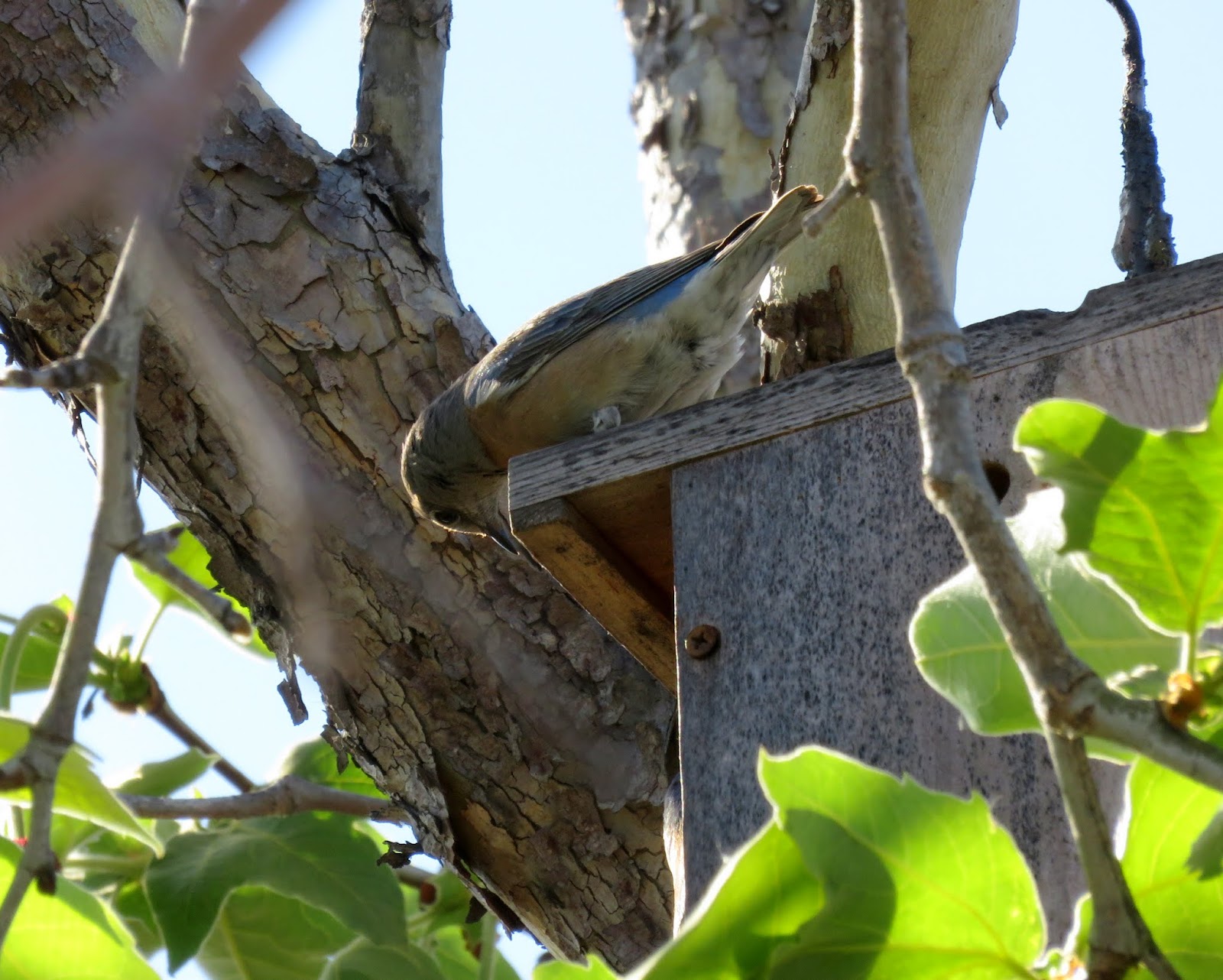
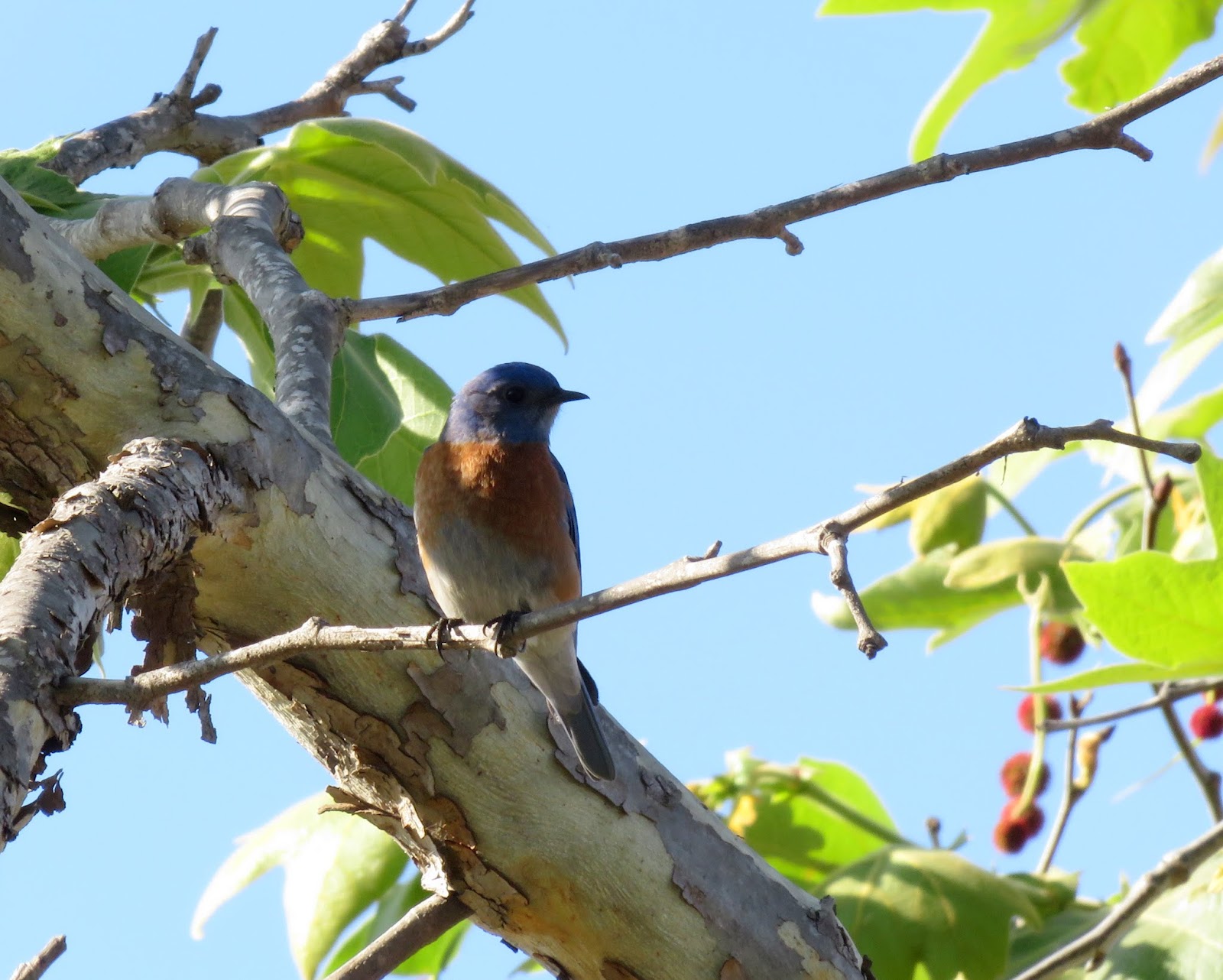
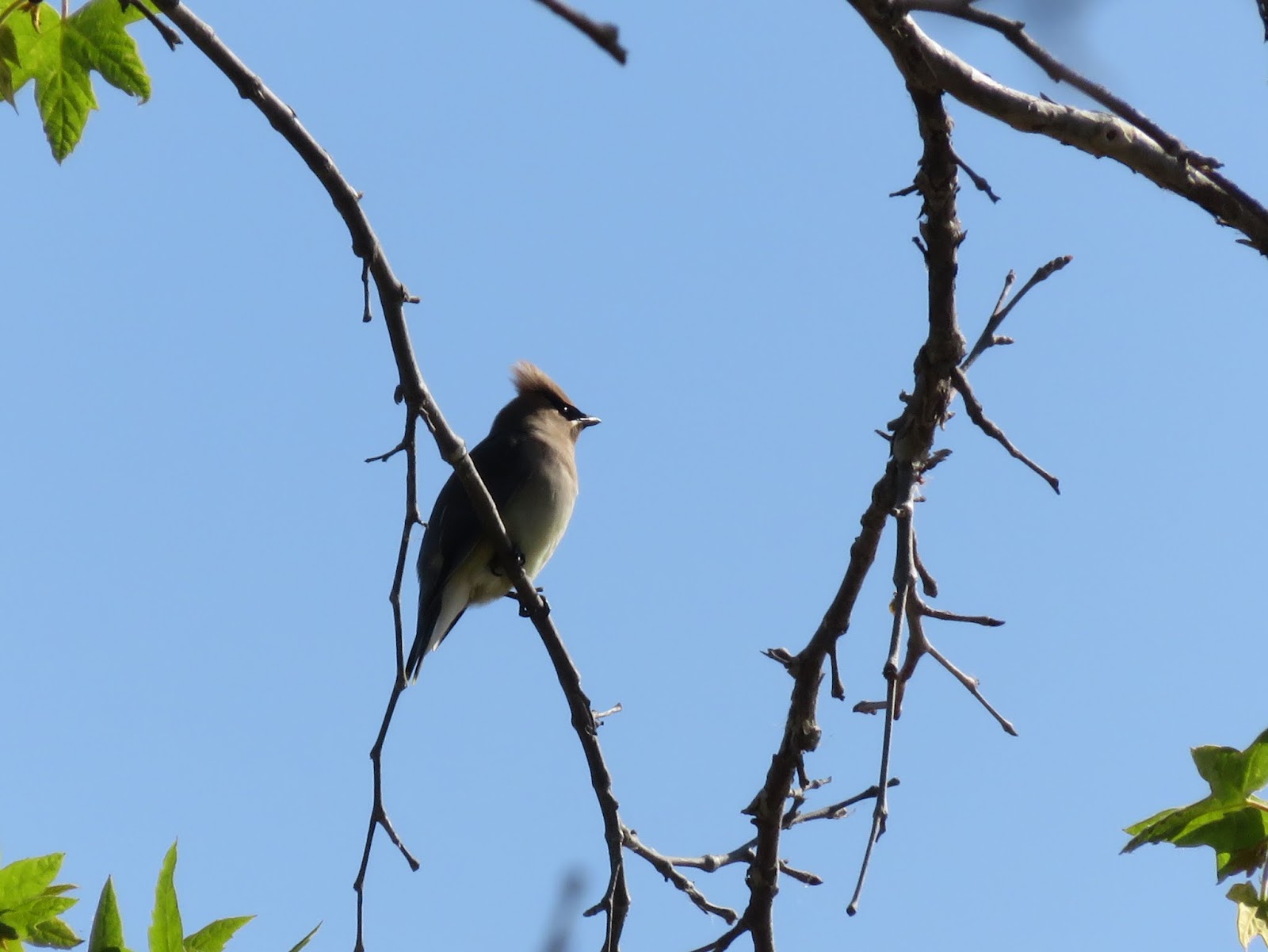
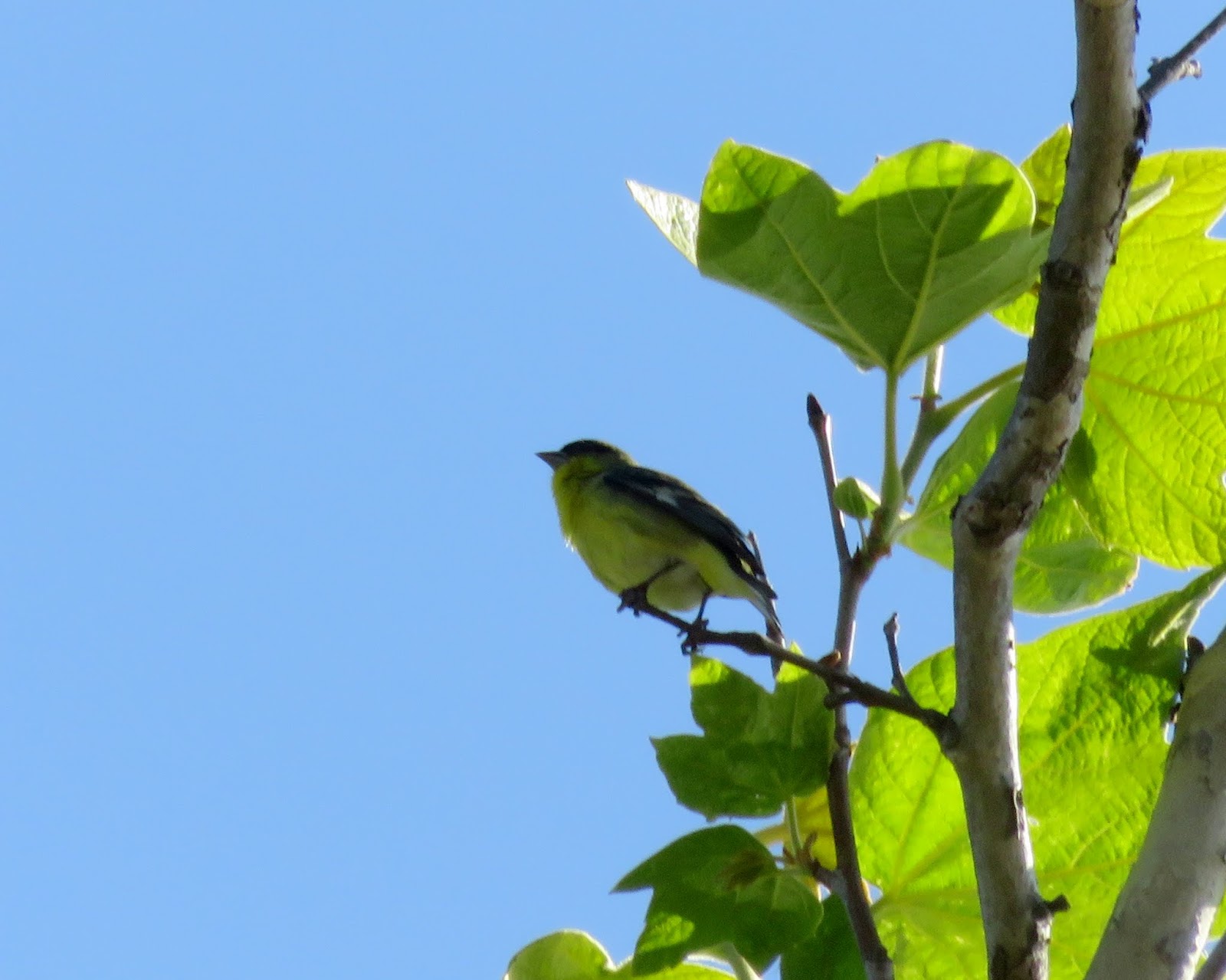
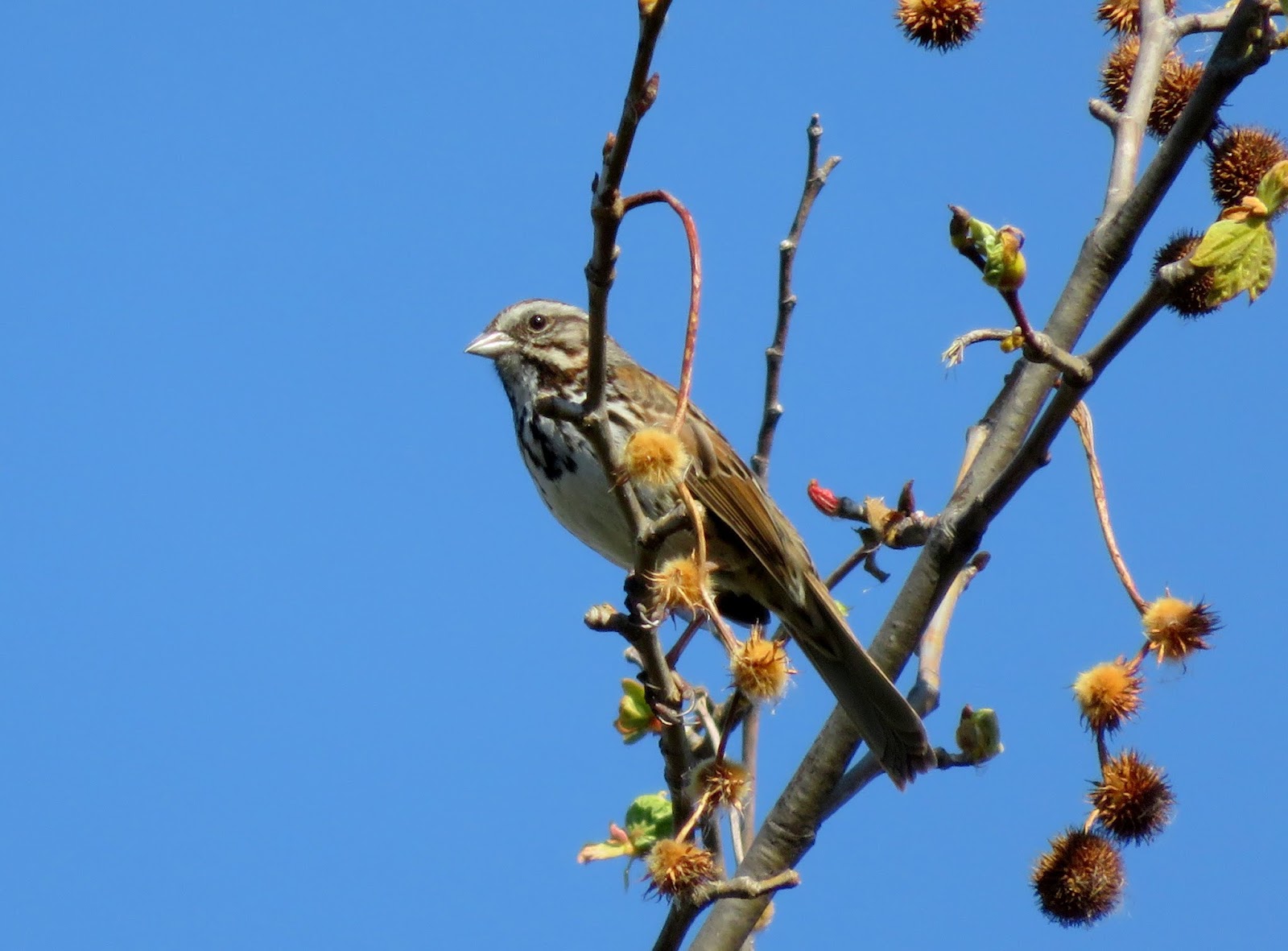
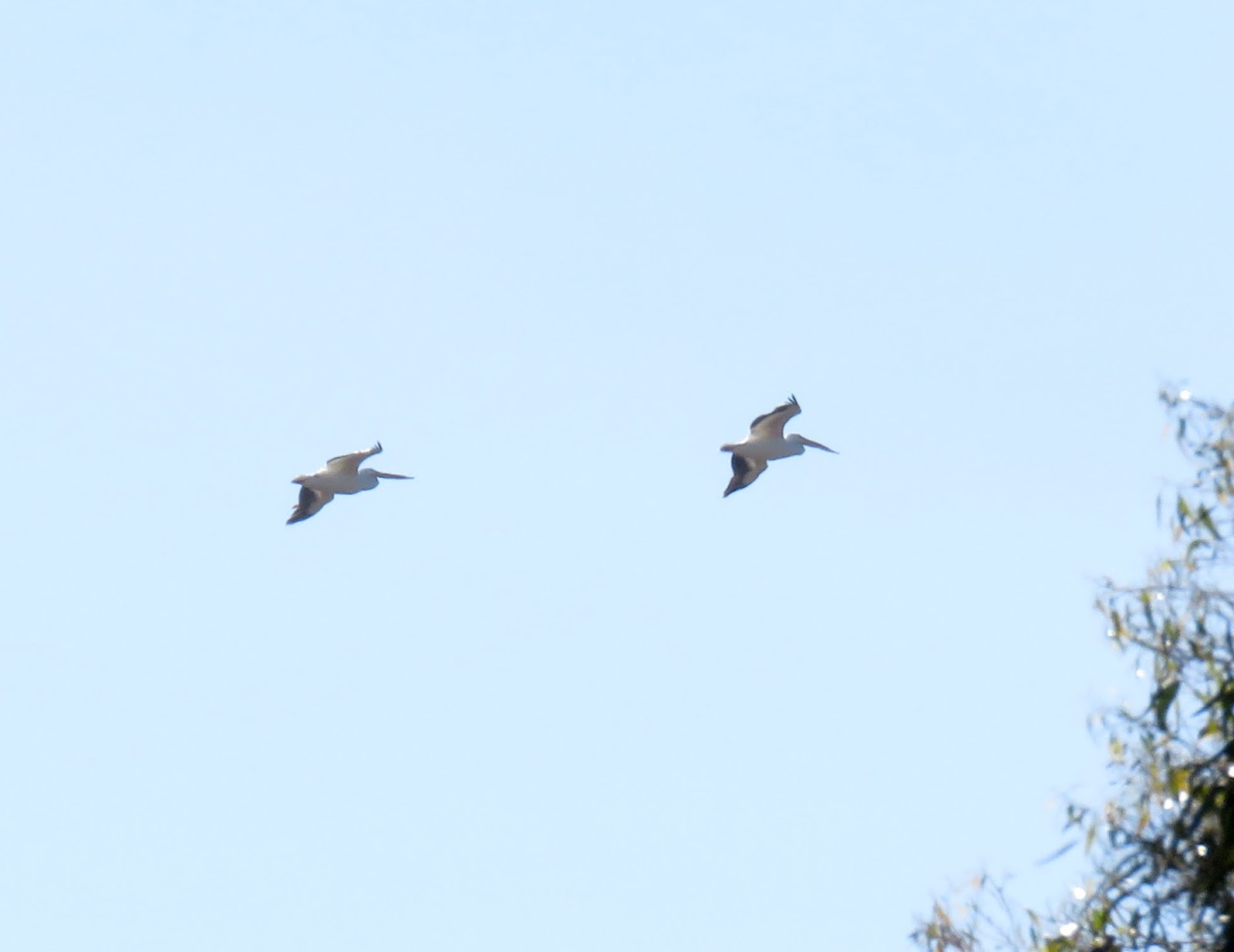
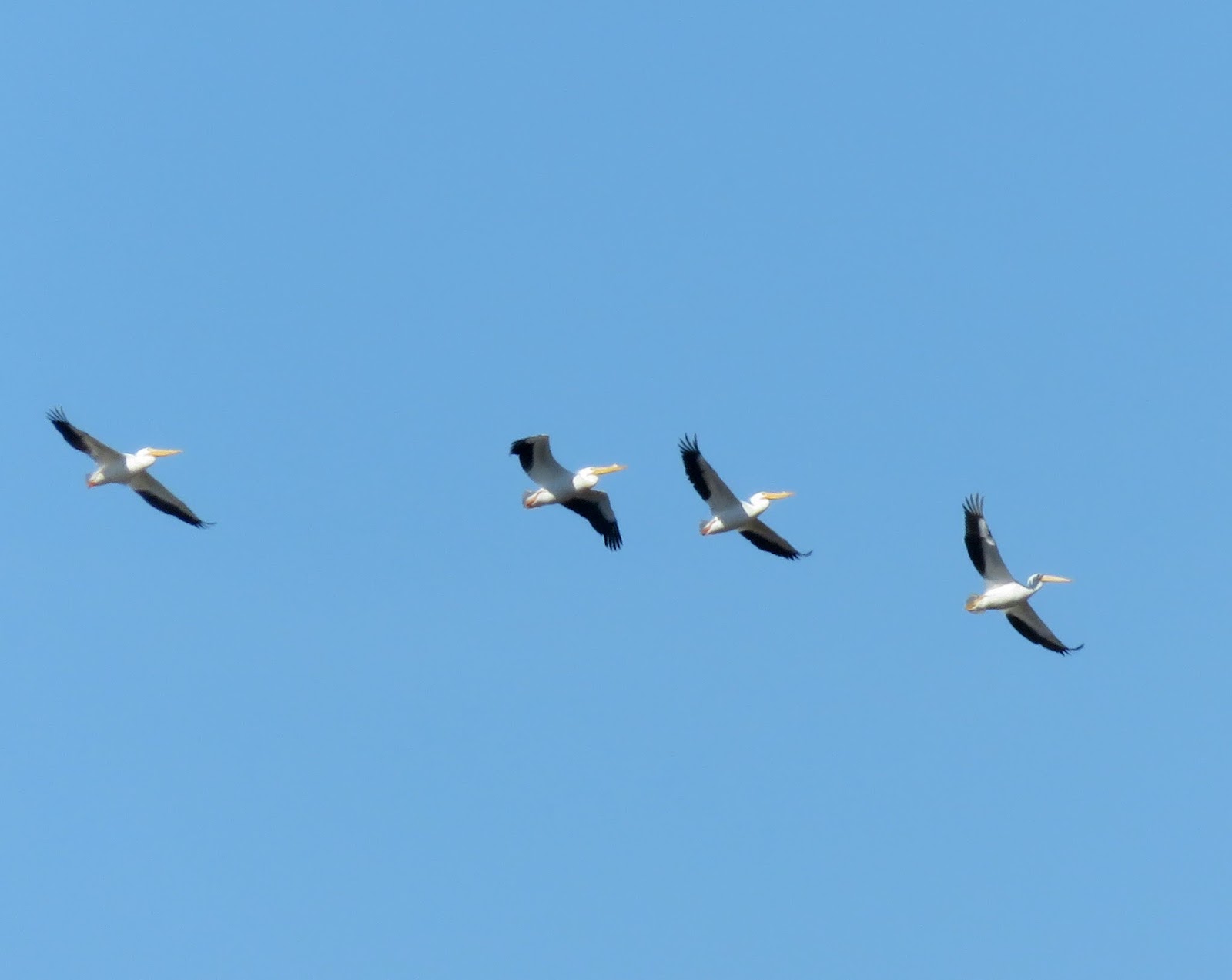
This past Saturday was the bird count at the Buena Vista Lagoon. It was sunny, but cool, and we saw quite a few birds. Below are four views around the lagoon.
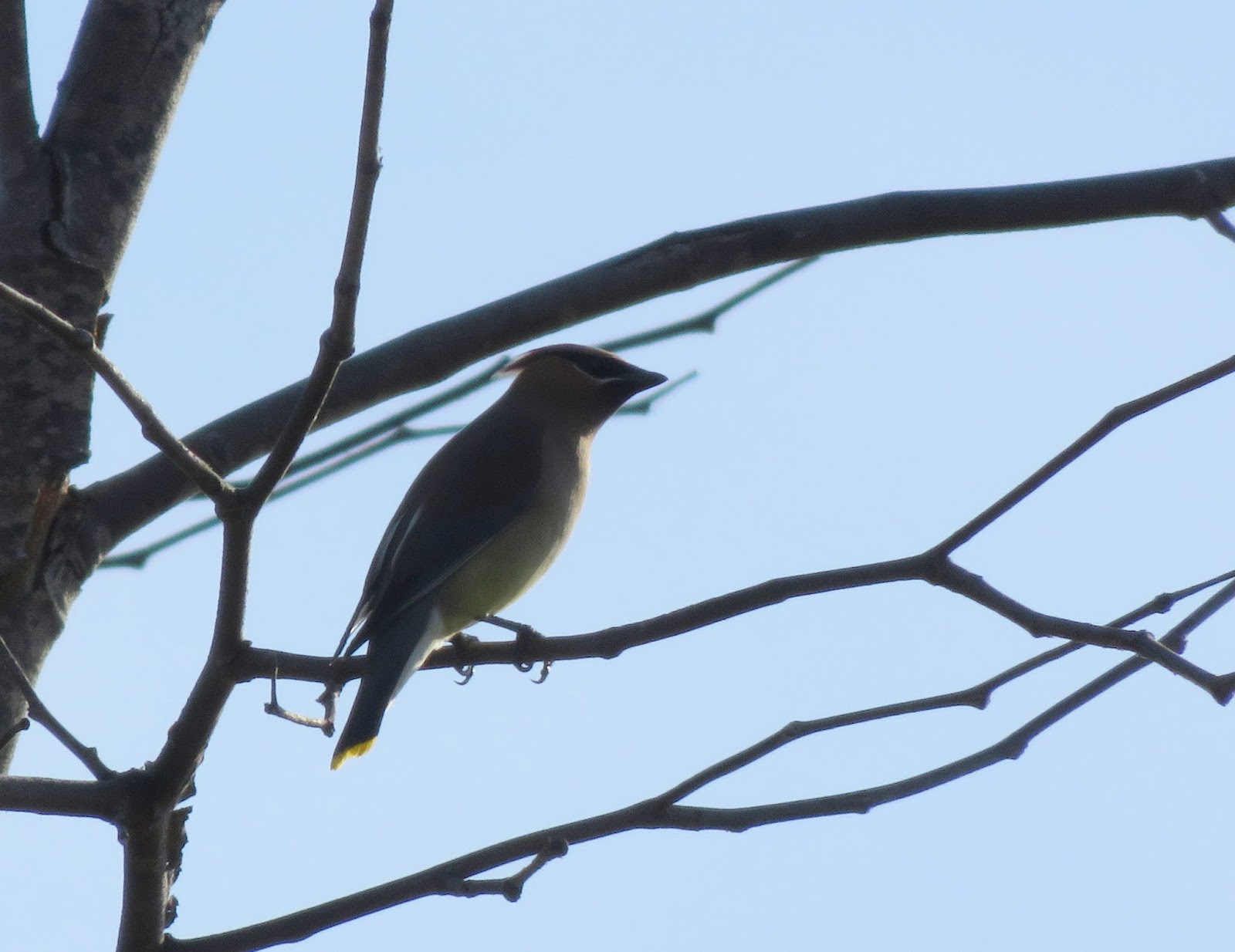
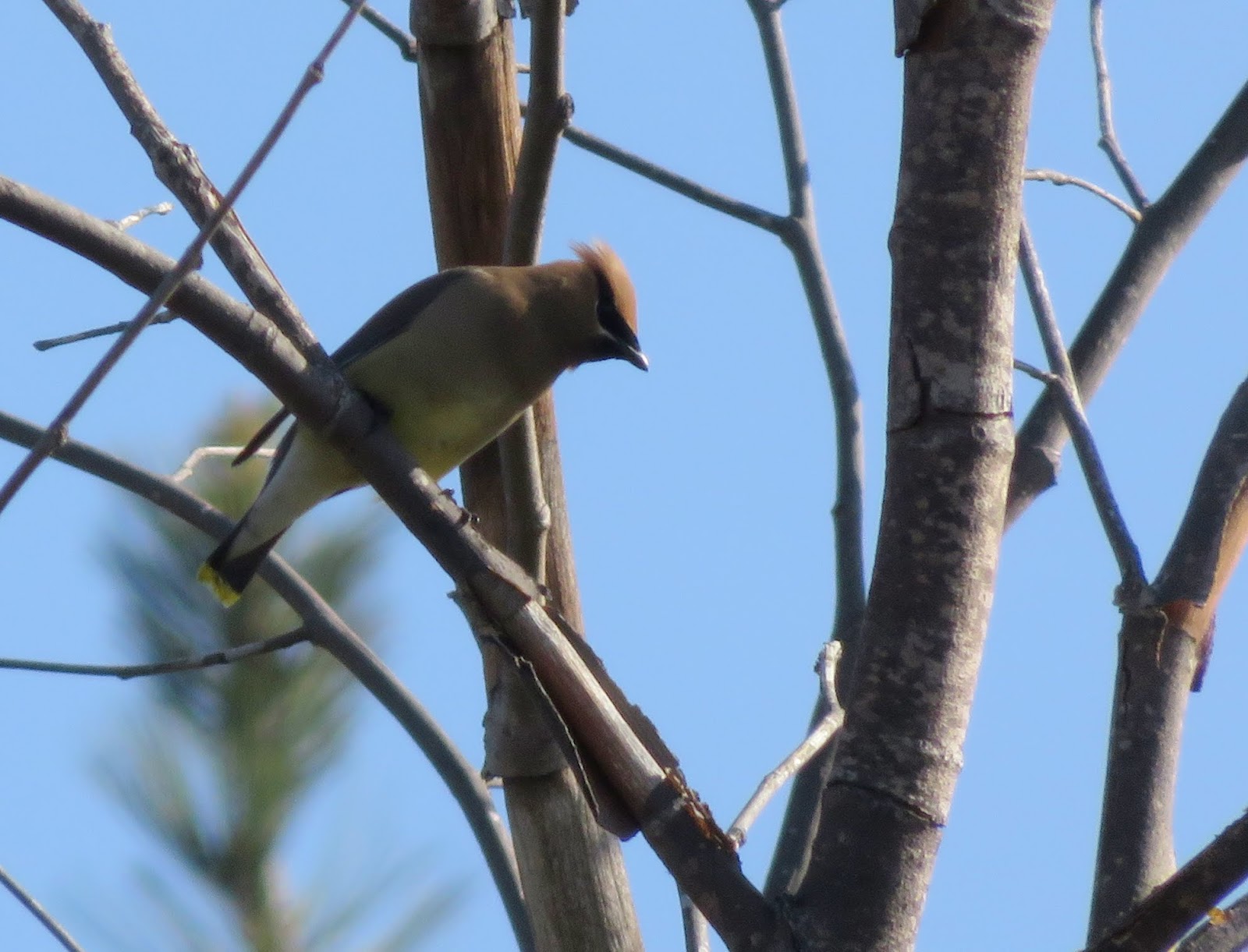
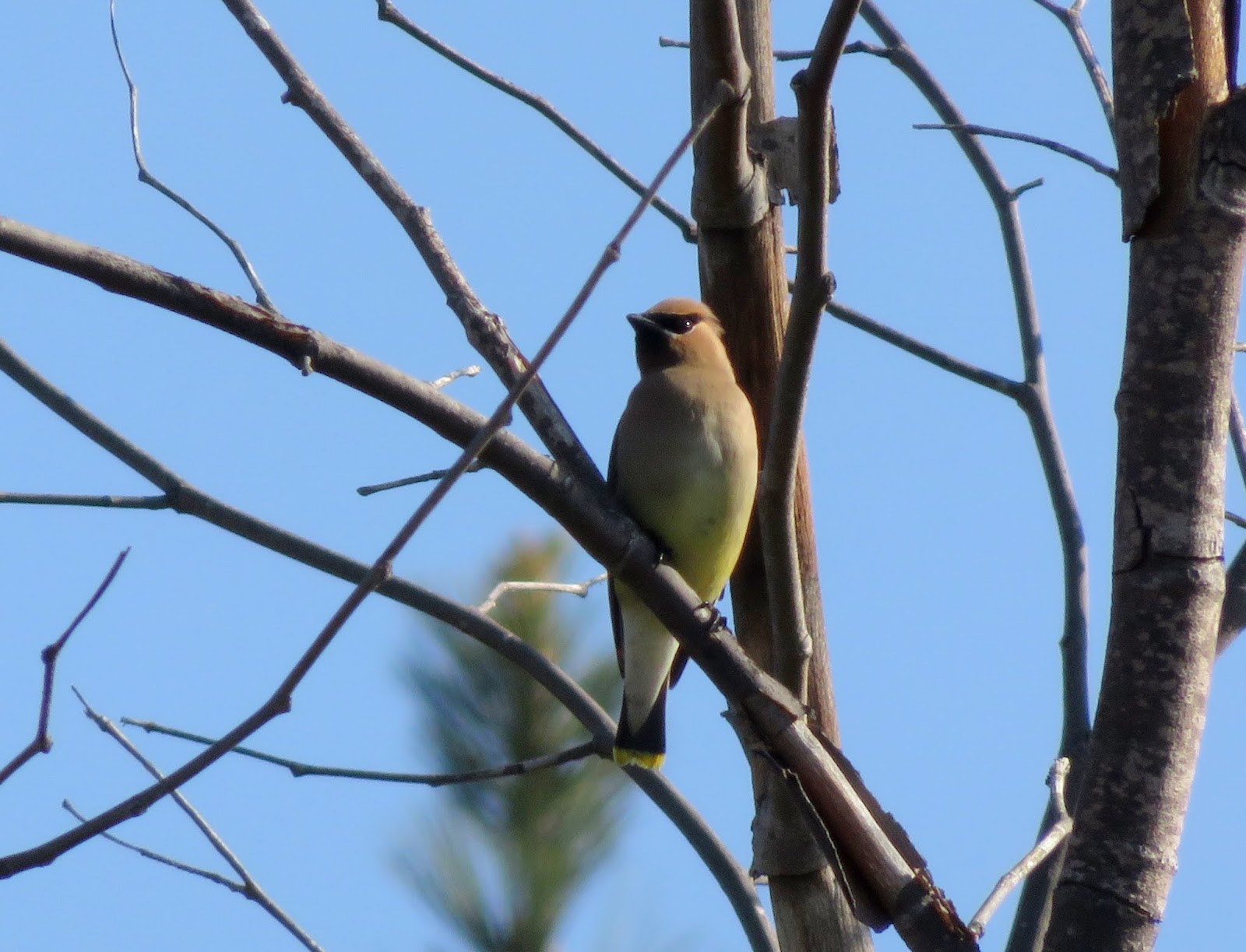
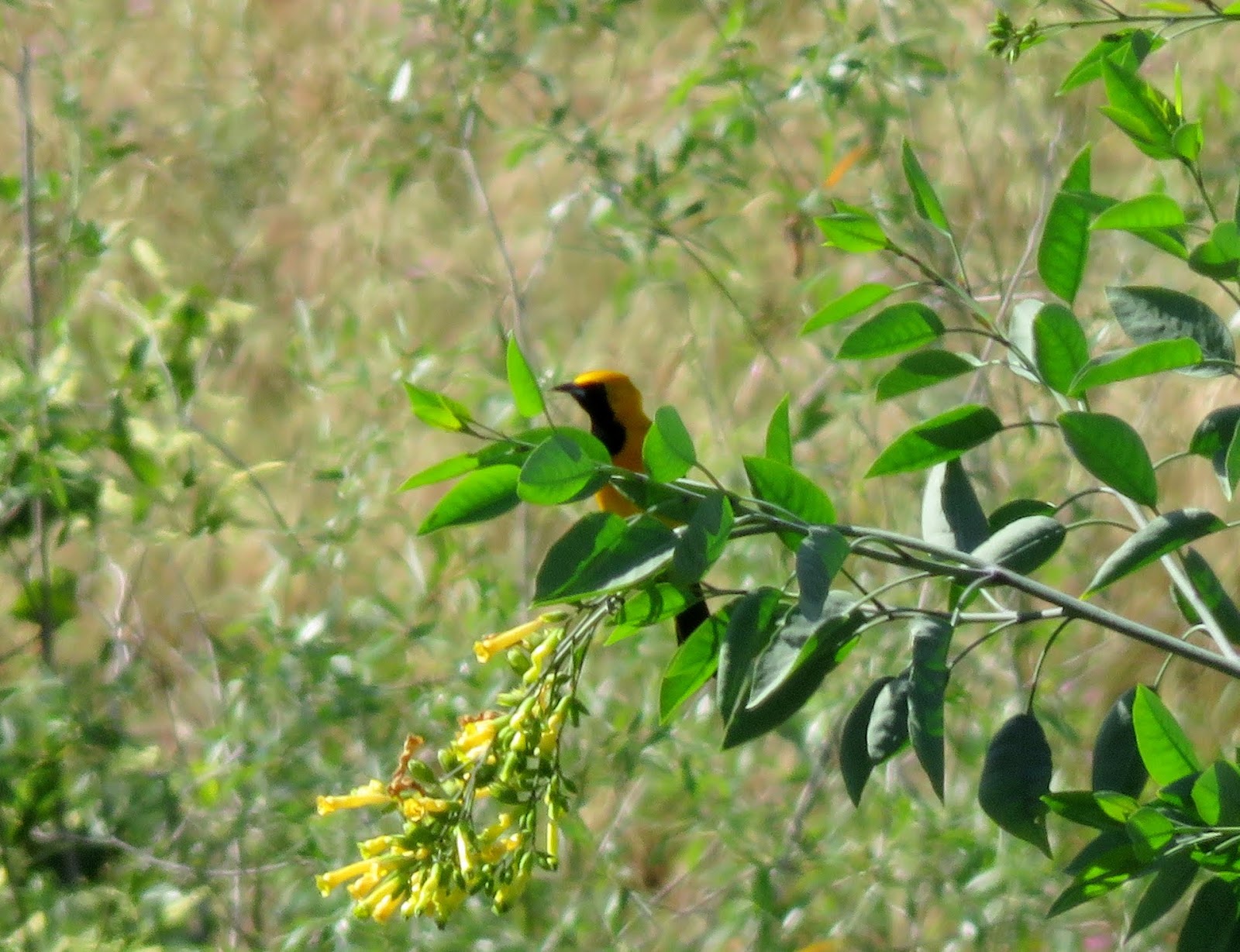
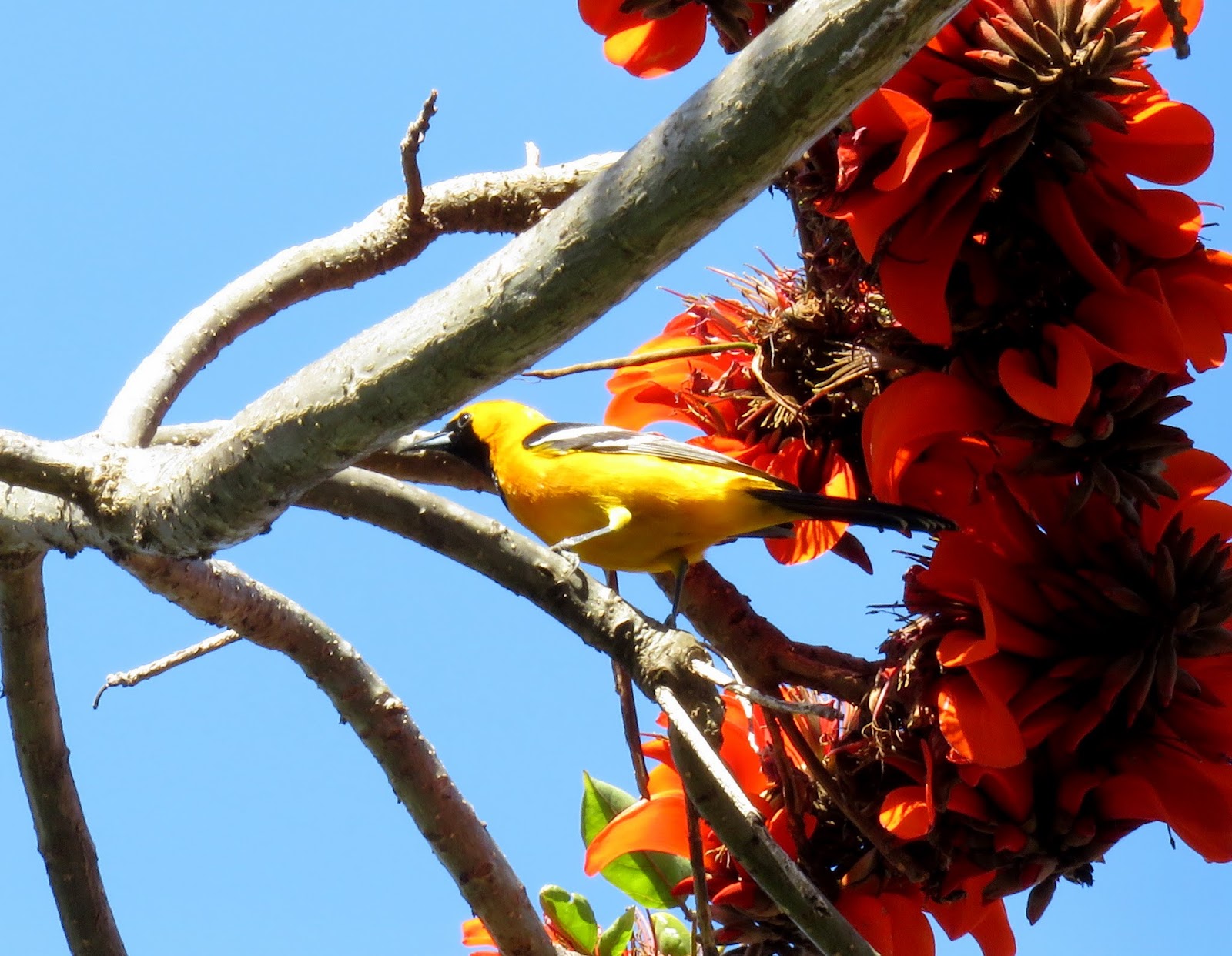
The orioles have started to arrive, though many of the winter birds are still here (though they'll probably start leaving sometime soon). We saw large flocks of Cedar Waxwings throughout the day. They were singing loudly, and some were acting like flycatchers - flying out, hovering a little, then returning to their perch. We also saw a few Hooded Orioles; two pairs. Below are three photos of Cedar Waxwings, and two photos of a couple of male Hooded Orioles.
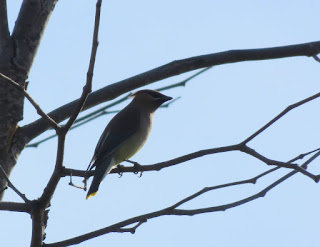 |
| Cedar Waxwing |
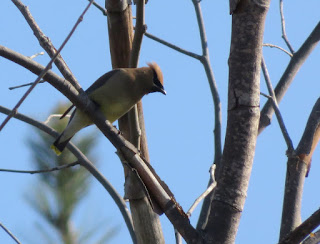 |
| Cedar Waxwing |
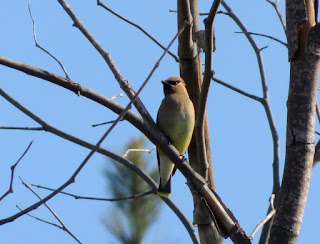 |
| Cedar Waxwing |
 |
| Hooded Oriole |
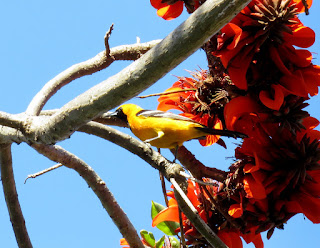 |
| Hooded Oriole |
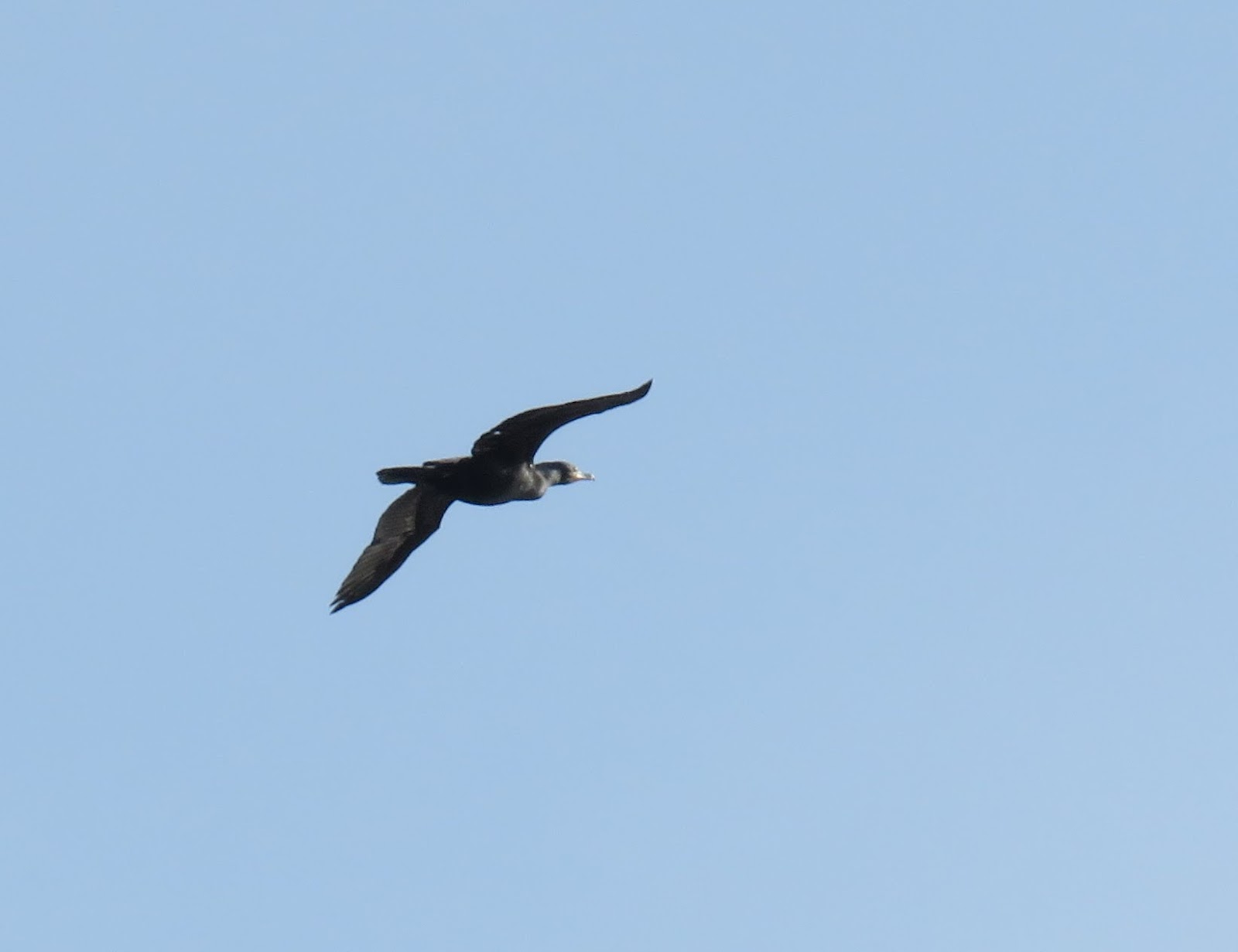
We saw a few Double-crested Cormorants here and there around the lagoon. Below is one flying over.
 |
| Double-crested Cormorant |
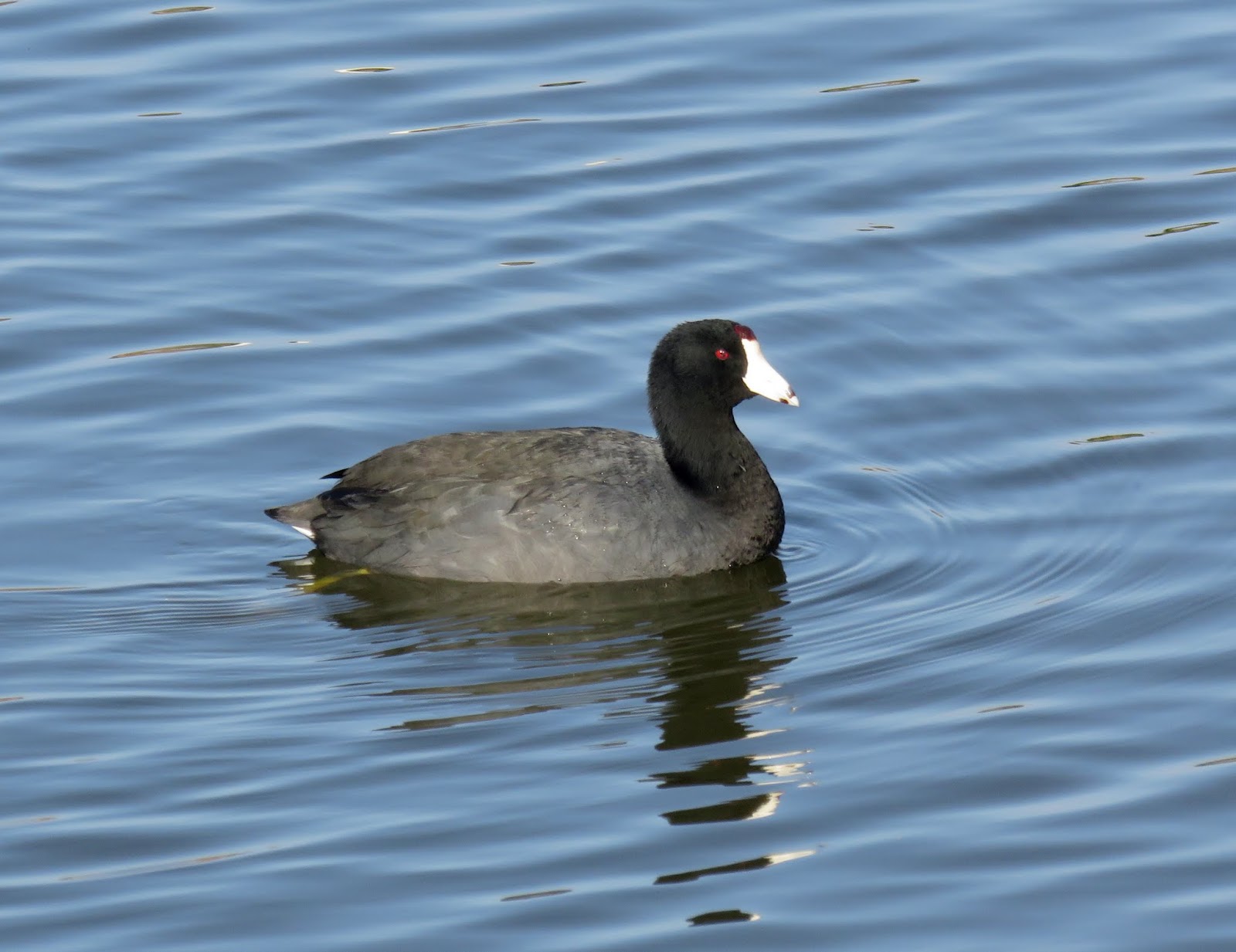
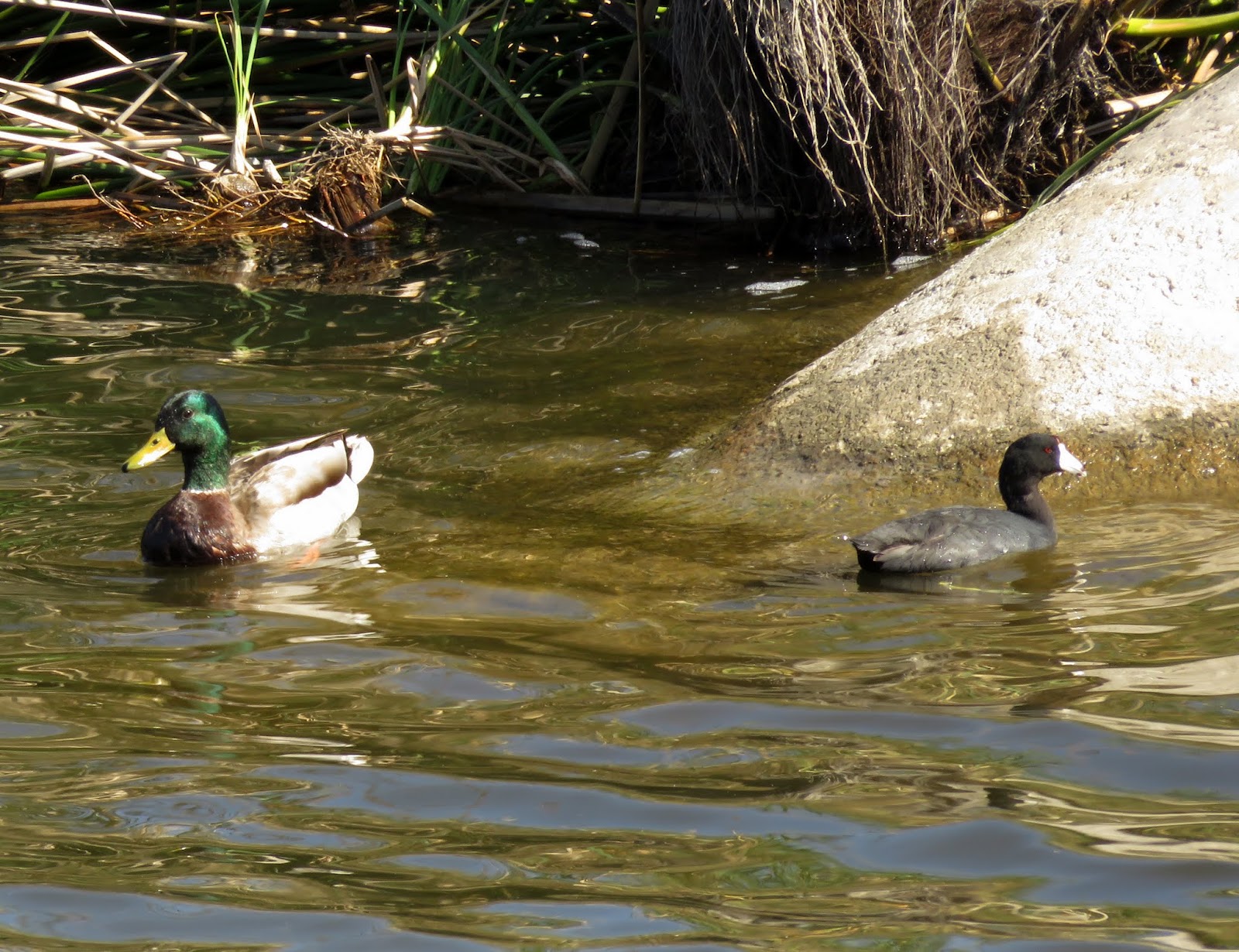
As usual, there were several American Coots and some Mallards around. Below are two photos, the first of a coot, and the second of both a coot and a male Mallard.
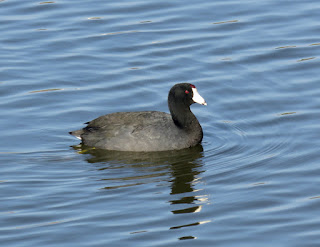 |
| American Coot |
 |
| Mallard and American Coot |
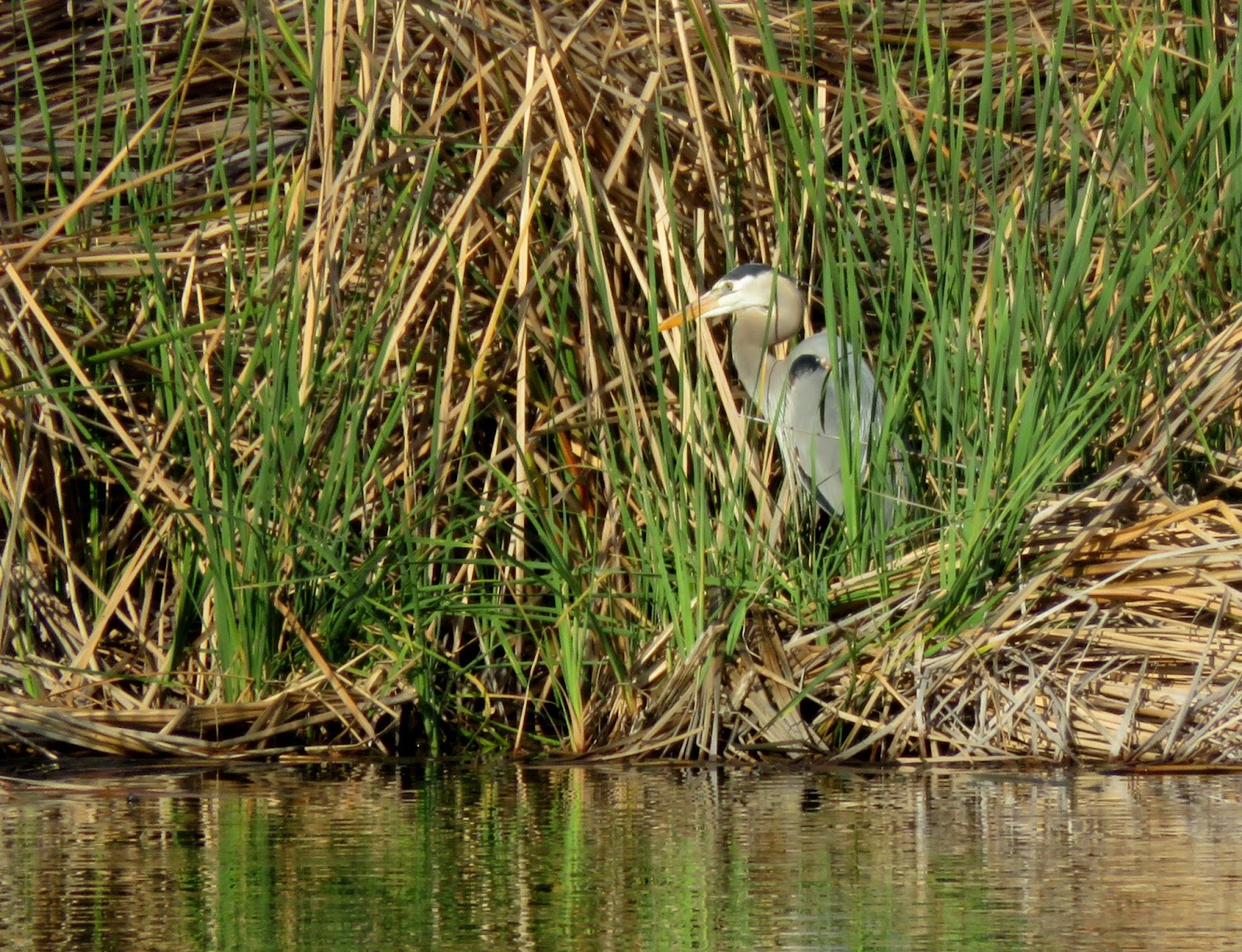
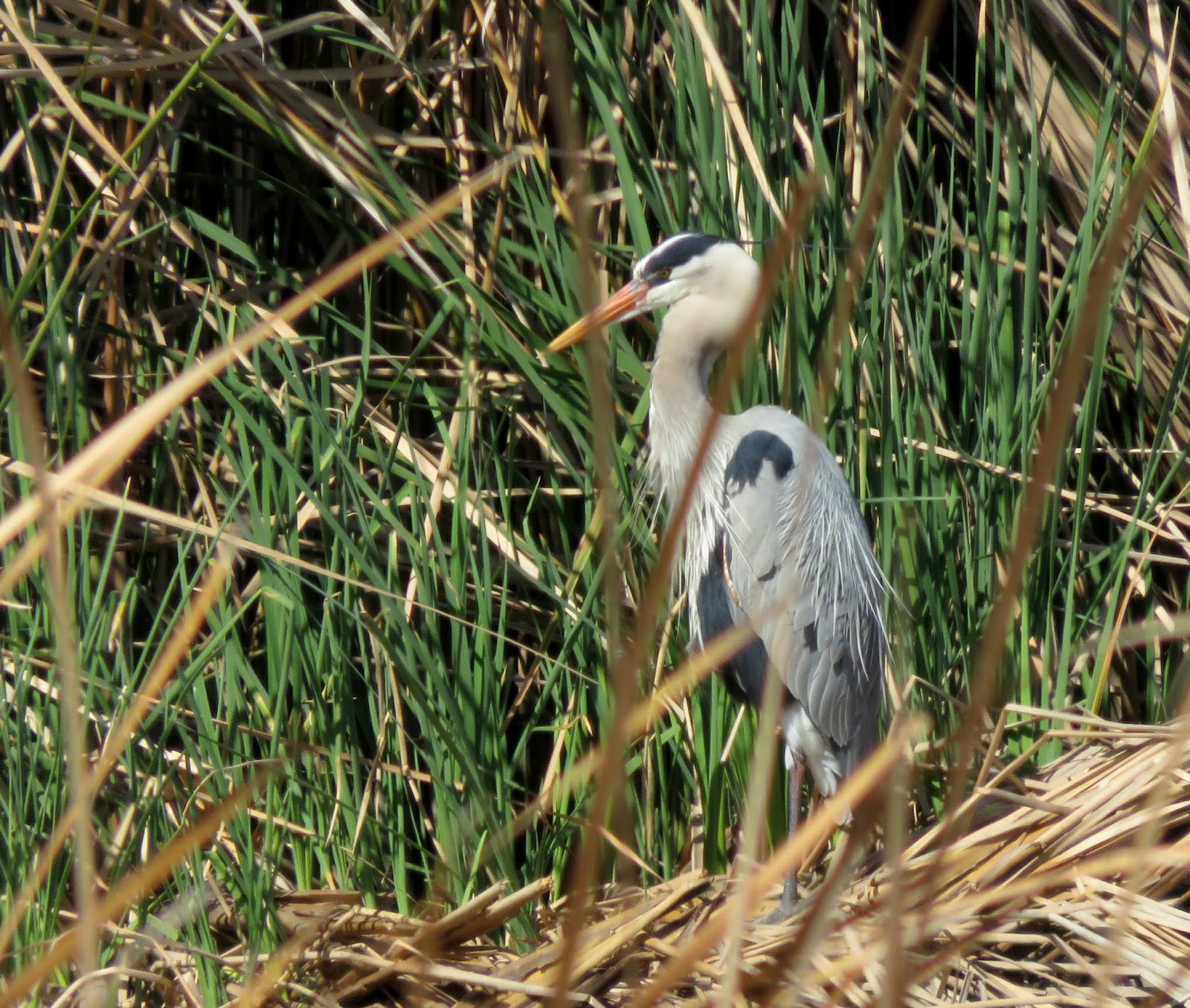
We didn't see very many members of the heron and egret family, but we did see a couple of Great Blue Herons. Below is one of them, sitting at the edge of the reeds.
 |
| Great Blue Heron |
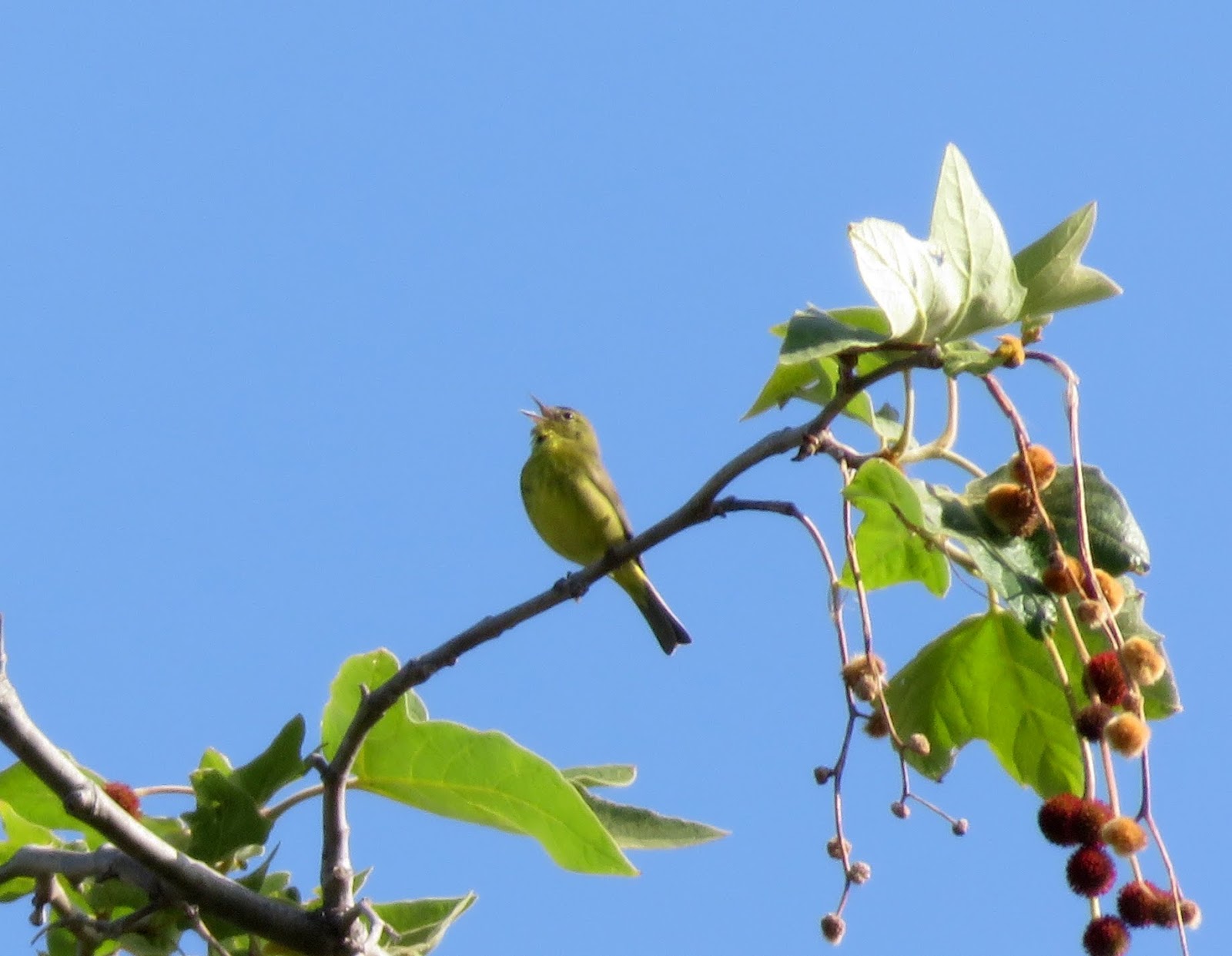
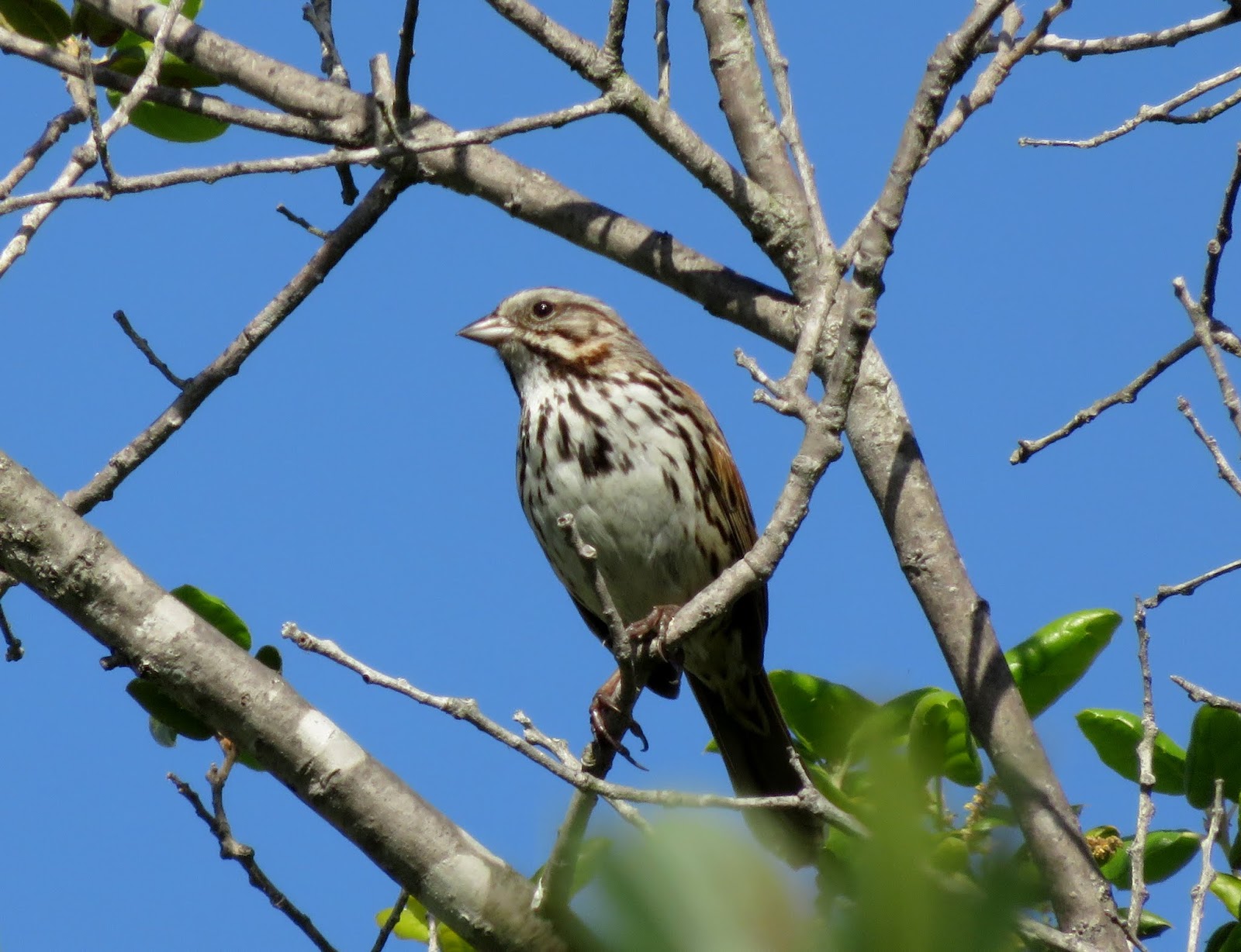
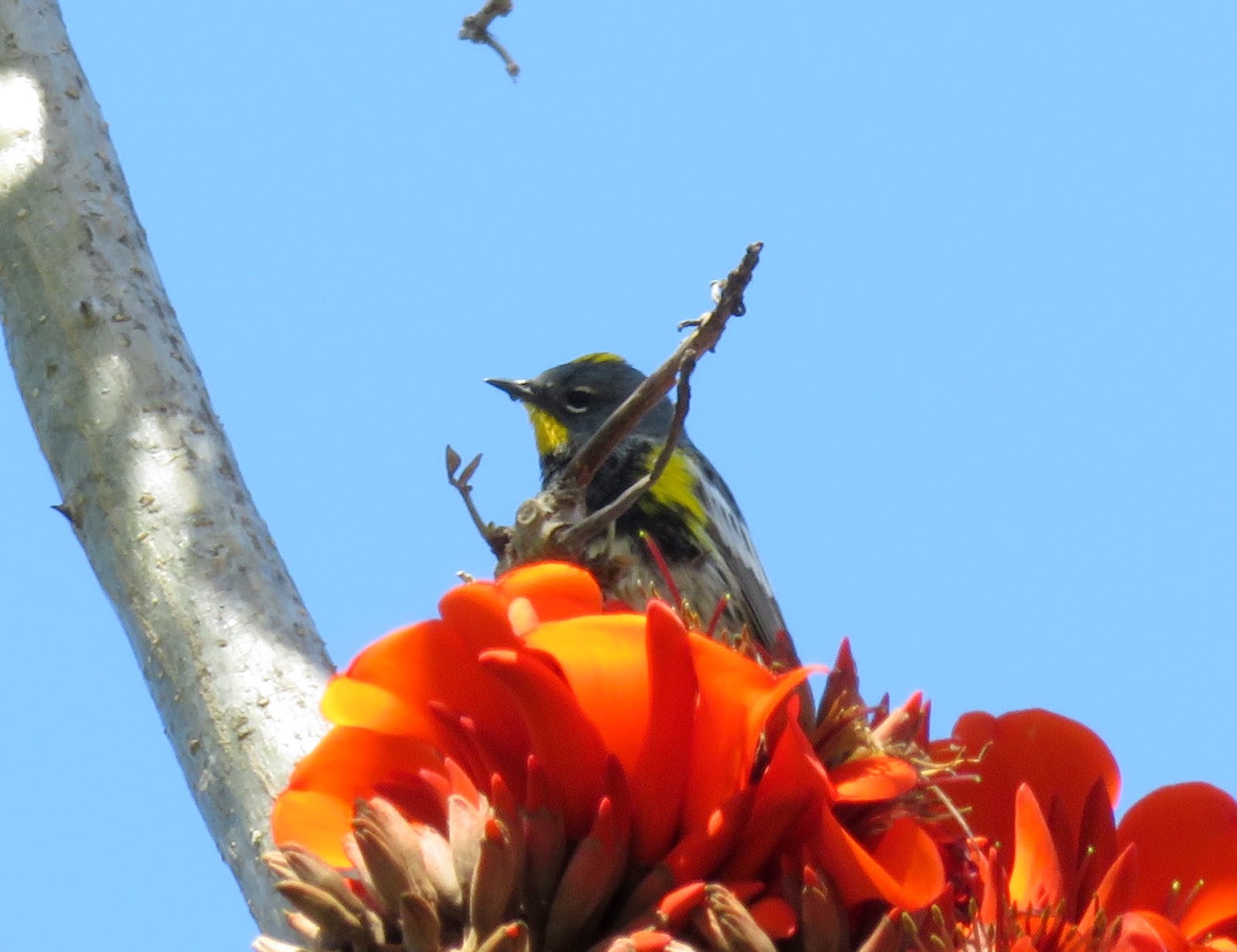
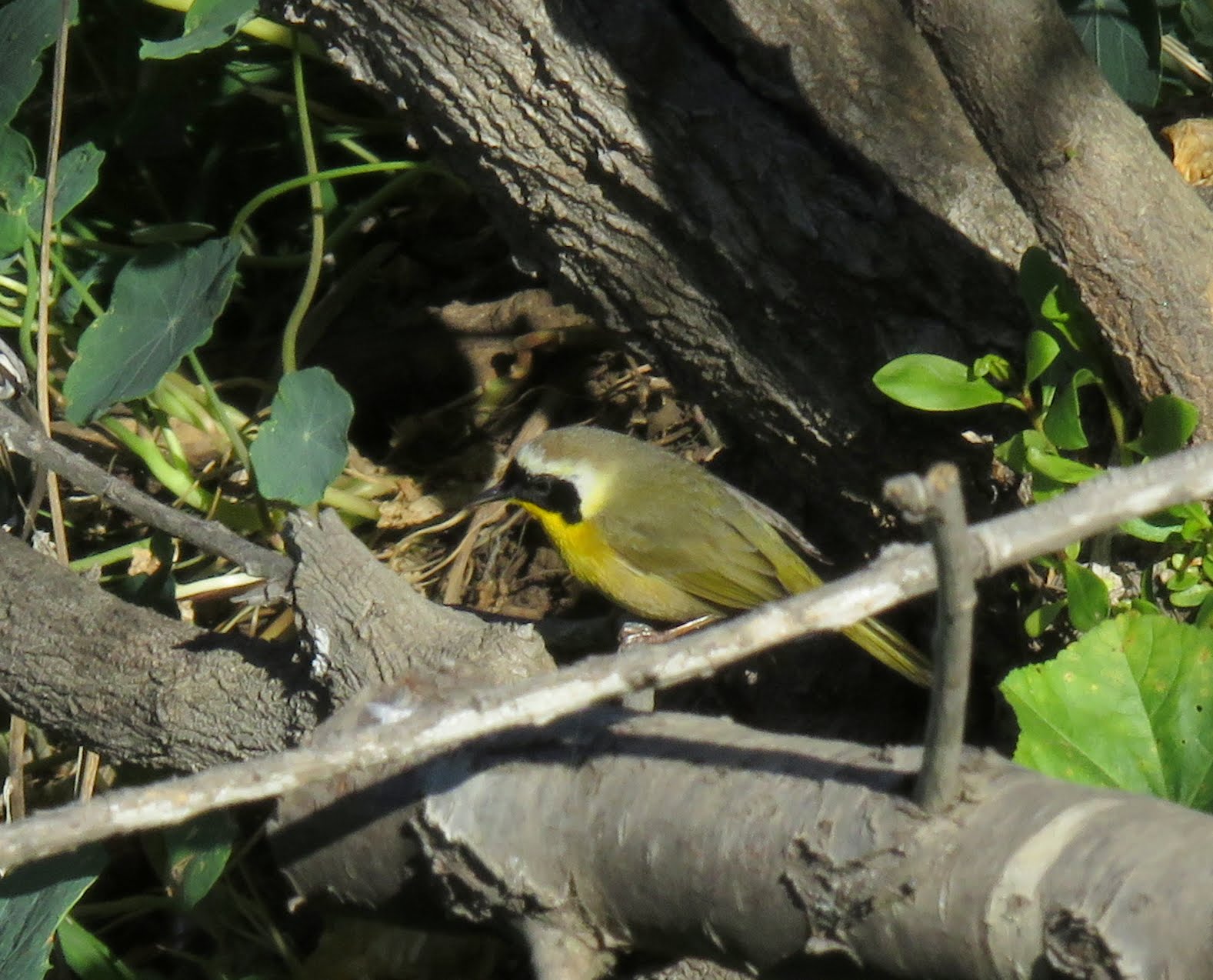
There were quite a few different birds singing in high in the trees and hidden in the bushes. White-crowned Sparrows, Song Sparrows, Orange-crowned Warblers, Common Yellowthroats, and Yellow-rumped Warblers were all calling and singing at the same time. Below are three photos, the first of an Orange-crowned Warbler, the second of a Song Sparrow, and the third of a Yellow-rumped Warbler.
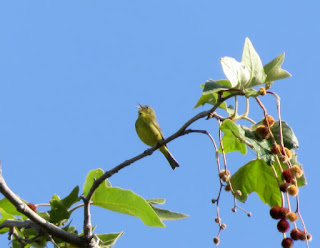 |
| Orange-crowned Warbler |
 |
| Song Sparrow |
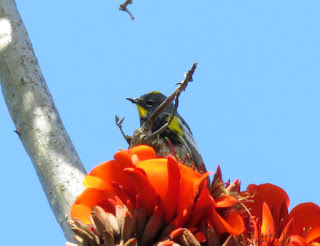 |
| Yellow-rumped Warbler |
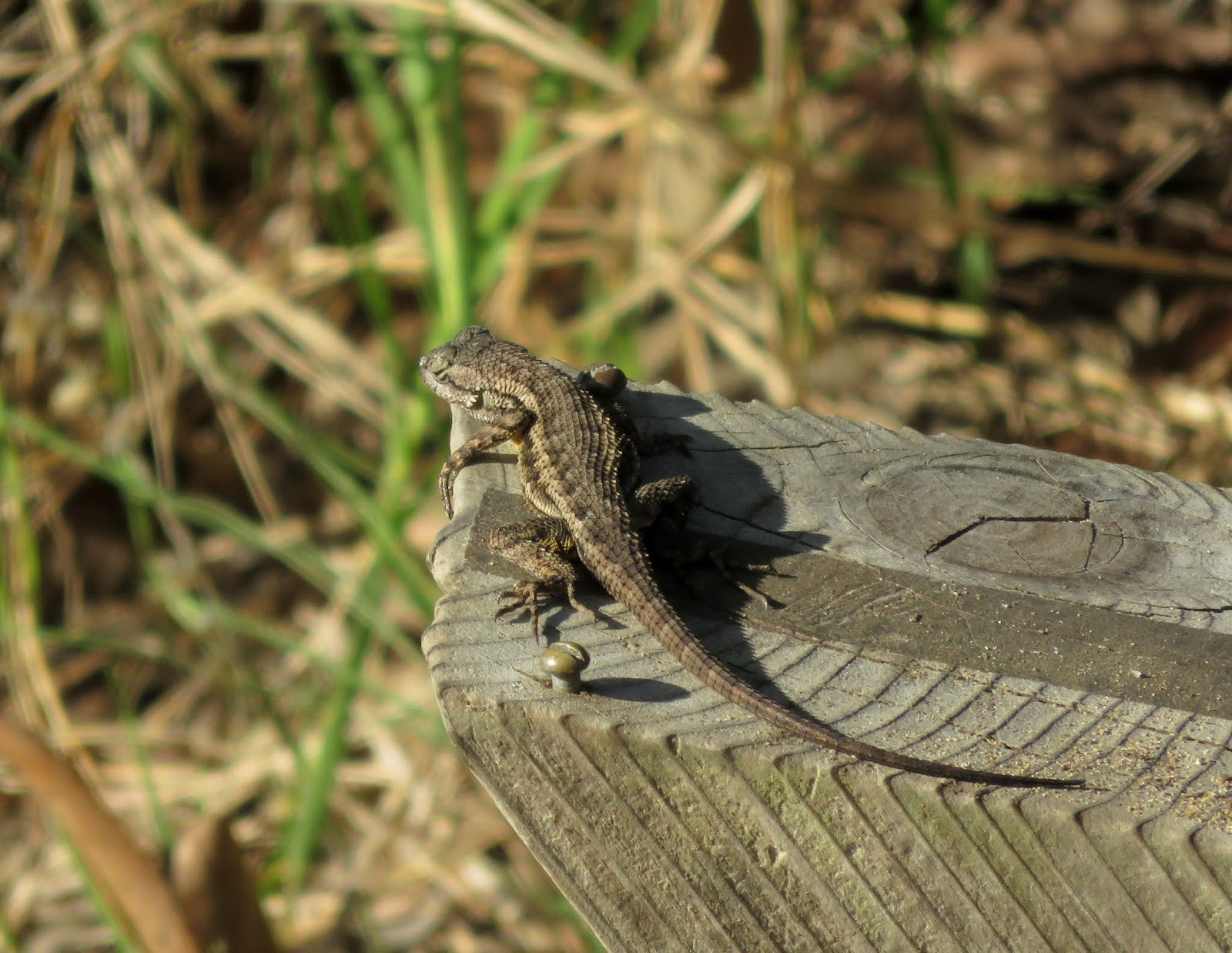
Besides the birds, there were quite a few other animals that were active as well. There were California Ground Squirrels and Western Fence-Lizards running through the bushes, and quite a few butterflies and dragonflies were flying around, enjoying the sun. Below is a Western Fence-Lizard sunning itself on a wooden post.
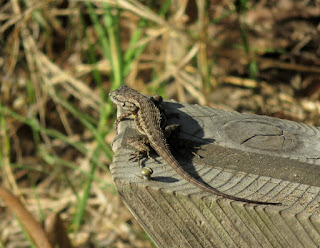 |
| Western Fence-Lizard |
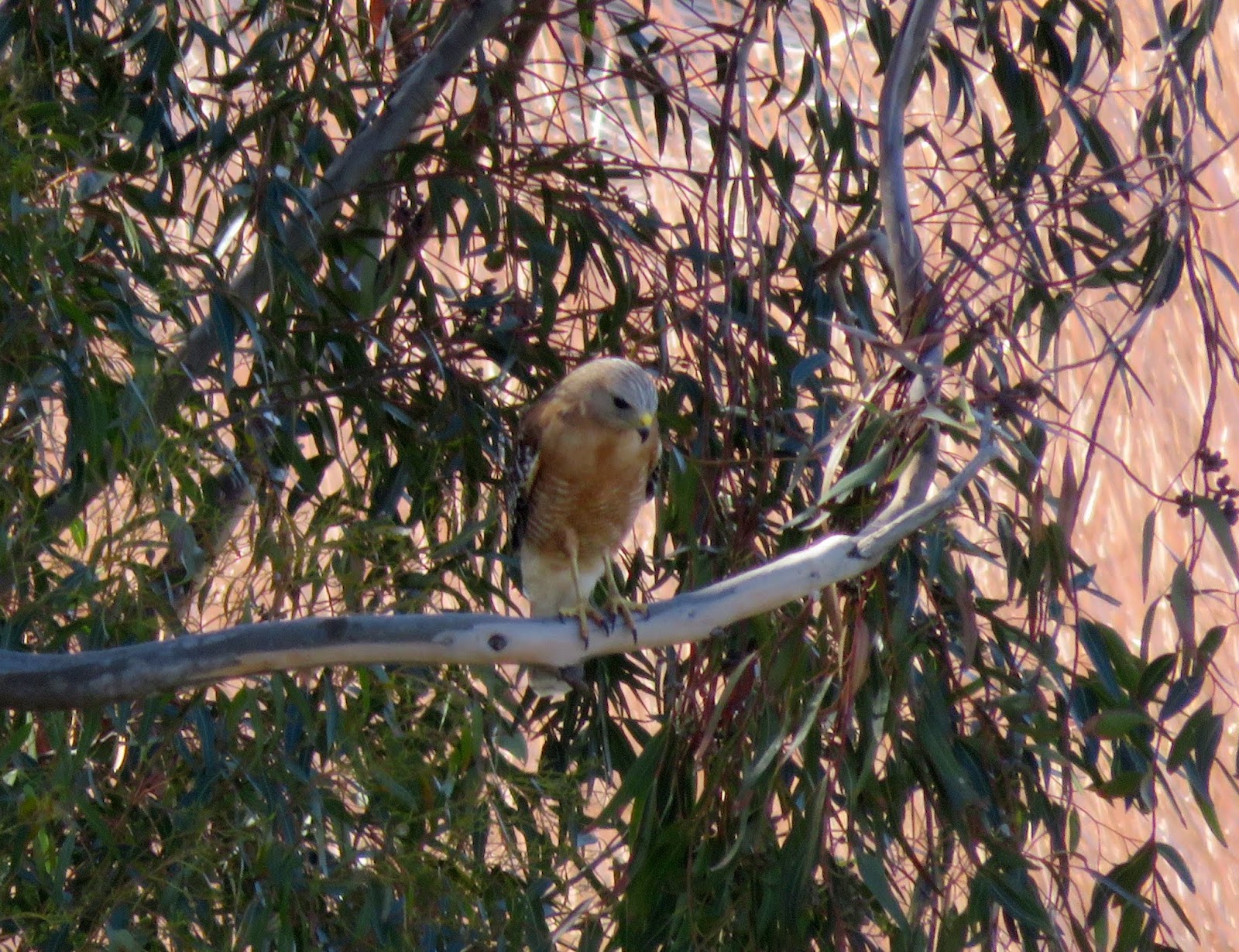
We saw a few birds of prey, including a Red-shouldered Hawk in a eucalyptus tree. Below is the hawk, scanning the ground for a possible breakfast.
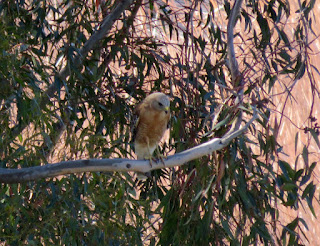 |
| Red-shouldered Hawk |
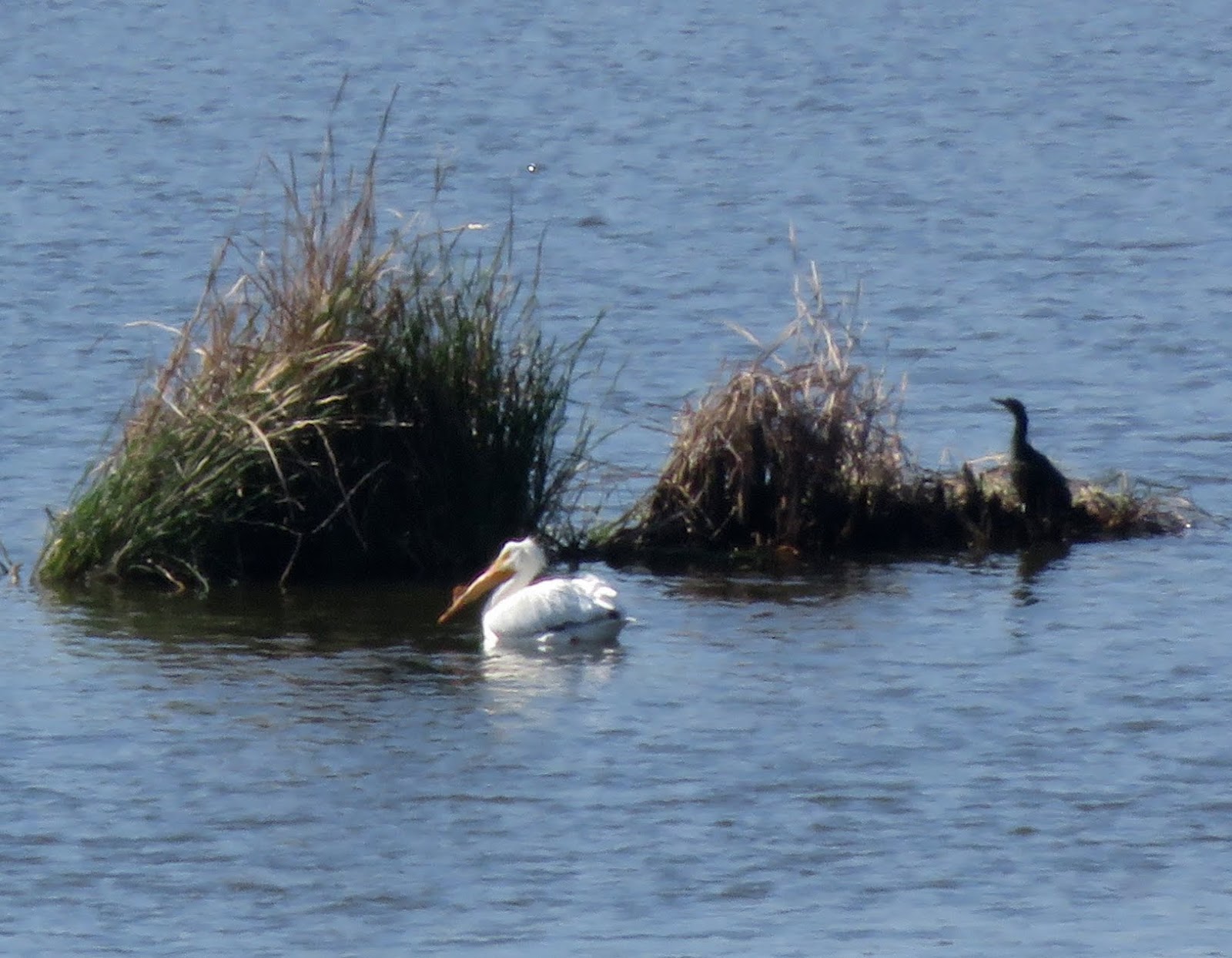
There were still quite a few American White Pelicans at the lagoon. They are entering the breeding season and have grown horns on their bills. Below is a photo of one of the pelicans with a horn, as well as a Double-crested Cormorant.
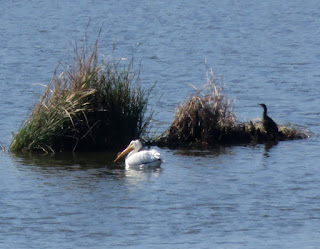 |
| American White Pelican and Double-crested Cormorant |
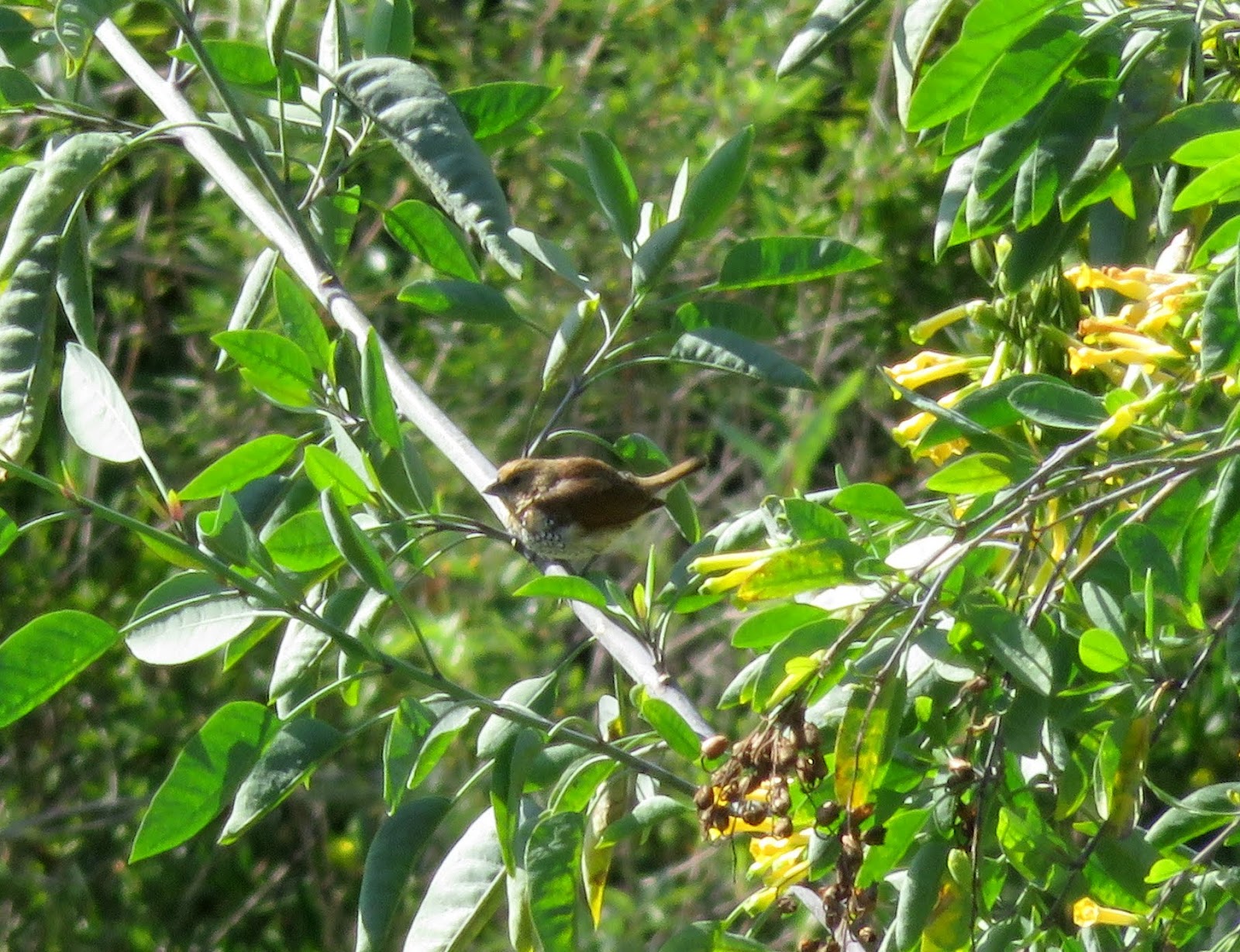
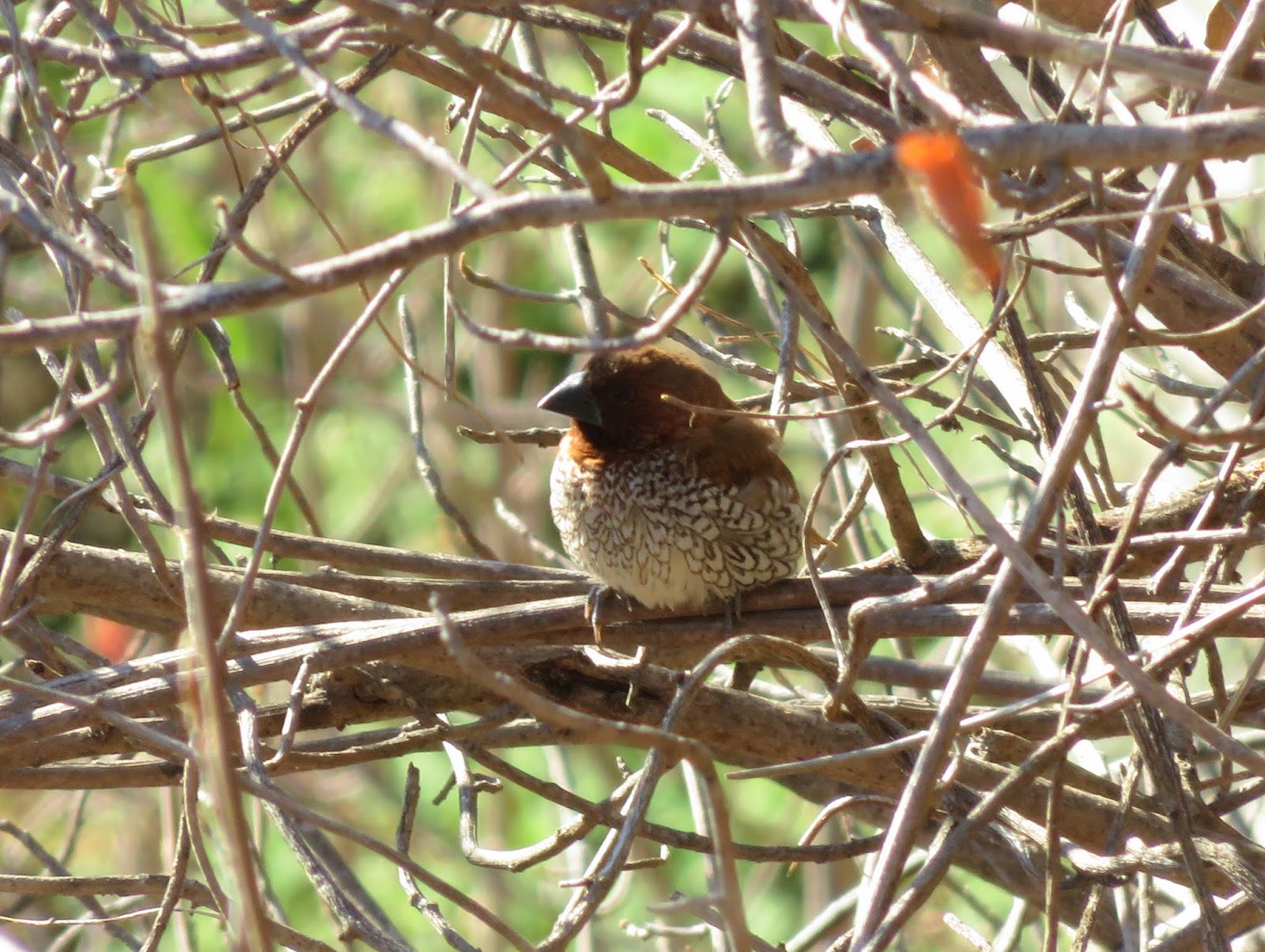
There is another pet store bird (like the Orange Bishop I mentioned in the last post) that has been spreading, and has established itself in California. It is the Scaly-breasted Munia, also call the Spotted Munia, Nutmeg Mannikin, and Spice Finch. The male has a dark brown back, darker face, and a scaled chest. The female looks very much like a muted version of the male. We saw them at the lagoon a couple of months ago, and saw them again this time. Below are two photos. The first is of a male at the lagoon. The second is a photo I took of one in San Luis Obispo that better shows the markings.
 |
| Scaly-breasted Munia |
 |
| Scaly-breasted Munia |
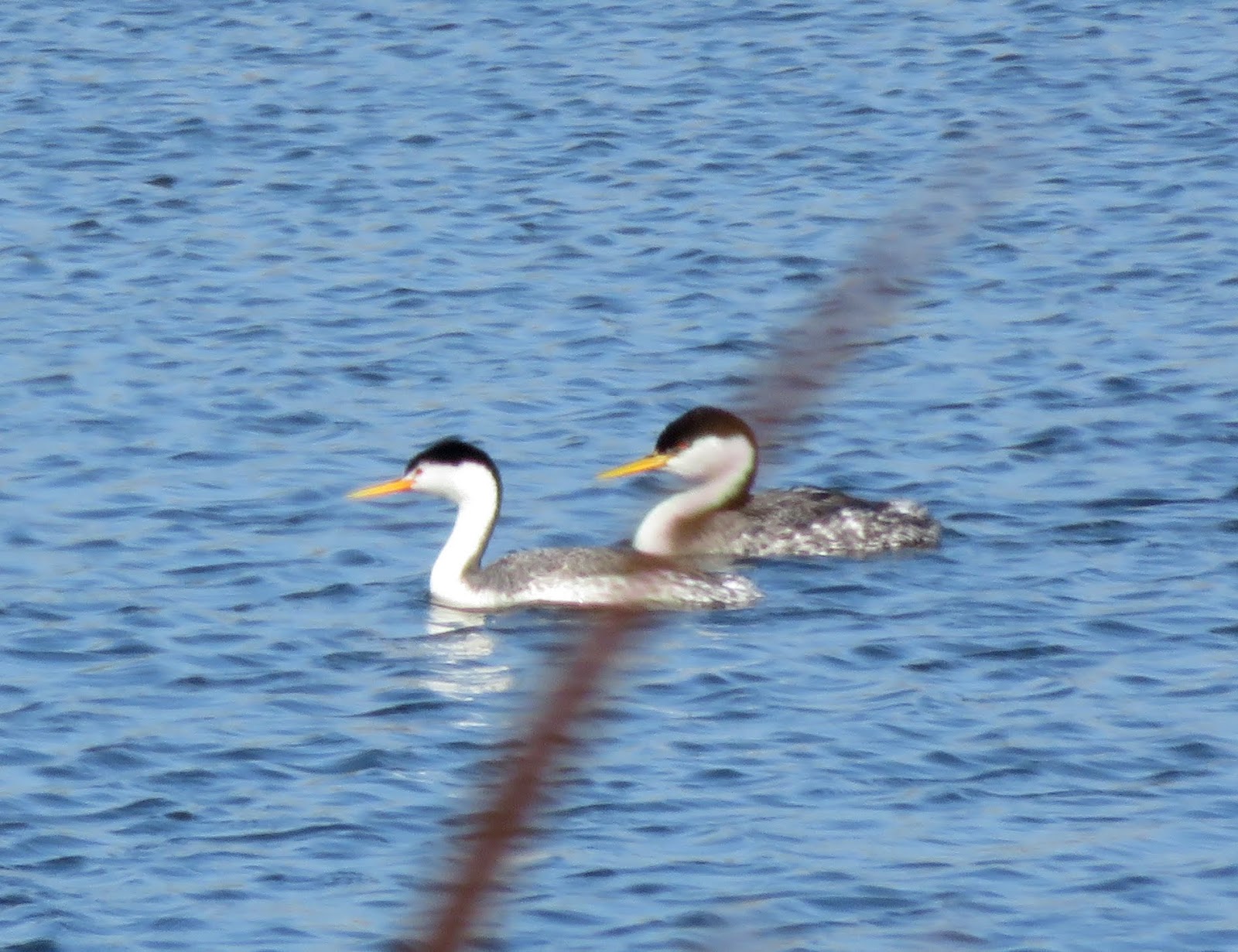
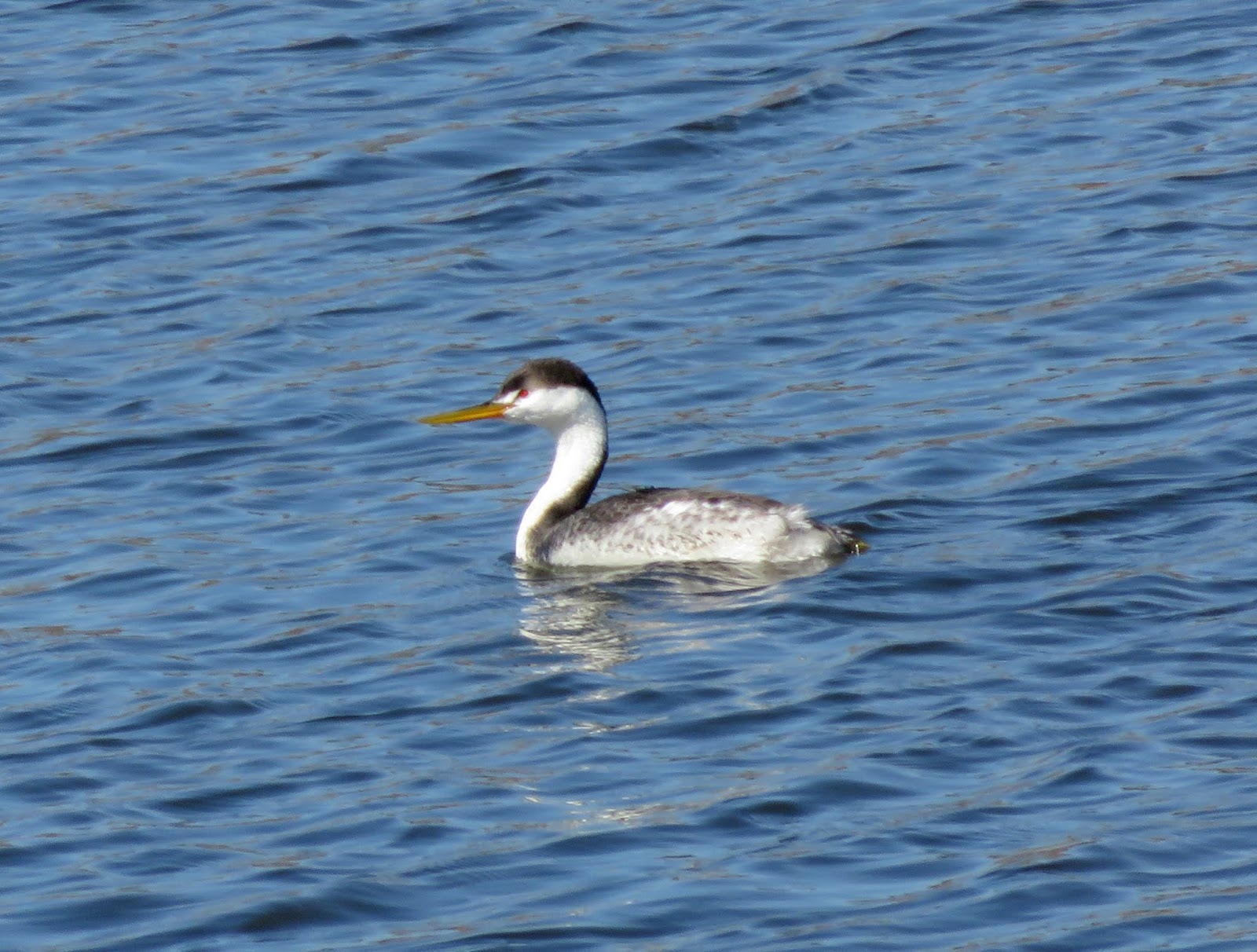
We saw several Western Grebes and one Clark's Grebe. The Clark's was swimming right alongside a Western, giving us a great view of the two species. Below is a photo of them. The Clark's is in front (white above the eye) and the Western is in back (black covering the eye).
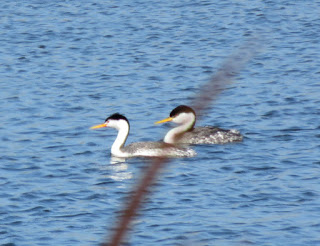 |
| Clark's Grebe and Western Grebe |
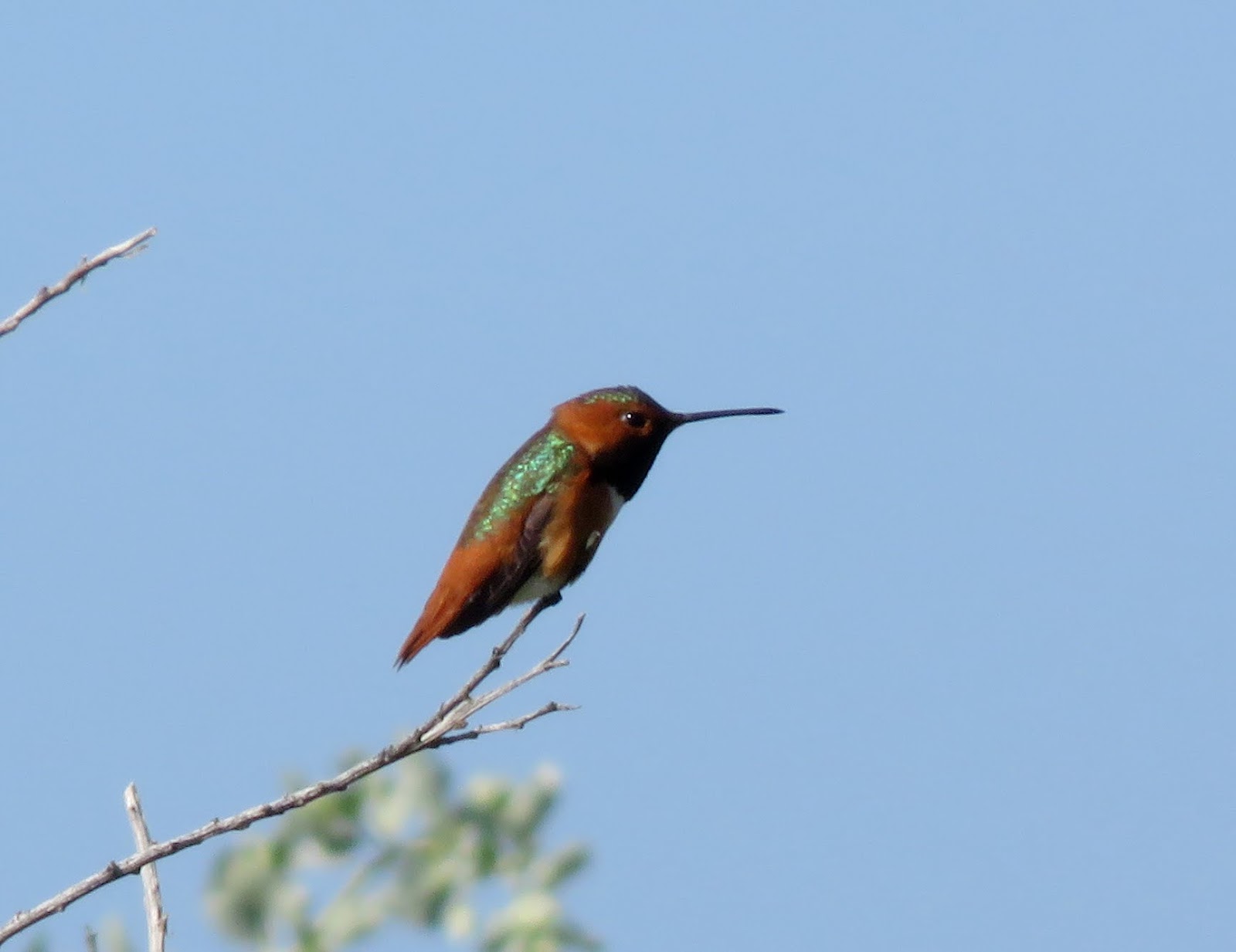
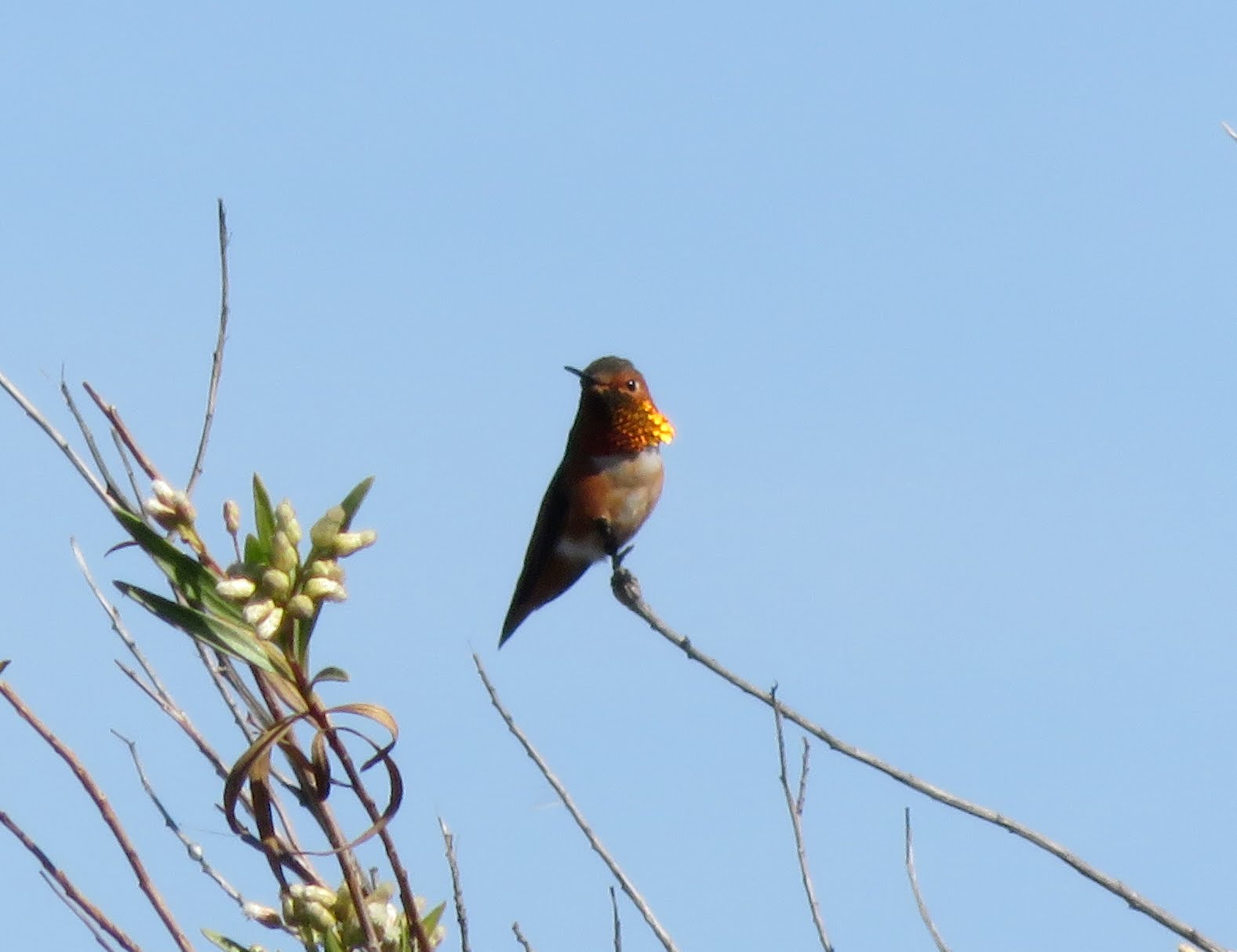
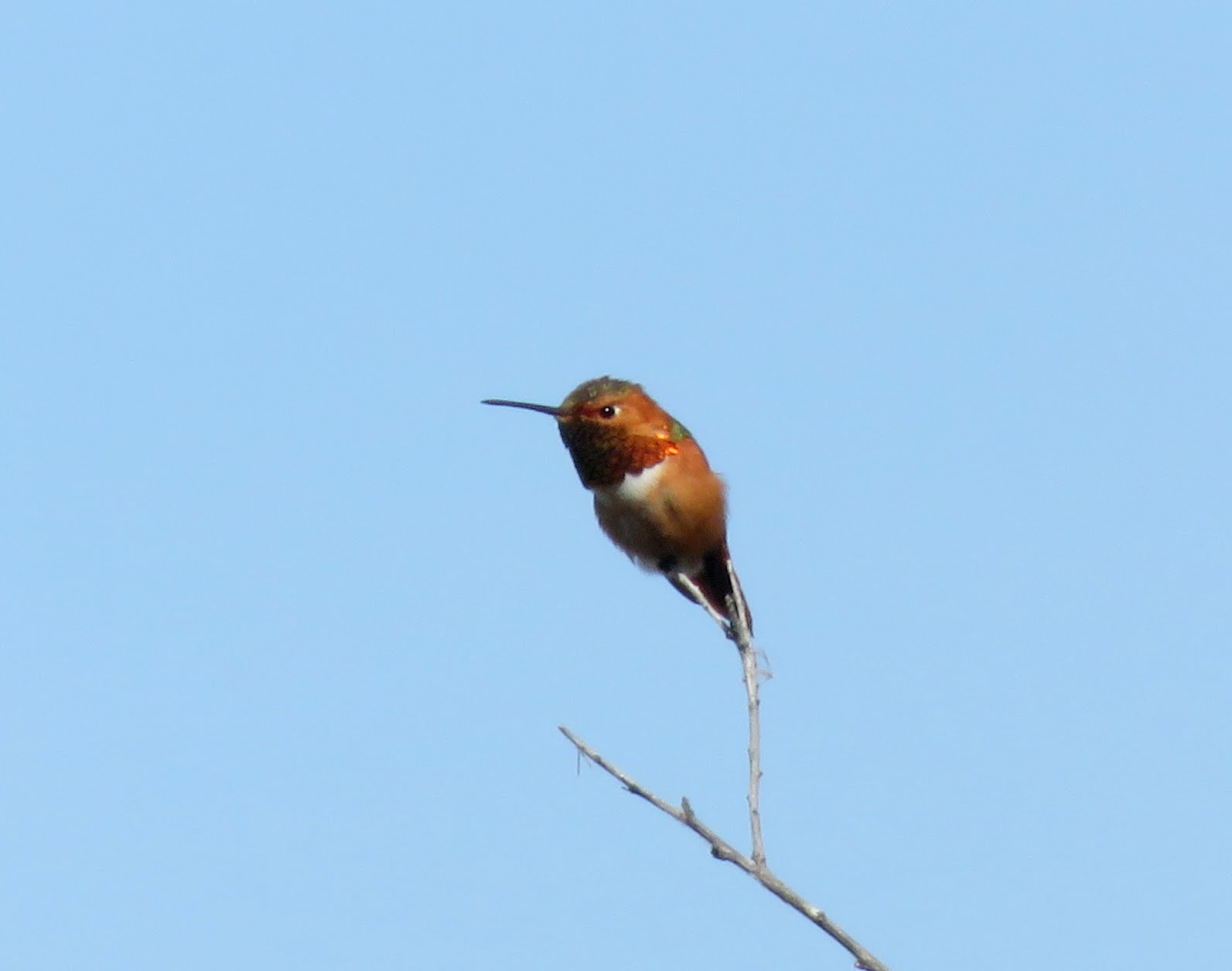
We didn't see quite as many hummingbirds as we usually do, but we still saw several Anna's and Allen's hummingbirds around. Below is a very beautiful male Allen's Hummingbird that sat nice and still for everyone to see.
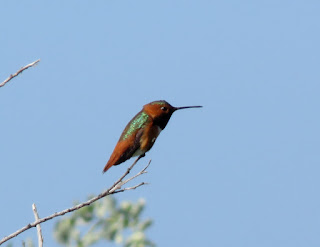 |
| Allen's Hummingbird |
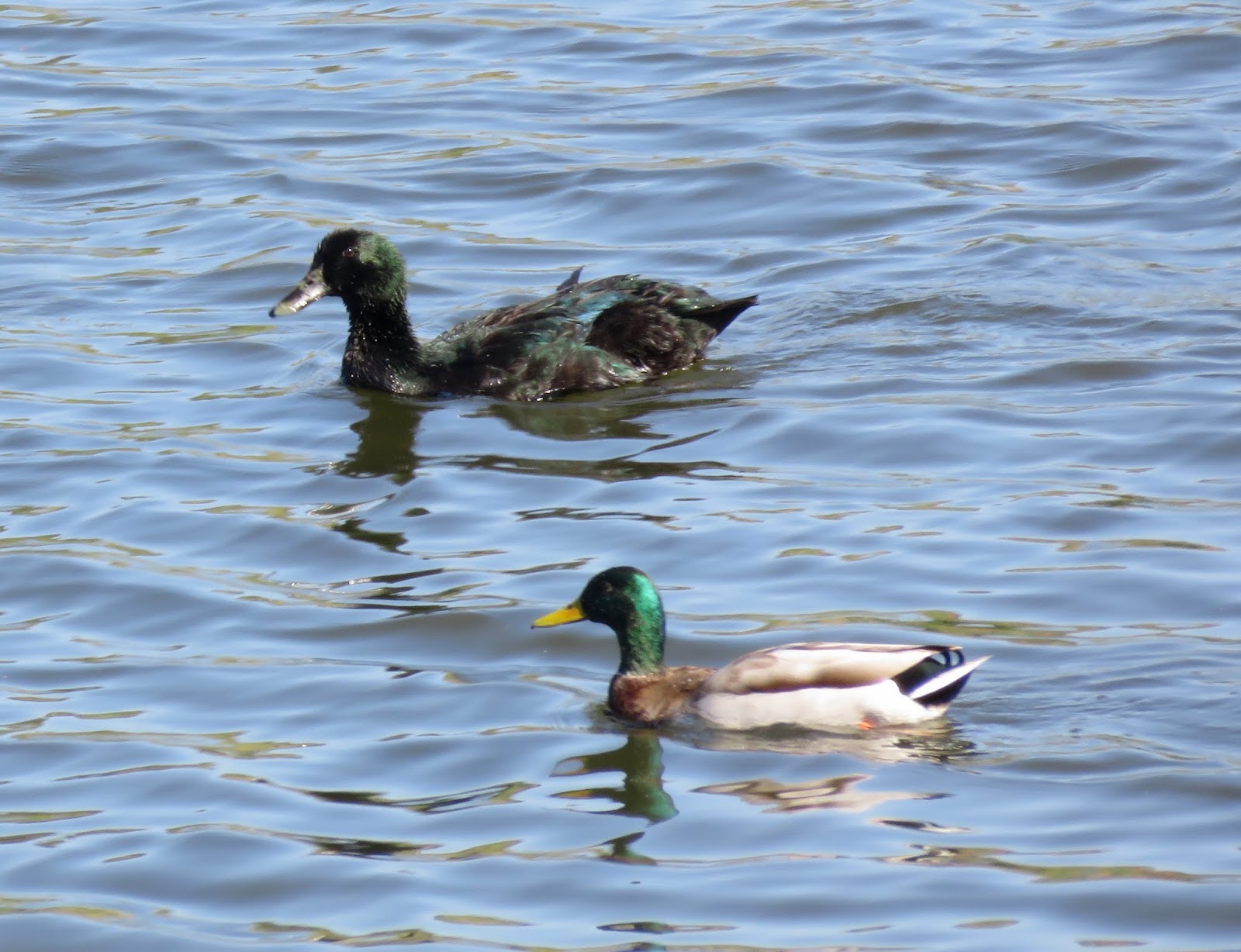
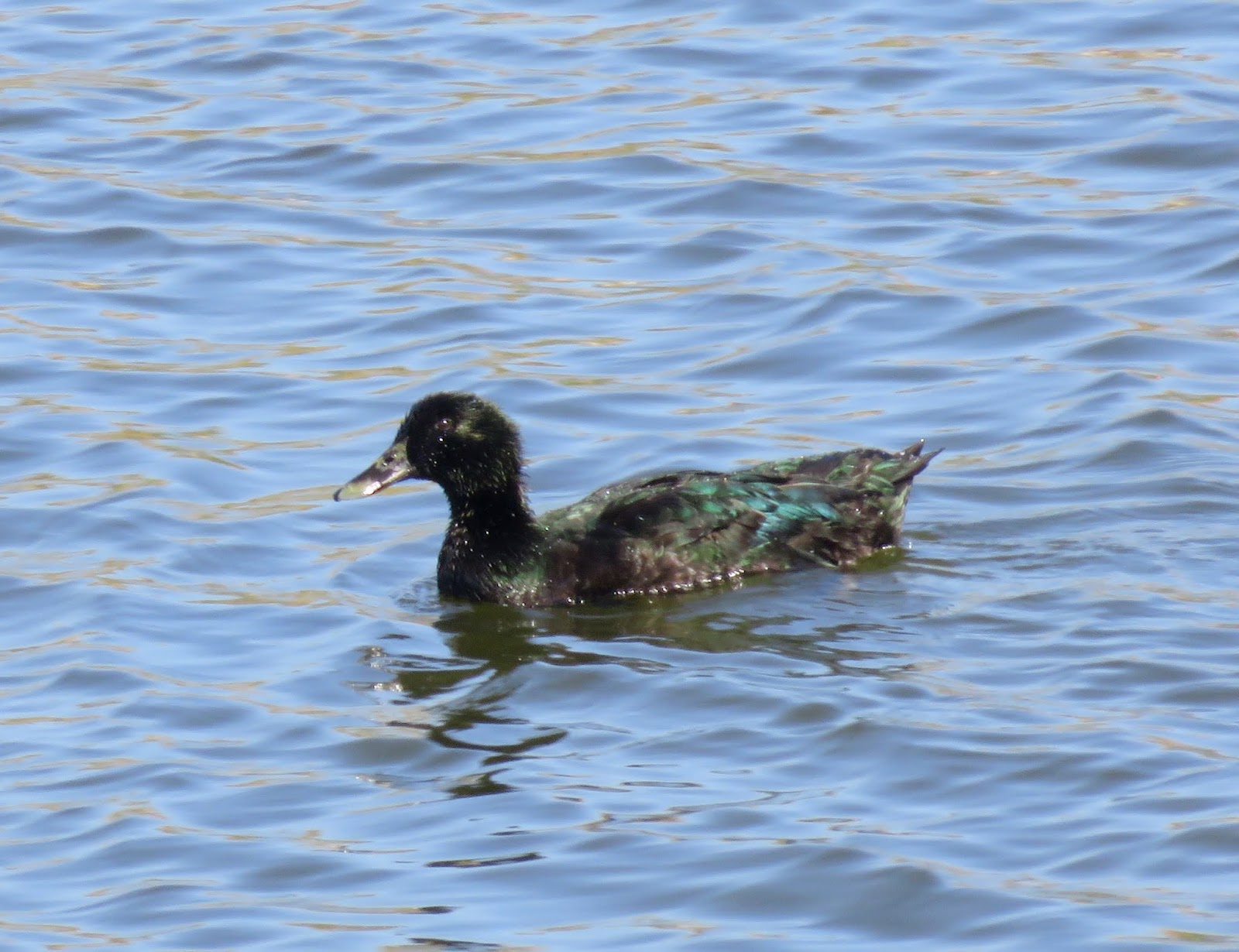
That black domestic Mallard that appeared a couple months ago is still here, and it's not actually all black. The past couple months were cloudy, so we only saw that the duck was very dark. It actually has green iridescent feathers all over its body, and is very beautiful. It was hanging out with some wild Mallards. Below are two photos of the domestic Mallard (plus a wild Mallard).
 |
| Mallards |
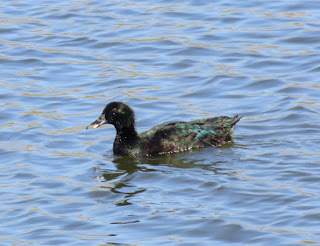 |
| Mallard |
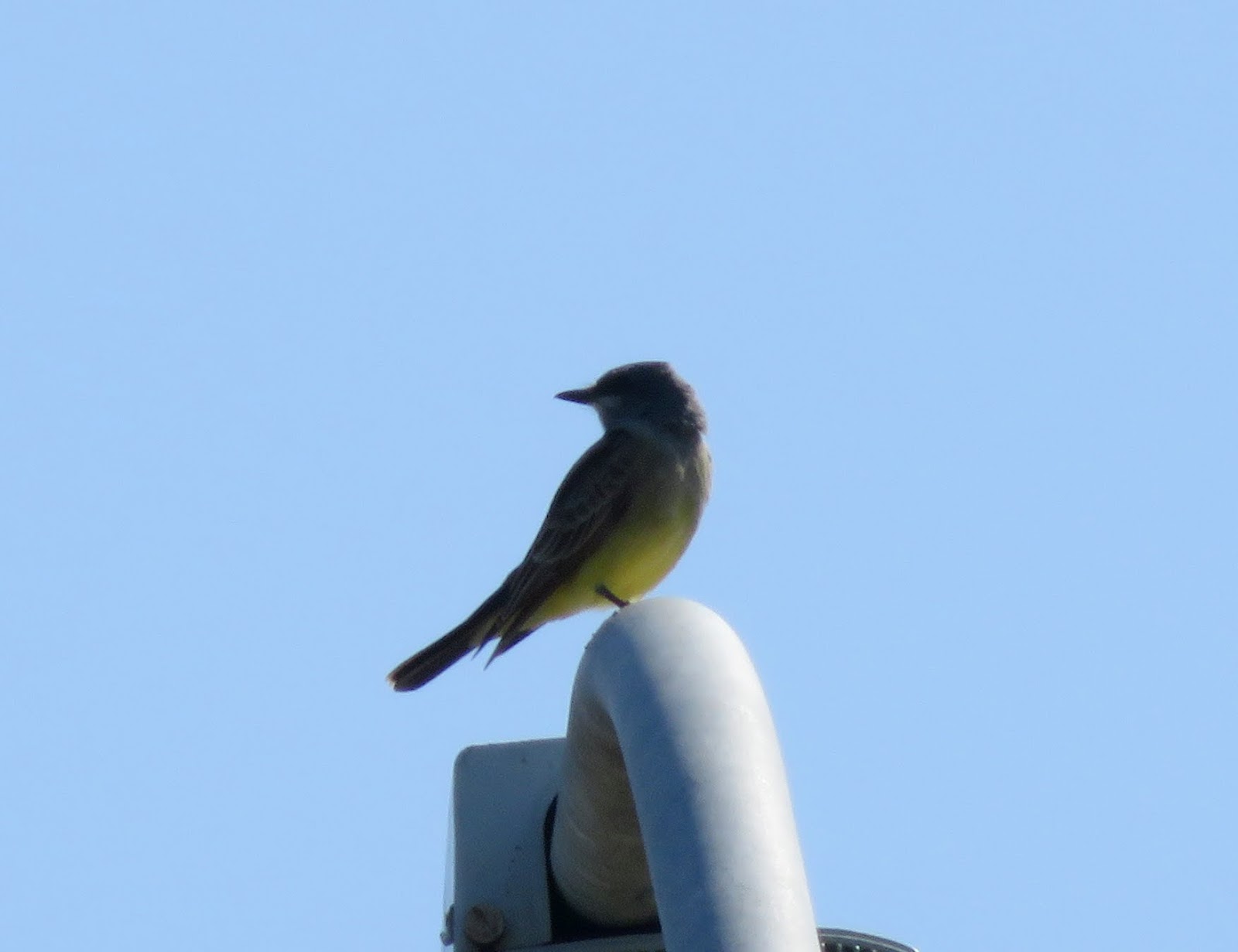
There were a couple of Cassin's Kingbirds around. Below is one of them perched on a street light.
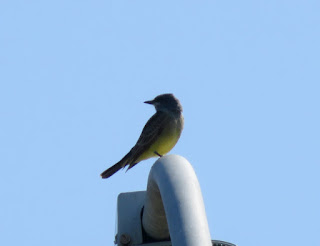 |
| Cassin's Kingbird |
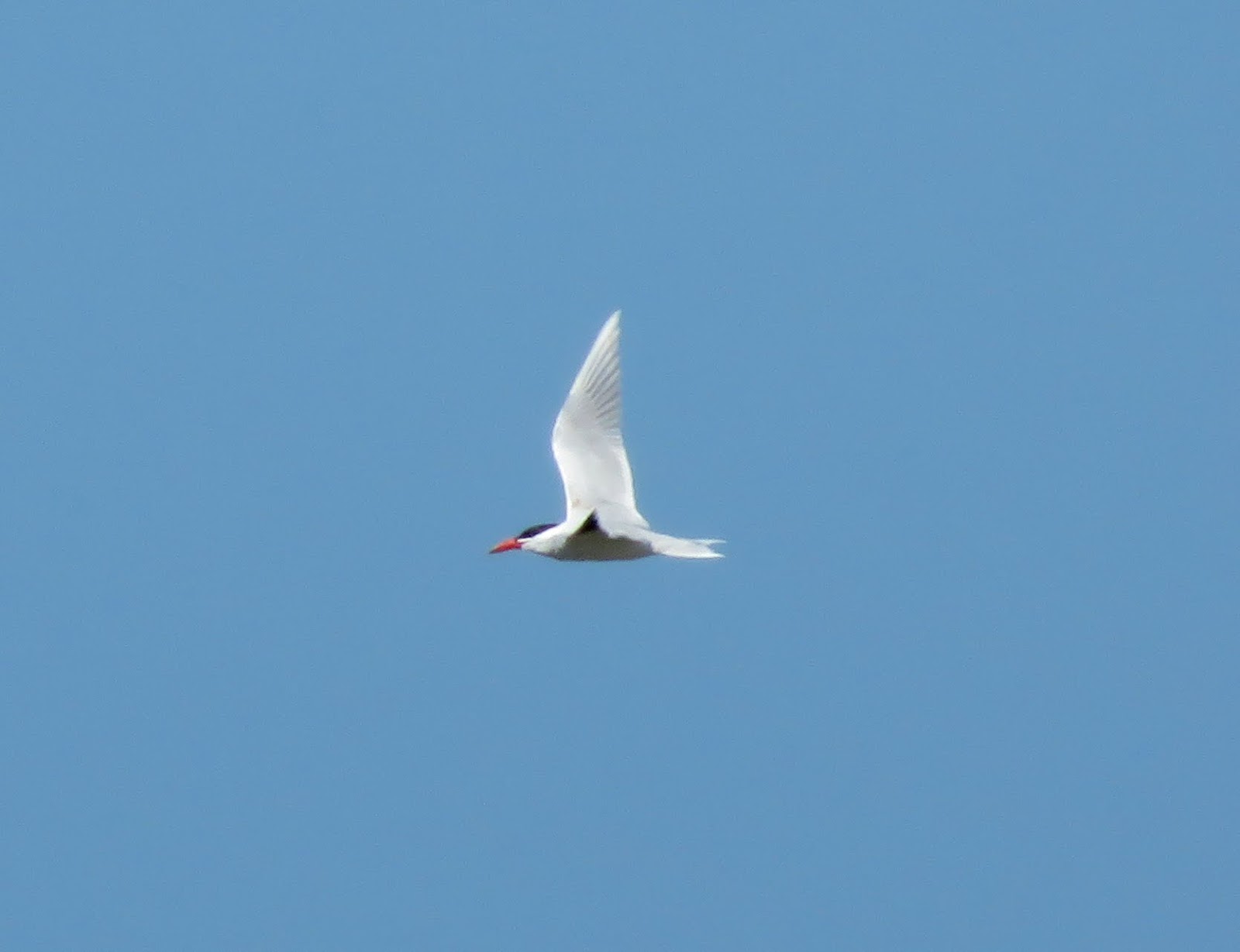
Near the end, we all saw a Caspian Tern. It was flying back and forth over the lagoon in the distance. The other terns should be showing up soon. Below is the Caspian Tern.
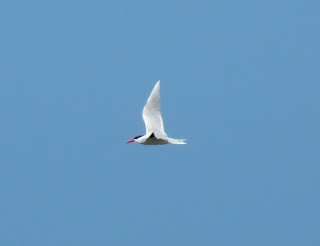 |
| Caspian Tern |
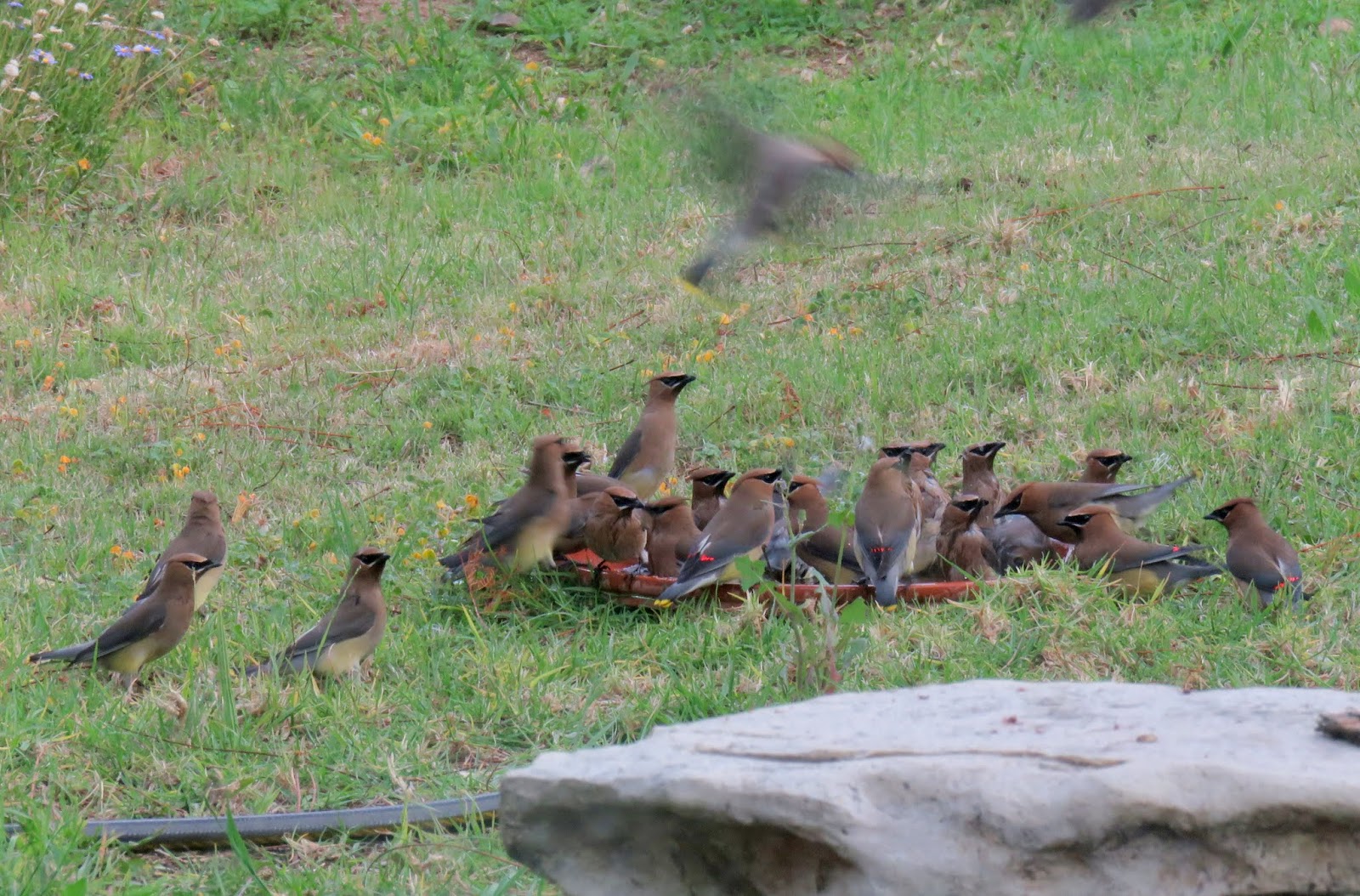
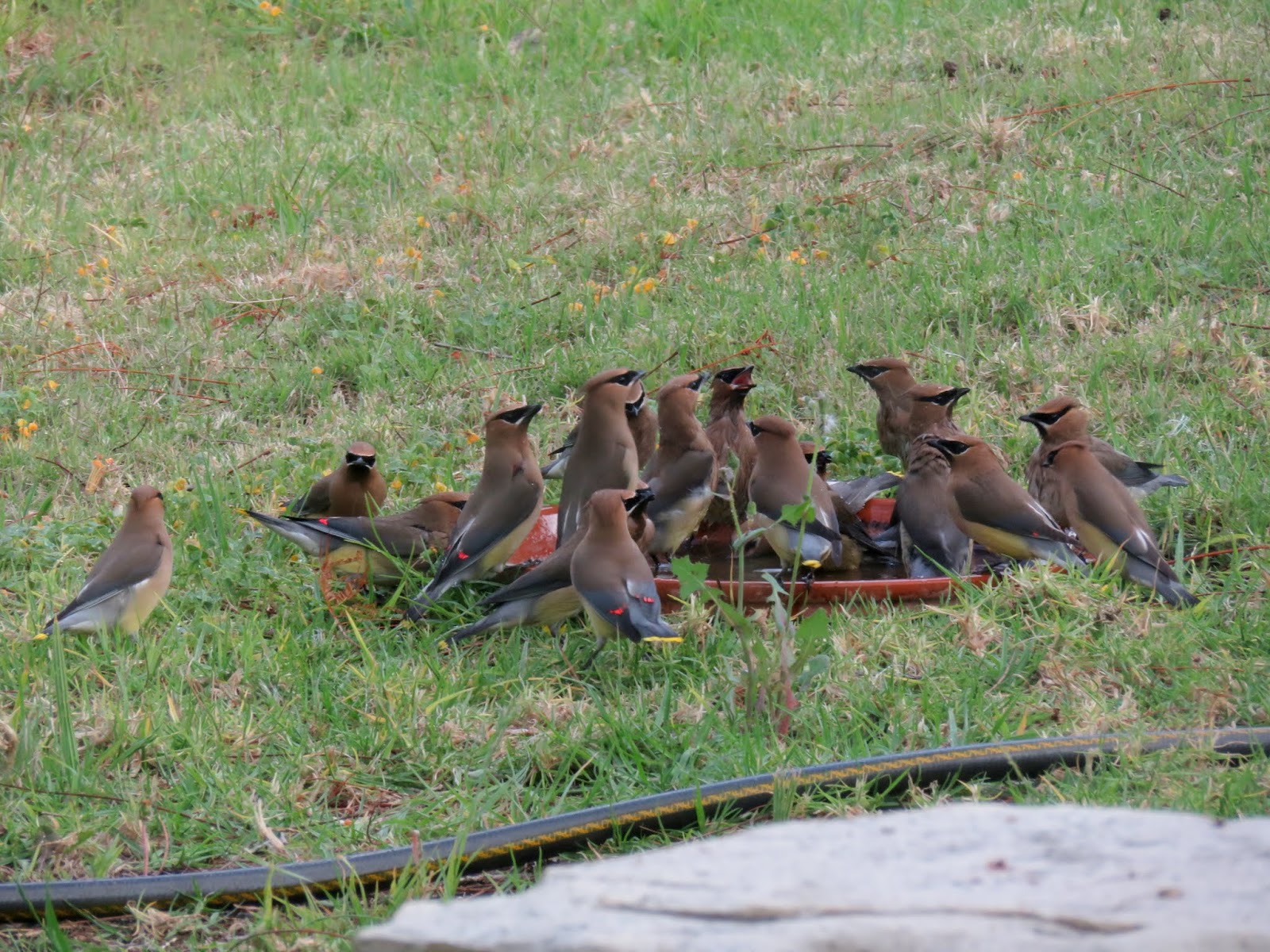
Bonus: A large group of Cedar Waxwings came down to take baths and drink in my yard yesterday. They were all crowding each other and being very noisy, all trying to bathe and drink at the same time out of one small clay bowl. More birds were constantly joining or flying off. It was very chaotic. Below are two photos of some of the waxwings.
 |
| Cedar Waxwings |
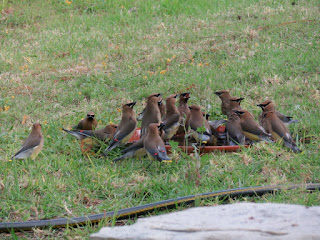 |
| Cedar Waxwings |