Showing posts with label Whale-Watching. Show all posts

Sunday, August 7, 2016

Seattle Part 2

This is the second part of the Seattle trip, covering the second half of Thursday, as well as Saturday.

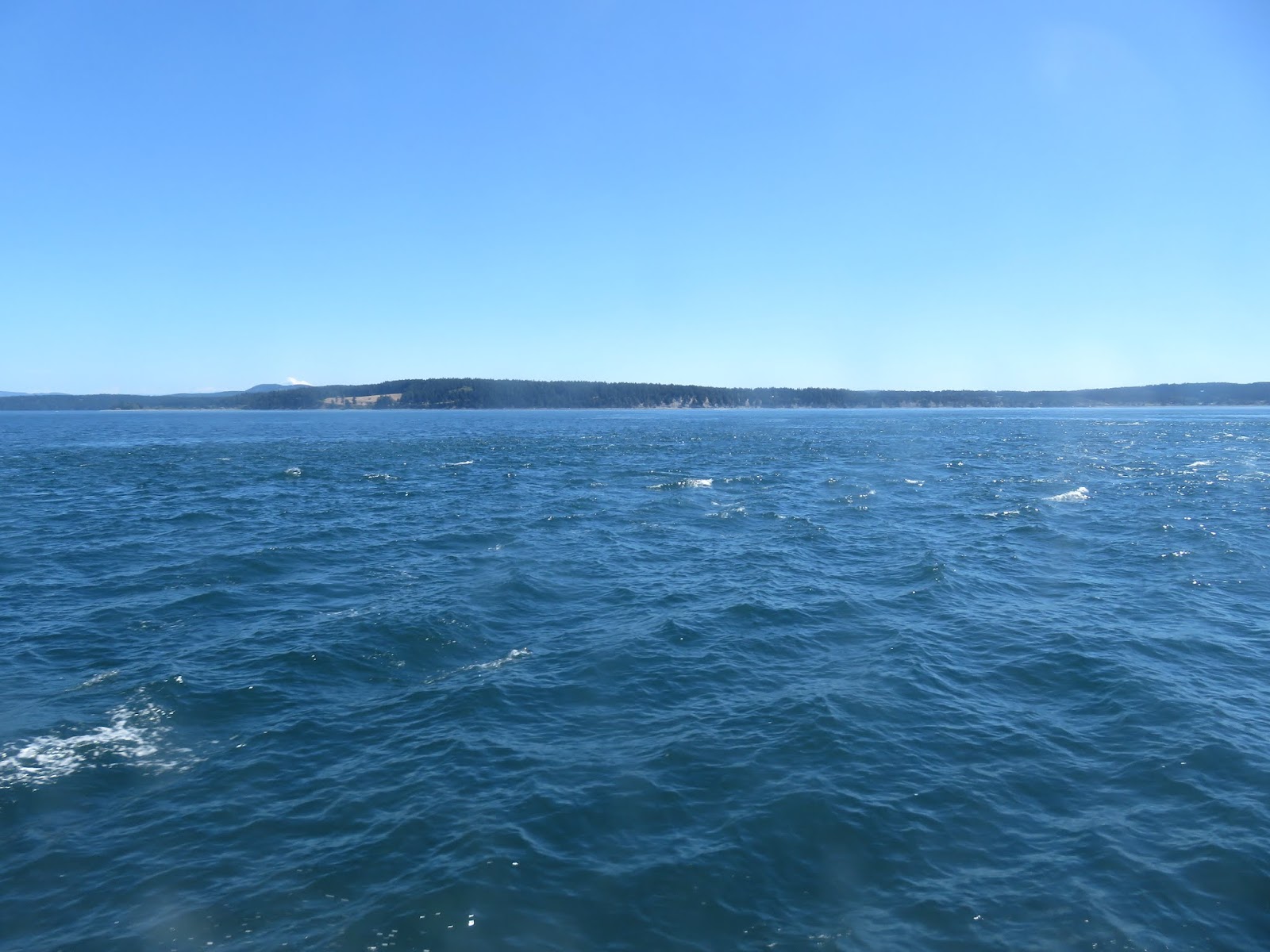
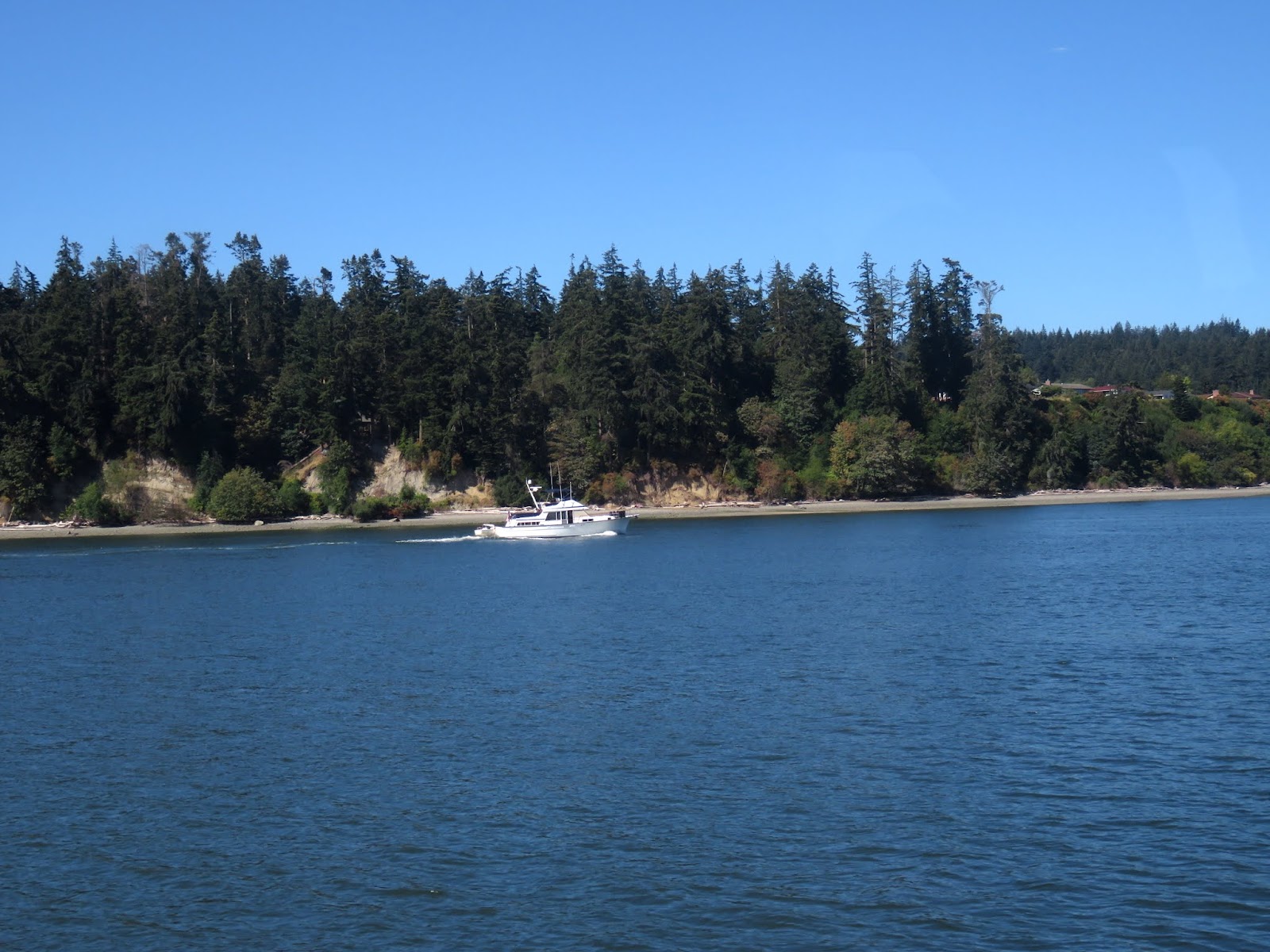
As we left Friday Harbor to begin the whale-watching tour, we entered much choppier water, and since the nearest report of Orcas was quite a distance away, we had to go quickly in order to stay on schedule. As a result, some people got seasick. There was complementary meclizine, though, for those who wanted it. Fortunately, I don't get seasick, so I felt fine. Below is a photo of the choppier water.


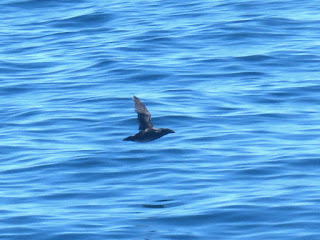
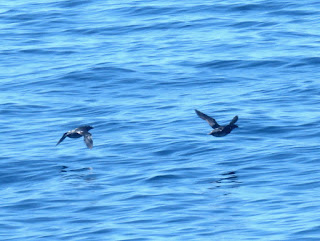
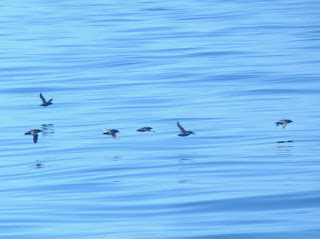
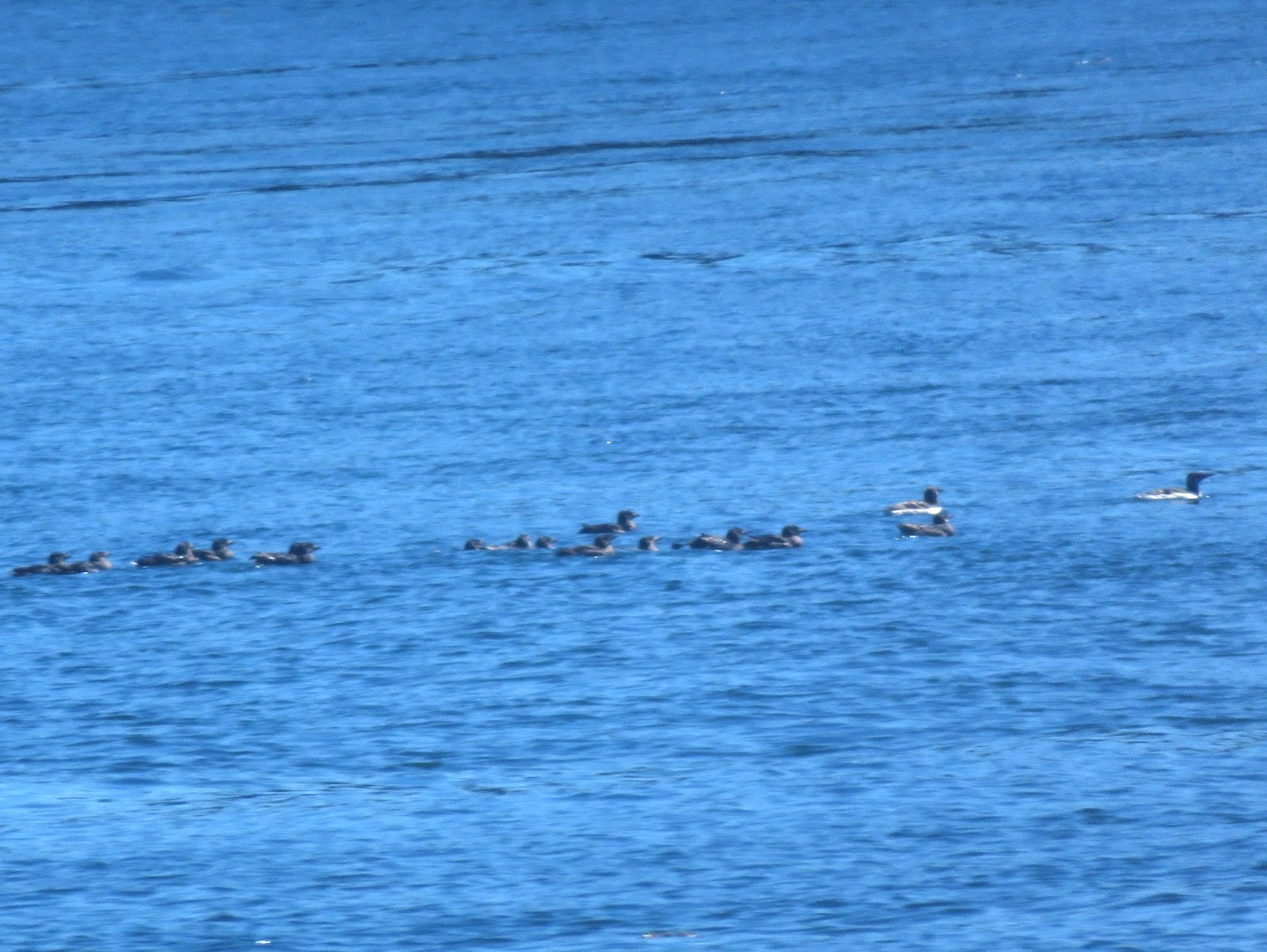
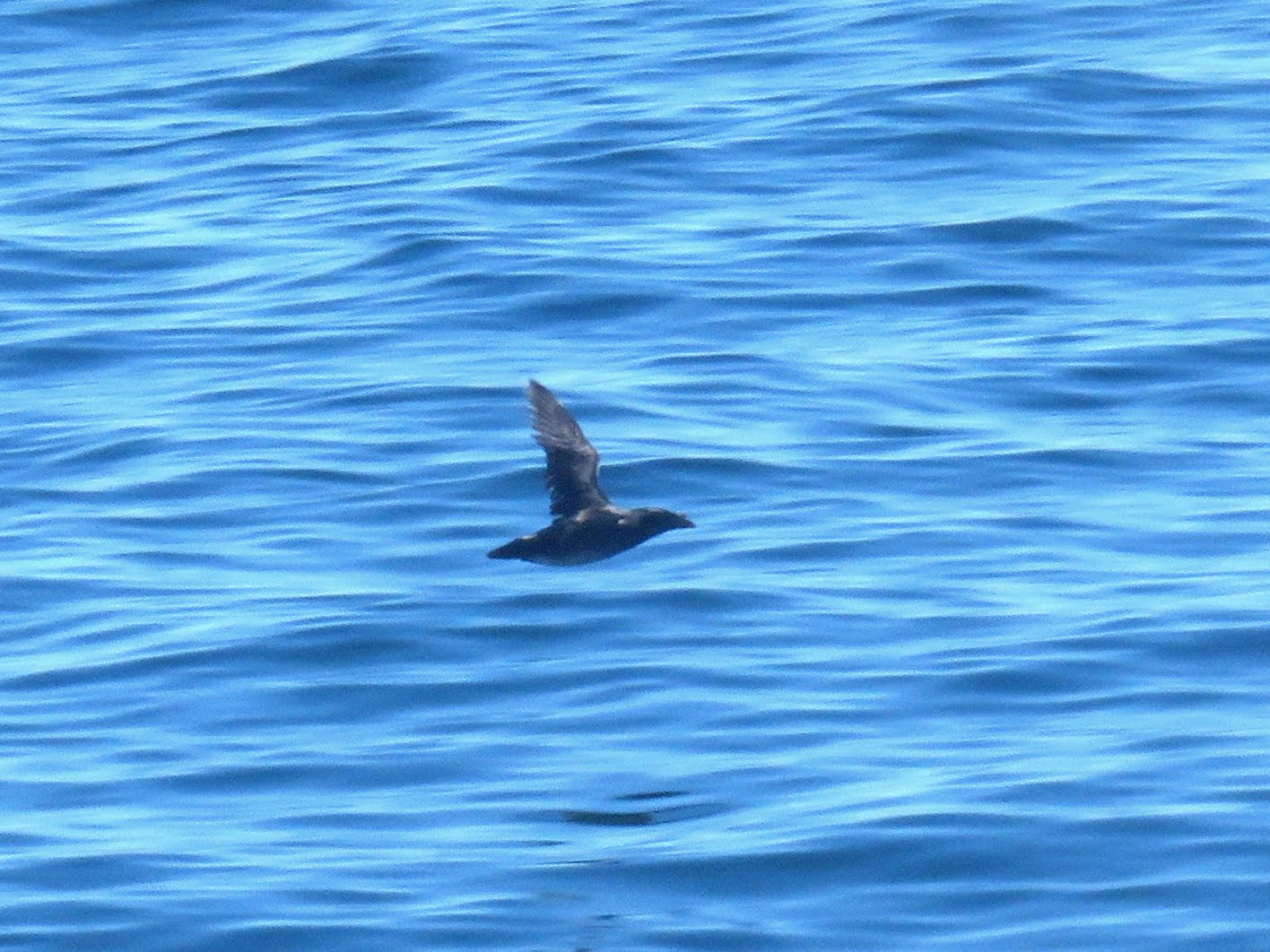
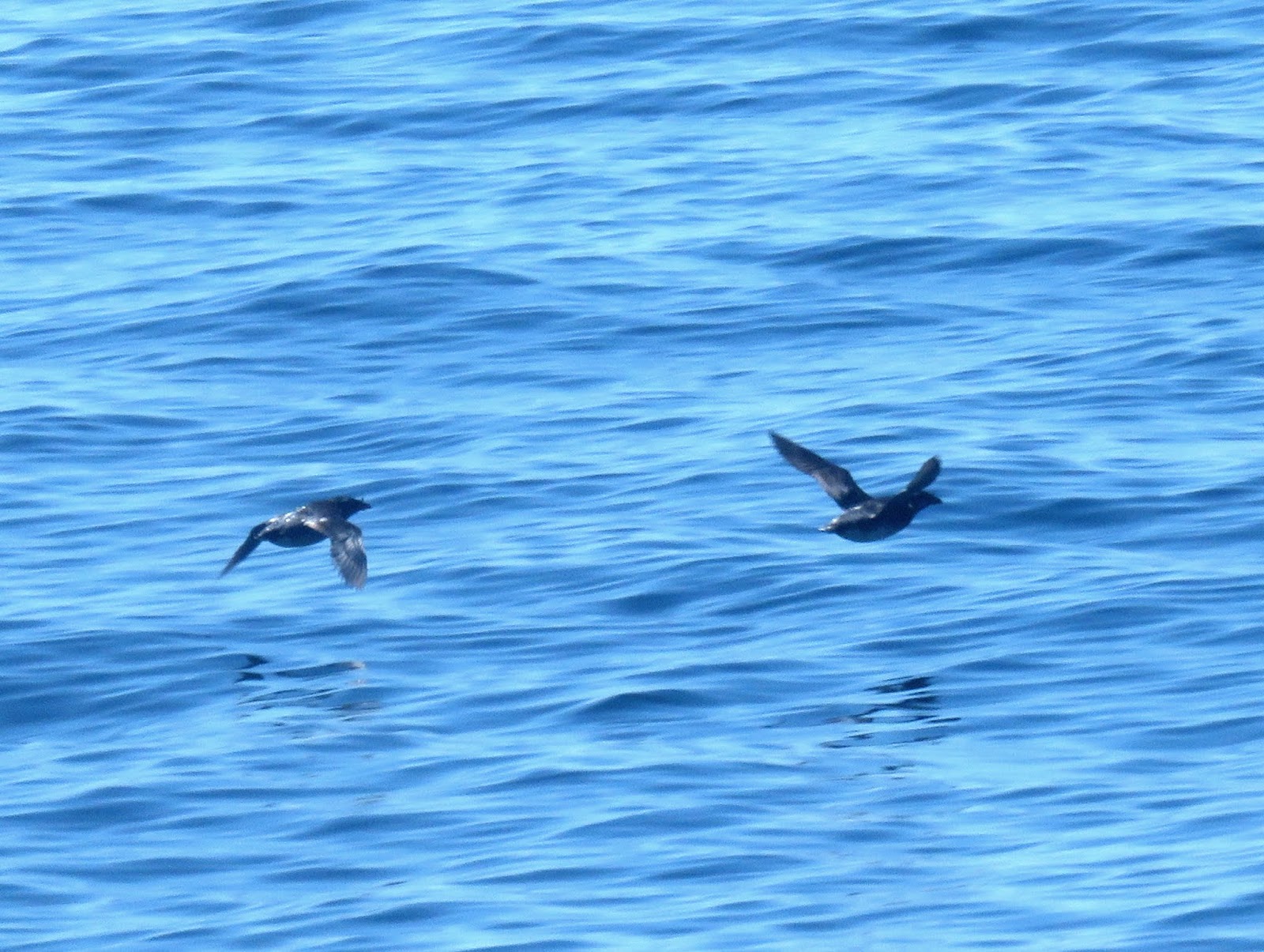
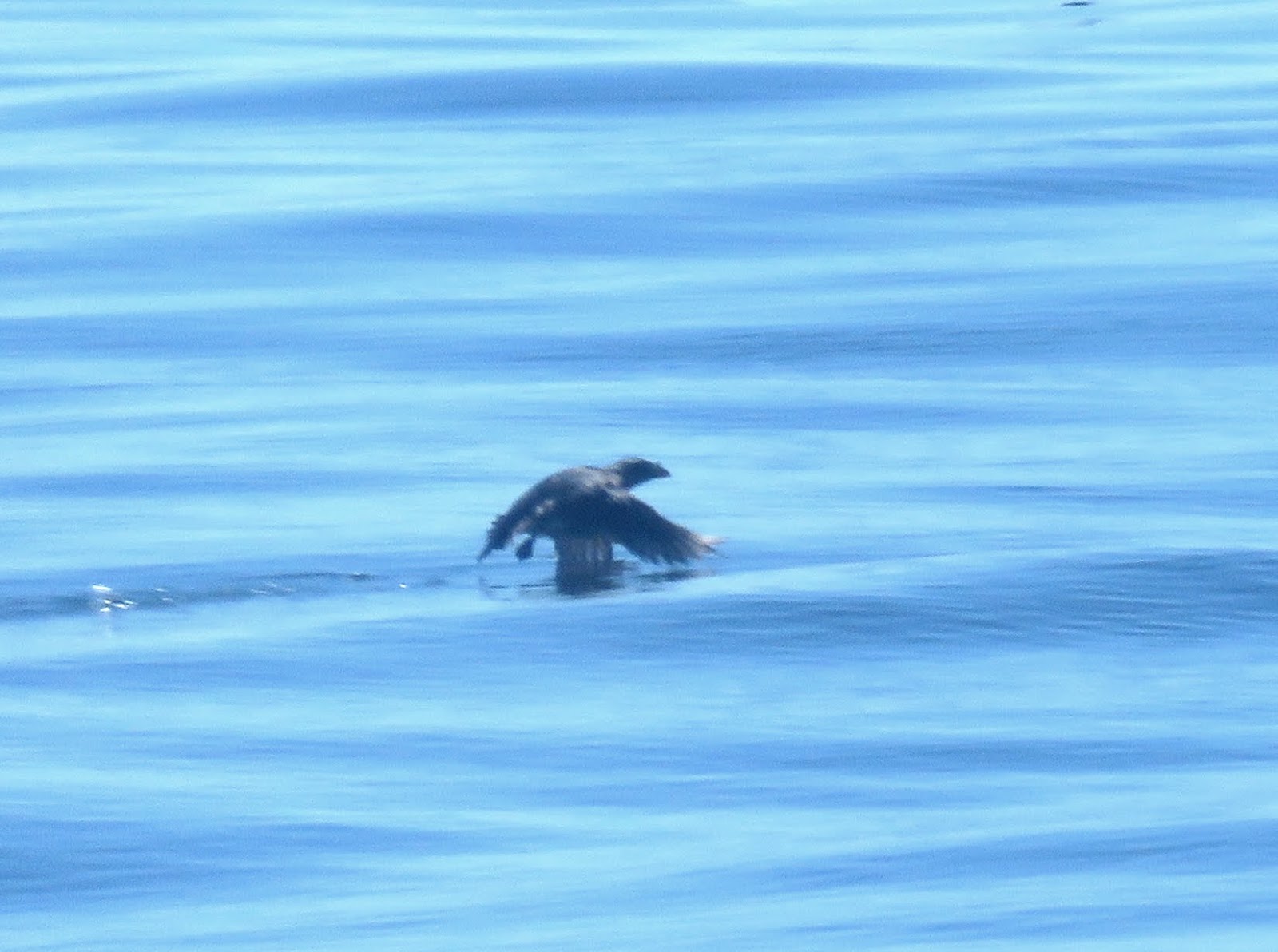
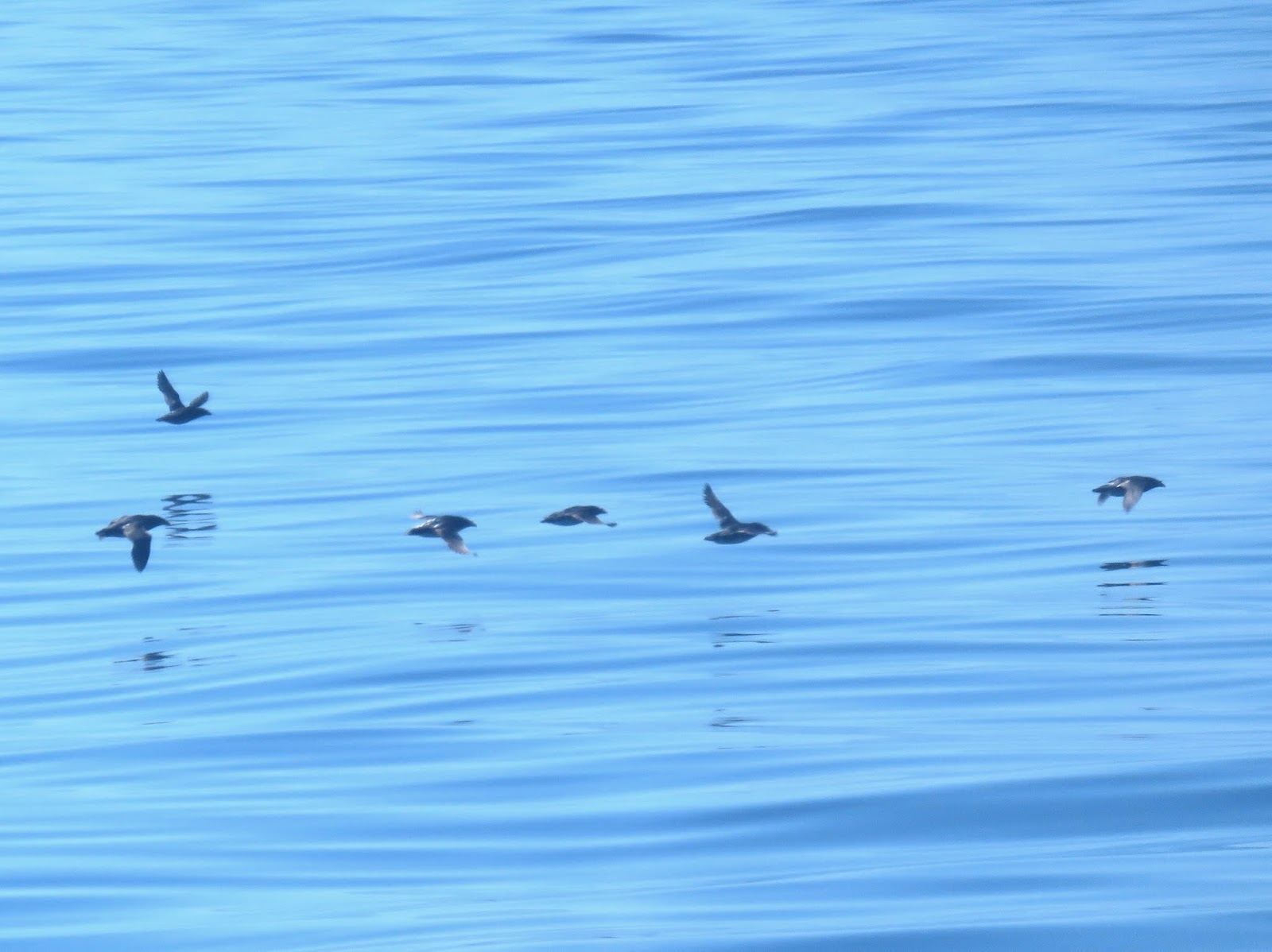
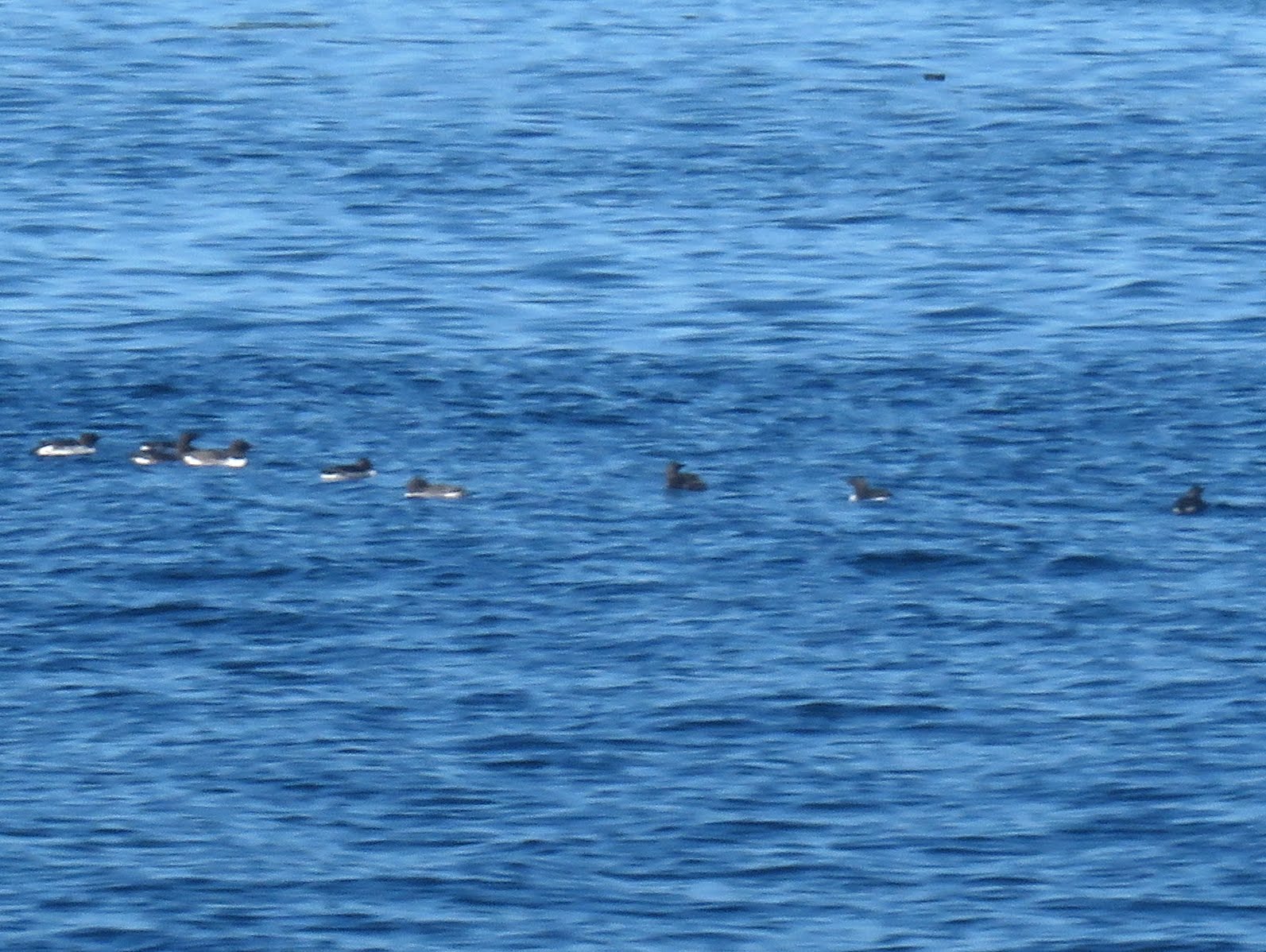
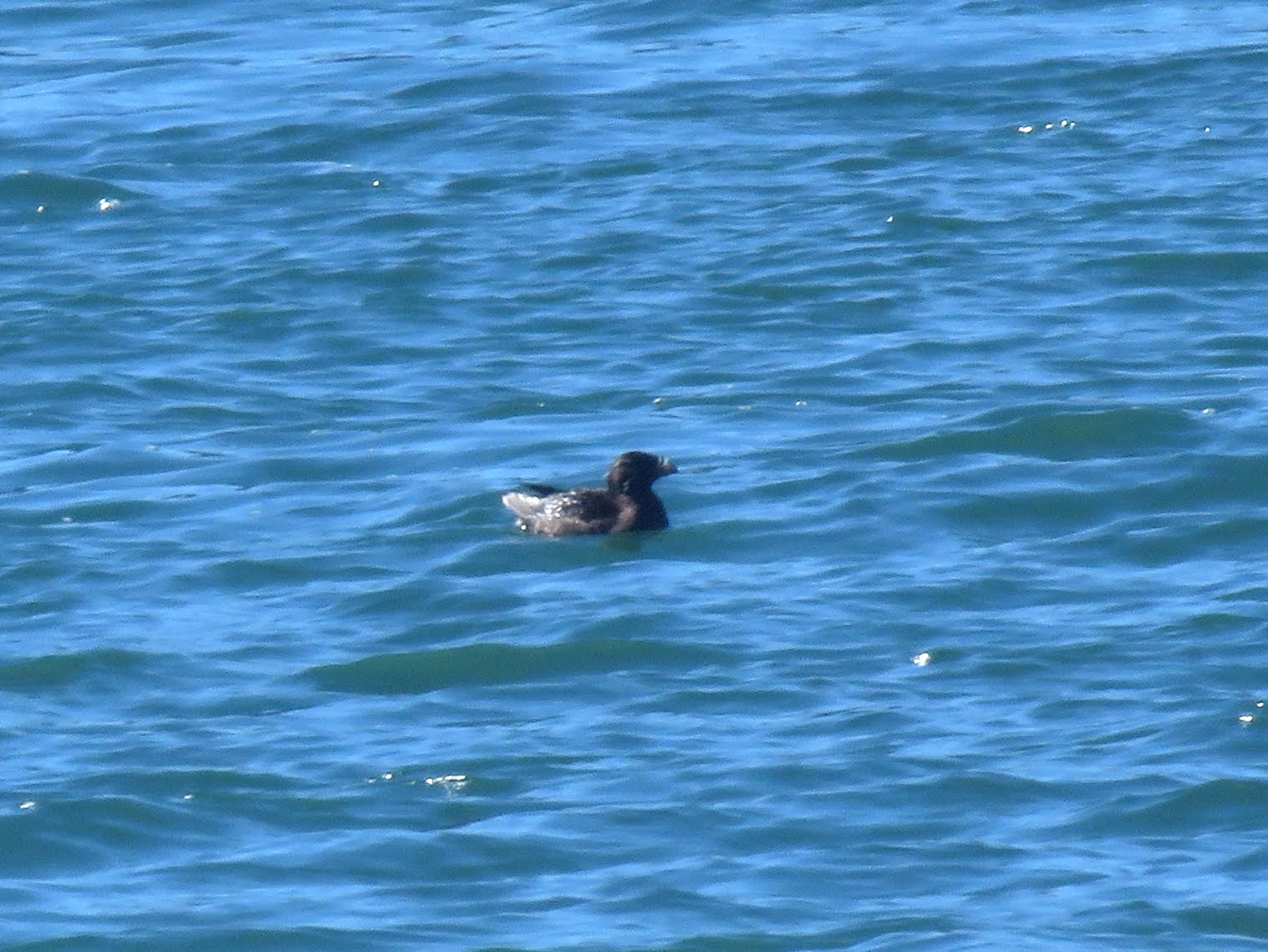
As mentioned in the previous post, there were a lot of Rhinoceros Auklets. Until about halfway through the whale-watching tour, there were many flocks of auklets, as well as some guillemots, murres, and gulls. Below are five photos of Rhinoceros Auklets. In the first photo, the two whitish birds at the right are Common Murres.
Rhinoceros Auklets and Common Murres
Rhinoceros Auklet
Rhinoceros Auklets
Rhinoceros Auklet
Rhinoceros Auklets

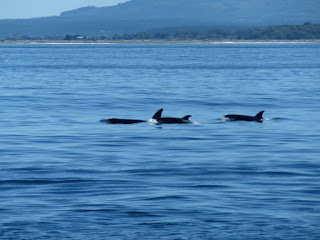
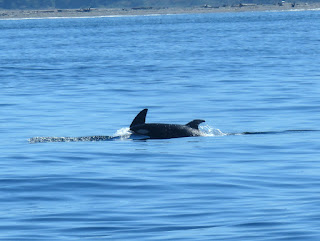
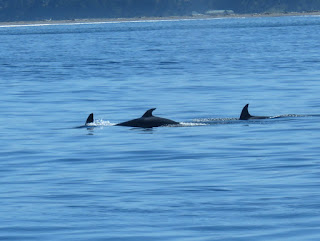
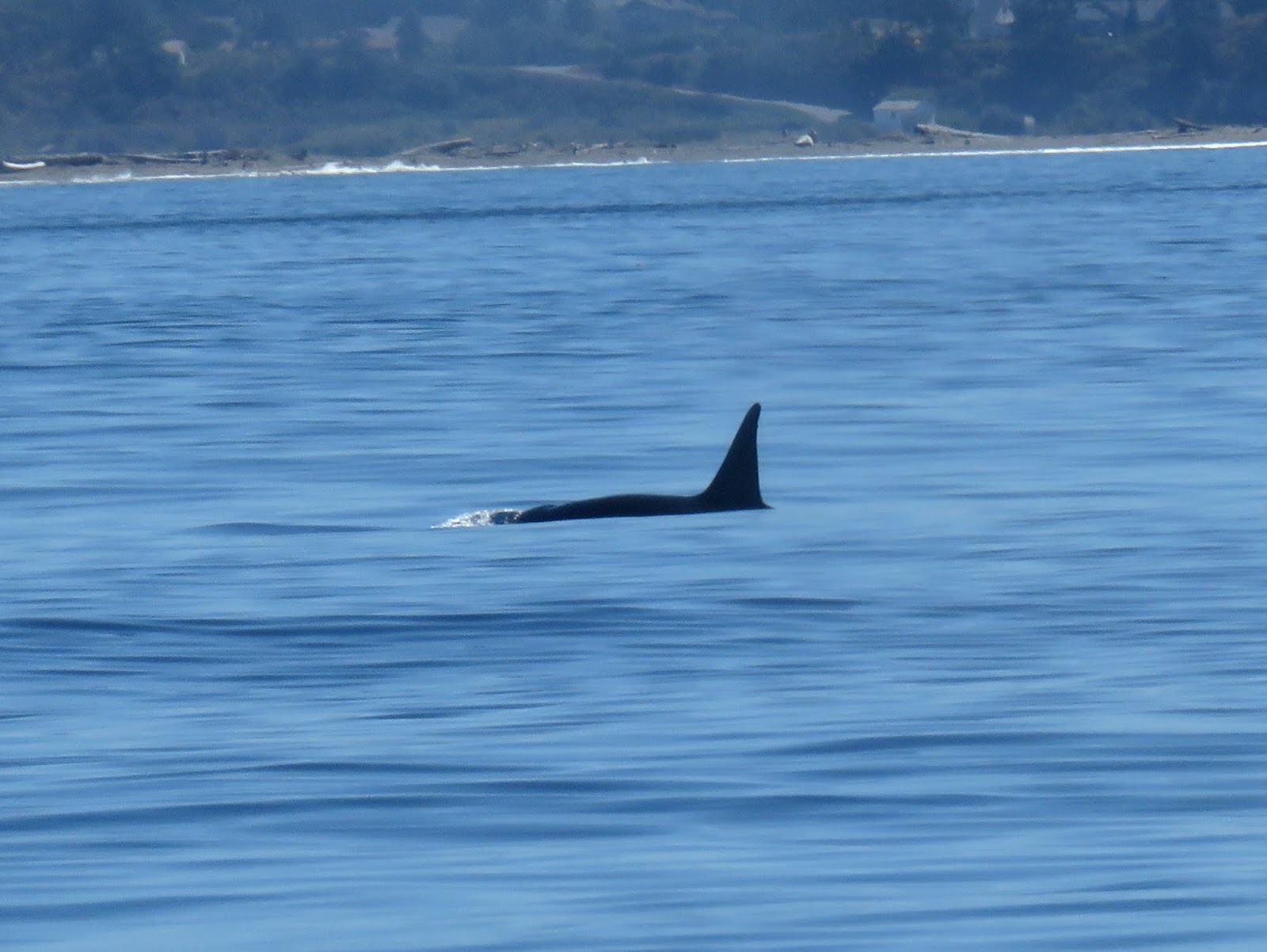
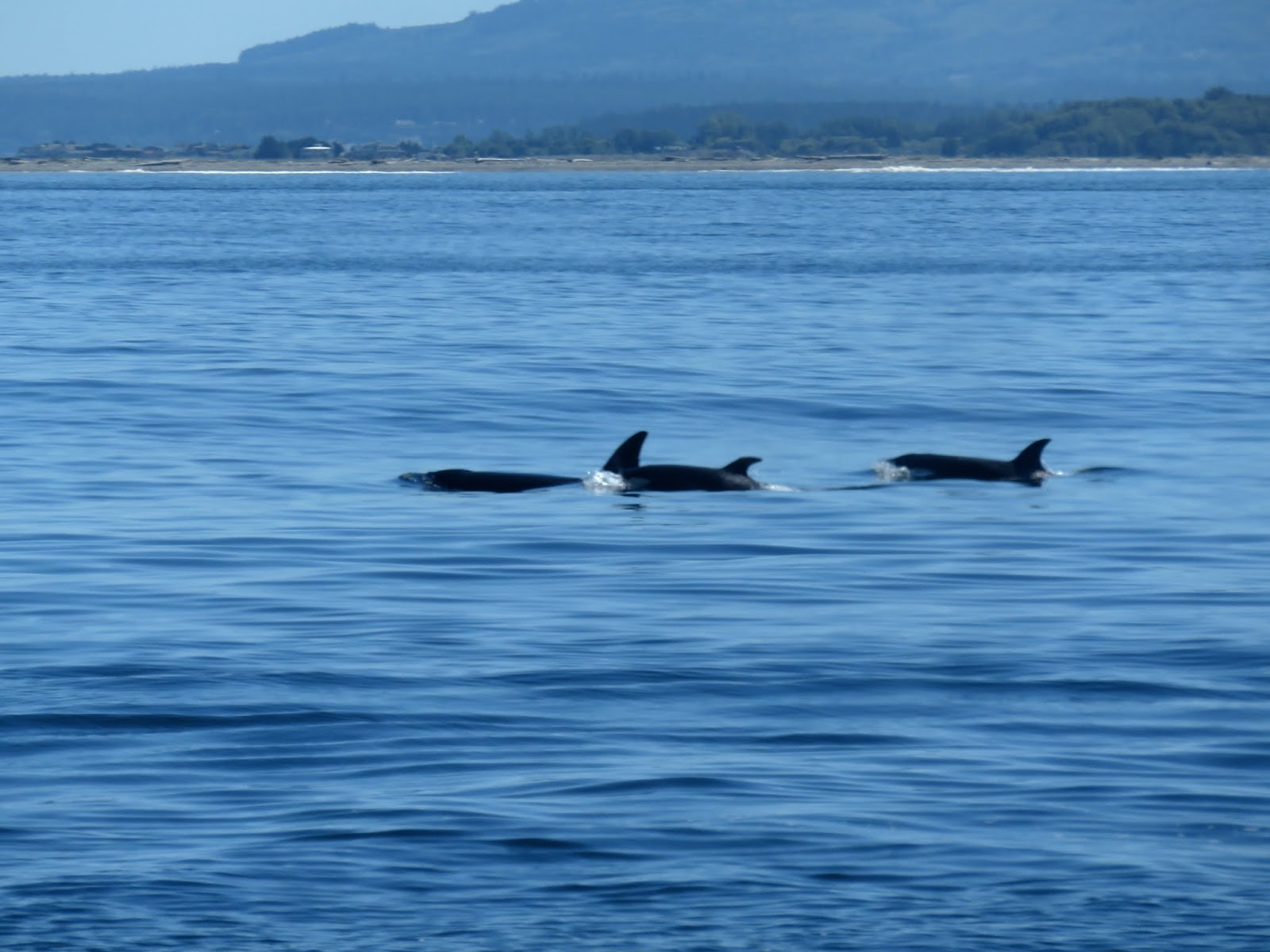
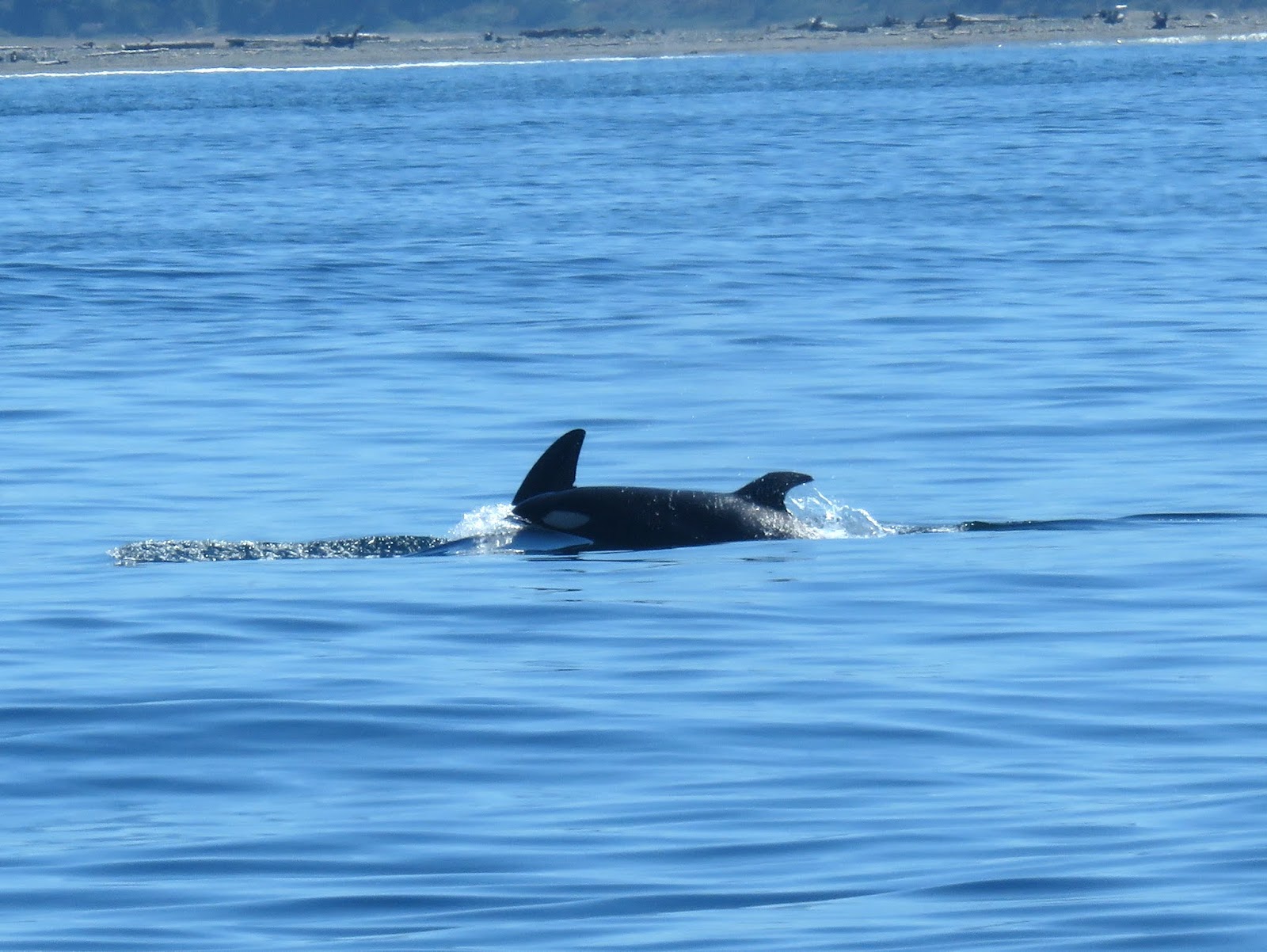
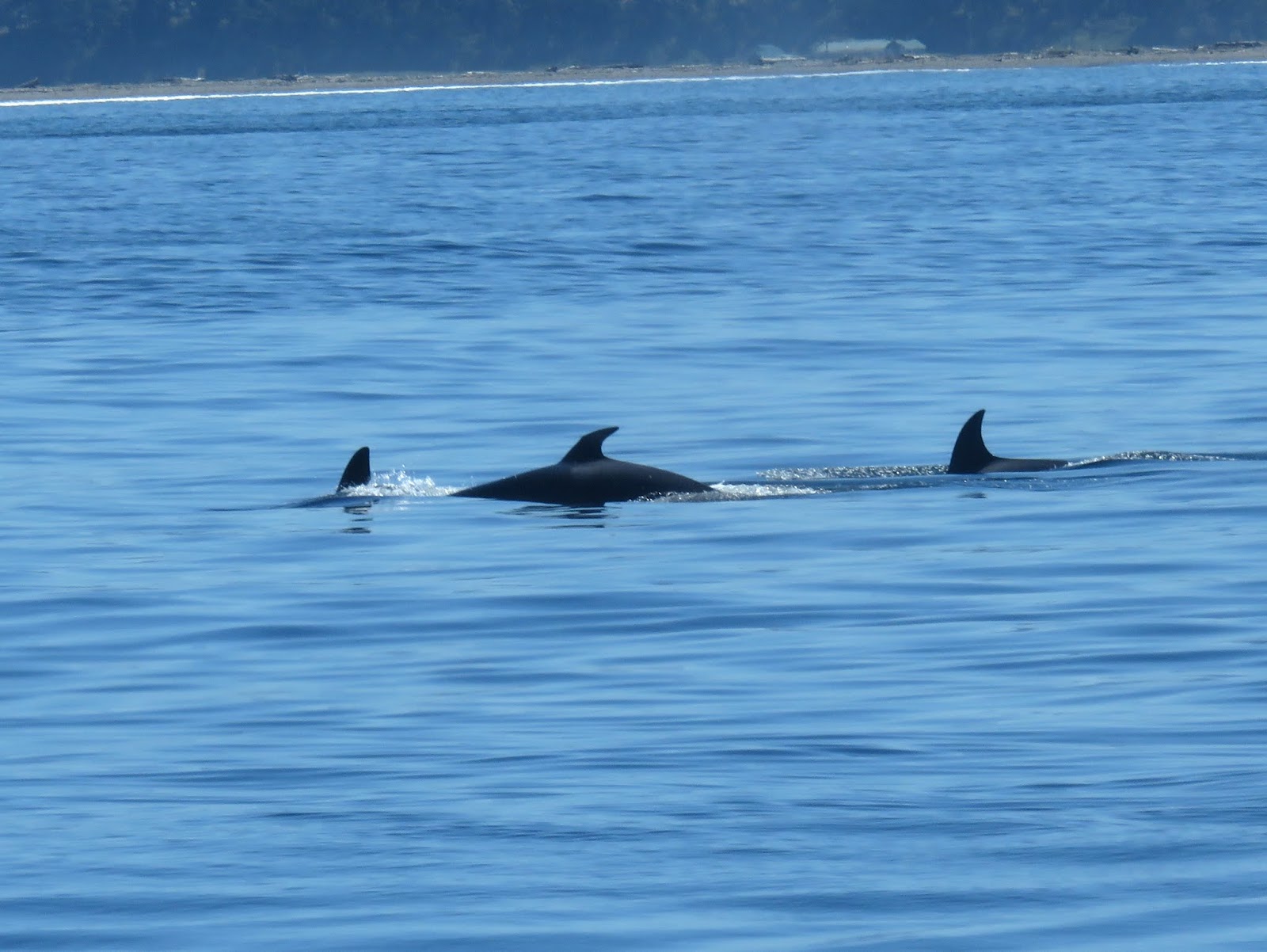
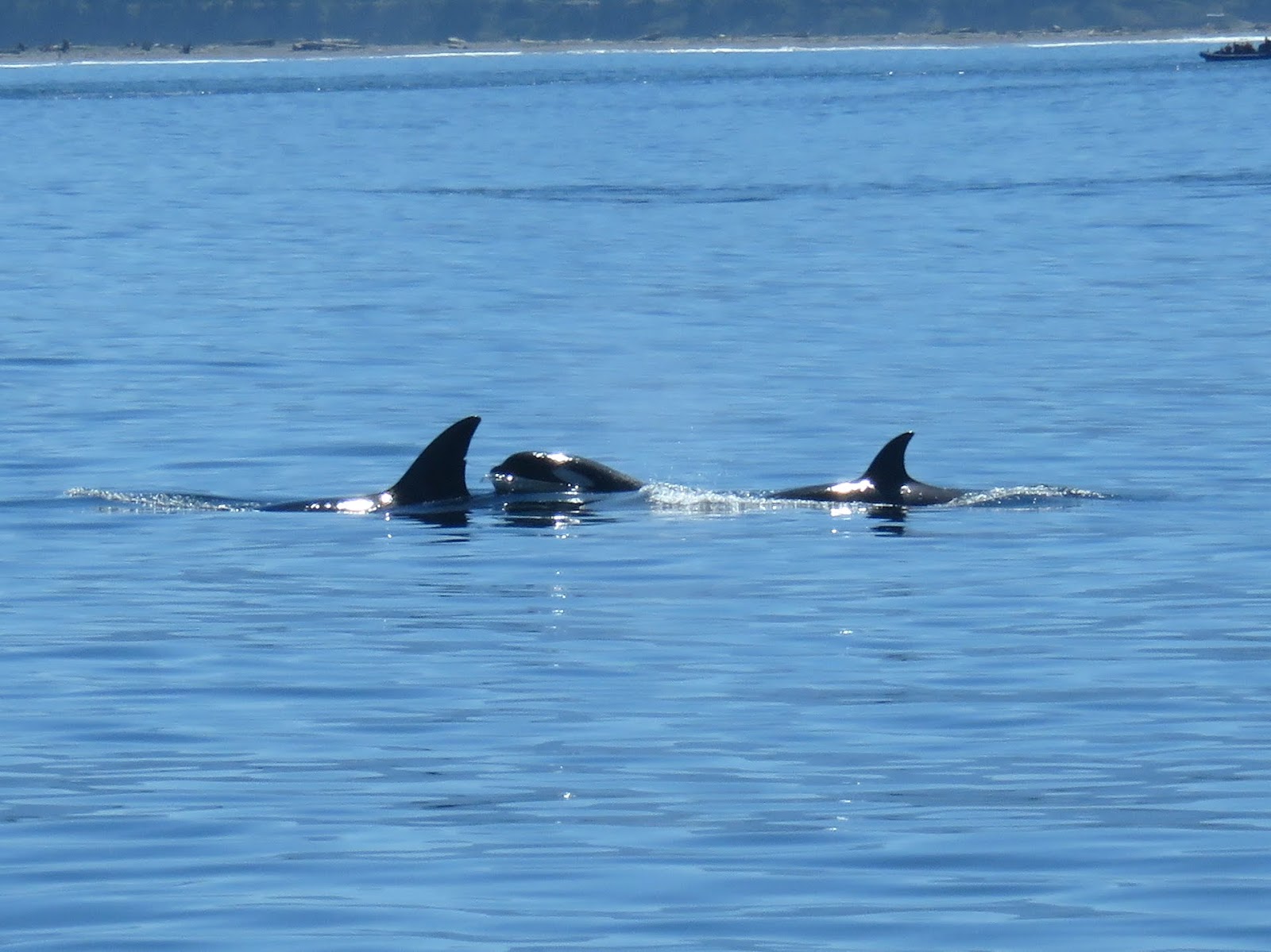
Where the Orcas had been sighted, there were a few whale-watching boats floating around. We sat and waited, then after a minute or so, a group of Orcas came to the surface. At first, a male Orca (tall, straight dorsal fin) was the main focus of attention. Then, a small group that included a female (shorter, curved dorsal fin) and her baby came and swam fairly close by. The Orcas were very impressive, and everyone on the boat was able to get very good views of them. However, since we still had to stay on schedule, we had to leave the Orcas after a while. Below are five photos. The first is of the male Orca. The rest of the photos are of the small group with the mother and baby (in all of them, the mother is in front with the tallest dorsal fin - she was identified by a small chip out of the middle of her fin - and the baby is the small one in the middle with the shortest dorsal fin).
Orca
Orcas
Orcas
Orcas
Orcas

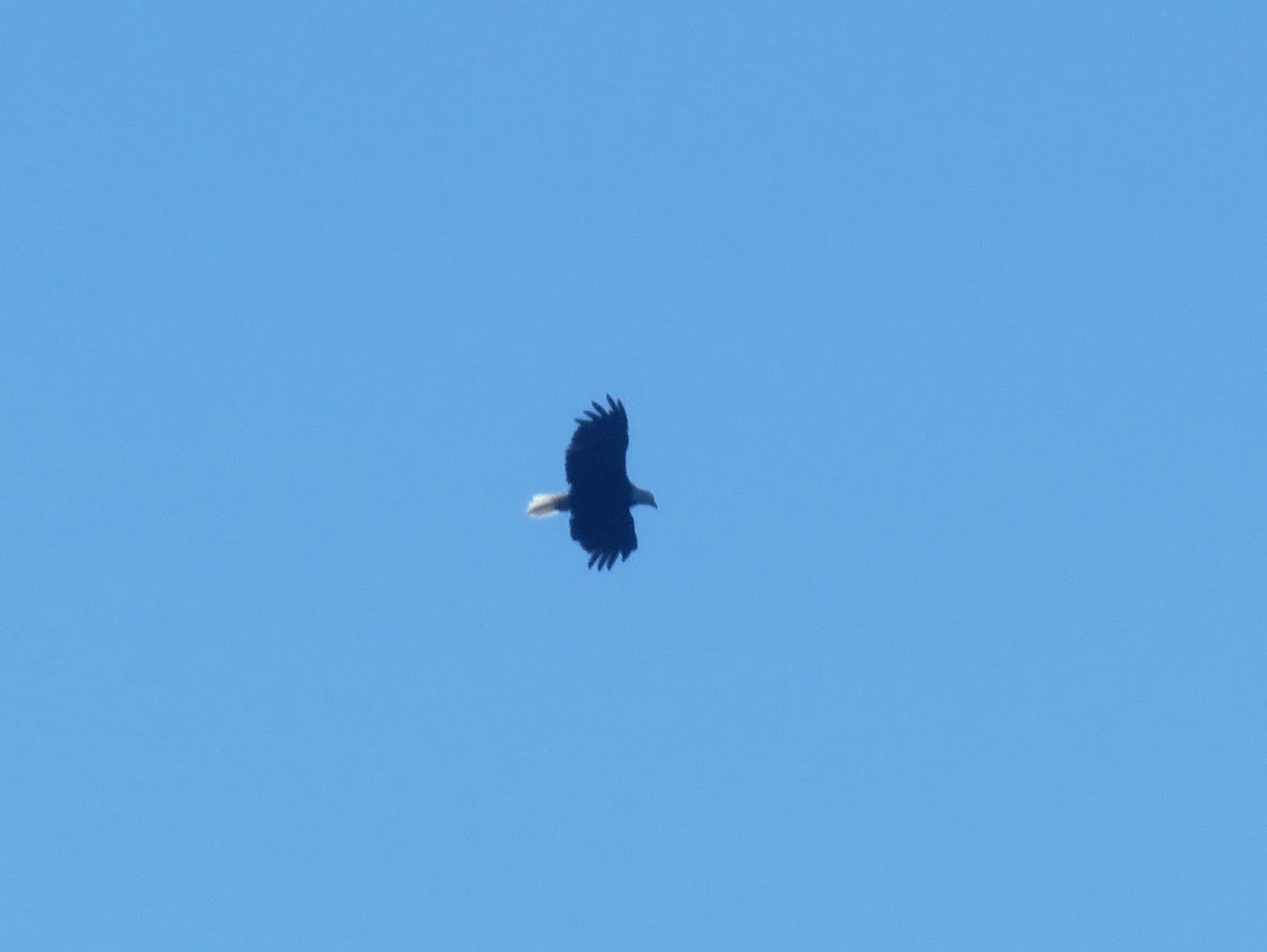
As we returned to Friday Harbor, I saw another Bald Eagle soaring around above the trees. Below is a photo of it.
Bald Eagle

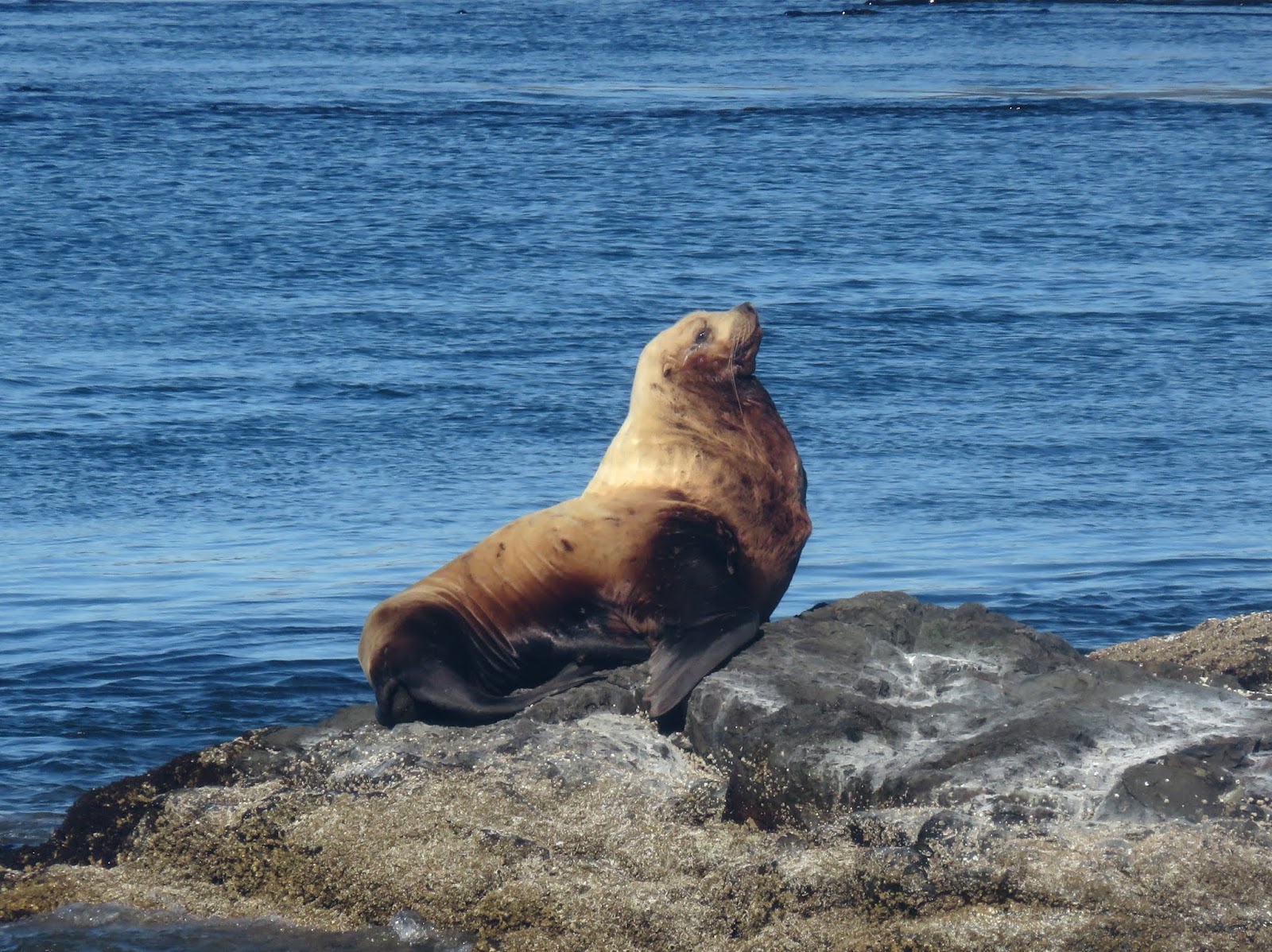
After spending about an hour and a half in Friday Harbor, everyone got back on the boat to head back to Seattle. On the way there, we paused at a small island where a male Steller Sea Lion was sitting. He was very large (Steller Sea Lions are the largest of the eared seals) and had a dog-like face. He watched us go by the island, but stayed where he was. Below is a photo of the Steller Sea Lion.
Steller Sea Lion

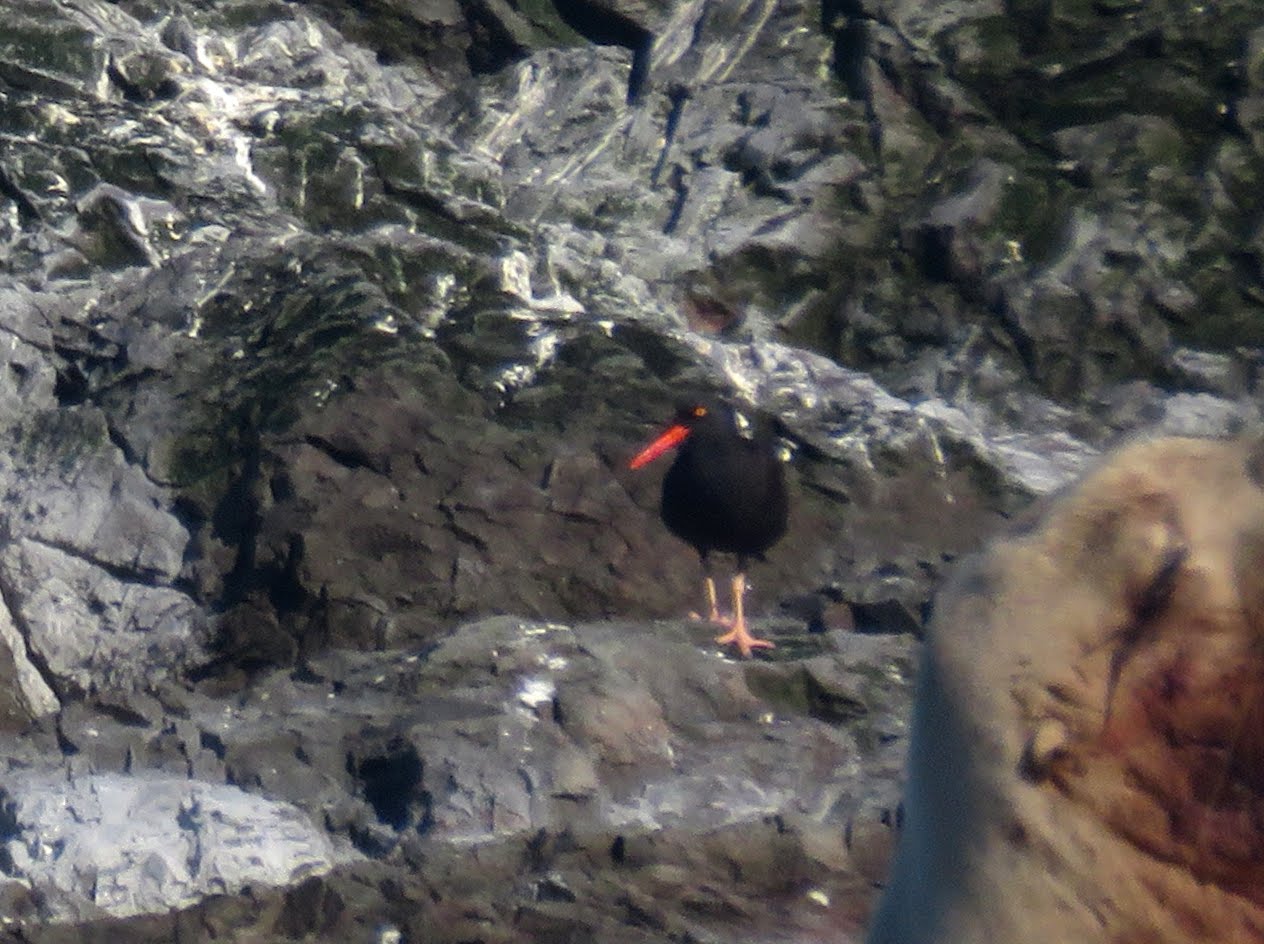
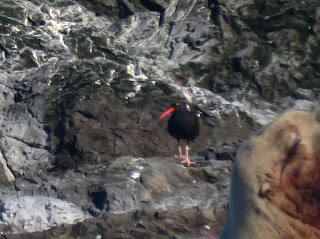
There were other wildlife on the island, too, besides the sea lion. As I was looking at the island, I saw small dark shapes moving over it. I couldn't see them very well, so I took photos, hoping I'd catch one. I did, and discovered they were Black Oystercatchers. Black Oystercatchers are found year-round along the Pacific Coast from the Aleutian Islands down to Baja California. They are distinctive with their entirely black plumage, bright red bills, and pale legs and feet. True to their name, they catch oysters and other mollusks. There were quite a few of them running around on the island, though they blended in pretty well with the dark rocks. Below is a photo of one of them (the thing in the lower right corner is the sea lion's head).
Black Oystercatcher and Steller Sea Lion

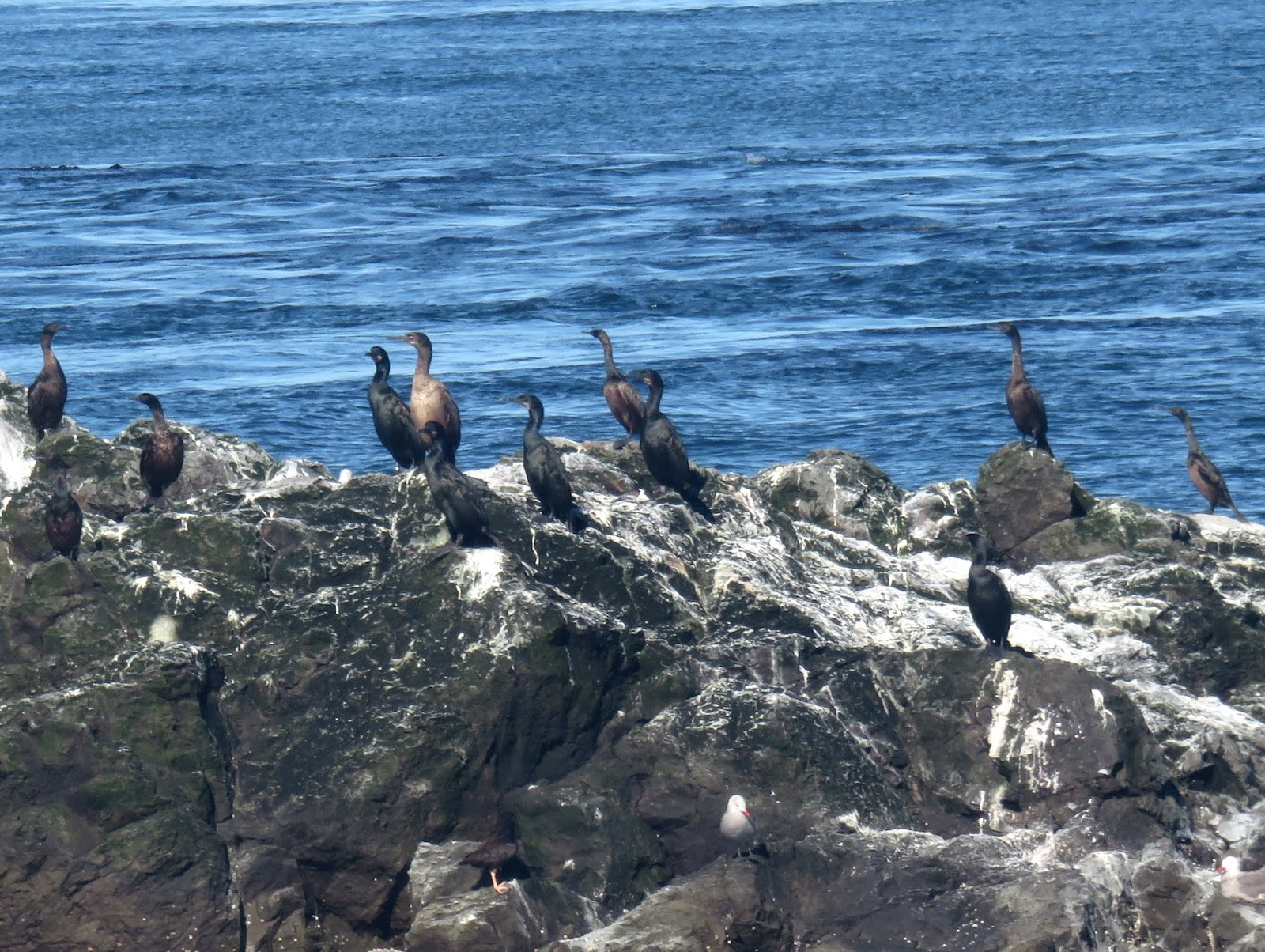
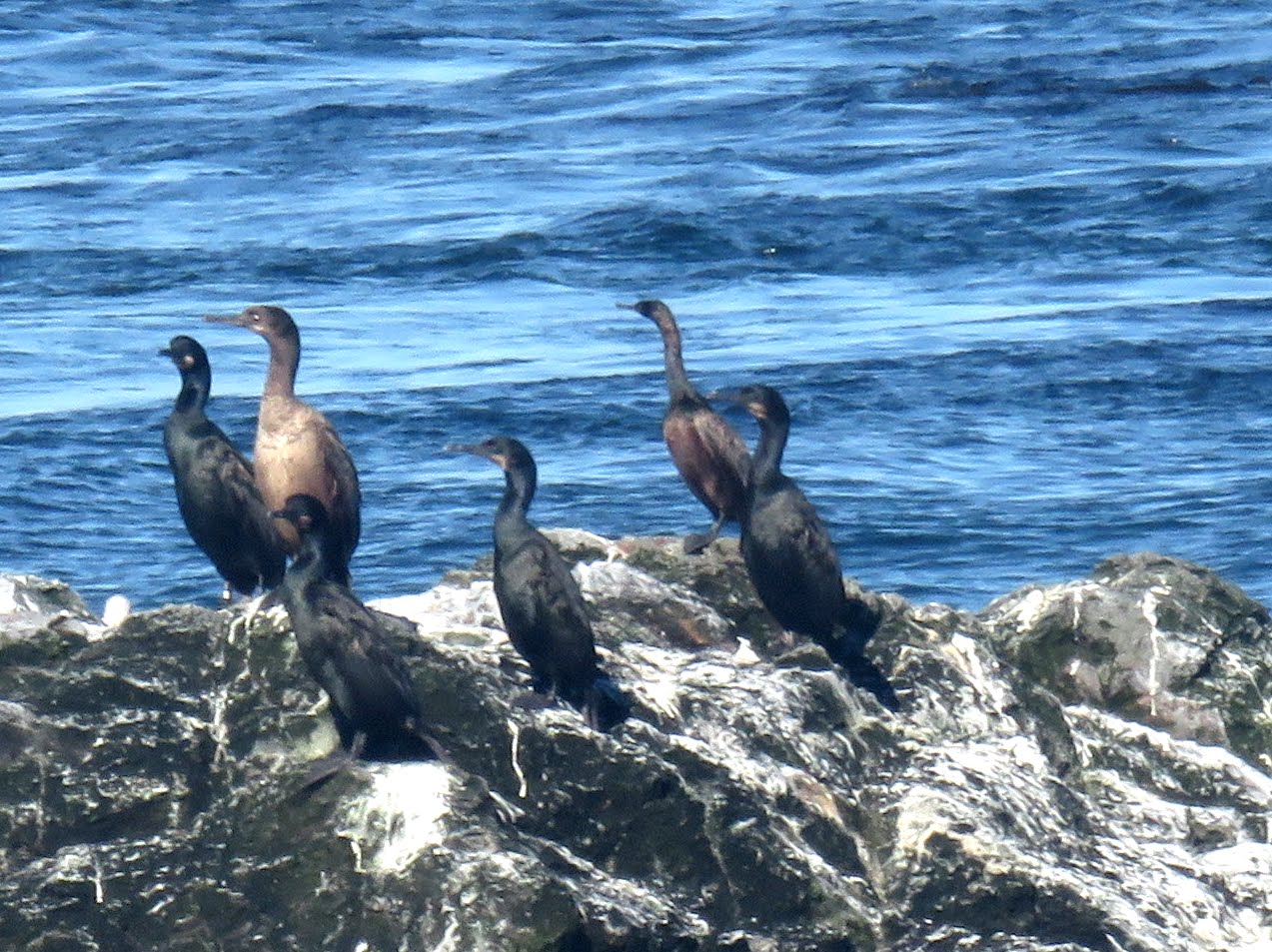
There were also numerous cormorants on the island. There were Double-crested, Brandt's, and Pelagic Cormorants there, just sitting around. In the photos below, there are only Brandt's and Pelagic. Pelagic Cormorants are found in northern Alaska in the summer and northern Baja California in the winter. Along the coast from the Aleutian Islands down to California, they are around all year. They are smaller than Brandt's and Double-crested Cormorants and are entirely dark-colored except for white patches on their flanks during breeding season. They have slender necks, thin bills, and long tails. As their name suggests, they are found on the open ocean. Below are two photos. They are the same photo, but the second is zoomed in to better show a Pelagic Cormorant, which is the smaller one in the back right. In the first photo, besides the cormorants, there is a Black Oystercatcher and a Heermann's Gull in the middle at the bottom.
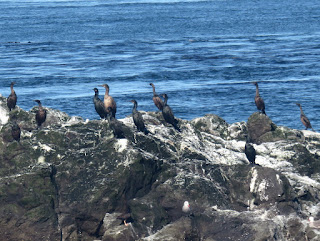
Brandt's Cormorants, Pelagic Cormorants, Heermann's Gull,
and Black Oystercatcher
Brandt's Cormorants and Pelagic Cormorant

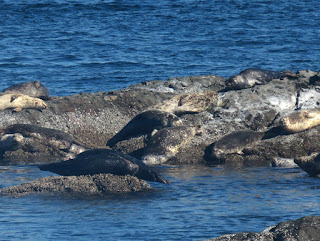
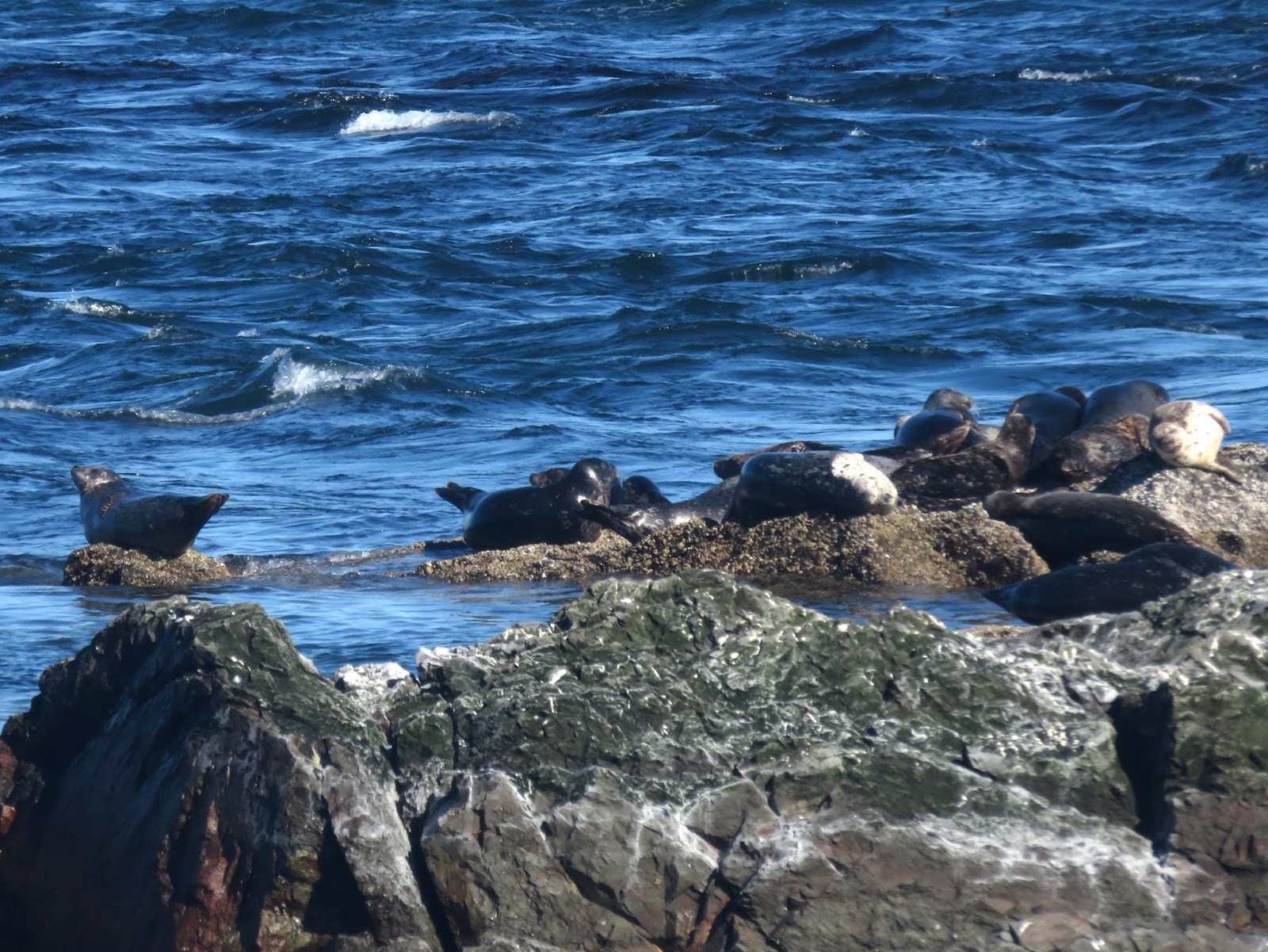
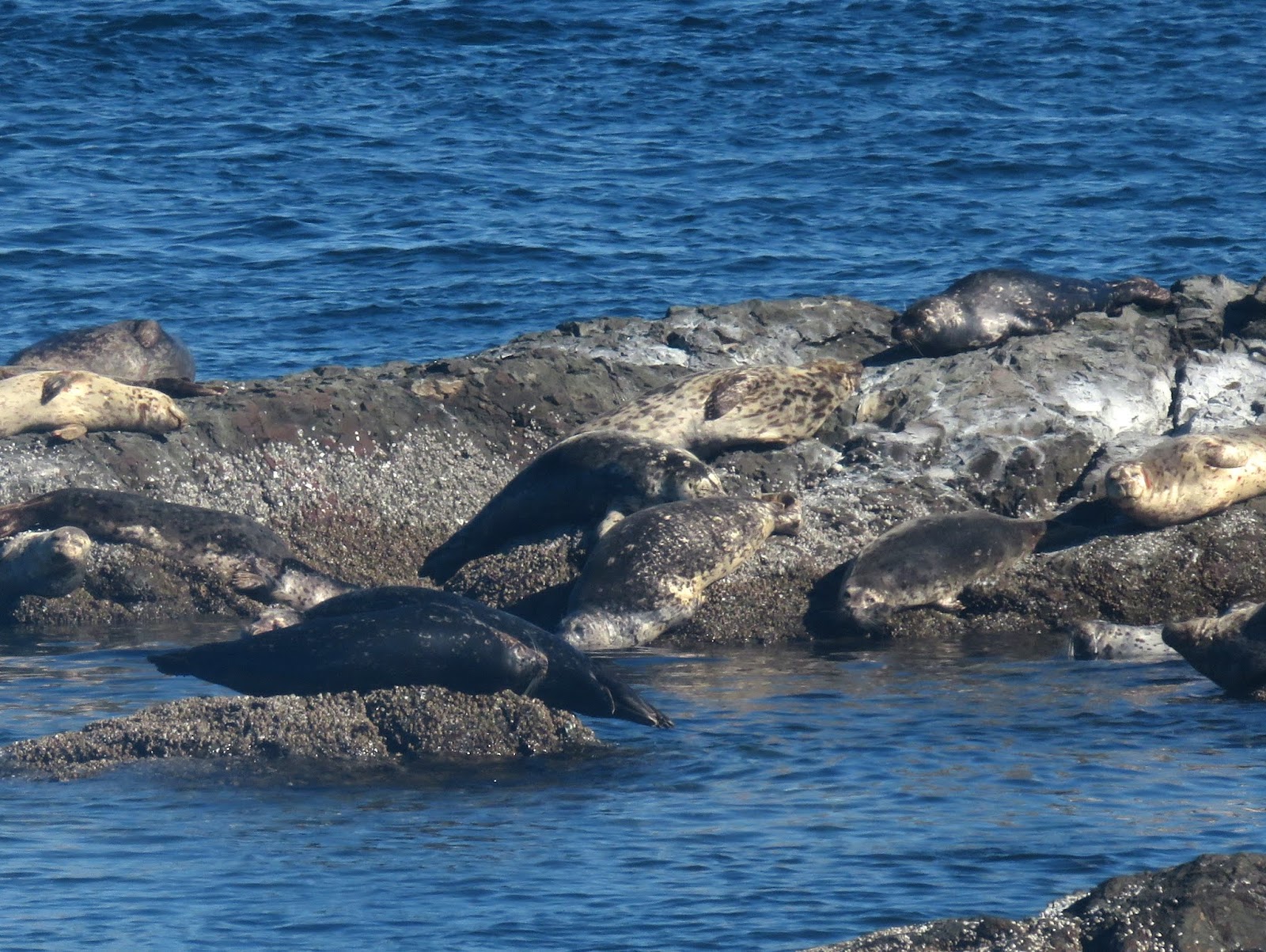
On the other side of the island, there was a large group of Harbor Seals sleeping and basking in the sun. A few were swimming in the water nearby. Below are two photos of them.
Harbor Seals
Harbor Seals

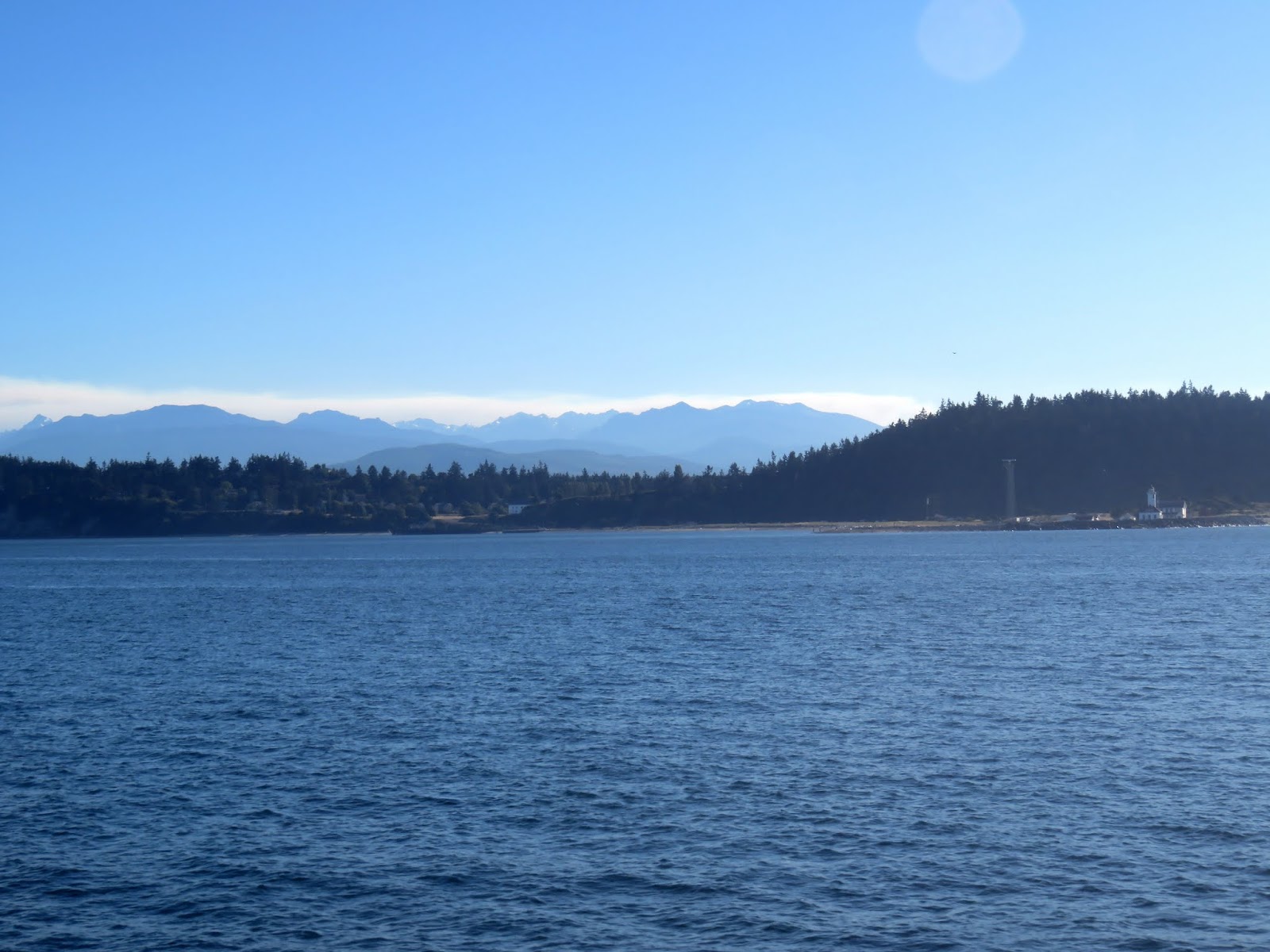
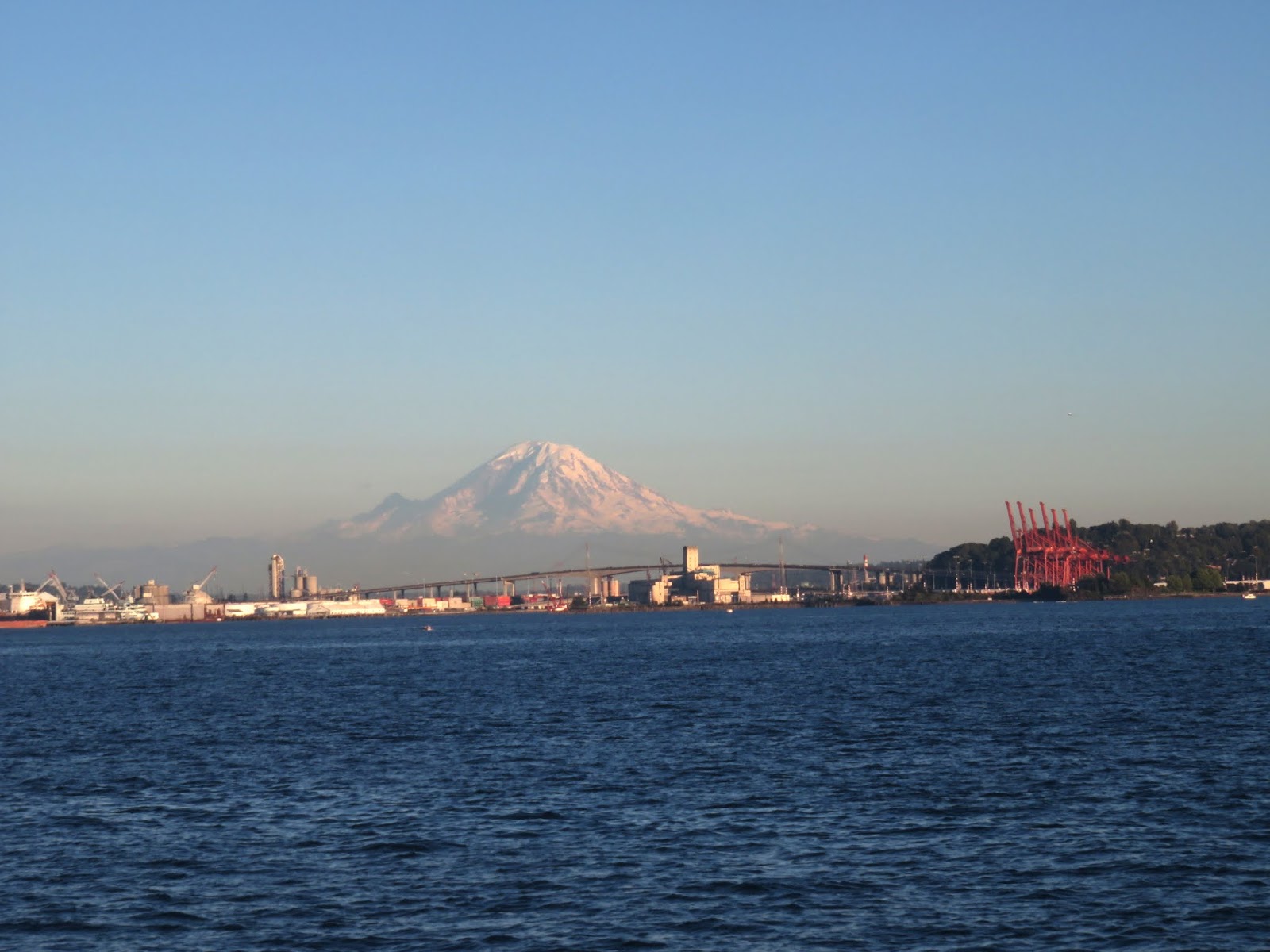
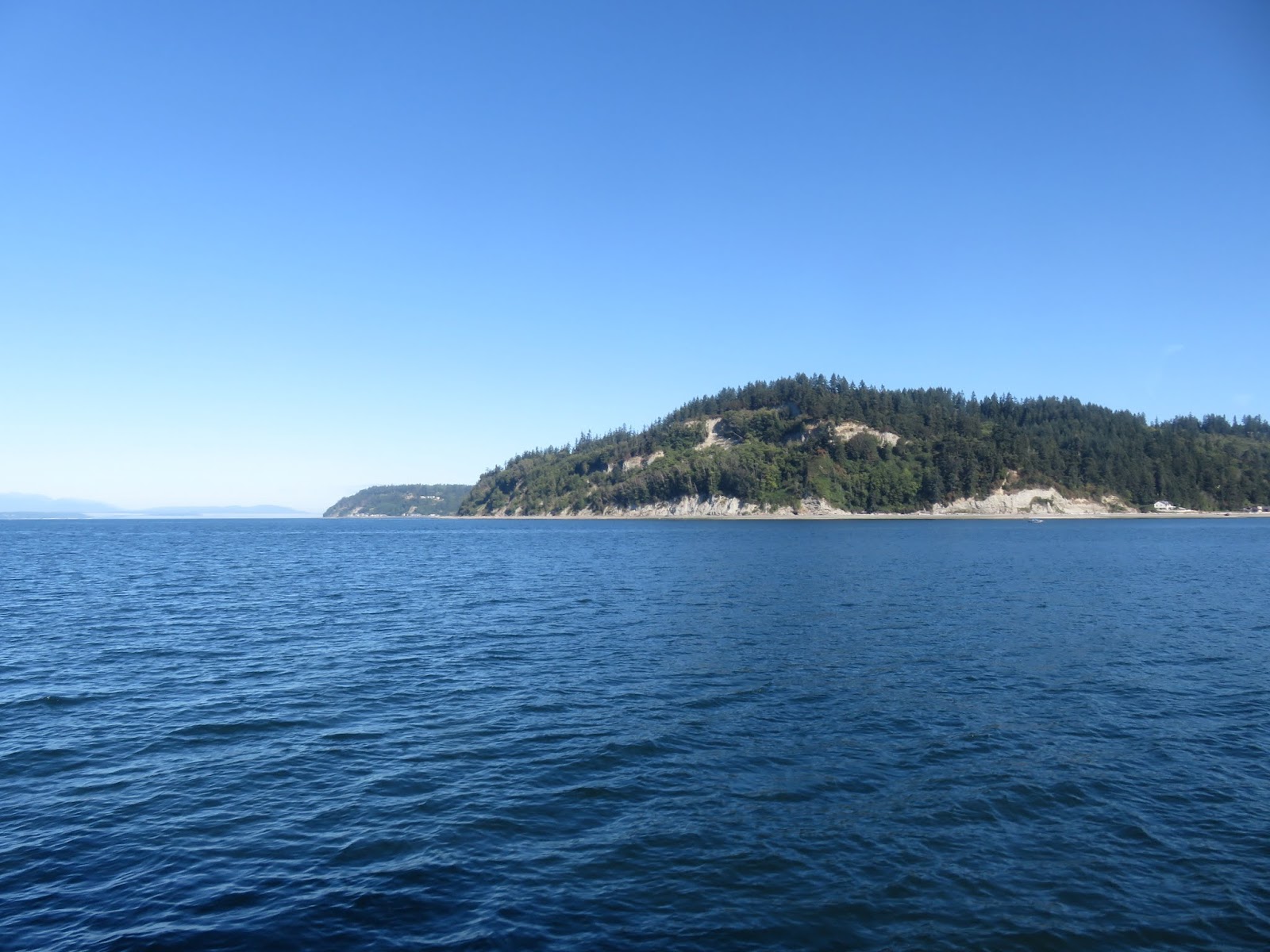
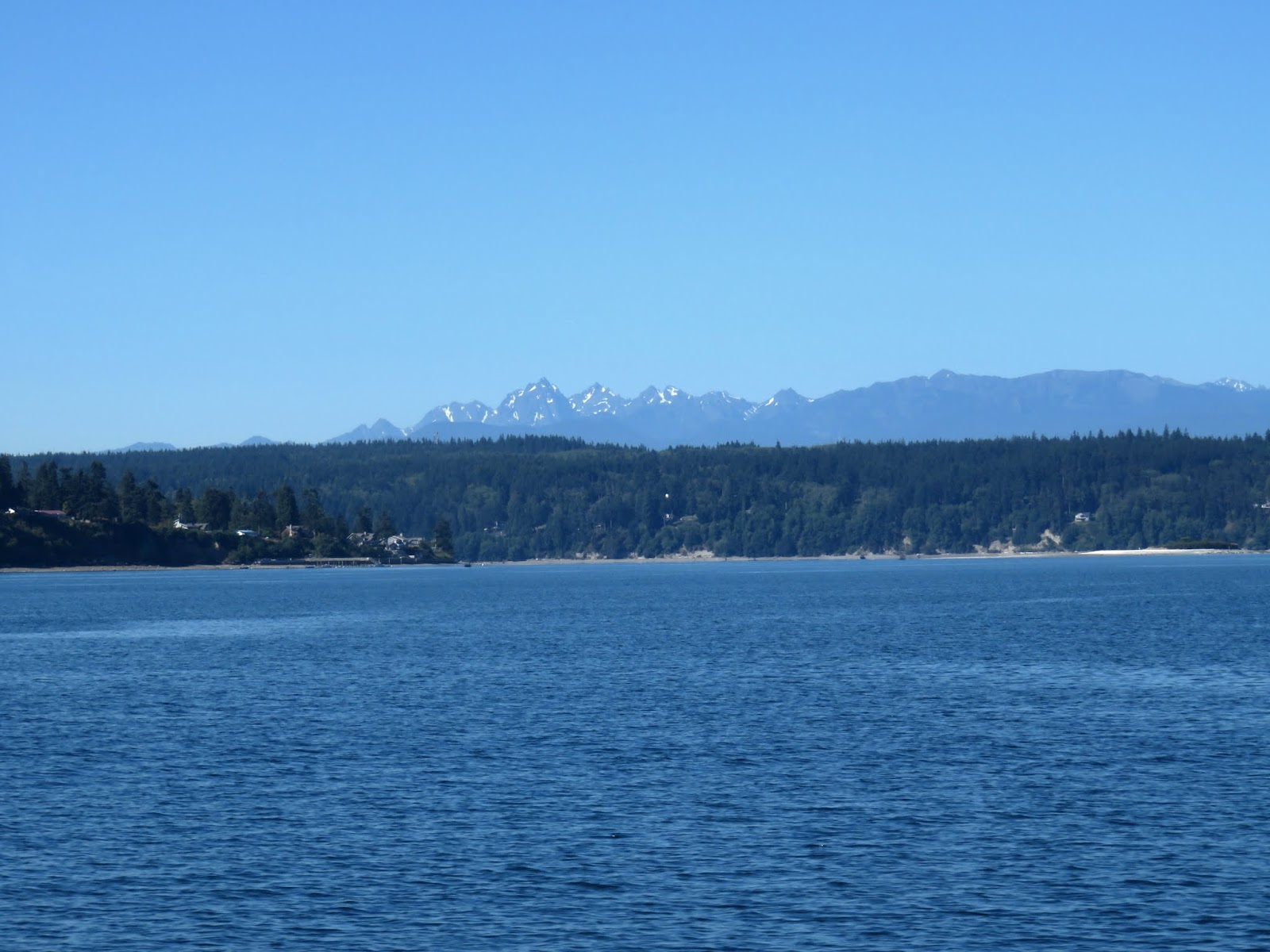
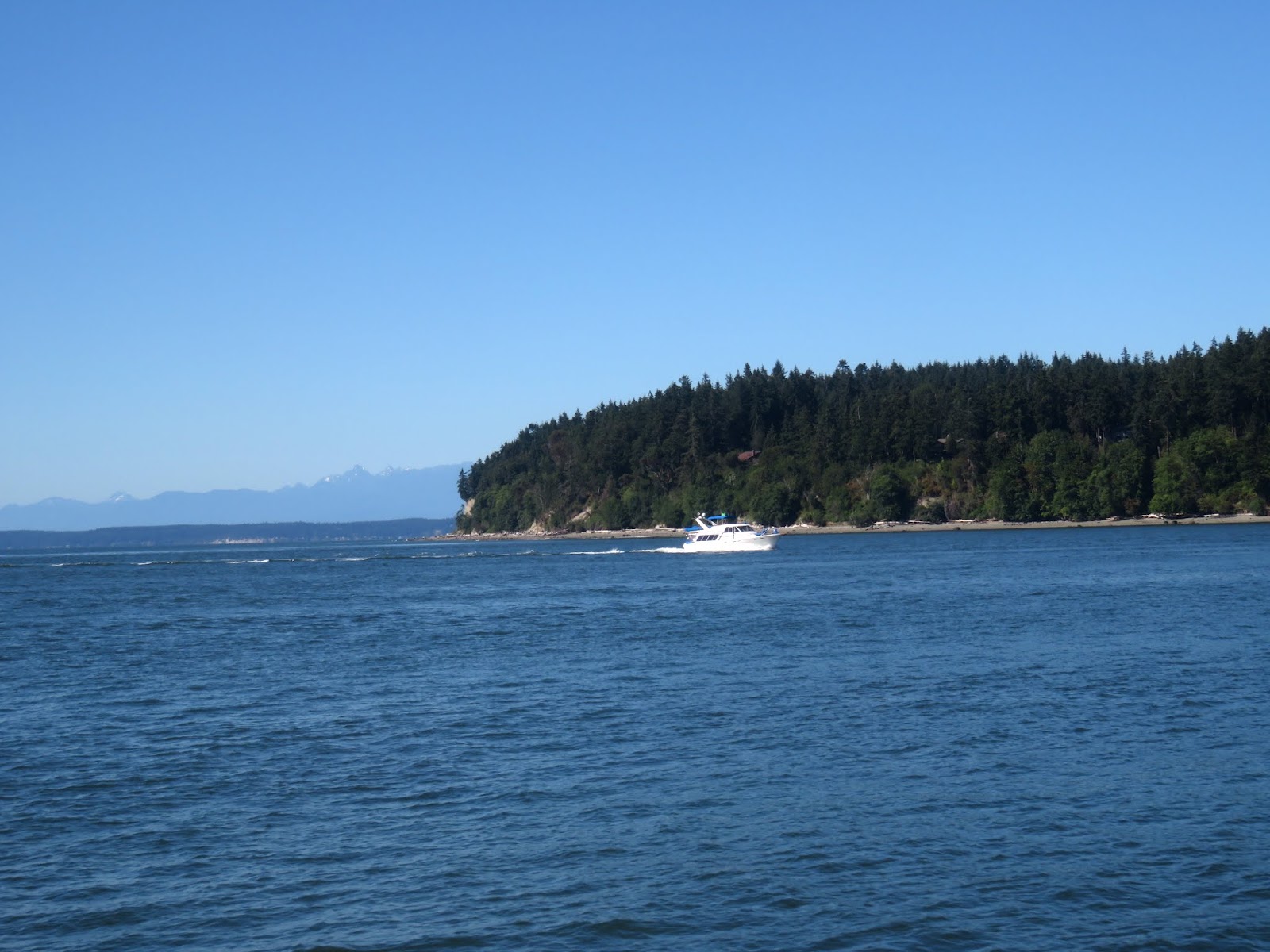
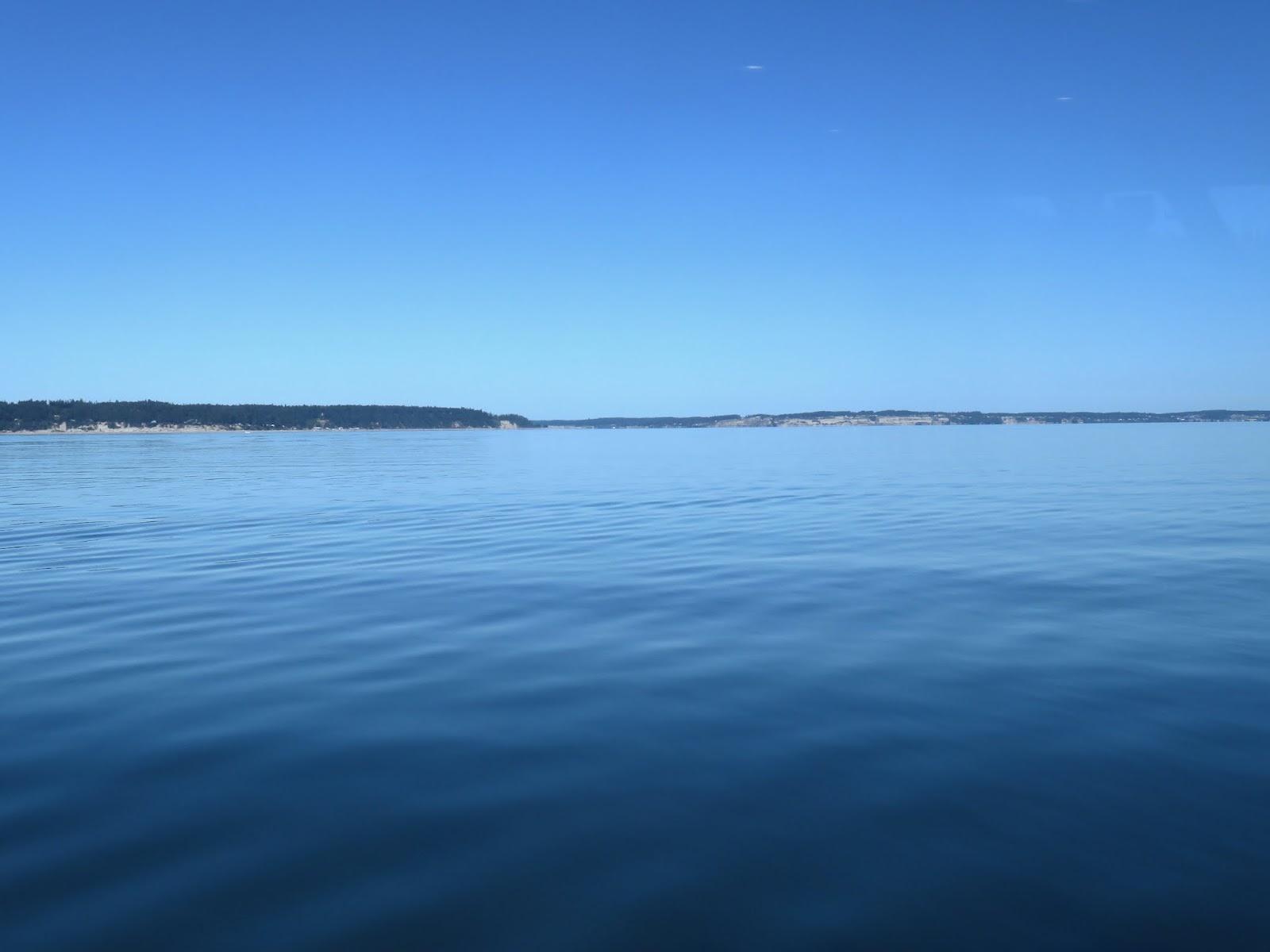
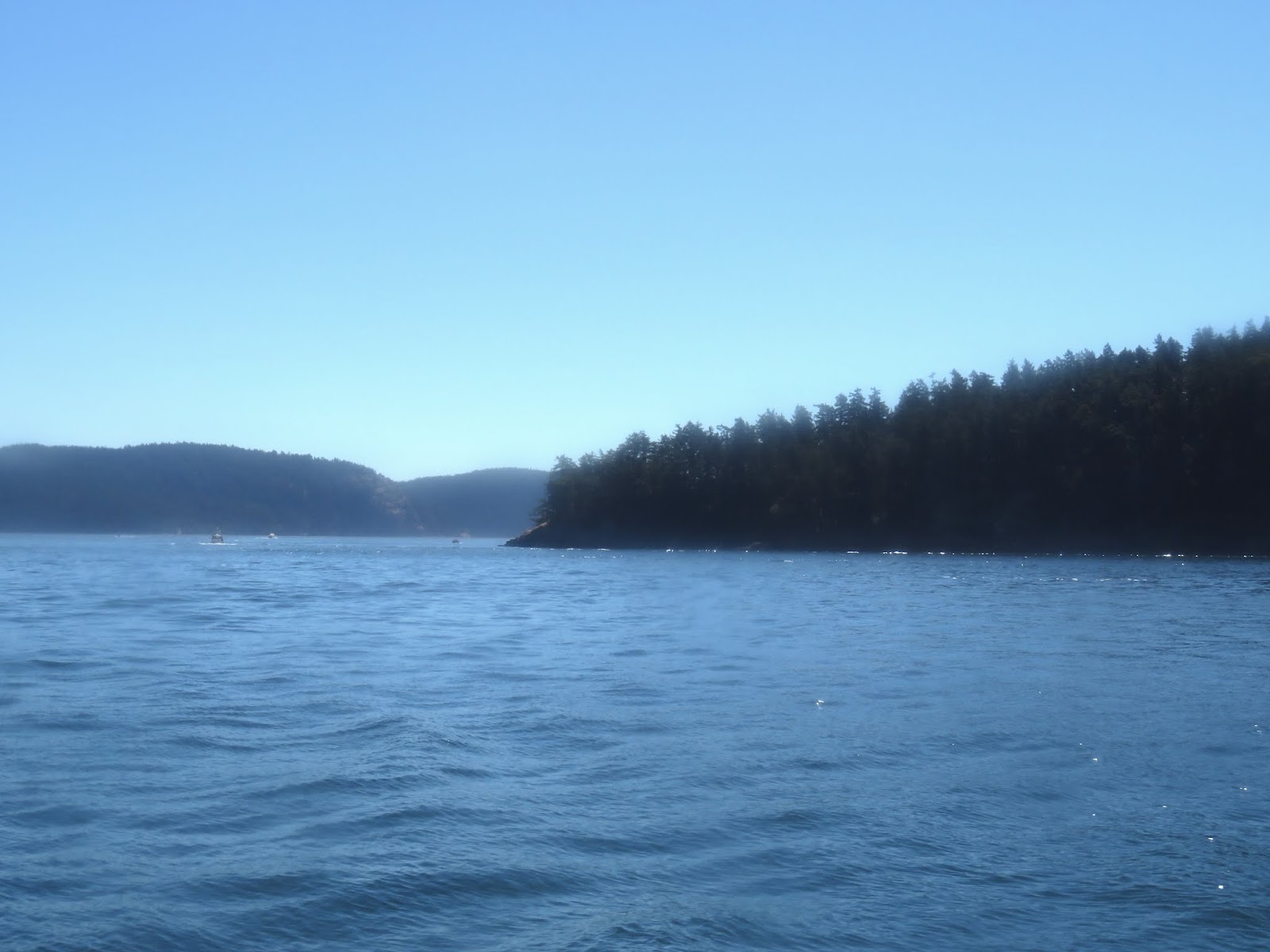
On the way back to Seattle, we saw a small group of Minke Whales, which are the smallest baleen whales in North American waters. They came very close, but unfortunately, I wasn't able to get a photo. We also saw more seabirds and Harbor Seals, but my camera was almost out of battery, so I couldn't take any more pictures. I did take a couple photos of the landscape as we returned to Seattle. Below are the photos.


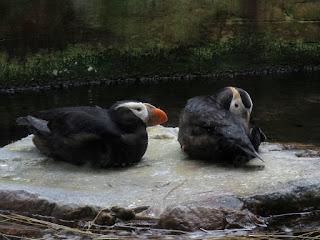
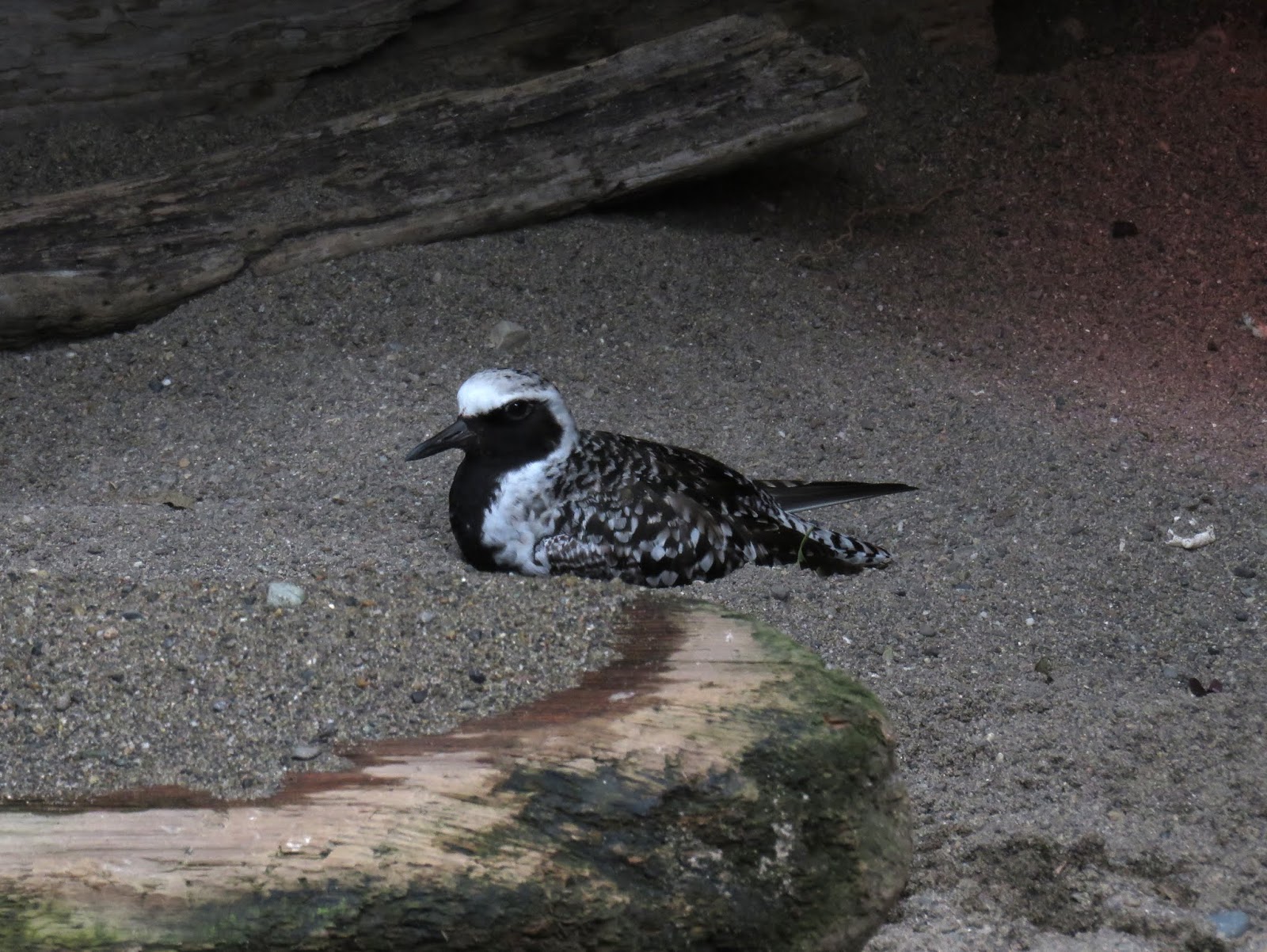
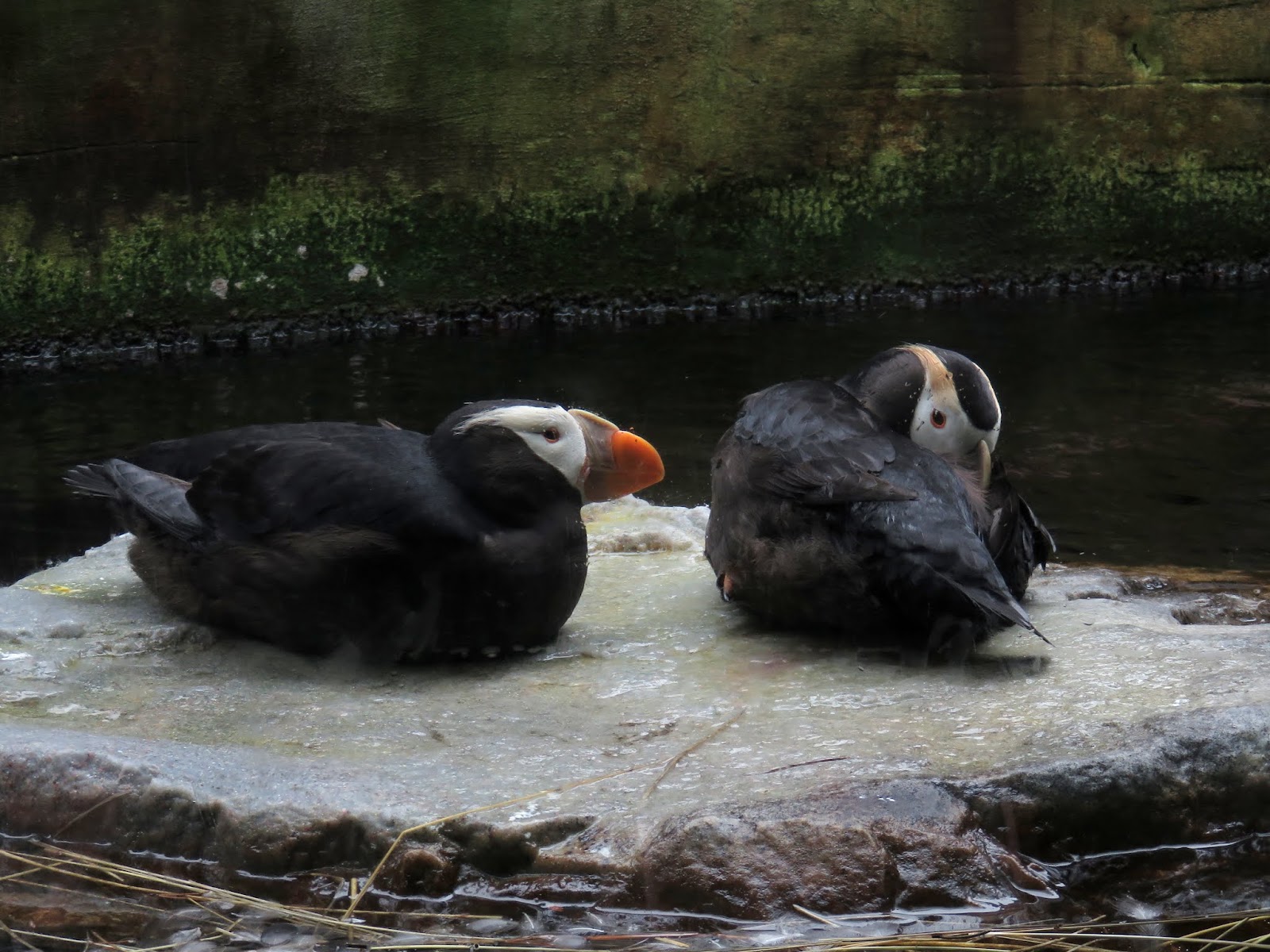
On Saturday, we went to the Seattle Aquarium, which was a very nice aquarium. Besides the fish and invertebrates, they also had marine mammals (Harbor Seals, Northern Fur Seals, Sea Otters, and River Otters), as well as an exhibit with alcids and shorebirds that are found in the area. I didn't take any photos of the fish, invertebrates, or mammals (it was way too dark), but I took a few photos of the birds. Below are a Black-bellied Plover, Common Murres, and Tufted Puffins (in that order).
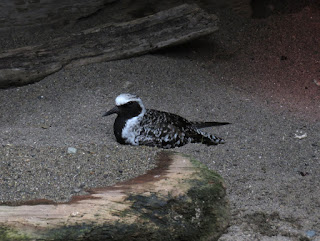
Black-bellied Plover
Common Murres
Tufted Puffins

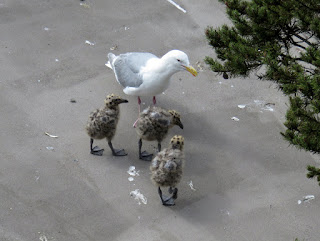
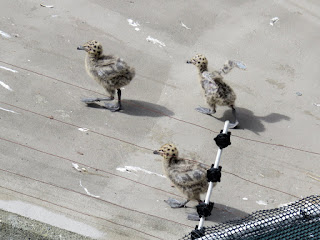
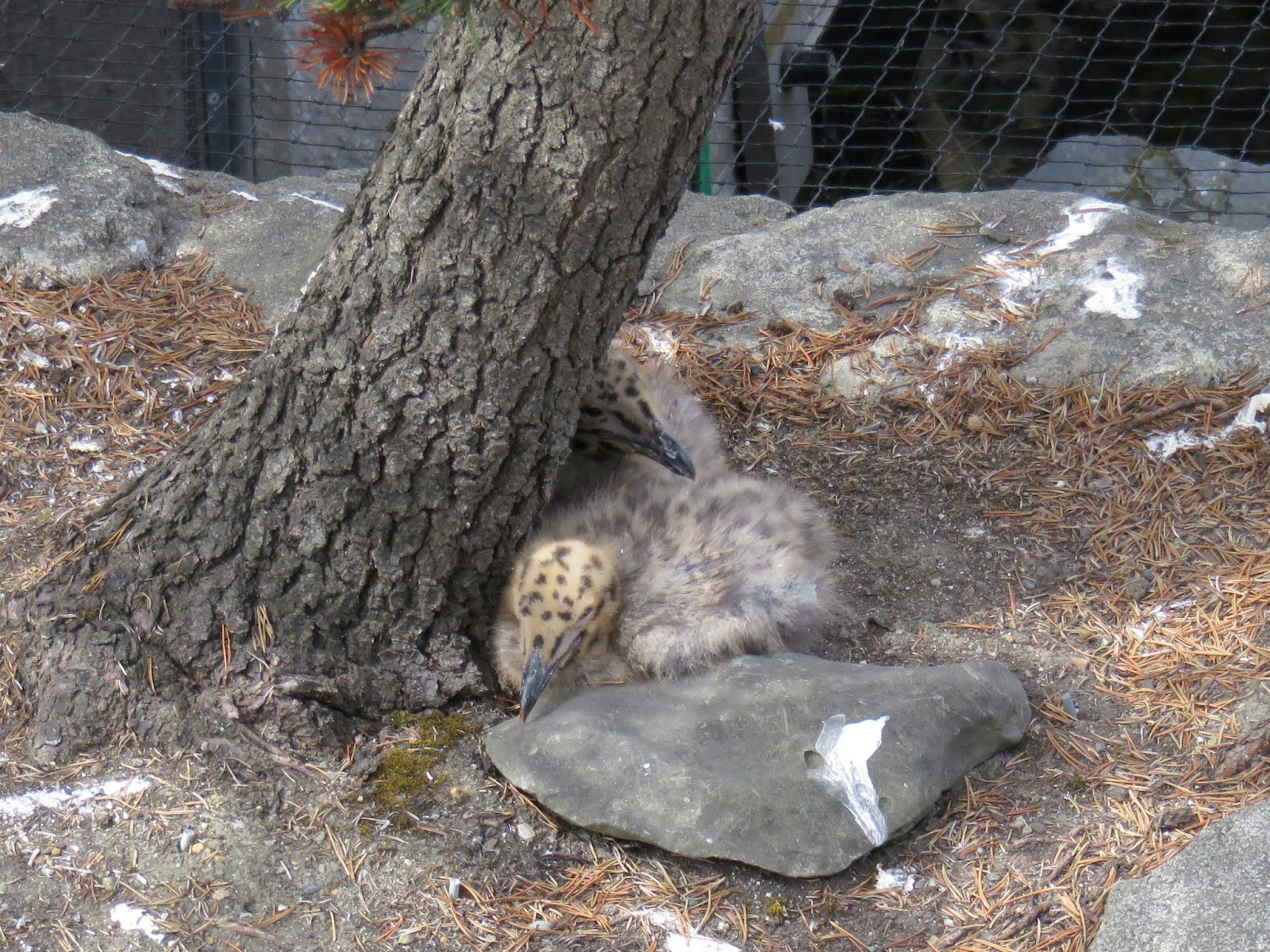
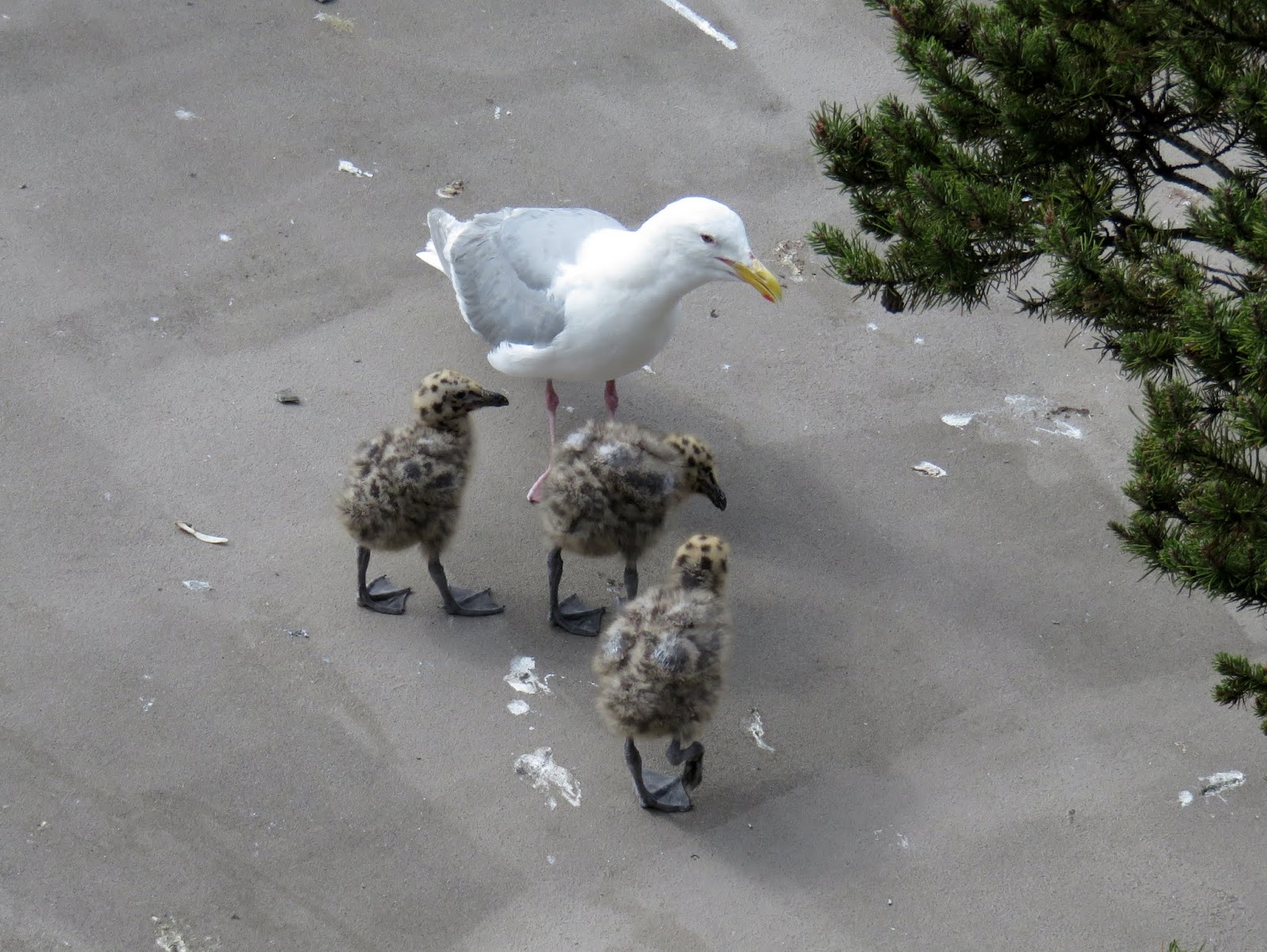
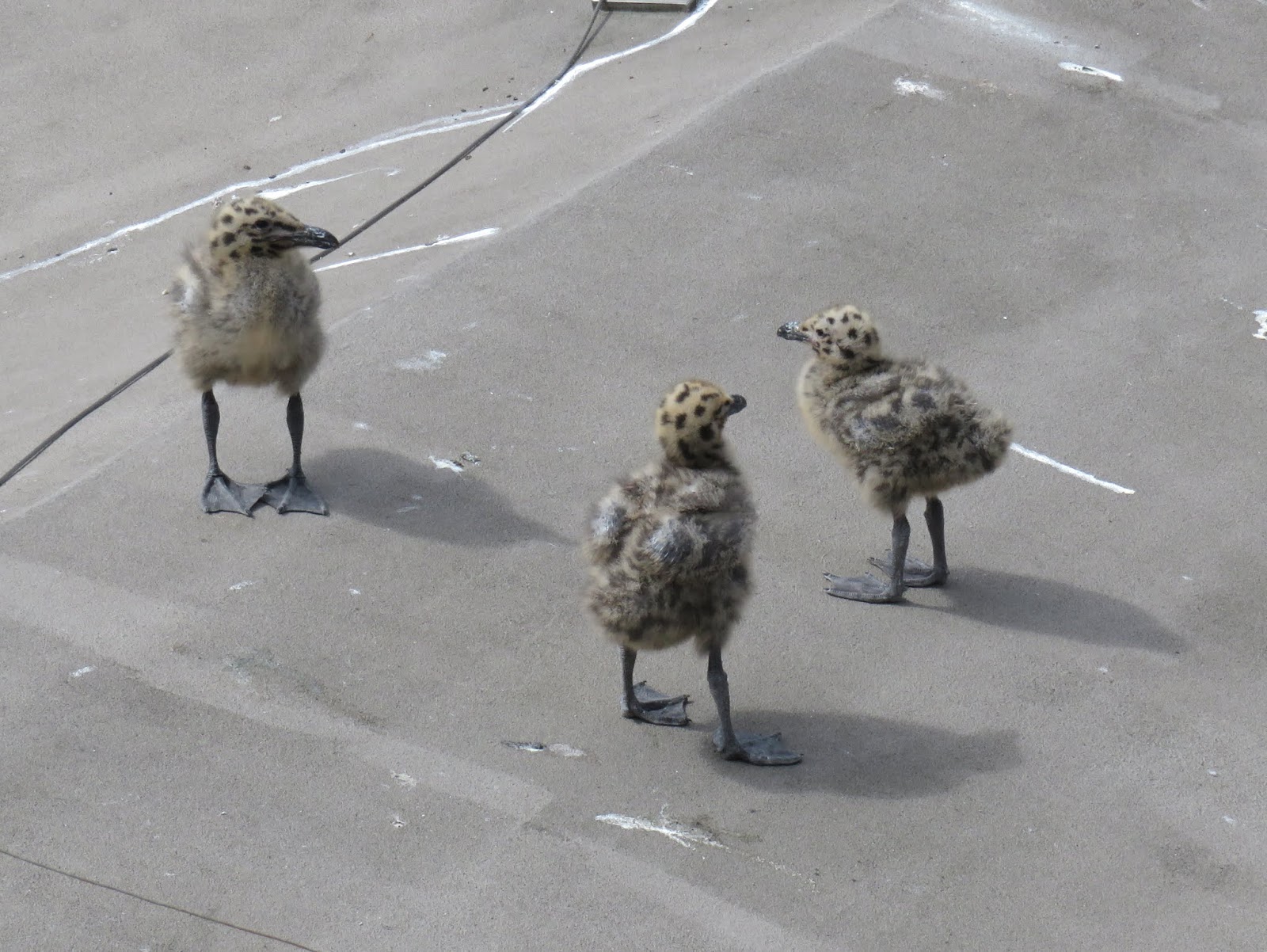
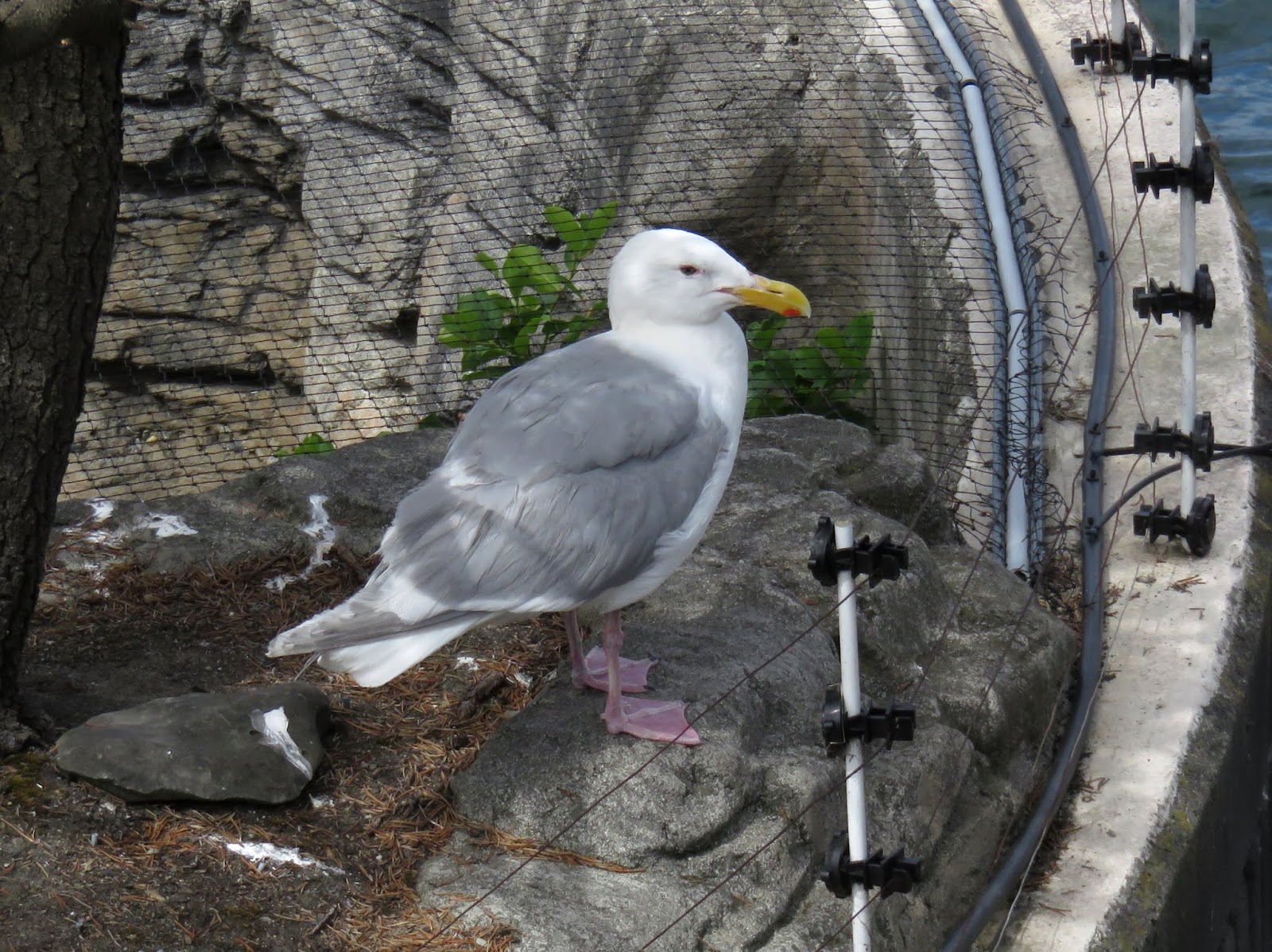
The mammal and bird exhibits were open air exhibits and had a great view of Elliot Bay. We climbed some stairs to a platform that overlooked the top of the Tufted Puffin exhibit. In the shade of the trees were three sleeping gull chicks. Their mother was a little way off and began calling to them with a very soft sound. They woke up and ran over to her, then started wandering around and flapping their fuzzy wings. They were very cute. Since I didn't have my field guide with me, I had to look them up later, and it turns out they were Glaucous-winged Gulls, which I'd never seen before. Glaucous-winged Gulls are found in northern Alaska in the summer and along the Pacific Coast from Oregon to the tip of Baja California in the winter. They are found all year from just above the Aleutian Islands down to Washington. Glaucous-winged Gulls are large, pale gulls with dark eyes, pink legs, and gray wingtips. In the winter, they have speckled brown heads. Below are five photos. The first is of two of the chicks sleeping and the second is of the mother with the three chicks. The third and fourth are of the chicks by themselves, and the fifth is of the mother.
Glaucous-winged Gulls
Glaucous-winged Gull

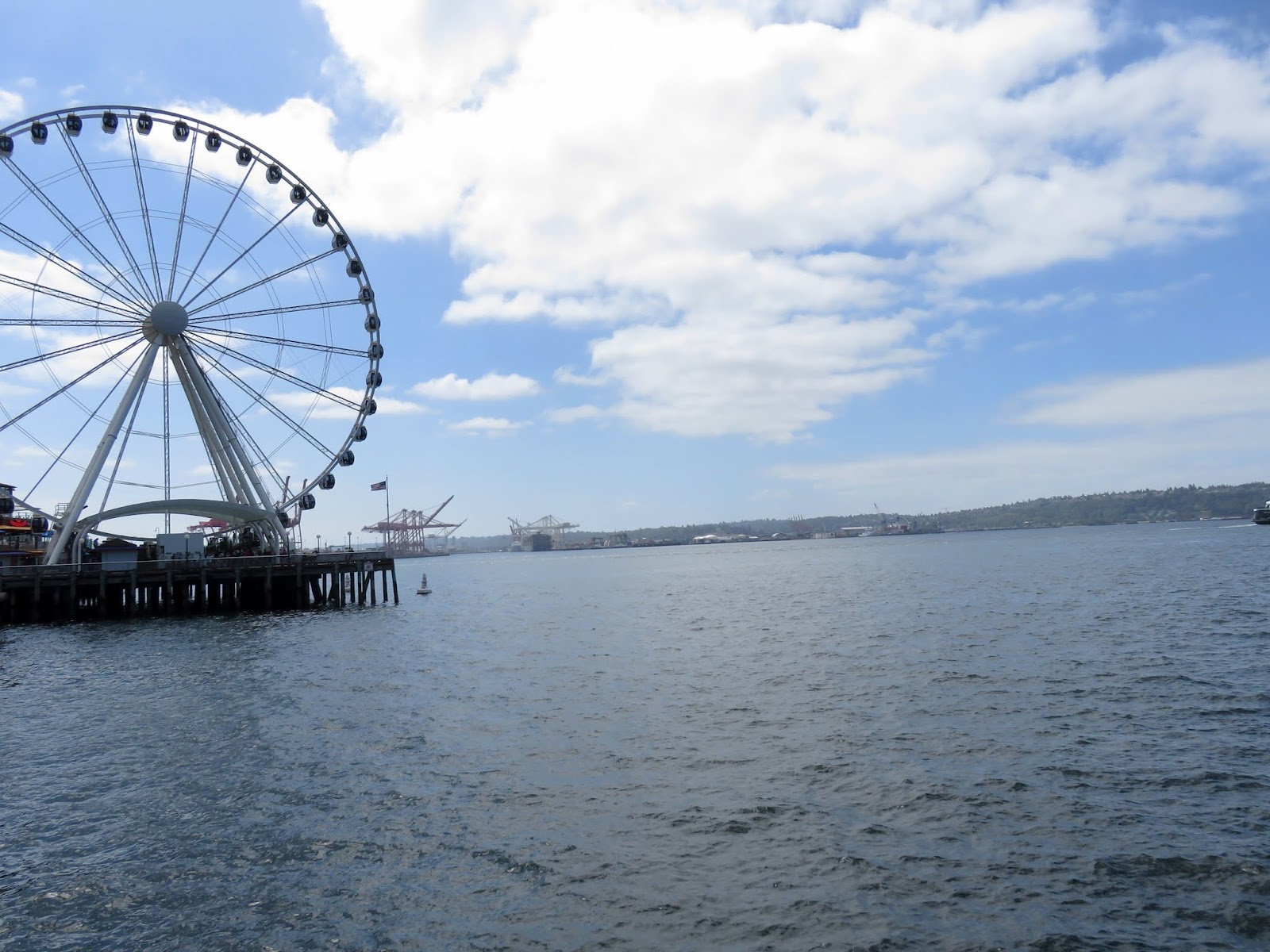
After visiting the aquarium, we stood on the pier next to it and looked out over the bay. Below is a photo of the Seattle Great Wheel and Elliot Bay.


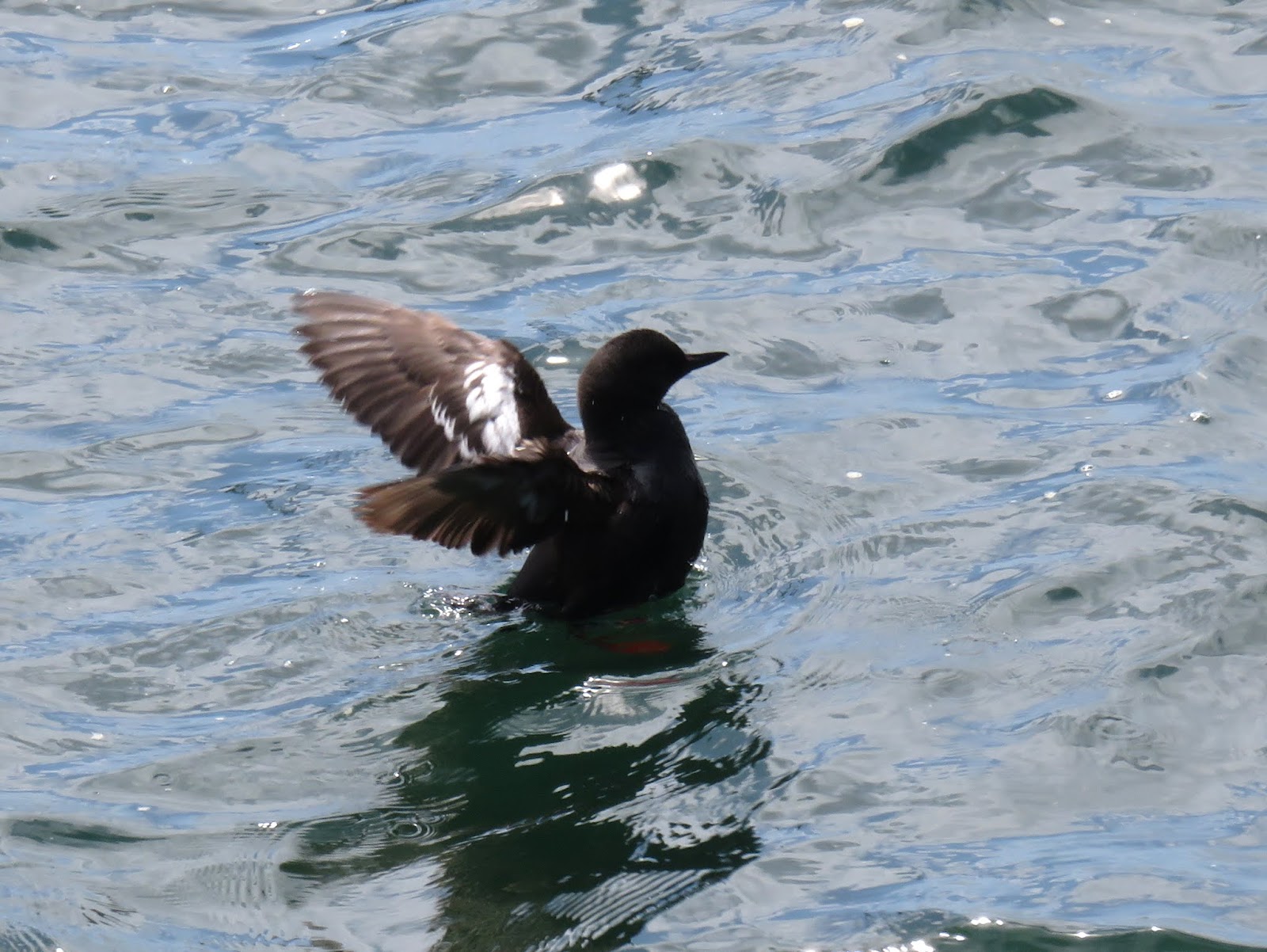
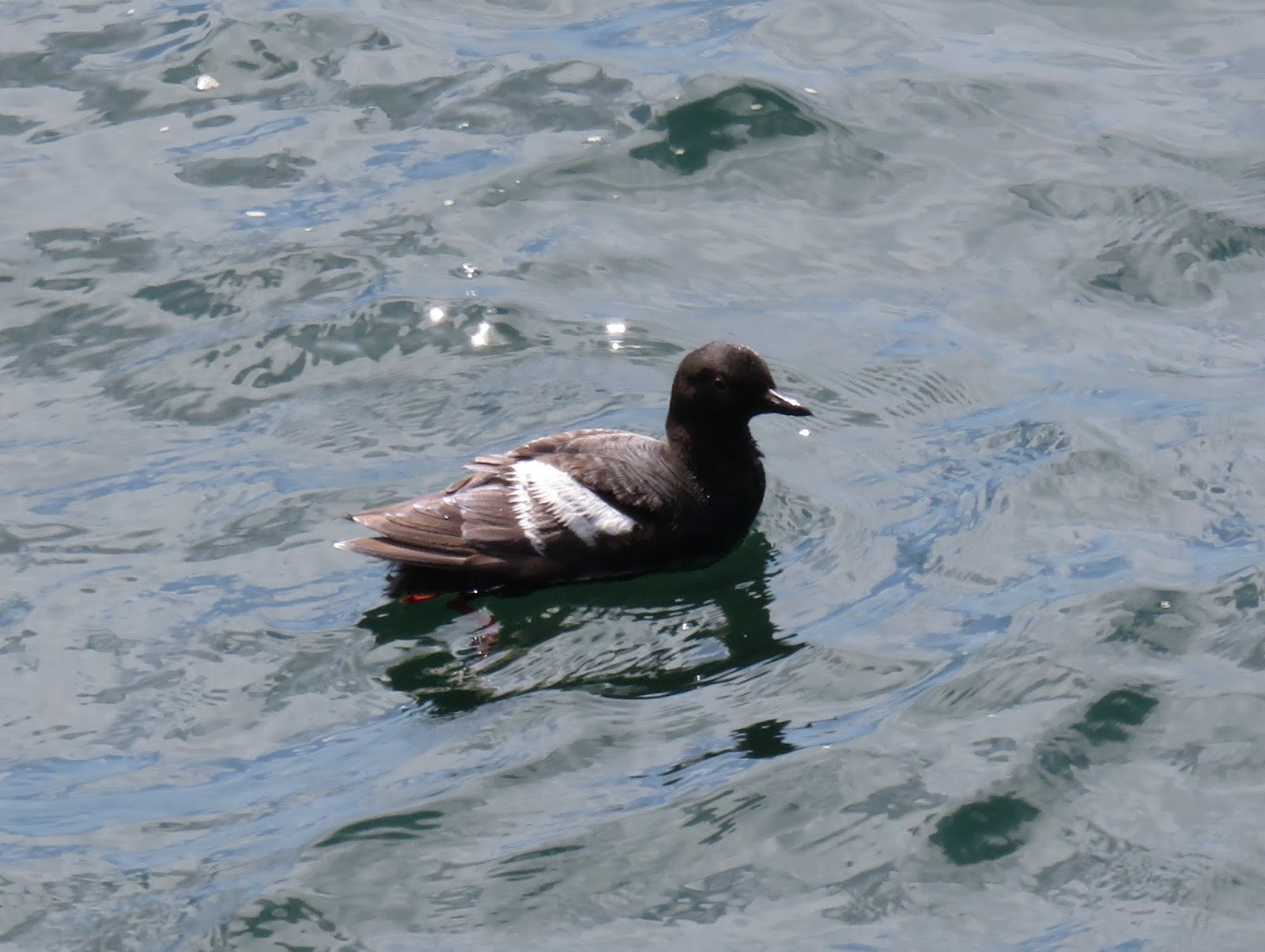
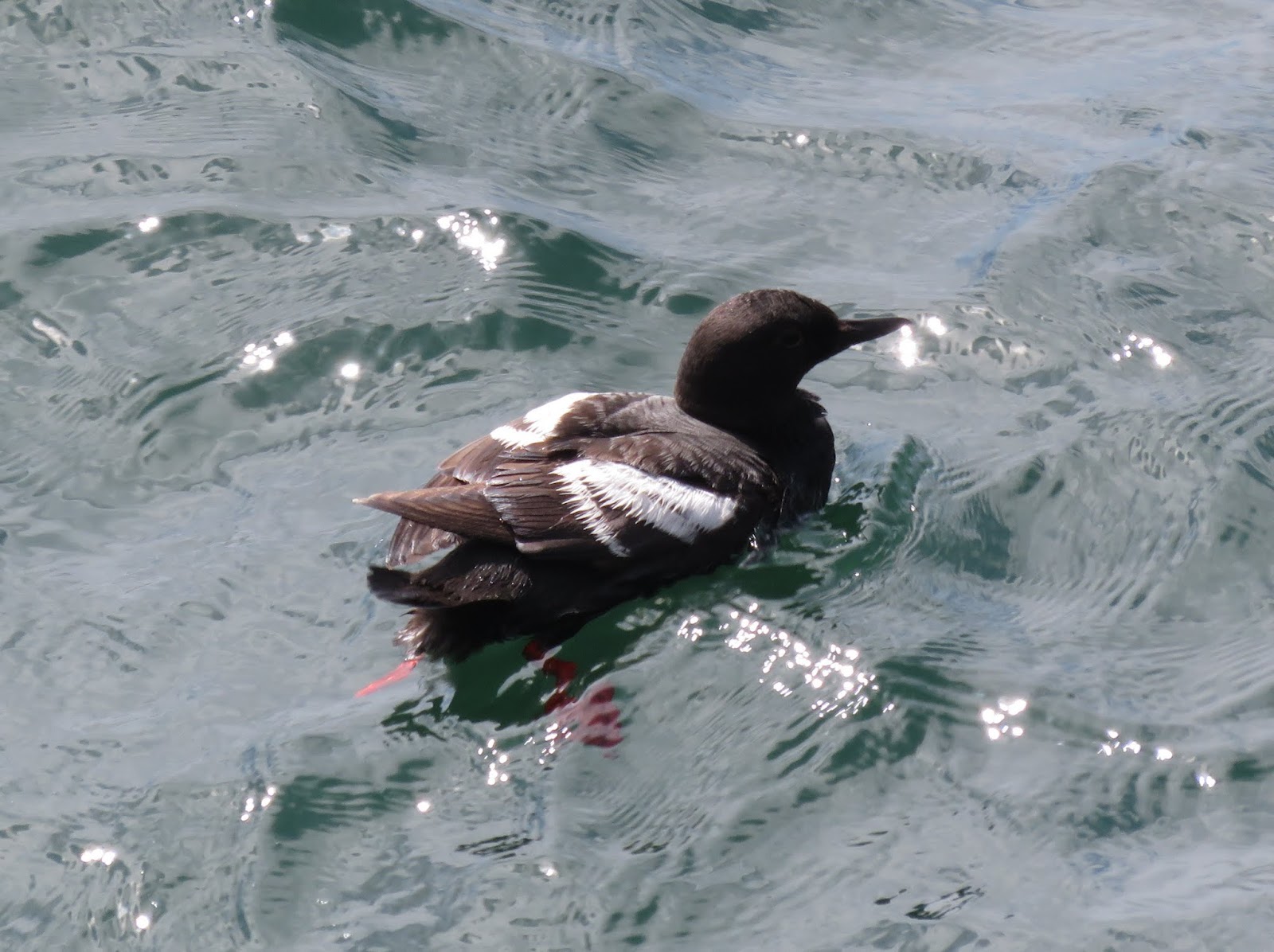
On the water near the pier were a couple of Pigeon Guillemots. One was very close to us (almost right below). It was preening itself, then vigorously flapping its wings. It was very small (pigeon-sized) and in nice breeding plumage, and I was able to take a few good photos of it. Below are three photos of the guillemot.
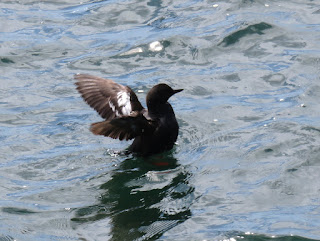
Pigeon Guillemot
Pigeon Guillemot
Pigeon Guillemot

Thursday, August 4, 2016

Seattle Part 1

Last Wednesday (July 27), my mom, my brother, and I flew to Seattle, Washington for a long weekend. We came back on Monday (August 1). It was a very nice trip, though the weather was a bit warmer and sunnier than we had expected. I'll be splitting the trip into two parts, since I have quite a few photos. This first part includes Wednesday and half of Thursday (most of my photos are from Thursday).

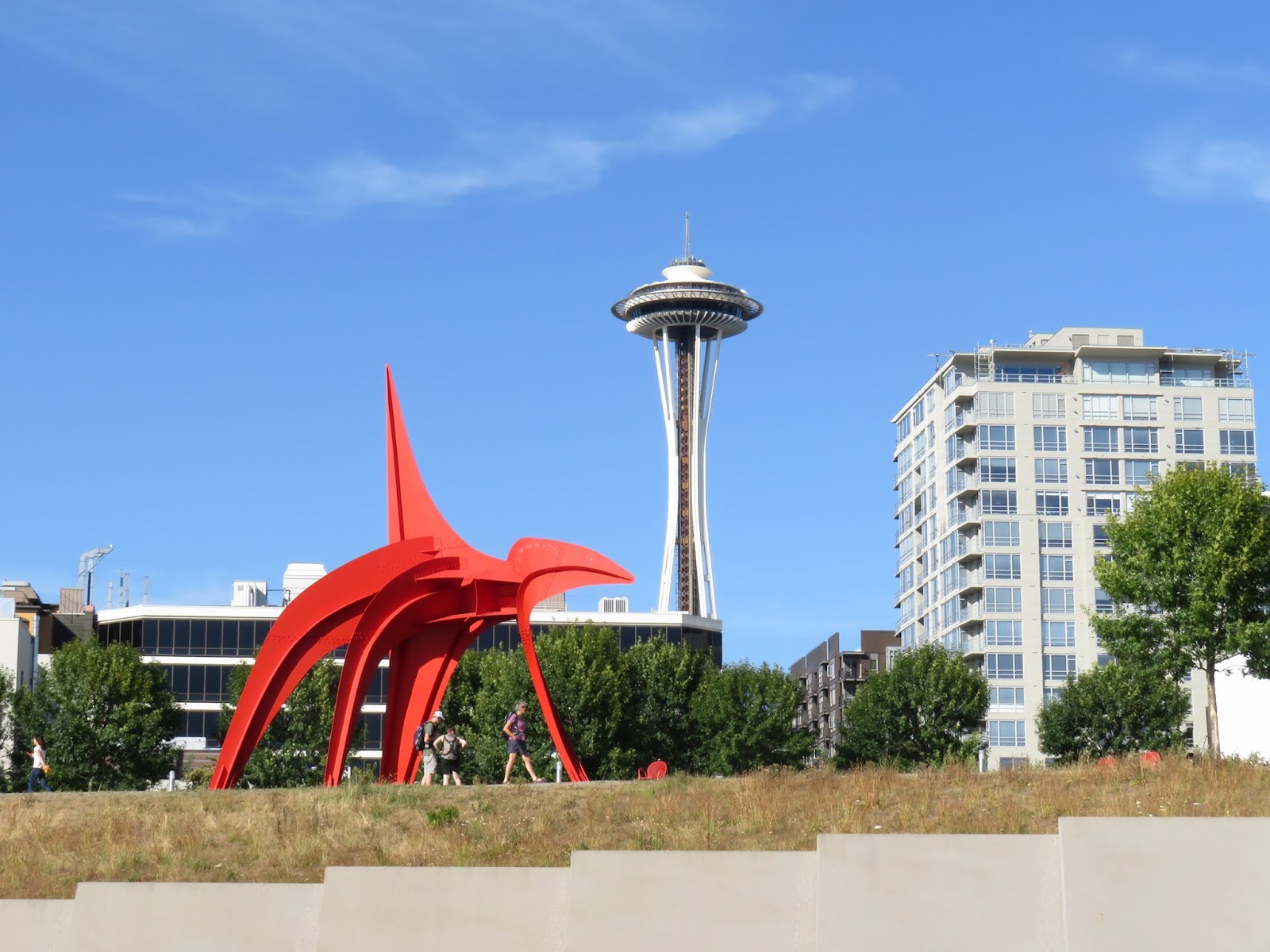
On Wednesday, after we arrived in Seattle, we walked down to the Olympic Sculpture Park. It was rather hot, and there wasn't much shade at the park, but the sculptures were interesting and the park had great views of Elliot Bay. After the sculpture park, we walked past the piers (looking for the pier we'd go to on Thursday). Below are two photos. The first is a photo of a sculpture (Eagle, by Alexander Calder) with the Space Needle in the background, and the second is a photo of a couple of sailboats in Elliot Bay.


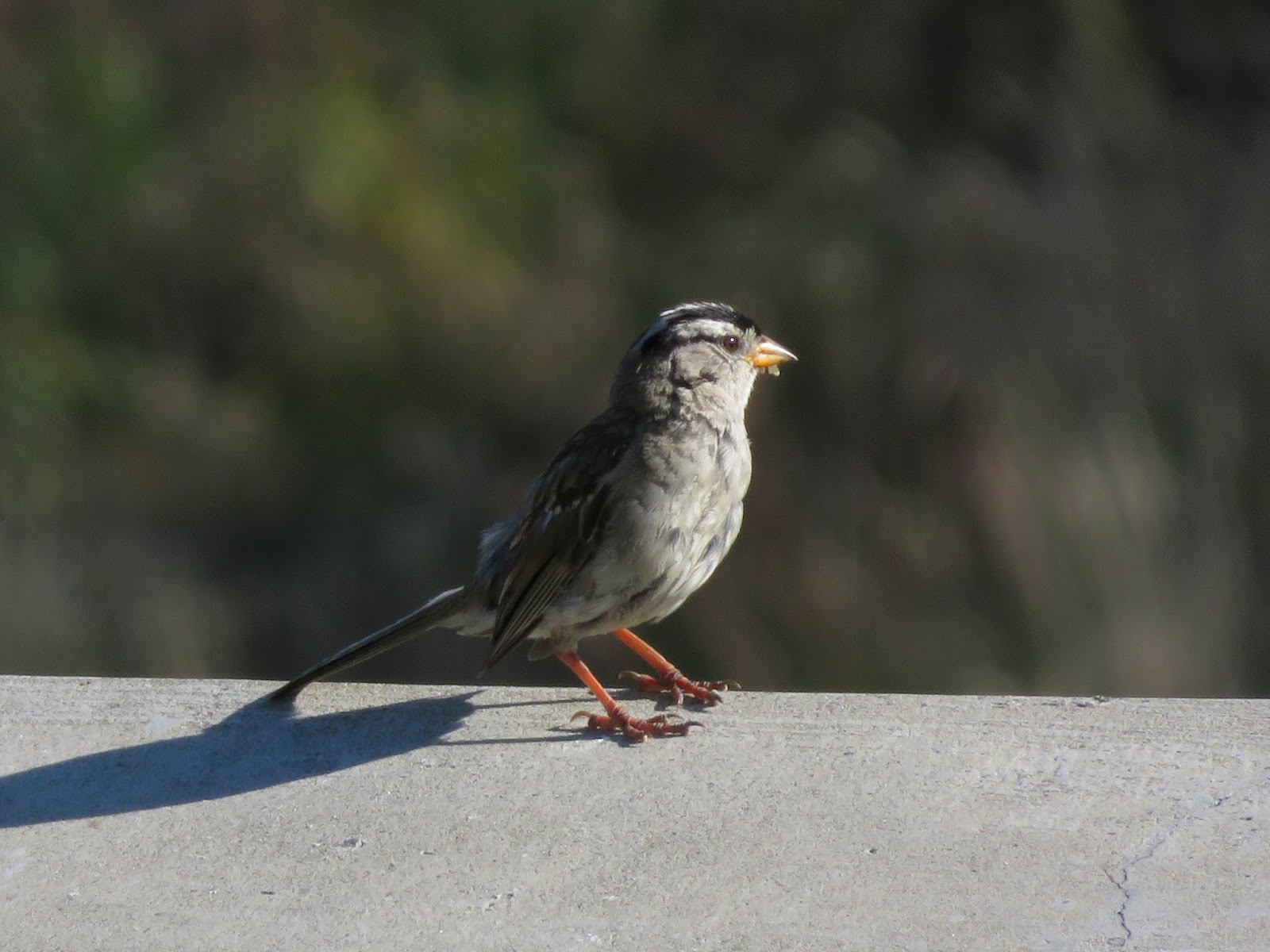
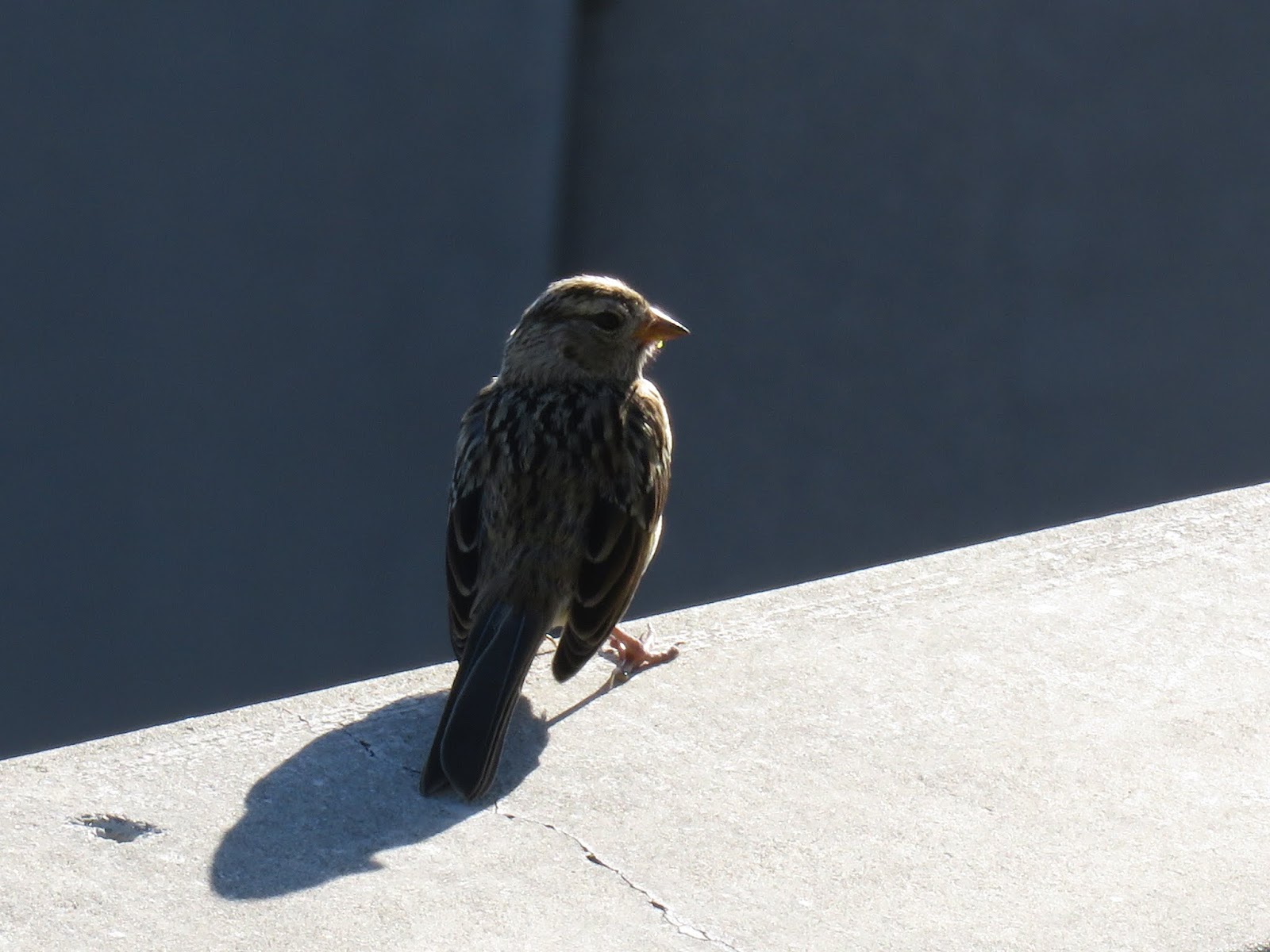
A lot of the birds that winter in southern California can be found in Washington in the summer, such as many of the warblers. Unfortunately, I didn't see any warblers, but there were quite a few White-crowned Sparrows hopping around in the brush at the sculpture park. Below are two photos of the sparrows.
White-crowned Sparrow

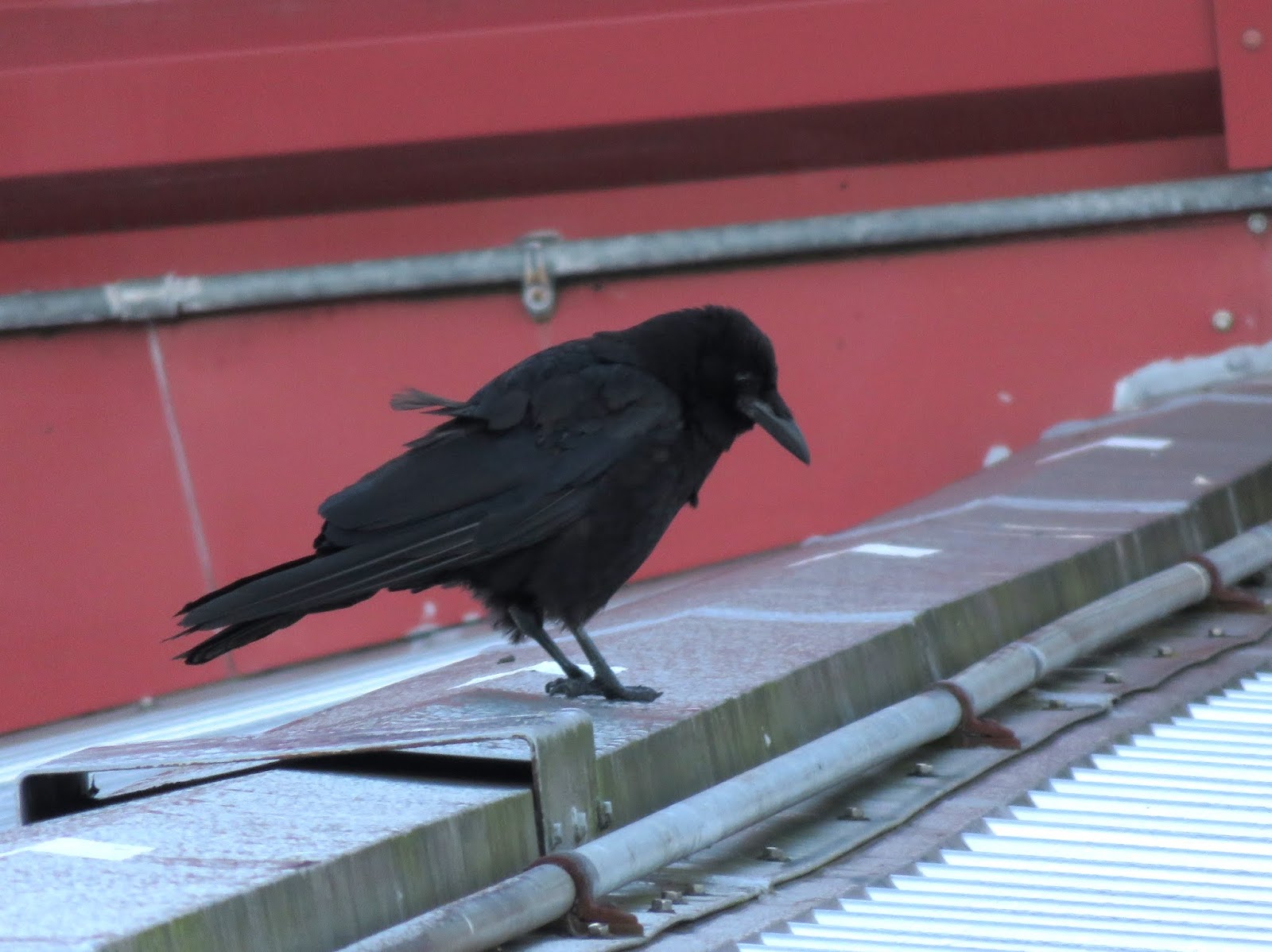
I'm not sure what seemed off about the crows in Seattle (maybe I was just hoping for something neat), but when I saw one walking around at the pier on Thursday, I pulled out my field guide. As it turns out, the Puget Sound area is populated by Northwestern Crows, which are very similar to American Crows except that they're a bit smaller (by about an inch or so) with slightly shorter tails and a hoarser voice. Northwestern Crows are found on the coast of the Pacific Northwest from Kodiak Island, Alaska down to Puget Sound. Since it's so similar to the American Crow, it's best identified by its range and habitat (beaches, tidepools, coniferous forests by the coast). Below is the Northwestern Crow at the pier.
Northwestern Crow

On Thursday, we set off on an all-day whale-watching trip up to the San Juan Islands (run by Clipper Vacations - highly recommend, it was a great trip). The boat went surprisingly fast, though it still took a few hours to get to Friday Harbor on San Juan Island (partly because we took the scenic route). Still, even though it took a while, there was a lot to see along the way, both scenery and wildlife. Below are four views taken as we went.


Some of the first wildlife I saw (after seagulls) were Common Murres. There was a large group of them in Elliot Bay. Oddly, though, after that group there were hardly any at all, all the way up to Friday Harbor and back down. Common Murres are found in the summer on the northwestern coast of Alaska and the eastern coast of Canada. In the winter, they can be found on the open ocean from Alaska down to northern Baja California as well as southeastern Canada and New England. They can be found year-round where these ranges overlap: from the Aleutian Islands down to about the middle of California and a little bit of eastern Canada. In breeding plumage, Common Murres are black above and white below with some gray on their sides. In nonbreeding plumage, they have brownish wings and mostly white throats and napes. They are reminiscent of loons in shape. They are similar in color to many other alcids, but can be distinguished by size, shape, and range. Below are two photos. The first is of part of the group of Common Murres in Elliot Bay. Since it isn't exactly a good photo, I've also included a somewhat better photo I took of a Common Murre in Santa Cruz, California back in 2009.
Common Murres
Common Murre

For the first part of the trip, the ride was surprisingly smooth. The water was glassy and there were very few bumps. It was very pleasant. Below is a photo of the smooth water.


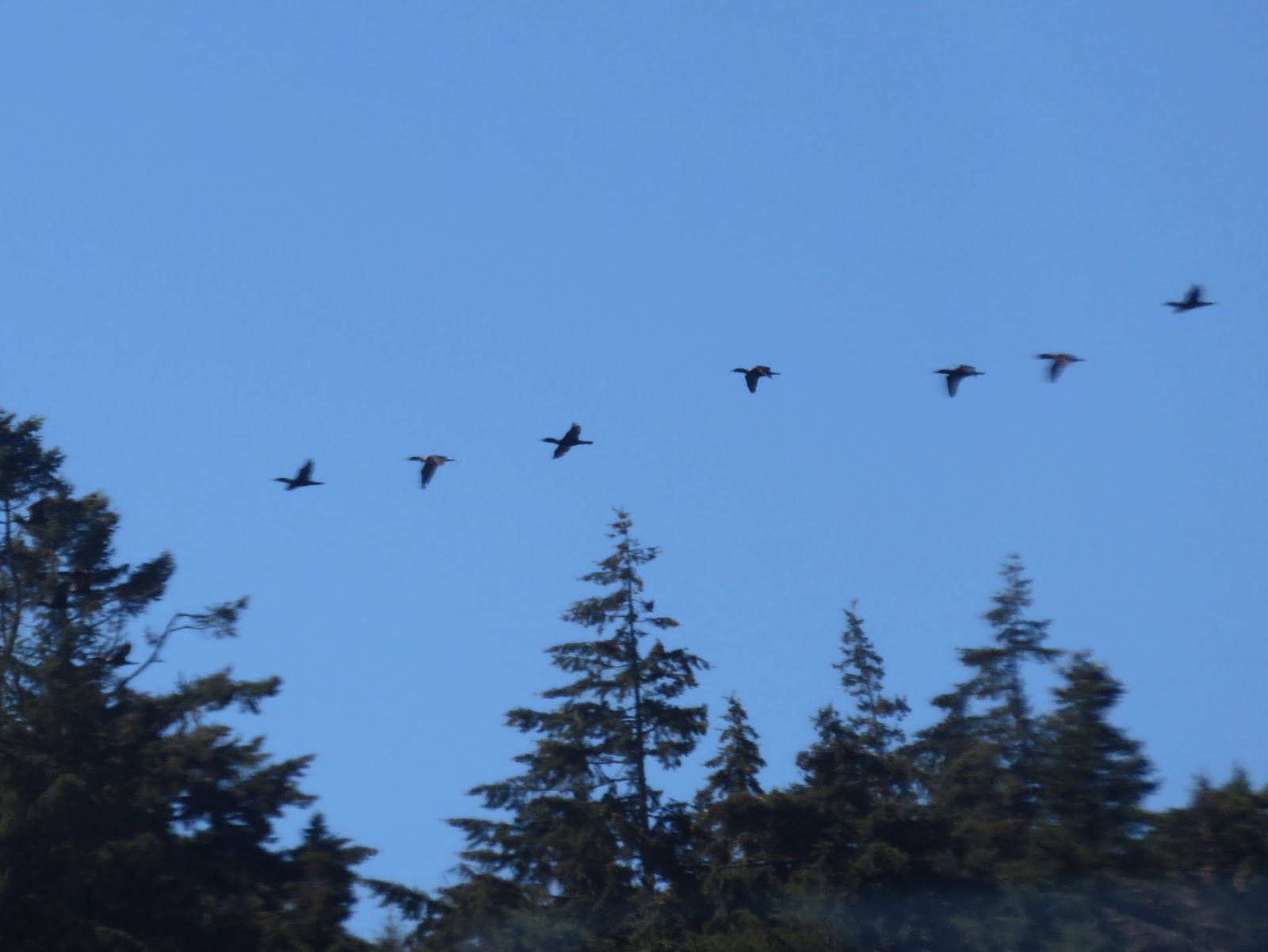
There were large flocks of Double-crested Cormorants flying and swimming by in the first part of the trip. Below is a flock flying above the trees on an island.
Double-crested Cormorants

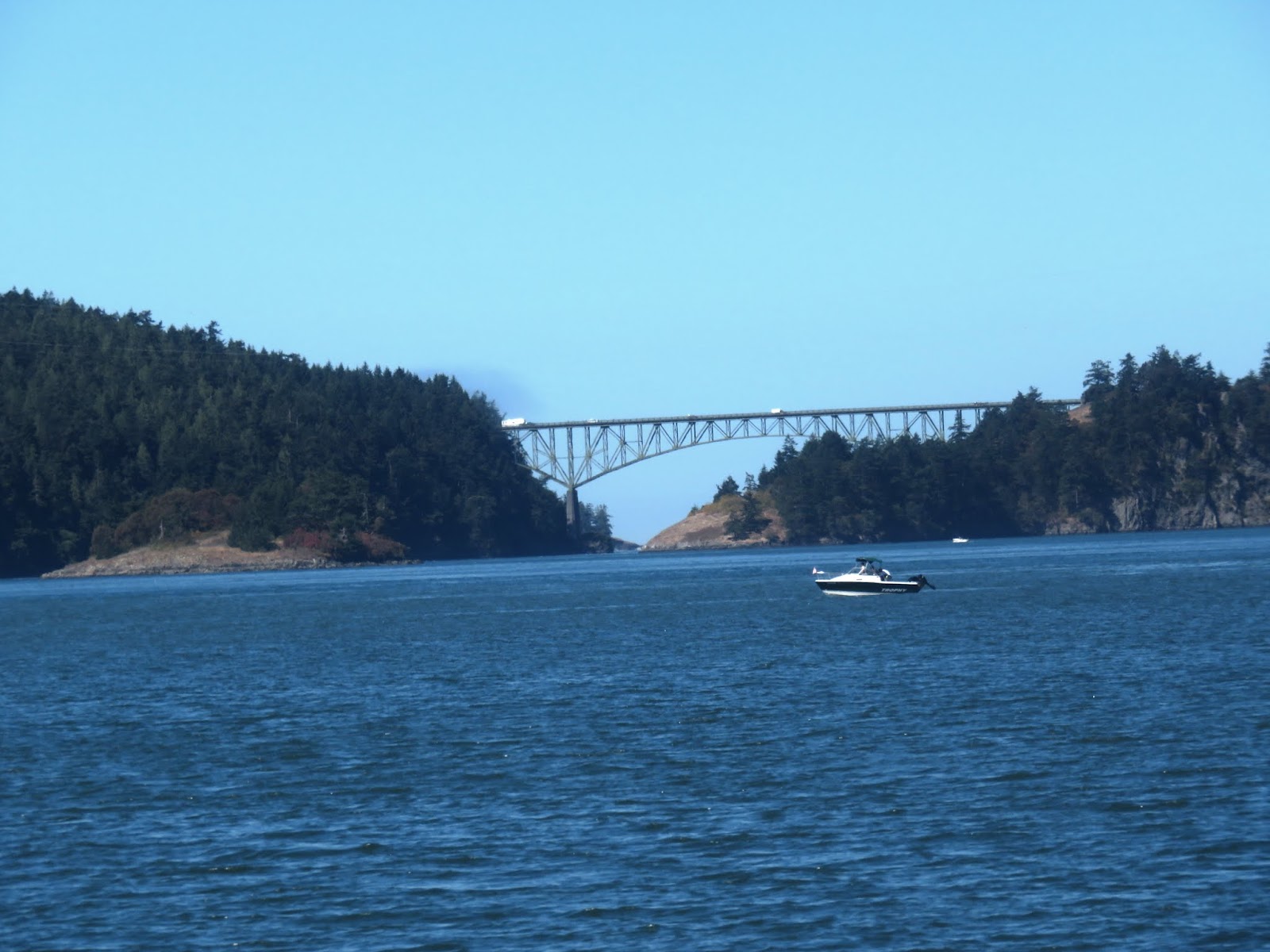
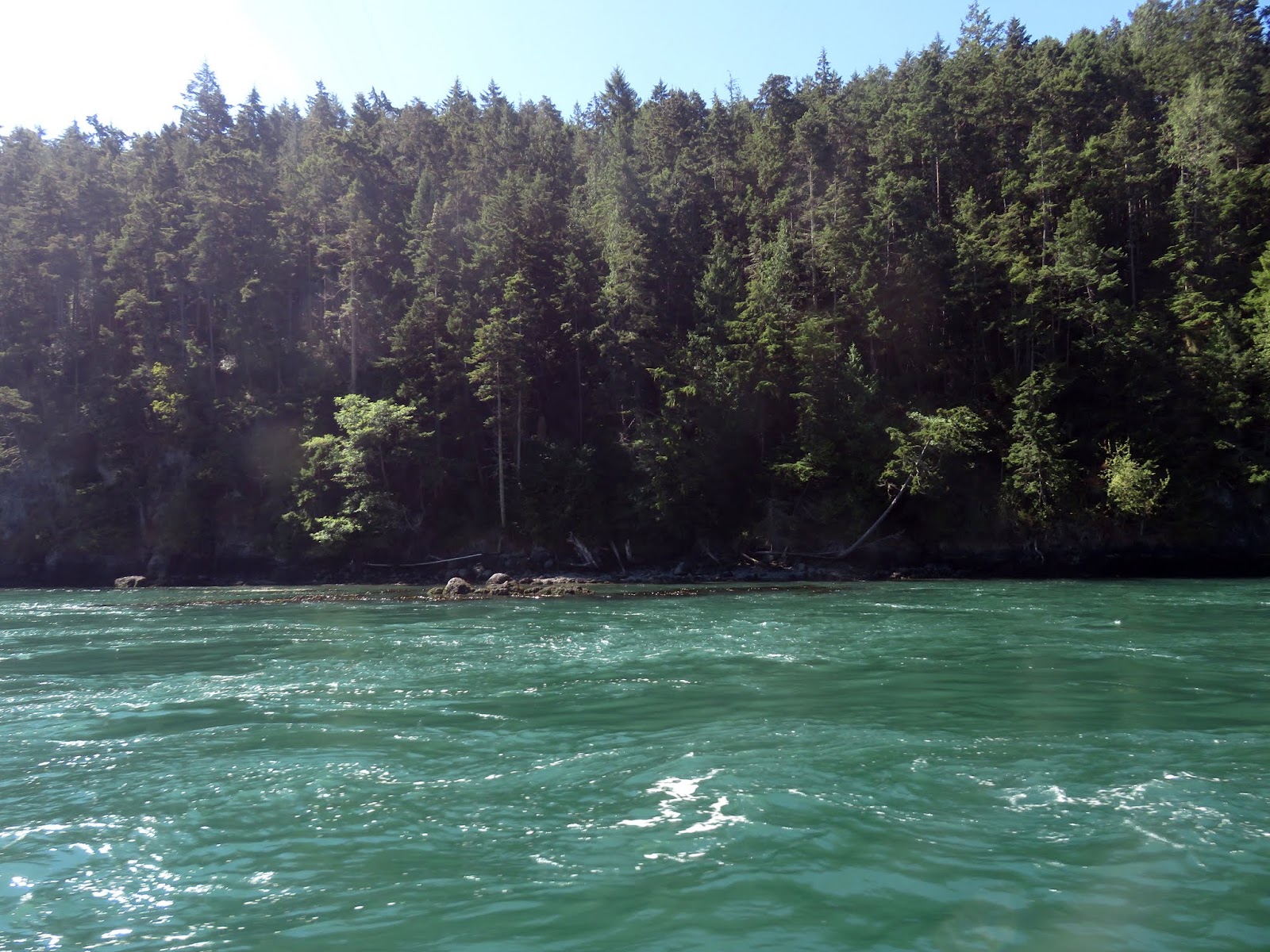
Part of the trip involved going through Deception Pass, which is a narrow pass between Whidbey Island and Pass Island that has a bridge going over it. The boat had to slow down quite a bit when going through, so we had a great opportunity to look for wildlife. Below are two photos of Deception Pass. The first shows the bridge (Whidbey Island on the left, Pass Island on the right). The second is of the forested Whidbey Island and the water, which was a beautiful emerald green color.


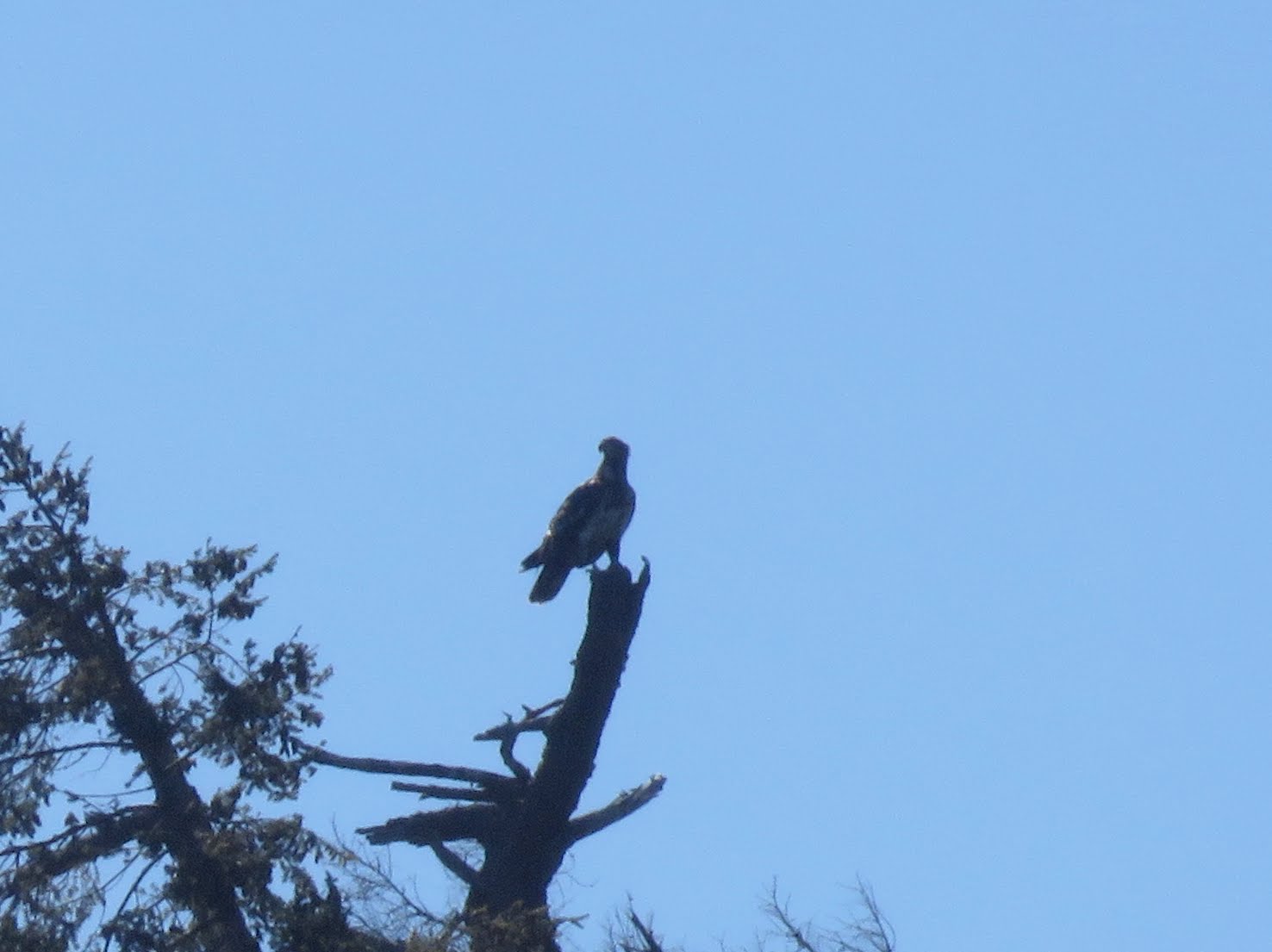
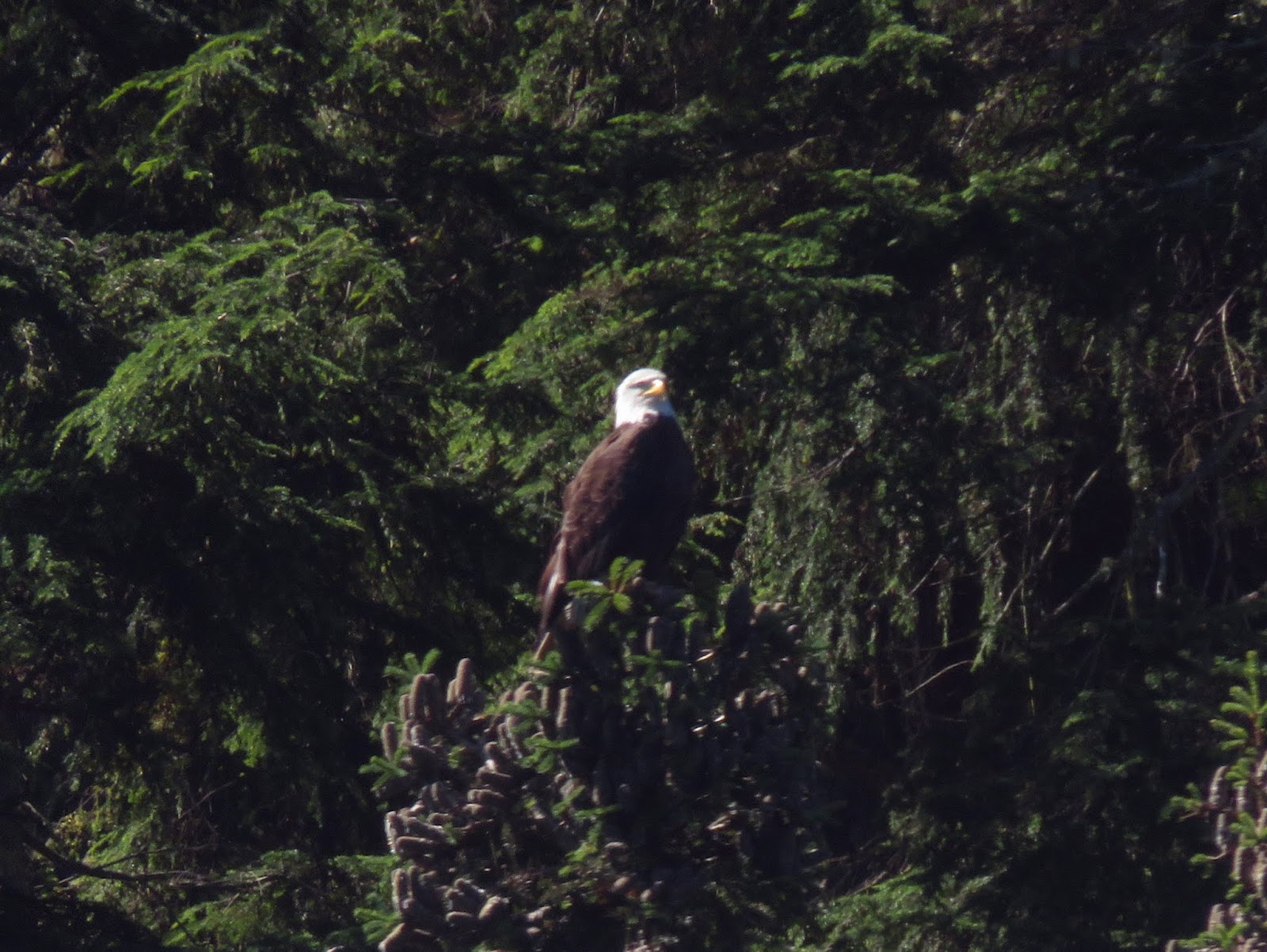
As we went through the pass, I saw two Bald Eagles, one juvenile and one adult. The juvenile eagle was high up at the top of the trees, but the adult was in a tree right near the water, so everyone was able to get a great view of it. Bald Eagles are found in the lower 48 states as well as northern Mexico and parts of southern Canada in the winter. In the summer, they're found in most of Canada and Alaska (except for the very northern parts). They are found year-round in the Pacific Northwest (southern Canada down to northern California), the northern Midwest and New England, and in patches throughout the United States. Adult Bald Eagles are distinctive with their dark brown bodies, white tails and heads, pale eyes, and large yellow bills. Juveniles, however, look very similar to Golden Eagles, but can be identified by their larger dark bills, larger heads, and messy white patches on their chests and under their wings (more visible when flying). Below are the two Bald Eagles. The first is the juvenile and the second is the adult.
Bald Eagle
Bald Eagle

Quite a few Harbor Seals were swimming around all along the way to Friday Harbor. It seemed like every ten minutes or so, we'd see a seal poking its nose out of the water. Below is one of them swimming through Deception Pass.
Harbor Seal

The most numerous bird on the water (even more numerous than the seagulls) was the Rhinoceros Auklet. There were large groups of them everywhere and some would fly past the boat (they were amazingly fast and looked sort of like footballs with wings). Rhinoceros Auklets are found on the northwestern coast of Canada and the southern coast of Alaska in the summer. In the winter, they are found on the western coast of the United States and Baja California. They are found year-round in the Pacific Northwest, from southern Canada to the middle of California. Like the murres, they are alcids, and are very similar to puffins (which are also alcids) in size and shape. They are dark gray above and white below with thick yellowish-orange bills. In breeding plumage, they have two white lines on either side of their face that look a bit like whiskers, as well as a small horn on their bill (hence rhinoceros). They can be told apart from similar alcids by their size (they're much larger than other auklets) as well as their head and bill shape. Below is a Rhinoceros Auklet.
Rhinoceros Auklet

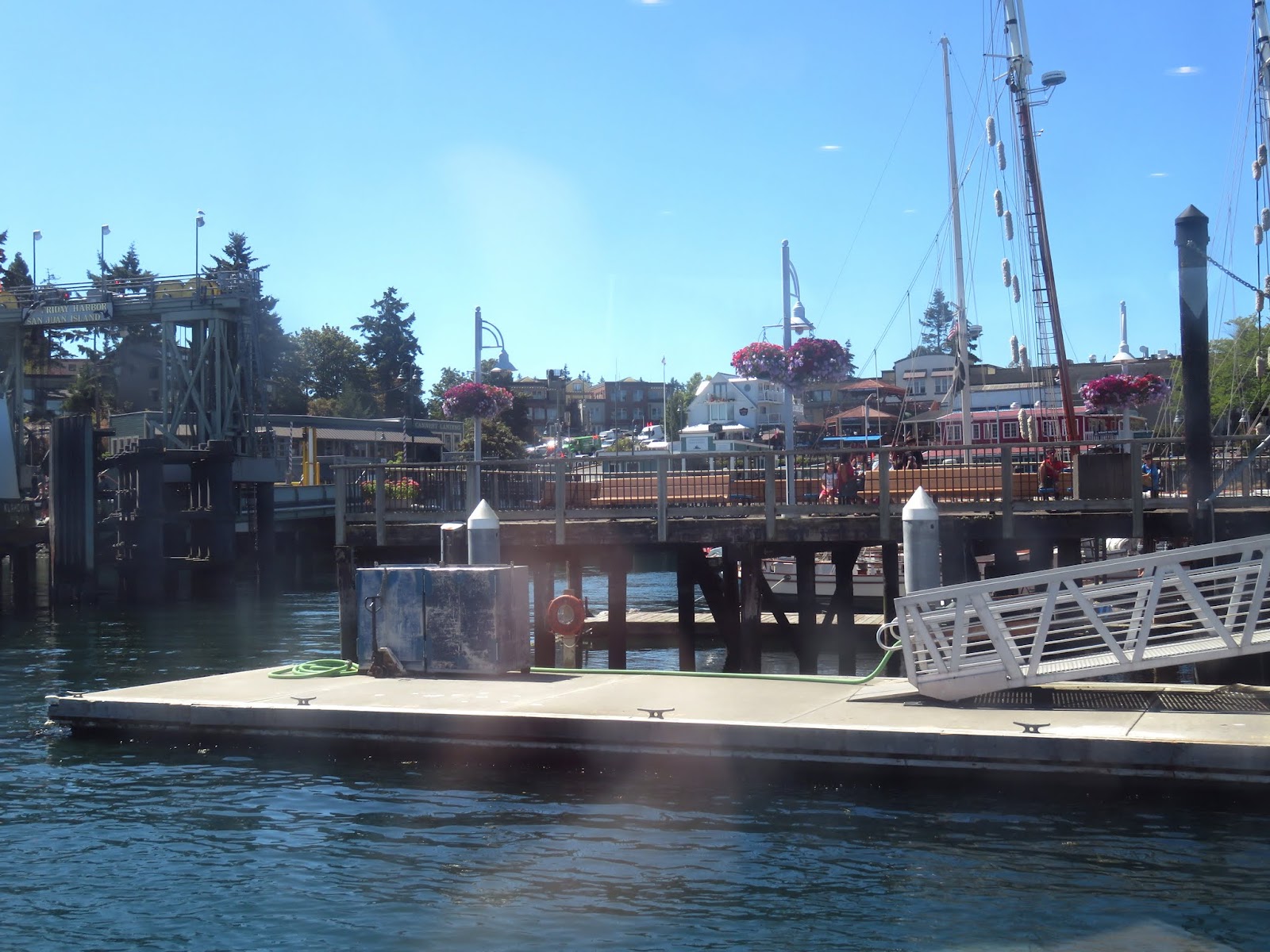
After a few hours we reached Friday Harbor, where the boat dropped off the people who weren't going on the whale-watching tour. Below are four photos I took as we were arriving.


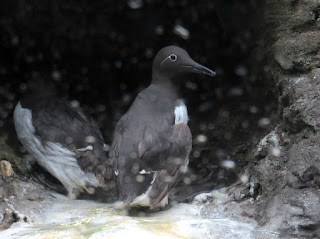
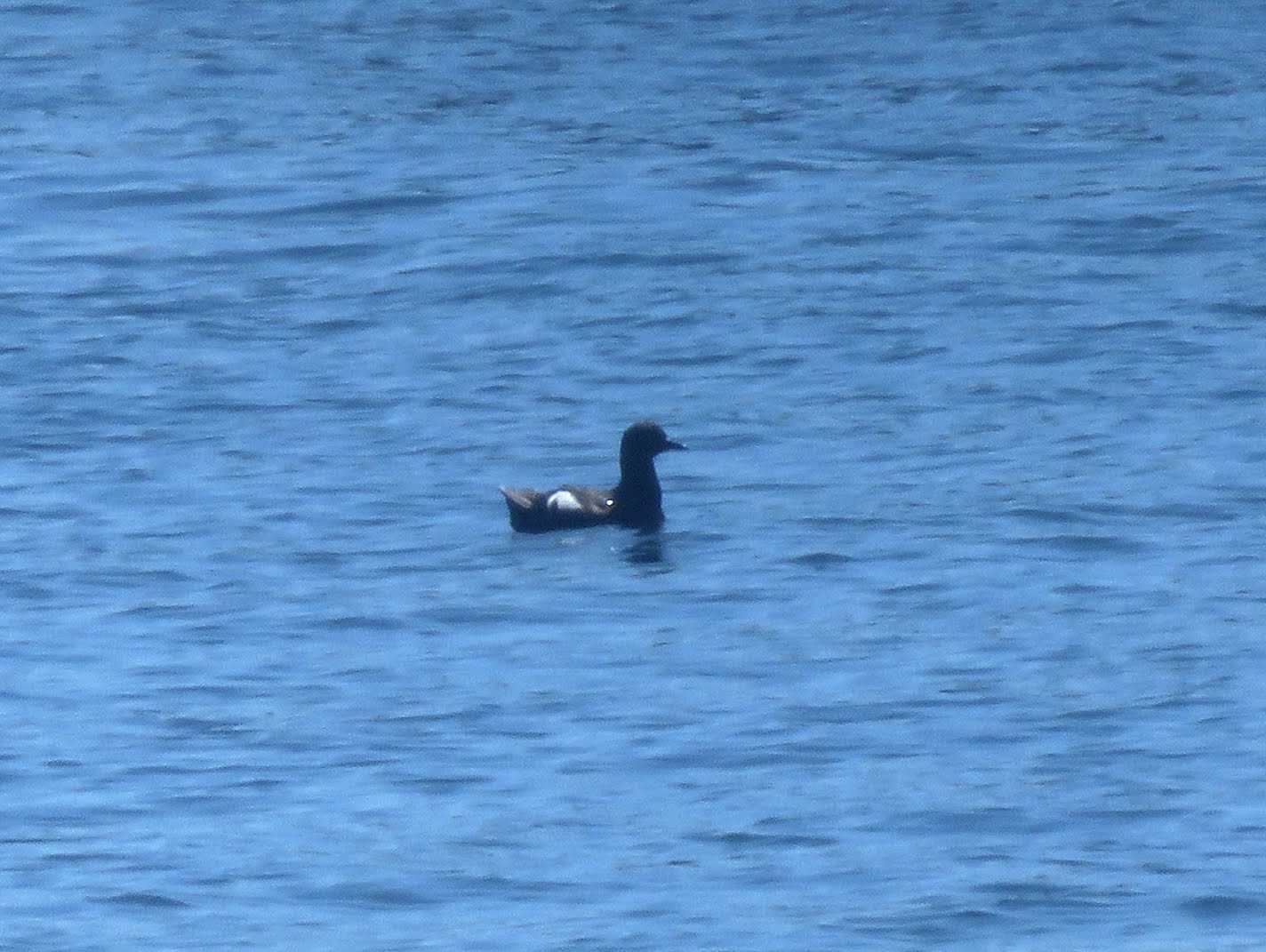
Along the way to Friday Harbor, we saw some Pigeon Guillemots scattered around; however, I wasn't able to take a photo of one until we actually got to the harbor. There were a few floating around there, and the boat was moving slowly enough for me to focus on one. Pigeon Guillemots are found in northern Alaska and the western United States in the summer, and in western Canada and southern Alaska year-round. They winter on the open ocean from California up to Alaska. They are another alcid, like the murres and auklets. They are similar to murres in shape and have bright red feet. In breeding plumage, they are entirely black except for a white patch on their wings. In nonbreeding plumage, they are mostly white with dark patches on their wings, back, and head. In flight, they look quite a bit like pigeons (and they're close to the same size, too), which is where they get their name. Below is one of the Pigeon Guillemots in Friday Harbor.
Pigeon Guillemot