Yesterday was the bird count at the Buena Vista Lagoon. It started out a bit foggy, but gradually began to clear up. Despite the fog, it was still pretty warm. There weren't that many birds around; we didn't quite make it to fifty species. Below are two photos by the lagoon.
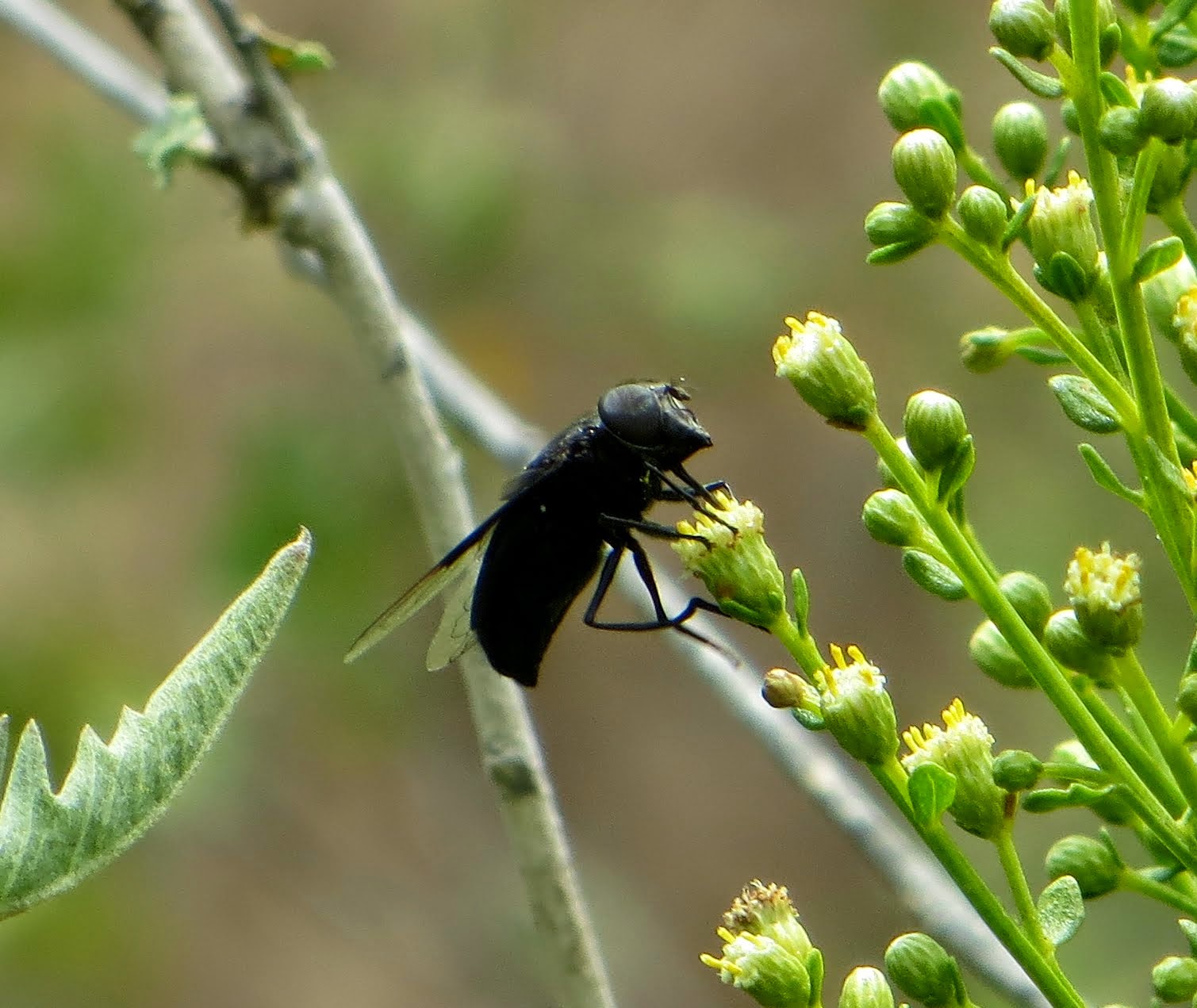
There were quite a few creatures besides birds. There were numerous fish, bullfrogs, dragonflies, butterflies, Mexican flower flies, lizards, and squirrels. Below are four photos. The first is of small, black fish (possibly young catfish, since they had long whiskers). The second is a dragonfly (there were also many damselflies around - dragonflies are thicker and hold their wings to the side, damselflies and thinner and hold their wings over their backs). The third is a young western fence lizard. The fourth is a Mexican cactus fly. There was one flowering bush that was swarming with them. They are very large flies; about the size of bumblebees.
Western Fence Lizard
Mexican Cactus Fly
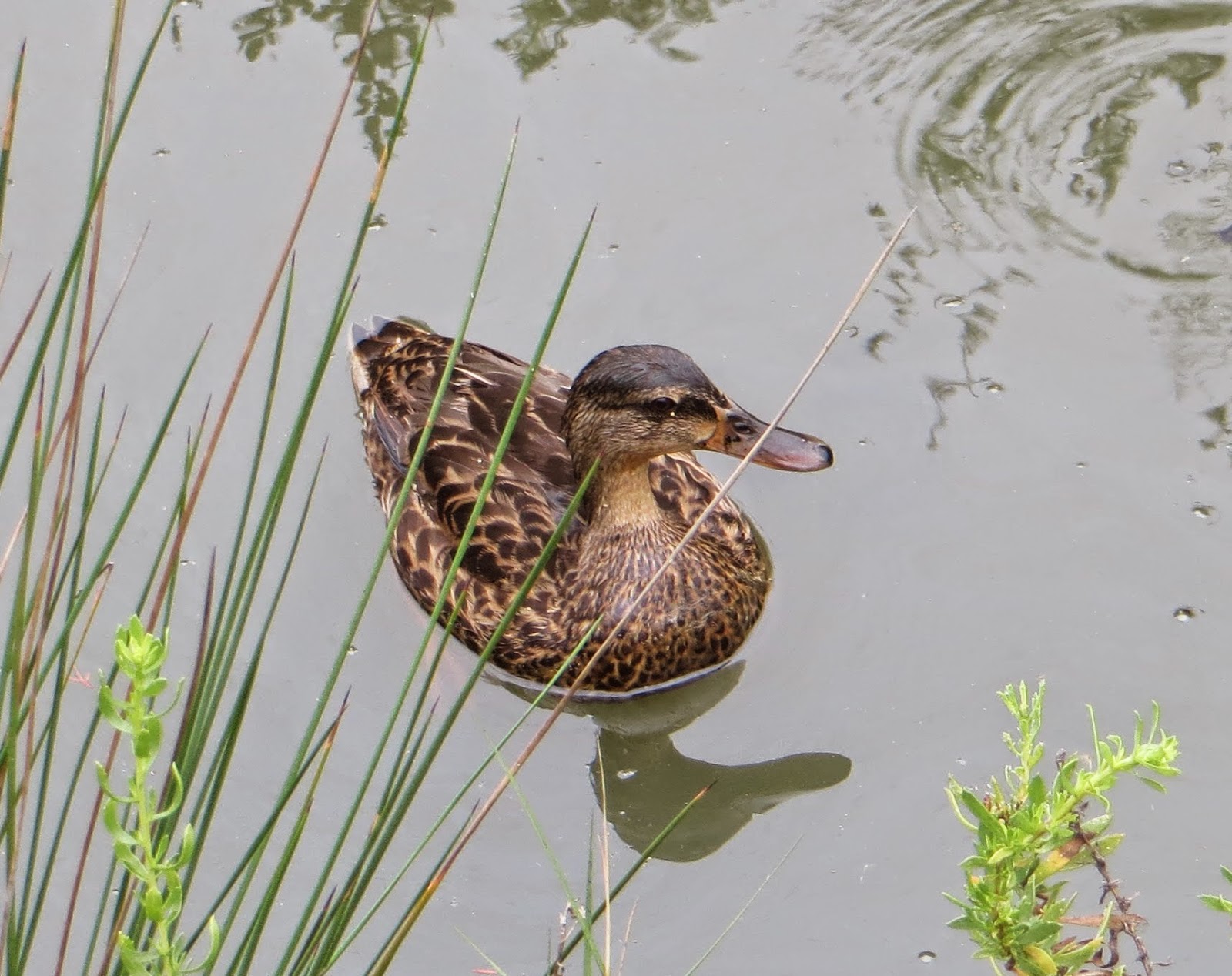
There was a young mallard in the water near road. I believe it was one of the ducklings raised there (I posted a photo of them a while ago). Young mallards can be told apart from the adult females by their duller beaks, very dark eyestripe, and overall darker plumage. Below are two photos of the young mallard.
Mallard
Mallard
There were quite a few hummingbirds around; both Anna's and Allen's. Below are two photos. the first is of an Anna's hummingbird, and the second is of an Allen's hummingbird.
Anna's Hummingbird
Allen's Hummingbird
There were several lesser goldfinches around, singing and eating the seeds of the sycamore trees. Below is a photo of a male lesser goldfinch.
Lesser Goldfinch
On a road beside the lagoon, someone had dropped off twenty-two Muscovy ducks; nine adults and thirteen ducklings. They were in a rather poor condition and were just sitting in the road. They may find their way to the water, but whoever dropped them off should never have done that. No-one should buy animals they can't care for, and domestic animals should never be released into the wild. Hopefully someone will help these ducks. Below is a photo of them.
Muscovy Ducks
In a ditch beside the road, there was a female mallard and a snowy egret. It is a pretty nasty-looking ditch, but the birds seem to like it. Below are two photos. The first is of both the mallard and egret. The second is just the egret.
Mallard and Snowy Egret
Snowy Egret
There were some young grebes out on the lagoon. There was a young pied-billed grebe following its parent, and three young western grebes swimming together. Below are two of the western grebes (sorry the photo isn't great; they were pretty far away). They were very fuzzy and gray.
A lot of finches have been hanging around the yard, eating the grass seeds that have come up. Below is a male house finch.
House Finch
We usually don't see very many mourning doves around, but one day there were quite a few sitting on the telephone line, and more just kept coming. It was nice to see so many, though I don't know what made them all suddenly get together. Below are twelve of the mourning doves.
Mourning Doves
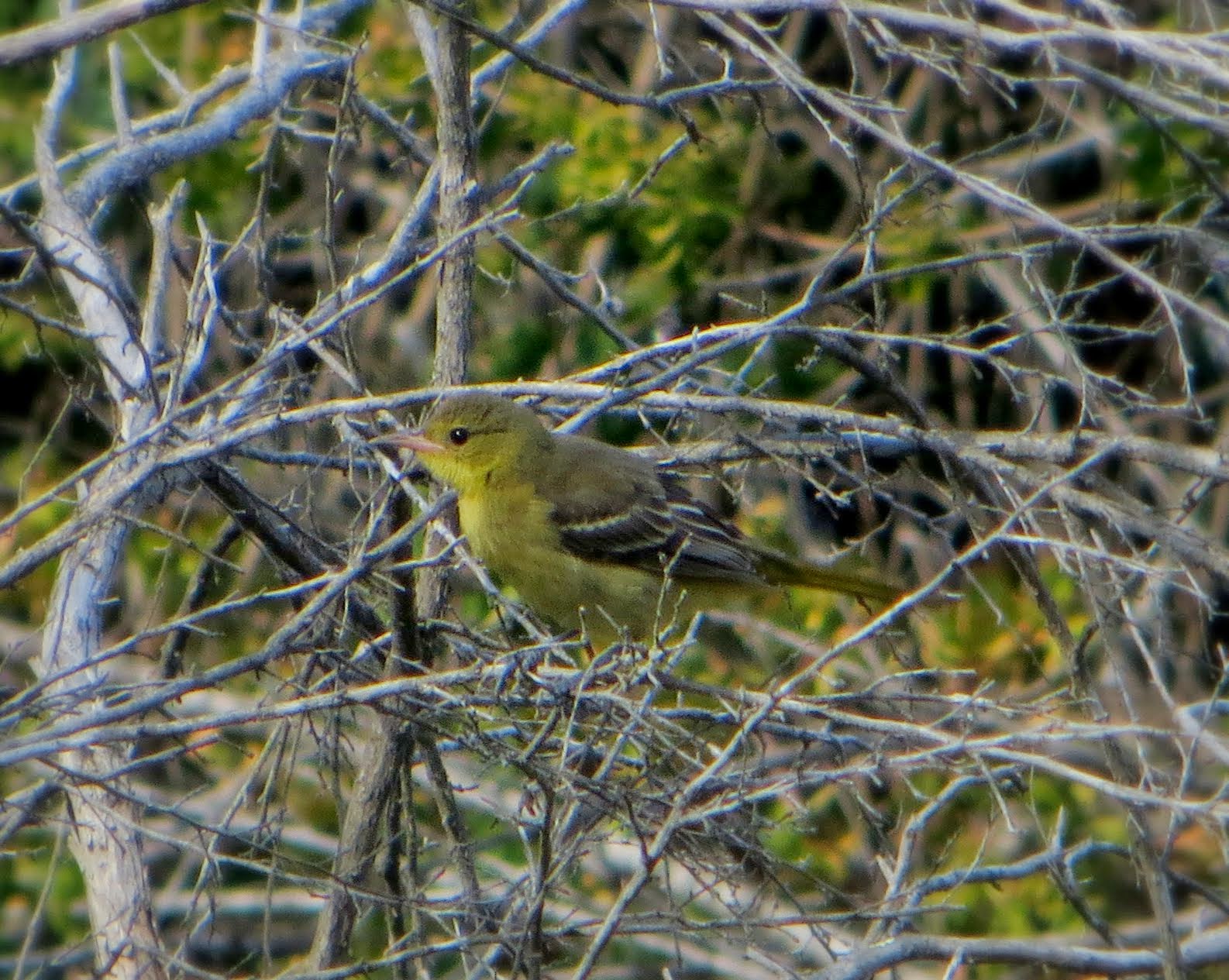
Every once in a while I'll see or hear a hooded oriole. Their song is strange and warbling, and sometimes sounds like a mockingbird. Hooded orioles will sometimes mimic other birds, similar to mockingbirds. Below is a young hooded oriole (notice the pale edges on the beak).
Hooded Oriole
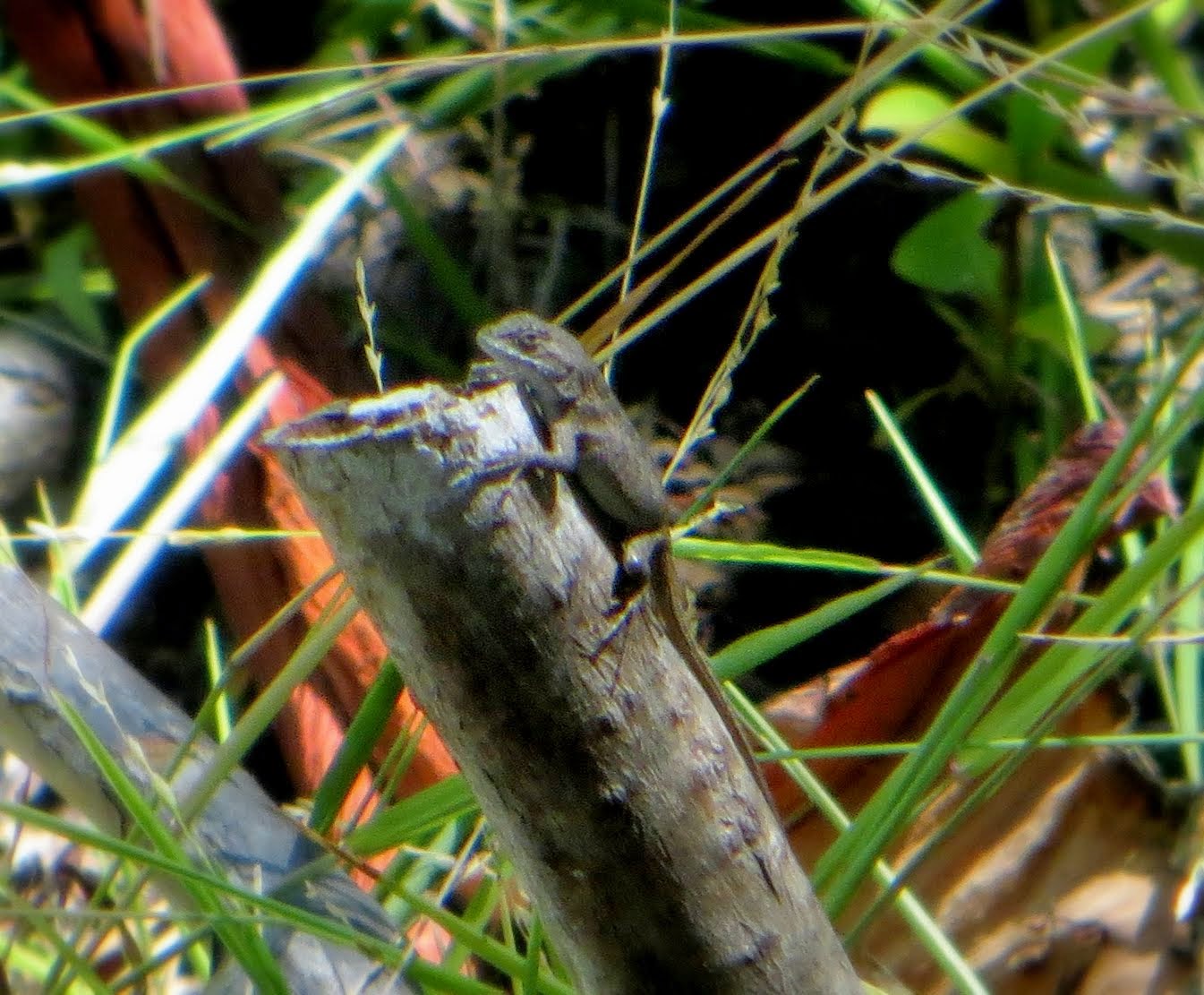
There are many young lizards around; mostly western fence lizards. The young ones are very tiny. Including the tail, many of them are about the length my finger. Below is one of the young western fence lizards.
Western Fence Lizard
There are two or three young western scrub-jays hanging around. They eat a lot of the catfood. Below are two photos of them (notice the brown or dull-colored heads).
Western Scrub-Jay
Western Scrub-Jay
There is a young California towhee that often visits the catfood bowls with its parent. Despite all of the catfood lying around in front of it, it still waits to be fed. The parent will take a large piece of catfood out of the bowl, then break it with its beak. It will then pick up each piece of broken catfood and hand them to the baby one by one. Below are two photos of them. The parent is on the right in both photos.
California Towhees
California Towhees
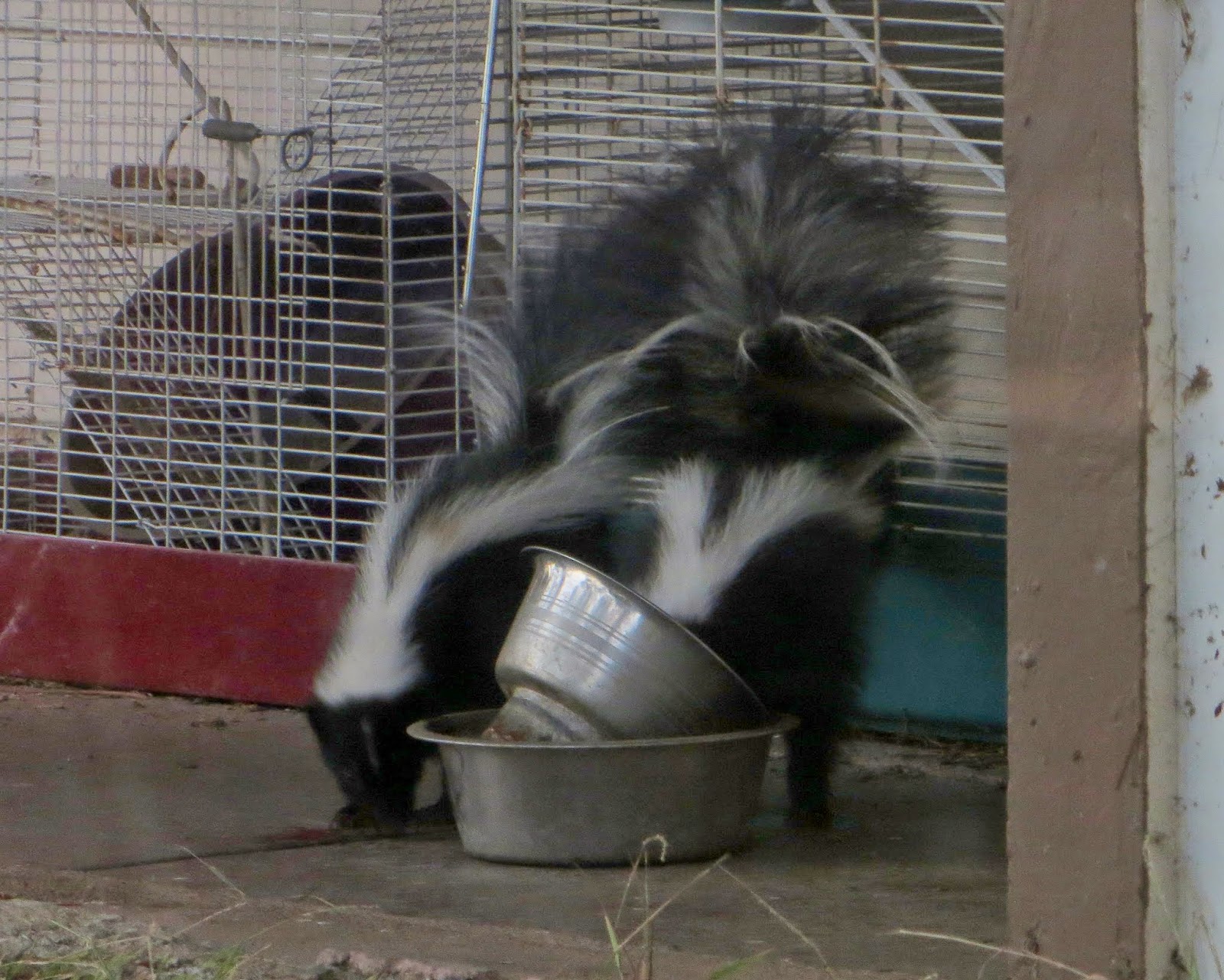
The striped skunks still visit the catfood bowls every day. The mother skunk doesn't visit very often, but the two young ones always come. We always know when they're around because they make a loud clatter with bowls when they eat. We think they might be living in a concrete tube in our yard. Below are three photos of the skunks.
Striped Skunk
Striped Skunk
Striped Skunks
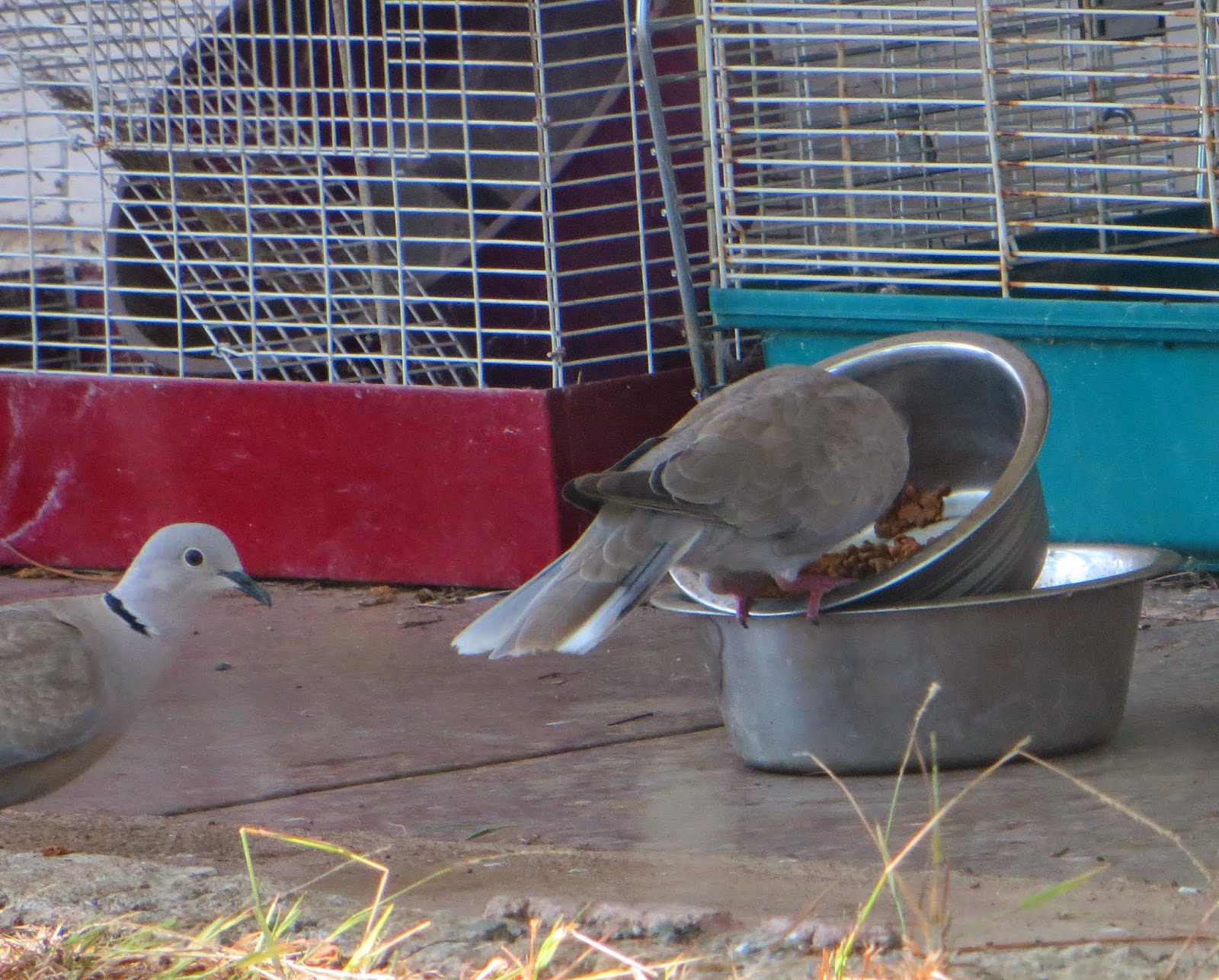
The Eurasian collared-doves still visit the catfood. They've figured out how to balance and keep the bowl from rolling and swinging around. They often come in a pair. Below are two photos of the two doves at the food bowls.
Recently, a striped skunk living in our yard raised two little babies. I don't see the mother that often, but every night, the two young skunks visit the cat food bowls. They are very small and very beautiful with their bold black and white fur. Below are four photos of them.
Striped Skunk
Striped Skunk
Striped Skunk
Striped Skunk
Another somewhat surprising visitor to the food bowls is a Eurasian collared-dove. I wouldn't have thought that doves would eat cat food, but I suppose they need their protein, too. Since the collared-dove it so big, it often has trouble balancing and tips the bowl over. Below are two photos. The first is of the dove near the cat food bowl and the second is of it at a water bowl (it almost fell of that bowl, too).
Eurasian Collared-Dove
Eurasian Collared-Dove
The young black phoebe from spring still hangs around our yard. For a long while, it wasn't able to catch any flying insects, so all it did was land on the ground and catch pill bugs. I think it can catch the other insects, but it still eats a large amount of pill bugs. Below are two photos of it.
Black Phoebe
Black Phoebe
The California towhees must have had another nest, because there is a young bird that hangs around sometimes, begging its parents for food. Below is a photo of it sitting on a bench.
California Towhee
There seem to be a lot of young animals in our yard right now. A few days ago, we saw a young spotted towhee scratching on the ground. They look a bit strange; not very much like adults. They have dark heads, backs, and tails and a tan patch below with white spots on their wings. They are much duller than adults, and they are covered in dark streaks. Adults have no streaking. Below is the young spotted towhee.
Spotted Towhee
A couple weeks ago there was a very pretty adult Cooper's hawk perched on a telephone pole. Below is a photo of it standing on one leg.
Cooper's Hawk
Below is a video I filmed of a northern mockingbird. In the video, it is singing and displaying by hopping up and running along the top of the telephone pole.
This morning was the bird count at the Buena Vista Lagoon. There weren't very many birds around, since it's summer, but we saw a lot more than we thought we would - fifty species. We saw all of the common herons and egrets - great blue heron, great egret, snowy egret, black-crowned night-heron, green heron, and least bittern - which was great considering we hadn't been seeing many of them recently. One of the first birds I saw was the green heron. It was just standing out in the open on a rock in the water by the road near the nature center; it wasn't even fishing. It just stood there looking at me until a person walked by and startled it. Below is a photo of the green heron.
Green Heron
A great blue heron came up out of the reeds screeching and landed on a light post. Below are two photos of it. In the first photo, its long plume feathers are visible on the neck and back. In the second, it's smoothed out.
Great Blue Heron
Great Blue Heron
We saw quite a few great egrets. Below is one of them standing in the reeds.
Great Egret
Today we saw one common moorhen. We hadn't seen them in a very long time, so it was great to see one today. It was very shy and quickly swam to hide in the reeds. Below is a photo of it.
Common Moorhen
There were quite a few terns today - Caspian, Forster's, and least. Below is one of the Caspian terns.
Caspian Tern
There were a lot of least terns around. They are very hard to photograph since they are very small, very quick, and they blend into the white clouds. I did manage to take one good photo. Below is a least tern.
Sorry this post is a bit late. Last weekend was the bird count. We didn't see as many species as usual, since summer is coming. We never see as many birds in the summer as we do in the rest of the year. There were several song sparrows around. Below is one of them sitting in a pine tree.
Song Sparrow
We did see egrets and herons, which was great, since we haven't been seeing very many recently. Below is a snowy egret walking beside the road.
Snowy Egret
There were quite a few Caspian terns around and diving after fish. There were also some least terns around, though not as many. Below are three photos of a Caspian tern flying, diving, and flying away with a fish.
Caspian Tern
Caspian Tern
Caspian Tern
A great blue heron was sitting and preening itself in the reeds. Below is a photo of it.
Great Blue Heron
We saw three brown-headed cowbirds, which we don't usually see. Brown-headed cowbirds are found in most of the central United States and Canada in the summer, the east and west coasts and northern Mexico year-round, and southern Mexico in the winter. Females are plain brown with a paler throat and light streaks on the chest. Males have iridescent black bodies and plain brown heads. Cowbirds are parasitic nesters, which means they lay their eggs in other birds' nests, sometimes pushing out the birds' eggs and nestlings in the process. Below is a photo of a male brown-headed cowbird.
Brown-headed Cowbird
In Oceanside and Carlsbad, there is a small population of feral lilac-crowned parrots. We often see a few of them flying by and squawking. Below is a photo of a flock of four.
Lilac-crowned Parrots
Another non-native we saw was the red-eared slider. They are one of the turtles commonly found in pet stores. They are native to the southeastern United States. We found two rather large ones on a hillside. We caught them, and they will be sent to Texas, where they are native. It was rather interesting catching them, since they shoot a stream of urine as a defense against predators. Below are two photos of them. The first photo is of one of them hiding among some melon vines. The second is of them in a box, showing the red ear-patches.
Red-eared Slider
Red-eared Sliders
We don't usually see pied-billed grebes close up, but we did this time. It swam for a little while out in the open before diving into the water. Below is a photo of it (see the black ring around the bluish-gray bill).
Pied-billed Grebe
It was nesting season for the mallards. There was a female with four little ducklings. They must have just hatched, because they were very tiny and fluffy. When they were startled, they would hurry down the hill, tumble into the water, and follow their mother. Below are four photos of the mother and her ducklings.